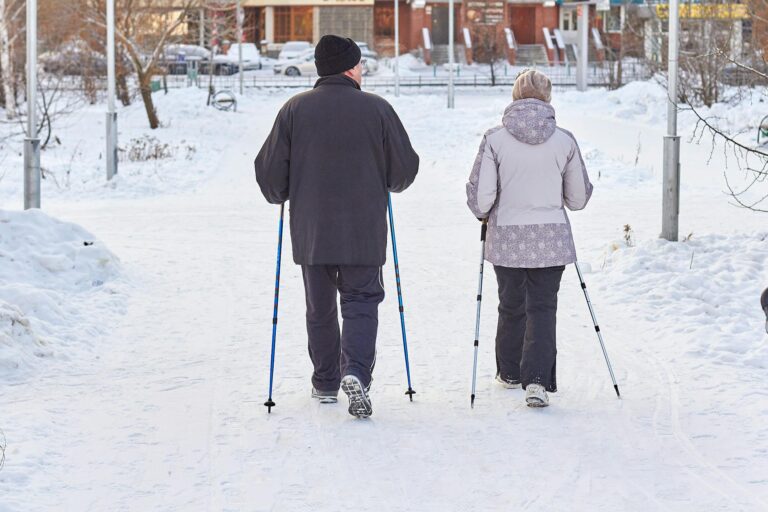
Walking that raises your heart rate delivers substantially greater cardiovascular protection than effortless strolling, but both forms of walking provide real, measurable health benefits, and dismissing either one is a mistake. A 2025 study found that people who walk at a brisk pace of three miles per hour or faster had a 35 to 43 percent lower risk of developing atrial fibrillation compared with slow walkers. Cleveland Clinic research connected faster walking pace to a 34 percent decrease in heart failure risk. The gap in outcomes between casual and intentional walking is not trivial. If you walk your dog around the block at two miles per hour, you are doing something good for your body.
If you walk that same route at 3.5 miles per hour with your heart rate elevated into the moderate-intensity zone, you are doing something measurably better. That said, the conversation around walking intensity has become unnecessarily binary. Casual walking falls under what researchers call Non-Exercise Activity Thermogenesis, or NEAT, and it increases your energy expenditure above resting levels by 100 to 200 percent. That matters, especially for people who spend half their waking hours sitting. This article breaks down the heart rate zones that define each type of walking, compares their calorie burn and cardiovascular effects, explains why low-effort walking still counts, and offers practical guidance for getting the most out of every walk you take.
Table of Contents
- What Happens to Your Heart Rate During Effortless Walking vs Brisk Walking?
- How Much More Does Heart-Rate-Elevating Walking Protect Your Heart?
- The Calorie Burn Difference Between Casual and Brisk Walking
- How to Use Both Types of Walking in a Weekly Routine
- Why Effortless Walking Still Matters More Than You Think
- Using the Talk Test to Find the Right Intensity Without a Heart Rate Monitor
- The Direction of the Research and What It Means for Walkers
- Conclusion
What Happens to Your Heart Rate During Effortless Walking vs Brisk Walking?
Leisurely walking at around two to 2.5 miles per hour keeps your heart rate below 50 percent of your maximum heart rate. For most adults, this translates to roughly 90 to 100 beats per minute. At this intensity, you are burning about 2.0 to 2.5 METs of energy, which is barely above what your body expends at rest. You can hold a full conversation, sing along to a podcast intro, and generally forget you are exercising at all. This is the pace of window shopping, walking to your car, or meandering through a farmer’s market. Brisk walking at 3.0 to 4.0 miles per hour changes the picture. Your heart rate climbs to 50 to 70 percent of your maximum, according to the American Heart Association, or 64 to 76 percent by CDC guidelines.
That typically lands between 110 and 130 beats per minute. You enter the moderate-intensity zone, Zones 2 through 3, burning 3.0 to 5.9 METs. The simplest way to gauge it without a monitor is the talk test: at moderate intensity, you can talk but you cannot sing. If you find yourself unable to finish a sentence without pausing for breath, you have crossed into vigorous territory. The distinction matters because your cardiovascular system responds differently to these two levels of demand. Below the aerobic threshold, your heart is essentially coasting. Above it, your heart muscle is being trained, your blood vessels are adapting, and your body is triggering a cascade of protective metabolic responses that casual walking simply does not produce at the same magnitude.

How Much More Does Heart-Rate-Elevating Walking Protect Your Heart?
The cardiovascular gap between strolling and striding is backed by large-scale research. Walking faster is linked to lower risks of cardiovascular disease, cancer, and early death, and the effect of pace exceeds the effect of step count. In other words, how fast you walk matters more than how many steps you log. Research suggests that short bursts of vigorous activity, including fast walking, can be up to six times more effective than casual walking at improving cardiovascular health markers. For someone already hitting 8,000 or 10,000 steps a day but doing all of them at a leisurely pace, simply increasing speed on a portion of those steps could produce outsized benefits.
However, these findings come with a limitation worth noting. Most of this research is observational, meaning it tracks associations rather than proving direct causation. People who walk faster may also be healthier to begin with, more physically fit, younger, or less burdened by joint pain or chronic conditions. A person with severe osteoarthritis in both knees cannot simply decide to walk at four miles per hour and expect the same outcomes as a healthy 40-year-old. The benefits of brisk walking are real, but they apply most clearly to people who are physically capable of sustaining that pace safely. If pushing your pace causes pain or instability, you are better off walking at a comfortable speed consistently than forcing an intensity that leads to injury or avoidance.
The Calorie Burn Difference Between Casual and Brisk Walking
Numbers make the case clearly. Leisurely walking at about two miles per hour burns roughly 60 calories per mile. Brisk walking at 3.5 to 4.0 miles per hour burns approximately 95 calories per mile. That is about 30 percent more calories burned over the same distance. Stretch that difference across a daily three-mile walk and you are looking at roughly 105 extra calories per session from brisk walking, which adds up to over 700 additional calories per week without adding a single extra step to your routine.
At the extreme end, race walking can burn up to 116 percent more calories than walking at 2.5 miles per hour. For a 155-pound person, brisk walking generates roughly 280 to 350 calories per hour, compared to about 149 calories per hour for a 100-pound person walking leisurely. The weight variable matters here. Heavier individuals burn more calories at every pace, which means the absolute calorie difference between casual and brisk walking is even larger for someone who weighs 200 pounds than for someone who weighs 130. If calorie expenditure is a primary goal, whether for weight management or creating a sustainable deficit, pace is one of the easiest levers to pull.

How to Use Both Types of Walking in a Weekly Routine
The CDC and World Health Organization recommend 150 minutes per week of moderate-intensity activity, like brisk walking, or 75 minutes per week of vigorous-intensity activity for substantial health benefits. That is roughly 22 minutes a day of brisk walking, five days a week. But Johns Hopkins Medicine emphasizes that formal exercise alone is not enough. Combining structured exercise with general daily movement, including casual walking, provides the greatest heart-protective benefits. The practical takeaway is that you need both kinds of walking, not one or the other.
A reasonable weekly approach might look like this: three to four dedicated brisk walks of 25 to 35 minutes each, where you maintain a pace that keeps you in the 110 to 130 bpm range, combined with as much casual walking as your day naturally includes. The brisk sessions are your cardiovascular training. The casual walking is your metabolic maintenance. Trying to make every walk a workout is a recipe for burnout. Treating every walk as a leisurely stroll leaves cardiovascular benefits on the table. The tradeoff is straightforward: intensity delivers the biggest per-minute returns, but volume of easy movement across the day supports metabolic health in ways that a single hard session cannot replace.
Why Effortless Walking Still Matters More Than You Think
Casual walking falls under NEAT, and dismissing it as useless is one of the more common fitness mistakes. NEAT can account for up to an extra 2,000 kilocalories per day beyond basal metabolic rate in highly active individuals. Even for average adults, the difference between someone who walks casually throughout the day and someone who sits for most of it is significant. Sedentary adults in industrialized countries spend up to half their day sitting. Even replacing a fraction of that sitting time with low-effort walking counteracts the metabolic harm of prolonged inactivity.
The limitation here is that casual walking alone will not build cardiovascular fitness. It will not lower your resting heart rate, improve your VO2 max, or produce the kind of cardiac adaptations that protect against heart failure. A study on elderly subjects found that those who walked less performed 29 percent less non-exercise activity overall, equivalent to about three fewer miles of ambulation per day, contributing to age-related weight gain. NEAT matters, but it is a floor, not a ceiling. If casual walking is all you do, you are protecting yourself against the worst effects of sedentary living without capturing the full cardiovascular benefits that moderate-intensity walking provides. That is a meaningful distinction, and being honest about it helps you make better decisions about where to invest your limited exercise time.

Using the Talk Test to Find the Right Intensity Without a Heart Rate Monitor
Not everyone owns a fitness tracker, and not everyone wants to stare at their wrist mid-walk. The talk test remains one of the most reliable low-tech methods for gauging walking intensity. At moderate intensity, you should be able to carry on a conversation but struggle to sing a song. If you can belt out a full chorus without any breathlessness, you are probably below the moderate threshold.
If you cannot get through a sentence without gasping, you have crossed into vigorous territory. A practical way to apply this: walk with a partner and pay attention to how your conversation flows. If you are both talking easily with long sentences and no pauses, pick up the pace slightly. If one of you starts dropping words or taking mid-sentence breaths, you are in the moderate zone where cardiovascular adaptation is happening.
The Direction of the Research and What It Means for Walkers
The trend in exercise science is moving away from step-count fixation and toward intensity awareness. Recent research consistently shows that pace matters more than volume for cardiovascular outcomes.
This does not mean step counts are irrelevant, but it does mean that a person logging 6,000 brisk steps may be getting more cardiovascular benefit than someone logging 12,000 leisurely ones. Expect future public health messaging to shift accordingly, emphasizing not just that you should walk more, but that you should walk faster for at least some portion of your daily movement. For anyone building a walking habit today, the smartest investment is learning what moderate intensity feels like in your own body and deliberately spending time there several days a week.
Conclusion
Walking that raises your heart rate into the moderate-intensity zone, roughly 50 to 76 percent of your maximum, delivers meaningfully greater cardiovascular protection, calorie burn, and long-term disease risk reduction than effortless strolling. The research is consistent on this point: a 34 percent lower heart failure risk, a 35 to 43 percent lower risk of abnormal heart rhythms, and up to six times greater effectiveness at improving cardiovascular markers. If you are choosing one type of walking to prioritize, brisk walking wins. But the real answer is that you should not choose.
Casual walking provides genuine metabolic benefits through NEAT, counteracts the damage of prolonged sitting, and serves as the foundation of daily movement that structured exercise alone cannot replace. The best approach is to treat brisk walking as your cardiovascular training and casual walking as the background activity that keeps your metabolism active throughout the day. Any walking beats no walking. Faster walking, for at least 150 minutes a week, beats everything else walking can offer.