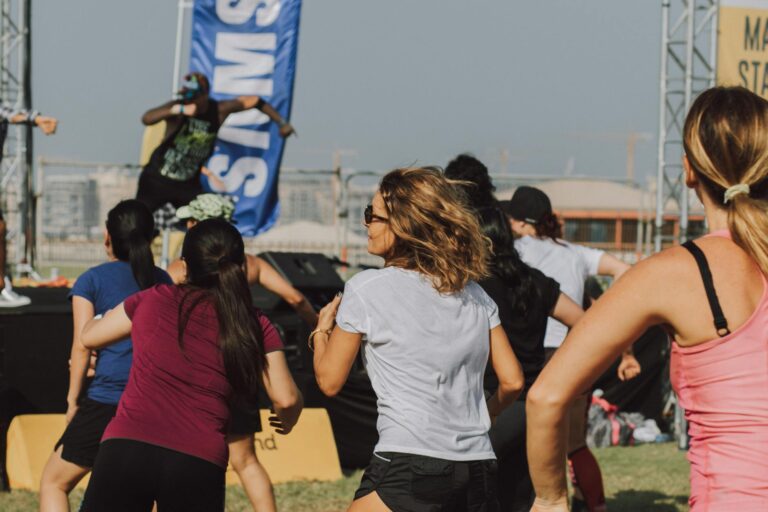
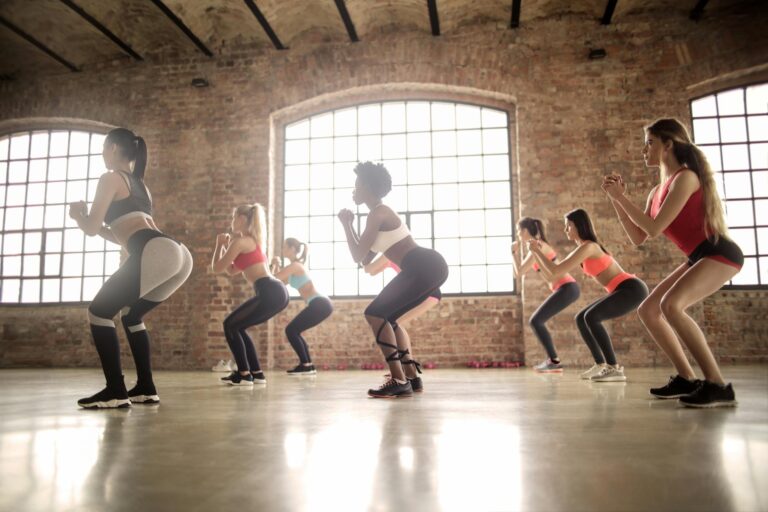
The most practical way to track calories burned during Zumba is to wear a fitness device with continuous heart rate monitoring, though you should know upfront that no wearable on the market measures calorie burn with perfect accuracy. A typical 60-minute Zumba class burns between 300 and 600 calories depending on your body weight, the class format, and how hard you push yourself, with most participants landing in the 400 to 550 calorie range per session. Research from the American Council on Exercise found that a single Zumba class burned an average of 369 calories, which works out to roughly 9.5 calories per minute. If you weigh around 155 pounds and attend three classes a week, you are likely burning somewhere between 1,100 and 1,650 calories from Zumba alone, a meaningful contribution to any weight management plan.
The challenge is that the number your fitness tracker displays after class may not reflect what actually happened inside your body. Studies have shown that different devices can report wildly different totals for the same workout, sometimes by more than 100 calories. That does not mean tracking is pointless. It means you need to understand how these devices estimate energy expenditure and where their limitations lie. This article covers how many calories Zumba actually burns based on research, which fitness trackers perform best for dance-style workouts in 2026, how accurate those devices really are, and how to get the most useful data from whatever you wear on your wrist.
Table of Contents
- How Many Calories Does Zumba Actually Burn According to Research?
- How Accurate Are Fitness Trackers at Measuring Zumba Calorie Burn?
- Best Fitness Trackers for Zumba and Dance Workouts in 2026
- Using the Zumba App and Smartwatch Integration for Better Tracking
- Why Your Zumba Calorie Count Might Be Misleading
- How to Use MET-Based Calculations as a Reality Check
- The Future of Calorie Tracking for Dance Fitness
- Conclusion
How Many Calories Does Zumba Actually Burn According to Research?
The calorie burn from Zumba varies more than most people realize, and the number depends heavily on which format you are doing and how much you weigh. Standard Zumba classes, the ones most gyms offer on their group fitness schedule, tend to burn in the 350 to 500 calorie range for an hour. High-intensity and toning Zumba formats, which are rated at 8.0 METs by exercise physiologists, push that figure to 550 to 600 calories per hour for a person weighing around 70 kilograms. The MET value, or metabolic equivalent of task, is a standardized way to compare energy costs across activities. For context, jogging at a moderate pace sits around 7.0 METs, which means an intense Zumba session can match or exceed a casual run in terms of calorie expenditure. Body weight is the single largest variable in how many calories you burn. A 20-kilogram difference in body weight can change calorie expenditure by 25 to 30 percent.
A person weighing 60 kilograms might burn 380 calories in a class where someone at 80 kilograms burns closer to 520. Music tempo also plays a role that often goes overlooked. Faster-paced tracks push participants to move more explosively and transition more quickly, which research suggests increases calorie burn by 15 to 20 percent compared to slower choreography. If your instructor tends to favor high-tempo Latin and reggaeton tracks, your actual burn is likely on the higher end of published ranges. The ACE study remains one of the most cited references on Zumba calorie burn, and its average of 369 calories per class is often lower than what enthusiasts expect. Part of the reason is that study participants included a range of fitness levels and effort intensities. People who have been doing Zumba for years and know the choreography well enough to execute full-range movements at speed will burn considerably more than someone learning the steps for the first time, even if they feel like they are working harder.

How Accurate Are Fitness Trackers at Measuring Zumba Calorie Burn?
The short answer is that no fitness tracker brand accurately measures calorie burn during workouts. A systematic review of studies on wearable energy expenditure accuracy found consistent discrepancies across all major brands, and zumba presents a particular challenge because of its variable movement patterns. Unlike running, where arm swing and stride length are relatively predictable, Zumba involves lateral shuffles, hip movements, arm choreography, and frequent changes in direction that can confuse the accelerometers and algorithms inside a wrist-worn device. The practical result is that the same Zumba class can show 420 calories on one device and 520 on another, even when both are strapped to the same wrist. Trackers estimate calorie burn using a combination of heart rate, age, weight, and gender, but each manufacturer uses a proprietary algorithm with different weightings for those inputs. Some devices lean heavily on heart rate data, which can overestimate burn during activities that spike heart rate through excitement or upper-body movement rather than sustained large-muscle exertion.
Others rely more on motion data, which can underestimate burn when your lower body is doing most of the work but your wrist stays relatively still during certain dance sequences. However, if you are using a tracker primarily to compare your own sessions over time rather than to get an exact calorie count, the data is still useful. A tracker that consistently overestimates by 15 percent will still show you meaningful differences between a low-effort Monday class and an all-out Saturday session. Scientific MET-based calculators, which use your weight and the established MET value for Zumba, provide accuracy within 10 to 15 percent for most individuals. That is comparable to lab-grade measurements and often more reliable than what a wearable reports. If precise numbers matter to you for dietary planning, consider cross-referencing your tracker data with a MET-based calculator to get a more grounded estimate.
Best Fitness Trackers for Zumba and Dance Workouts in 2026
For Zumba specifically, the Garmin Venu 3 stands out as one of the strongest options available. It excels at real-time heart rate tracking and provides detailed metrics on distance, pace, and elevation, with a sensor array that handles the erratic movement patterns of dance fitness better than most competitors. The Venu 3 also offers a dance cardio activity profile, which uses adapted algorithms that account for the types of movements common in Zumba rather than treating every workout like a run. If you want the most granular data and are willing to spend for it, the Garmin is the tracker to beat. The Fitbit Charge 6 is the most advanced band-style Fitbit and works well across many workout types including dance.
It is a solid middle-ground option for people who want reliable heart rate tracking without the bulk and price of a full smartwatch. For those watching their budget more closely, the Fitbit Inspire 3 offers genuine value with Active Zone Minutes, which tell you how much time you spent in fat-burn, cardio, and peak heart rate zones during your class. Its battery lasts roughly 10 days, which means you are not charging it every other night like some smartwatches demand. On the budget end of the spectrum, the Amazfit Active 2 comes in at 99 dollars and packs 160-plus workout modes, making it a legitimate option for someone who wants basic calorie and heart rate data without a large investment. The Xiaomi Mi Band 9 is even more minimal and affordable, offering heart rate monitoring, SpO2 tracking, step counting, and calorie estimates in a slim band that you barely notice on your wrist. Neither budget option will match the sensor quality or algorithmic sophistication of a Garmin, but both provide enough data to track trends over time.
Using the Zumba App and Smartwatch Integration for Better Tracking
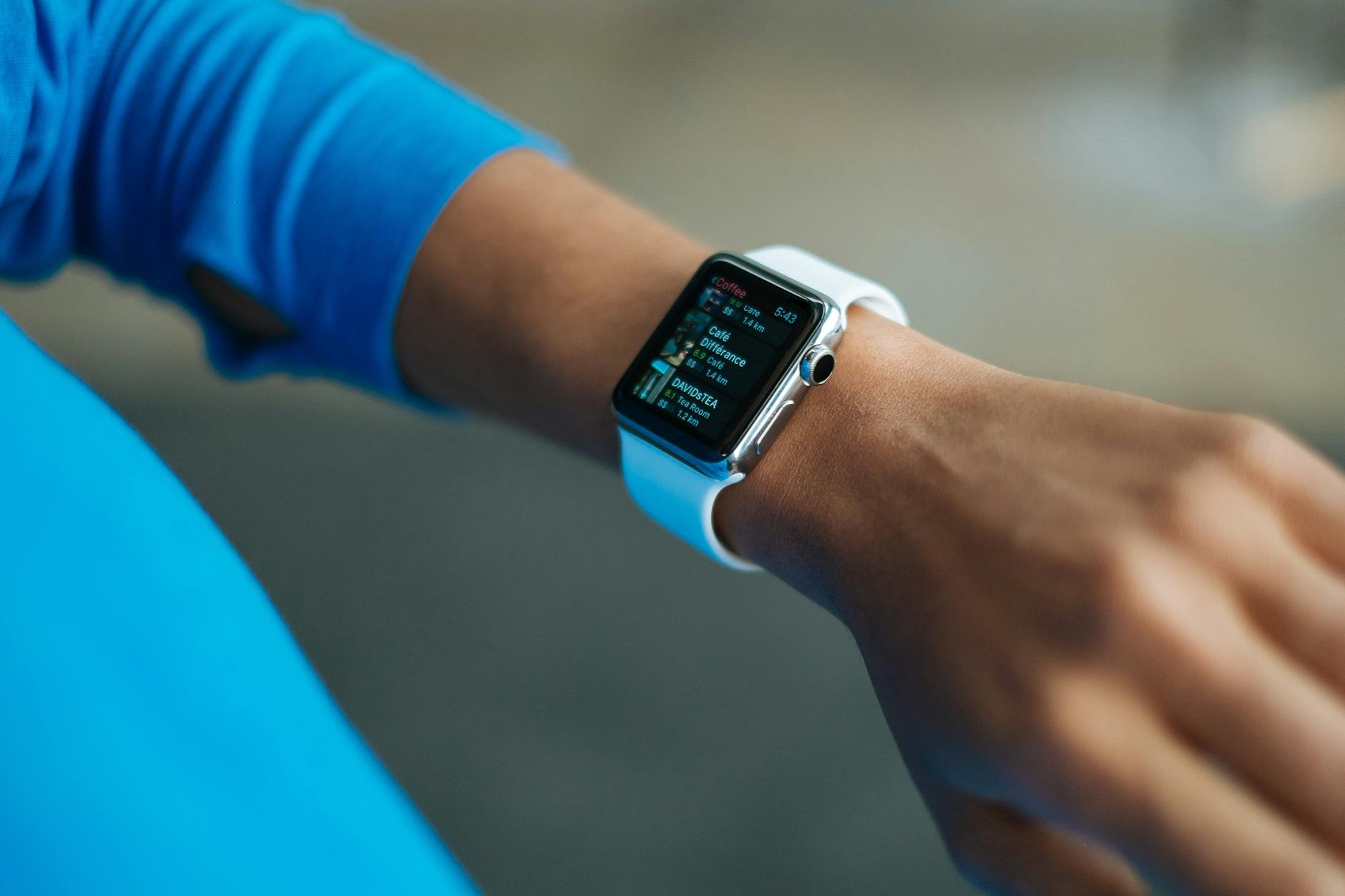
Zumba has developed its own app, available on Google Play, that integrates directly with Wear OS smartwatches to record heart rate, burned calories, and steps in real time during Zumba workouts. The advantage of using a purpose-built app is that it is designed around the specific structure of a Zumba class, including warm-up phases, high-intensity intervals, and cool-down periods. Generic fitness tracker apps treat all elevated heart rate periods the same way, but the Zumba app can contextualize your data within the framework of how a class actually flows. The tradeoff is compatibility.
The Zumba app works with Wear OS devices, which means it pairs well with watches from Samsung, Google, and some Mobvoi models, but it will not sync with Garmin, Fitbit, or Apple Watch natively. If you already own a Garmin Venu 3 or a Fitbit Charge 6 and are happy with it, switching ecosystems just for one app rarely makes sense. The better approach for most people is to use their existing tracker’s built-in dance or cardio mode, then compare those readings against a MET-based calculator once or twice to understand how far off their device tends to be. That calibration step, done even informally, gives you a mental adjustment factor that makes every future reading more useful.
Why Your Zumba Calorie Count Might Be Misleading
One of the most common traps with calorie tracking during Zumba is taking the number on your wrist at face value and using it to justify food intake. If your tracker says you burned 550 calories but the real number was closer to 420, eating back all 550 calories puts you in a surplus rather than a deficit. This is not a hypothetical scenario. The gap between reported and actual burn is large enough with dance workouts that it can completely undermine a calorie-deficit strategy if you are not accounting for it. Another issue is that fitness trackers report total calories, which includes your basal metabolic rate during that hour, not just the additional calories burned from exercise. You would have burned 60 to 80 calories during that hour just sitting on the couch, and most tracker displays do not subtract that baseline.
Some apps distinguish between total and active calories in their detailed summaries, but the big number shown on the post-workout screen is almost always the total figure. If you are logging exercise calories in a food diary app, make sure you understand which number you are entering. Heart rate drift can also distort Zumba calorie estimates. As a class progresses and your body heats up, your heart rate can climb even if your actual effort level stays the same or decreases during a cool-down song. Trackers that rely heavily on heart rate will interpret this drift as continued high-intensity effort, inflating the calorie count for the back half of the session. Chest strap heart rate monitors tend to be more accurate than wrist-based optical sensors in these situations, though wearing one adds a layer of inconvenience that most casual Zumba participants are not interested in.

How to Use MET-Based Calculations as a Reality Check
If you want a quick sanity check on your tracker’s calorie estimate, the MET formula is straightforward. Multiply the MET value of the activity by your body weight in kilograms by the duration in hours. For standard Zumba at around 6.5 METs, a 70-kilogram person doing a 60-minute class would calculate 6.5 times 70 times 1.0, which equals 455 calories. For high-intensity Zumba at 8.0 METs, the same person gets 560 calories.
These figures have an accuracy margin of 10 to 15 percent, which is tight enough for practical nutrition planning. Running this calculation once or twice alongside your tracker data gives you a useful reference point. If your Fitbit consistently reports 15 percent higher than the MET calculation, you can mentally discount future readings by that margin without needing to pull out a calculator after every class. The goal is not obsessive precision but rather a realistic ballpark that keeps your dietary decisions grounded in something closer to reality than a number generated by a proprietary algorithm you cannot see or verify.
The Future of Calorie Tracking for Dance Fitness
Fitness tracker manufacturers are increasingly building activity-specific algorithms rather than applying one-size-fits-all models to every workout type. Garmin and Samsung have both introduced dance-specific activity modes in recent years, and the trend suggests that calorie estimates for non-running activities will continue to improve as companies collect more training data from real-world dance workouts. Sensor technology is also advancing, with some 2026 models incorporating multi-wavelength optical sensors that provide more stable heart rate readings during the kind of rapid arm movements that plague current devices during Zumba.
The integration between class-specific apps like the Zumba app and wearable hardware is another area worth watching. As Wear OS adoption grows and more fitness brands open their APIs, the possibility of combining a best-in-class tracker with a purpose-built workout app becomes more realistic. For now, the best approach remains a pragmatic one: wear a decent tracker, understand its limitations, cross-reference with MET calculations when accuracy matters, and focus more on consistency and trends than on any single session’s calorie number.
Conclusion
Tracking calories burned during Zumba comes down to accepting a range rather than chasing an exact number. Research puts a typical 60-minute class at 300 to 600 calories, with most participants falling between 400 and 550, and your body weight, the class format, and your effort level determine where you land within that window. Fitness trackers like the Garmin Venu 3, Fitbit Charge 6, and budget options like the Amazfit Active 2 all provide useful heart rate and calorie data, but none of them are perfectly accurate, and the same workout can produce readings that differ by 100 calories or more between devices.
The most effective strategy is to pick a tracker you will actually wear consistently, use its data to compare your own sessions over time, and occasionally cross-reference with a MET-based calculation to keep your expectations realistic. If you are using calorie data to inform your eating, err on the conservative side of whatever your device reports. Zumba is a genuinely effective cardiovascular workout regardless of the exact number on your screen, and the best tracking approach is one that keeps you informed without turning every class into an accounting exercise.