The features that matter most in a high-quality walking shoe come down to five fundamentals: cushioning with adequate shock absorption, proper arch support, an appropriate heel-to-toe drop, a roomy anatomical toe box, and a durable outsole with reliable traction. Get these right and you protect your joints, maintain natural biomechanics, and actually enjoy putting in miles on foot. Get them wrong — say, by grabbing a stylish flat with zero midsole support — and you are inviting plantar fasciitis, knee pain, and blisters that will sideline your walking routine within weeks. The Brooks Ghost Max 3, for instance, uses a nitrogen-infused DNA Loft v3 midsole that delivers plush cushioning that “never bottoms out, even after 50+ hours of testing on pavement and uneven trail surfaces,” according to OutdoorGearLab.
That is the kind of engineering you should be looking for, not just brand recognition. This article breaks down each critical feature in detail so you can evaluate any walking shoe on the shelf — or online — with confidence. We will cover how midsole stack height and heel-to-toe drop affect your stride, why arch support is not optional, how weight and fit influence long-term comfort, and which outsole materials actually hold up over hundreds of miles. Along the way, we will reference specific models that earned top marks in lab testing for 2026, including the Skechers Arch Fit 2.0, the HOKA Bondi SR, and the Nike Motiva, so you have real benchmarks rather than vague advice.
Table of Contents
- What Cushioning Features Should You Prioritize in a High-Quality Walking Shoe?
- How Arch Support and Stability Prevent Long-Term Foot Problems
- Why Heel-to-Toe Drop Matters More Than Most Walkers Realize
- How to Find the Right Weight and Fit for Daily Walking Shoes
- Traction and Outsole Durability — Where Walking Shoes Often Fall Short
- Notable Expert Picks for Walking Shoes in 2026
- What the Future of Walking Shoe Technology Looks Like
- Conclusion
What Cushioning Features Should You Prioritize in a High-Quality Walking Shoe?
Cushioning is the single most important feature separating a quality walking shoe from a cheap one, and understanding how it works helps you shop smarter. Every time your heel strikes the ground during a walk, impact forces travel upward through your feet, ankles, knees, and hips. A well-cushioned midsole absorbs a significant portion of that shock before it reaches your joints. Max-cushioned shoes accomplish this with foam midsoles that have stack heights of at least 30mm — that is the distance measured from the ground to where your foot actually sits inside the shoe. For context, a typical casual sneaker might have a stack height closer to 18–22mm, which means noticeably less material standing between your skeleton and the pavement. Not all foam is created equal, though. The Brooks Ghost Max 3 uses nitrogen-infused foam, which maintains its responsiveness and does not compress into a flat, dead slab after a few months of regular use.
Cheaper EVA foams tend to pack out faster, losing their cushioning properties well before the outsole wears through. If you are walking three or more miles daily, that distinction matters enormously by month four or five. The Skechers Arch Fit 2.0 was lab-tested as the cushioned walking shoe with the best shock absorption, with arch support that “perfectly contours to the feet,” according to RunRepeat. That combination of cushioning and contouring is what separates a shoe that merely feels soft in the store from one that actually protects your body over thousands of steps. One thing to watch: more cushioning is not always better. Extremely thick midsoles can reduce ground feel and proprioception, making it harder to sense uneven terrain underfoot. If you primarily walk on sidewalks and paved trails, max cushioning is a clear advantage. If you frequently walk on rocky or uneven natural surfaces, you may want moderate cushioning with a slightly lower stack height so your foot can respond to changes in the ground more naturally.
How Arch Support and Stability Prevent Long-Term Foot Problems
Arch support is not a luxury feature or something only people with flat feet need to think about. during the walking gait cycle, your arch flexes and rebounds with every step, distributing pressure across the foot. Proper arch support ensures that pressure is spread evenly rather than concentrated on the heel and ball of the foot, which lessens impact forces on both the feet and legs over the course of a walk. A structured, well-padded heel counter — the rigid piece at the back of the shoe that wraps around your heel — works in concert with arch support to provide secure heel hold and overall foot stability, preventing the lateral wobble that leads to ankle sprains and Achilles irritation. The Skechers Arch Fit 2.0 stands out in this category specifically because its arch contour was developed using podiatric data, and independent testing confirmed its shock absorption leads the cushioned walking shoe category.
However, if you have unusually high arches or have been diagnosed with a specific structural issue like severe overpronation, an off-the-shelf arch support — even a good one — may not be sufficient. In those cases, a walking shoe with a removable insole is essential, because it allows you to swap in a custom orthotic prescribed by a podiatrist without losing the shoe’s other features like cushioning and traction. There is also a common misconception that stability shoes are only for older walkers or people recovering from injuries. In reality, anyone who walks more than 30 minutes at a time benefits from a shoe that resists excessive inward rolling of the foot. The difference between a neutral shoe and a stability shoe is often subtle — a slightly firmer foam density on the medial side, a wider base, a more pronounced heel counter — but over thousands of steps, that subtle difference compounds into meaningfully less fatigue and joint stress.
Why Heel-to-Toe Drop Matters More Than Most Walkers Realize
Heel-to-toe drop — the difference in height between the heel and forefoot of a shoe — directly influences how your foot strikes the ground and how much strain your Achilles tendon absorbs. Traditional walking shoes typically feature drops between 8 and 12mm, which positions the heel slightly higher than the toes and helps reduce strain on the Achilles tendon during the heel-strike phase of the gait cycle. Experts recommend a low-to-mid heel-to-toe drop for optimal walking biomechanics, which generally means staying within that 8–12mm range for most people. The Nike Motiva is a useful example here.
As Nike’s first dedicated walking shoe, it was specifically engineered with smooth heel-to-toe transitions in mind, earning praise from OutdoorGearLab for its luxurious cushion and robust outsole alongside those transitions. That “smooth transition” language you see in reviews is describing what happens when the drop, rocker geometry, and midsole flex work together so your foot rolls naturally from heel strike through toe-off without any dead spots or abrupt shifts in stiffness. A word of caution: if you have been wearing zero-drop shoes (completely flat, no height difference between heel and forefoot), jumping straight into a 12mm drop shoe can actually cause calf and Achilles discomfort because it changes the angle at which those tissues are loaded. The reverse is also true — going from a high-drop shoe to a minimal-drop shoe too quickly is a common cause of Achilles tendinitis in walkers who are chasing trends. Transition gradually, adding or subtracting no more than 2–4mm of drop at a time, and give your body two to three weeks to adapt before making another change.
How to Find the Right Weight and Fit for Daily Walking Shoes
Weight and fit are where personal preference and biomechanical reality intersect, and getting this balance right determines whether a shoe feels like an extension of your foot or a burden strapped to it. Daily walking shoes weighing 7 to 10 ounces generally provide the best balance of features and comfort. Below 7 ounces, you start sacrificing cushioning material and outsole durability — the shoe may feel nimble at first but will break down faster and offer less protection. Above 10 ounces, the cumulative weight over a long walk creates unnecessary fatigue in the hip flexors and shins, particularly for people logging five miles or more in a session. An anatomical toe box is one of those features you do not fully appreciate until you have walked in a shoe that lacks one. A proper toe box allows your toes to sit naturally rather than being pushed inward, which means your forefoot can splay slightly on each step to help with balance and push-off.
Walking shoes should be designed with proper biomechanics in mind, prioritizing natural foot movement over a tapered, fashion-forward silhouette. If you trace your bare foot on a piece of paper and then place the shoe on top of that outline, the shoe should be at least as wide as your foot at the widest point of the toes. Many walkers — especially those coming from dress shoes or narrow athletic shoes — are surprised to discover they have been wearing shoes a half-size too small or a width too narrow for years. The tradeoff is straightforward: a roomier toe box in a lightweight shoe sometimes means thinner upper materials, which can reduce durability. A more structured, durable upper adds weight. For most daily walkers, a shoe in the 8–9 ounce range with a mesh or engineered knit upper and a moderately wide toe box hits the sweet spot. Save the ultralight racing-inspired shoes for short recovery walks and invest in something slightly more substantial for your regular routes.
Traction and Outsole Durability — Where Walking Shoes Often Fall Short
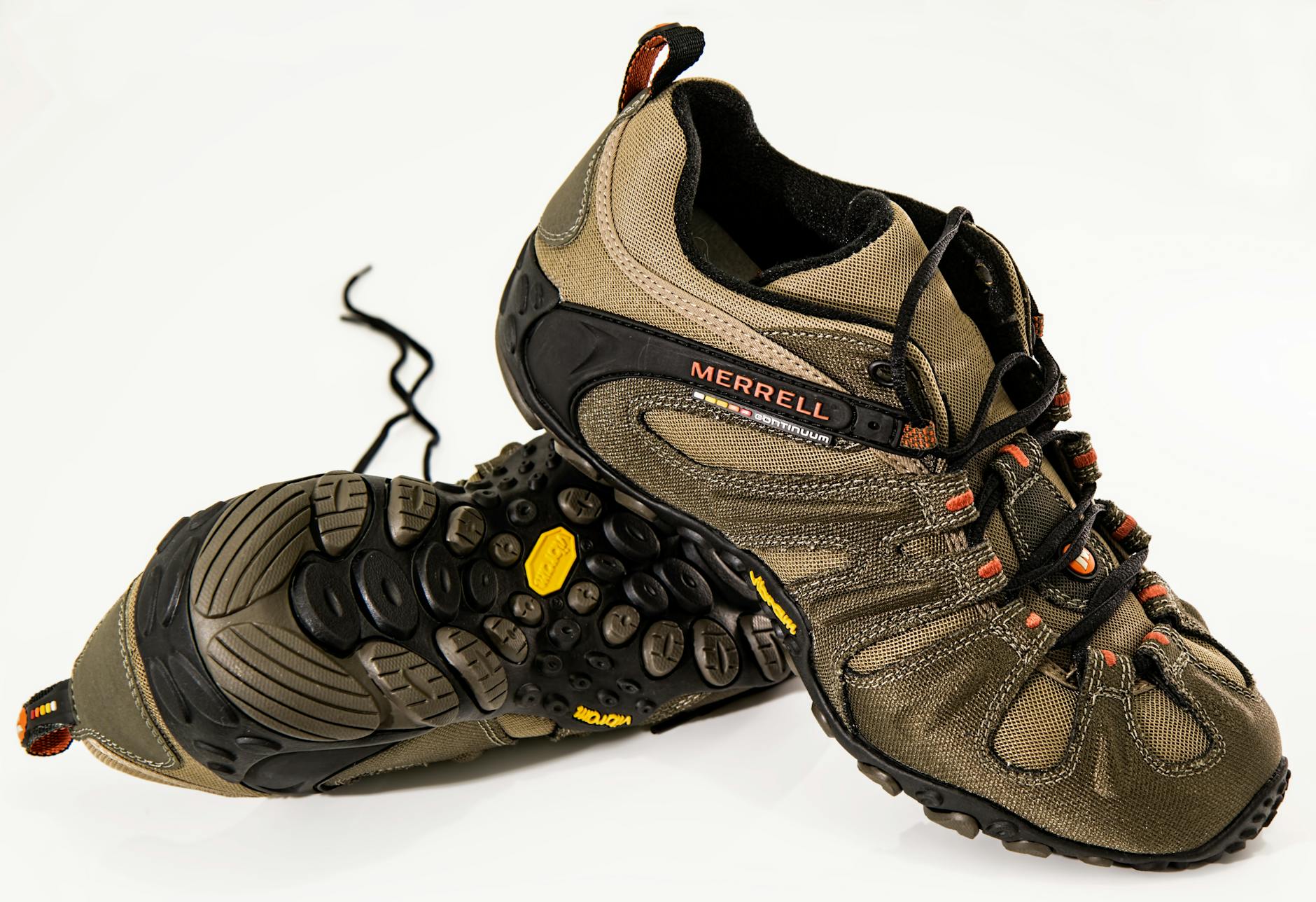
The outsole is the most overlooked component when people shop for walking shoes, which is unfortunate because it is the part of the shoe that actually contacts the ground and takes the most direct abuse. Outsole composition and tread pattern are significant factors in traction quality, and they vary widely even among shoes at the same price point. A flat, shallow-lugged outsole may feel fine on dry concrete but becomes dangerously slick on wet tile, painted crosswalks, or damp leaves — the exact surfaces urban and suburban walkers encounter regularly. The HOKA Bondi SR is noted for being cushioned, supportive, durable, and slip-resistant, according to RunRepeat. That “SR” stands for slip-resistant, and it reflects an outsole rubber compound and tread pattern specifically designed to maintain grip on surfaces where standard outsoles fail.
If you walk in environments with any moisture — morning dew on sidewalks, rainy commutes, wet grocery store floors — slip resistance should be near the top of your checklist, not an afterthought. Durability is the other half of the outsole equation. Leather uppers are more durable than synthetic, though modern materials like Kevlar offer impressive abrasion resistance in high-wear zones. On the outsole itself, blown rubber wears faster than carbon rubber, and some shoes use a combination — softer rubber in the forefoot for flexibility and harder rubber in the heel for longevity. A good walking shoe outsole should last 300 to 500 miles before the tread becomes noticeably worn. If your outsoles are going bald in under 200 miles, the shoe was not built for the kind of mileage serious walkers put in, regardless of how good the cushioning feels.
Notable Expert Picks for Walking Shoes in 2026
If you want a shortcut through the research, four models consistently rose to the top of independent lab testing and expert evaluations for 2026. The Nike Motiva, Nike’s first dedicated walking shoe, was praised for its luxurious cushion, smooth transitions, and robust outsole by OutdoorGearLab, making it a strong all-around pick for pavement walkers. The Skechers Arch Fit 2.0 earned best-in-class marks for shock absorption and arch support, making it particularly well-suited for walkers dealing with plantar fascia discomfort or those who spend long hours on their feet beyond their walking sessions. The HOKA Bondi SR took top marks for versatility and slip resistance, a standout choice for anyone who walks across varied indoor and outdoor surfaces.
And the Brooks Ghost Max 3 earned the nod for best overall cushioning, with its nitrogen-infused midsole delivering consistent performance across extended testing. Each of these shoes represents a different priority — transitions, arch support, traction, or cushioning depth — which is why no single “best walking shoe” exists. The right shoe depends on which feature matters most for your walking surfaces, foot structure, and distance goals. Try on at least two from this list, walk around the store for ten minutes in each, and pay attention to which one you forget you are wearing. That is usually the correct choice.
What the Future of Walking Shoe Technology Looks Like
Walking shoe design has changed more in the past three years than in the previous decade, driven partly by the running shoe industry’s innovations trickling into the walking category. Nitrogen-infused foams, 3D-printed midsole geometries, and outsole compounds borrowed from tire technology are all making their way into mainstream walking shoes.
The fact that Nike created its first purpose-built walking shoe with the Motiva — rather than simply repackaging a running shoe — signals that major brands are finally treating walking as its own biomechanical discipline rather than a slower version of running. Expect to see more sensor-integrated walking shoes in the next few years, with embedded pressure mapping that syncs to your phone and provides gait feedback in real time. Whether that technology delivers meaningful value for the average daily walker remains to be seen, but the core features — cushioning, arch support, proper drop, good fit, and durable traction — will remain the foundation of any high-quality walking shoe regardless of what electronics get layered on top.
Conclusion
A high-quality walking shoe is defined by measurable, testable features: midsole cushioning with adequate stack height, arch support that distributes pressure evenly, a heel-to-toe drop in the 8–12mm range, a weight between 7 and 10 ounces, an anatomical toe box that allows natural foot splay, and an outsole with reliable traction and durability. Models like the Brooks Ghost Max 3, Skechers Arch Fit 2.0, HOKA Bondi SR, and Nike Motiva each excel in one or more of these categories, giving you proven starting points rather than guesswork. The most important next step is to identify which one or two features matter most for your specific situation — your walking surfaces, your foot shape, any existing discomfort — and prioritize those when shopping.
Visit a store that allows you to walk in the shoes for more than a quick lap around a carpeted aisle. And replace your walking shoes every 300 to 500 miles, because even the best cushioning and traction compounds degrade with use. Your joints will thank you for the investment.