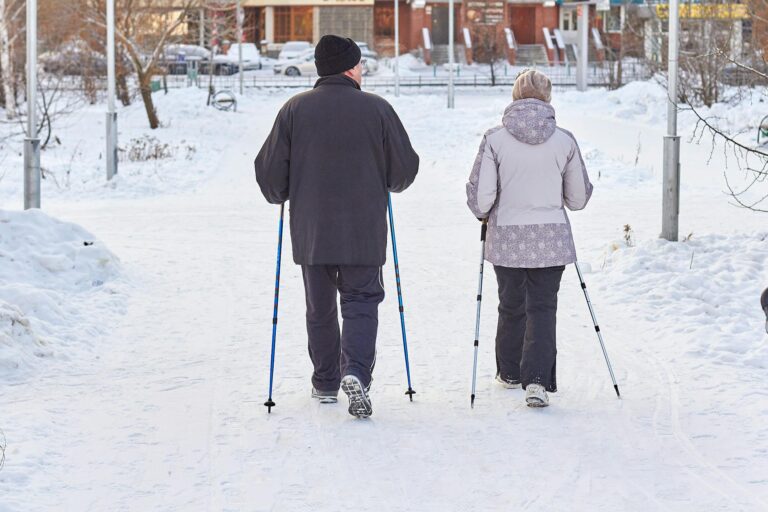
Walking is not a consolation prize for people who cannot run. A global review of 57 studies published in The Lancet Public Health found that walking just 7,000 steps per day cuts the risk of early death by roughly 47 percent — a figure that surprises even longtime fitness enthusiasts who have been told for years that real exercise requires sweat, speed, and suffering. When researchers compare walking and running head to head, controlling for total energy expenditure, walking produces comparable reductions in hypertension, high cholesterol, diabetes, and coronary heart disease. The phrase “just walking” undersells one of the most effective, accessible, and sustainable forms of cardiovascular exercise available to any human with functioning legs.
That does not mean walking is a magic bullet. It does not adequately train all muscle groups, it will not build the kind of upper-body or core strength that protects against injury as you age, and the way you walk — how long, how fast, and how continuously — matters far more than most casual walkers realize. A five-minute stroll to the mailbox and back is not the same thing as a 30-minute brisk walk through your neighborhood, and the research now quantifies exactly how large that gap is. This article breaks down what the latest science says about walking for fitness, including the step thresholds that actually matter, why walk duration changes your outcomes dramatically, how walking stacks up against running for chronic disease prevention, what walking can and cannot do for weight loss, and where walking falls short as a standalone fitness program.
Table of Contents
- How Many Steps Per Day Do You Actually Need for Real Health Benefits?
- Why Your Walking Pattern Matters More Than Your Step Count
- Walking vs. Running — What the Research Actually Shows
- How to Walk for Maximum Calorie Burn and Weight Loss
- Where Walking Falls Short as a Complete Fitness Program
- The Walking Trend Is Real — and It Is Not Just a Fad
- What the Future of Walking Research Looks Like
- Conclusion
How Many Steps Per Day Do You Actually Need for Real Health Benefits?
The 10,000-step target that lives on your fitness tracker was never based on medical research. It originated from a 1965 Japanese marketing campaign for a pedometer called Manpo-kei, which translates to “10,000-step meter.” The actual science points to a lower and more nuanced number. A meta-analysis of 15 international cohorts found that each additional 1,000 steps per day is associated with a 15 percent decrease in all-cause mortality, with the most significant gains happening in the first several thousand steps. For adults under 60, the mortality benefit levels off between 8,000 and 10,000 steps per day. For adults over 60, it levels off between 6,000 and 8,000 steps, according to research published in JAMA Network Open. What this means in practice is that a 65-year-old retiree walking 7,000 steps a day is already capturing most of the longevity benefit available from walking.
Going from 3,000 to 7,000 steps is a dramatic health improvement. Going from 7,000 to 12,000 is a much smaller one. If you are currently sedentary, the most impactful change you can make is not training for a marathon — it is adding a single 30- to 40-minute walk to your daily routine. The CDC estimates that 110,000 deaths per year could be prevented if U.S. adults aged 40 and older increased their moderate-to-vigorous physical activity. Walking is the simplest path to that threshold for the vast majority of people who are not currently meeting it.

Why Your Walking Pattern Matters More Than Your Step Count
Not all steps are created equal, and this is where many well-intentioned walkers leave significant health benefits on the table. A December 2025 study found that walking in sustained bouts of 10 to 15 minutes lowers cardiovascular disease risk by up to two-thirds compared to the same number of steps accumulated in short, fragmented bursts throughout the day. The difference is not marginal — it is enormous. The data on mortality risk makes this even more concrete. Participants who walked only in bouts shorter than five minutes had an all-cause mortality risk of 4.36 percent.
Those who walked in bouts of five to ten minutes dropped to 1.83 percent. That means the person who takes three 15-minute walks per day is getting a fundamentally different health outcome than the person who accumulates the same step count by pacing around the kitchen, walking to the printer, and wandering through a parking lot. If you check your step count at the end of the day and feel satisfied by the number, but you never actually went on a real walk, you may be overestimating your activity level. However, if you have mobility limitations, chronic pain, or a condition that makes sustained walking difficult, fragmented steps are still far better than no steps. The research shows diminishing returns from longer bouts, not zero returns from shorter ones. Start where you are, but if you are physically able to walk for 10 or more uninterrupted minutes, that is the format you should prioritize.
Walking vs. Running — What the Research Actually Shows
The rivalry between walkers and runners is largely a cultural invention, not a scientific one. A study published in Arteriosclerosis, Thrombosis, and Vascular Biology compared the two activities using equivalent energy expenditure and found that walking reduced the risk of hypertension by 7.2 percent, high cholesterol by 7.0 percent, diabetes by 12.3 percent, and coronary heart disease by 9.3 percent per METh per day. Those numbers were comparable to — and in the case of diabetes, better than — the reductions achieved by running. The critical caveat is time. Running burns roughly double the calories per unit of time, which means you can achieve the same energy expenditure in half the duration. A 30-minute run and a 60-minute walk may produce similar health outcomes, but the runner finishes sooner.
For people with packed schedules, that efficiency matters. On the other hand, running carries significantly higher injury risk. Stress fractures, plantar fasciitis, IT band syndrome, and knee injuries are common among runners and relatively rare among walkers. If you are over 50, returning to exercise after a long break, or carrying significant extra weight, walking offers a far better risk-to-reward ratio. Consider a practical example: a 45-year-old office worker who runs three days a week for 30 minutes each time might burn about 900 calories and get meaningful cardiovascular benefits. That same person could walk briskly for 45 minutes five days a week, burn a comparable number of calories, reduce chronic disease risk by similar margins, and face a fraction of the injury risk. Neither approach is wrong, but the assumption that running is inherently superior does not survive contact with the research.

How to Walk for Maximum Calorie Burn and Weight Loss
Walking one mile burns approximately 80 to 120 calories for most adults, with the variation driven primarily by body weight. A 140-pound person will burn closer to the low end, while a 200-pound person will burn closer to the high end. Brisk walking at 4 miles per hour for 30 minutes burns roughly 100 to 150 calories. That may sound modest compared to the 300-plus calories a vigorous run can burn in the same time frame, but the compounding effect of daily walking is substantial. Five brisk 30-minute walks per week adds up to 500 to 750 calories burned, or roughly a pound of fat loss every five to seven weeks from walking alone — without any dietary changes. Speed is a meaningful lever. Increasing your walking pace from 3.0 to 4.0 miles per hour raises calorie burn by about 40 percent.
The CDC defines brisk walking as completing a mile in 15 to 24 minutes, which qualifies as moderate-intensity physical activity under federal guidelines. If you are walking slower than a 24-minute mile, you are technically in the light-intensity category, and you will need to walk longer to achieve the same benefits. One simple test: if you can carry on a full conversation without any breathlessness, you are probably not walking briskly enough to qualify as moderate intensity. The tradeoff is straightforward. Walking is gentler, more sustainable, and easier to maintain as a daily habit — but it requires more time to achieve the same caloric deficit as higher-intensity exercise. For weight loss specifically, walking works best as a complement to dietary changes rather than a standalone strategy. Expecting walking alone to produce rapid weight loss is a setup for disappointment.
Where Walking Falls Short as a Complete Fitness Program
Walking is outstanding cardiovascular exercise, but it is not a complete fitness program, and pretending otherwise does walkers a disservice. As TIME has reported, walking does not adequately exercise all muscle groups. It primarily works the lower body — calves, quadriceps, hamstrings, and glutes — while doing very little for your chest, back, shoulders, arms, or core. Over time, this imbalance can contribute to postural problems, reduced upper-body strength, and increased vulnerability to falls and fractures, particularly in older adults. Strength training provides benefits that walking simply cannot deliver, including lowering injury risk, improving mobility and flexibility, preserving bone density, and maintaining the muscle mass that naturally declines with age.
The CDC’s official guidelines recommend at least 150 minutes per week of moderate-intensity aerobic activity like brisk walking, and the American Heart Association sets the same threshold — but both organizations also recommend muscle-strengthening activities on two or more days per week. Meeting only the aerobic guideline while ignoring the strength guideline leaves a significant gap in your fitness. A realistic warning: if you are over 40 and walking is your only form of exercise, you are likely losing muscle mass at a rate of roughly 3 to 5 percent per decade. Walking will not reverse or even slow that trend. Two days of basic resistance training — bodyweight exercises, dumbbells, resistance bands, or machines — can address this directly without requiring a gym membership or a dramatic lifestyle change.

The Walking Trend Is Real — and It Is Not Just a Fad
Walking as a deliberate fitness strategy is experiencing a cultural moment. Google search interest in “Japanese walking” surged by 2,986 percent heading into 2026, and searches for walking yoga increased by 2,414 percent in 2025, according to data analyzed by Athletech News. These are not gimmicks. Japanese walking, which emphasizes posture, arm movement, and sustained pace, aligns well with the research showing that intentional, structured walking produces far better outcomes than passive, incidental movement.
The broader trend reflects a shift in how people think about exercise. After years of high-intensity interval training, boutique fitness studios, and workout culture that treated anything below maximum effort as wasted time, many people are discovering that consistent moderate-intensity activity produces better long-term adherence and comparable health outcomes. Walking is not trending because it is trendy. It is trending because people are finally paying attention to what the evidence has been saying for decades.
What the Future of Walking Research Looks Like
The science of walking is becoming more granular. Researchers are no longer just asking whether walking is good for you — they are investigating exactly which walking patterns, speeds, durations, and terrains produce the best outcomes for specific populations. The December 2025 study on bout length represents this new wave of research, and more studies are expected to examine how factors like walking surface, elevation changes, and time of day interact with cardiovascular outcomes. For the average person, the practical takeaway is already clear.
Walk more, walk longer without stopping, walk briskly, and pair your walking habit with some form of resistance training. The research is unlikely to reverse these conclusions. What future studies will likely refine is the dose-response relationship for specific conditions — how much walking is optimal for blood sugar management versus blood pressure versus cognitive health. That precision will help doctors write more targeted exercise prescriptions, but the fundamental message will remain the same: walking is serious exercise, and dismissing it is a mistake.
Conclusion
The evidence is no longer ambiguous. Walking 7,000 steps per day in sustained bouts of 10 minutes or more can cut your risk of early death by nearly half, reduce chronic disease risk at rates comparable to running, and meet federal guidelines for moderate-intensity physical activity. It requires no equipment, no membership, no coach, and no recovery days. The barrier to entry is essentially zero, and the injury risk is lower than virtually any other form of cardiovascular exercise. But walking alone is not enough.
Pair it with two days of basic strength training per week to address the muscle groups walking does not reach, and be honest about your walking intensity and duration. A 7,000-step day accumulated in 90-second bursts is not the same as a 7,000-step day built around two or three focused walks. Walk with intention, walk at a pace that slightly challenges your breathing, and stop treating walking as something you do only when you cannot do “real” exercise. It is real exercise. The research is settled on that point.