The best treatment for IT band syndrome is a combination of targeted hip-strengthening exercises, activity modification, and addressing the biomechanical factors that caused the problem in the first place. Foam rolling and rest alone will not fix it. The iliotibial band itself is a thick, fibrous sheet of connective tissue that runs from the hip to just below the knee, and when it becomes irritated — usually at the lateral femoral epicondyle near the outer knee — the solution lies not in stretching or massaging the band itself, but in correcting the weakness and movement patterns that placed excessive stress on it.
A runner logging 40 miles per week who suddenly develops a sharp, burning pain on the outside of the knee during every run is a textbook case, and that runner will typically find the most relief from a progressive hip abductor strengthening program combined with a temporary reduction in training volume. This article breaks down the specific exercises that research supports, explains why some popular treatments fall short, walks through how to modify your training during recovery, and covers when you should consider seeing a specialist. Whether you are dealing with your first bout of IT band pain or a frustrating recurrence, understanding the root causes will help you treat it effectively and reduce the risk of it coming back.
Table of Contents
- What Is the Most Effective Exercise-Based Treatment for IT Band Syndrome?
- Why Foam Rolling and Stretching the IT Band Are Not Enough
- How Training Errors Contribute to IT Band Syndrome
- How to Modify Your Training While Recovering from IT Band Syndrome
- When IT Band Syndrome Does Not Respond to Conservative Treatment
- The Role of Running Gait and Footwear
- Preventing IT Band Syndrome from Coming Back
- Conclusion
- Frequently Asked Questions
What Is the Most Effective Exercise-Based Treatment for IT Band Syndrome?
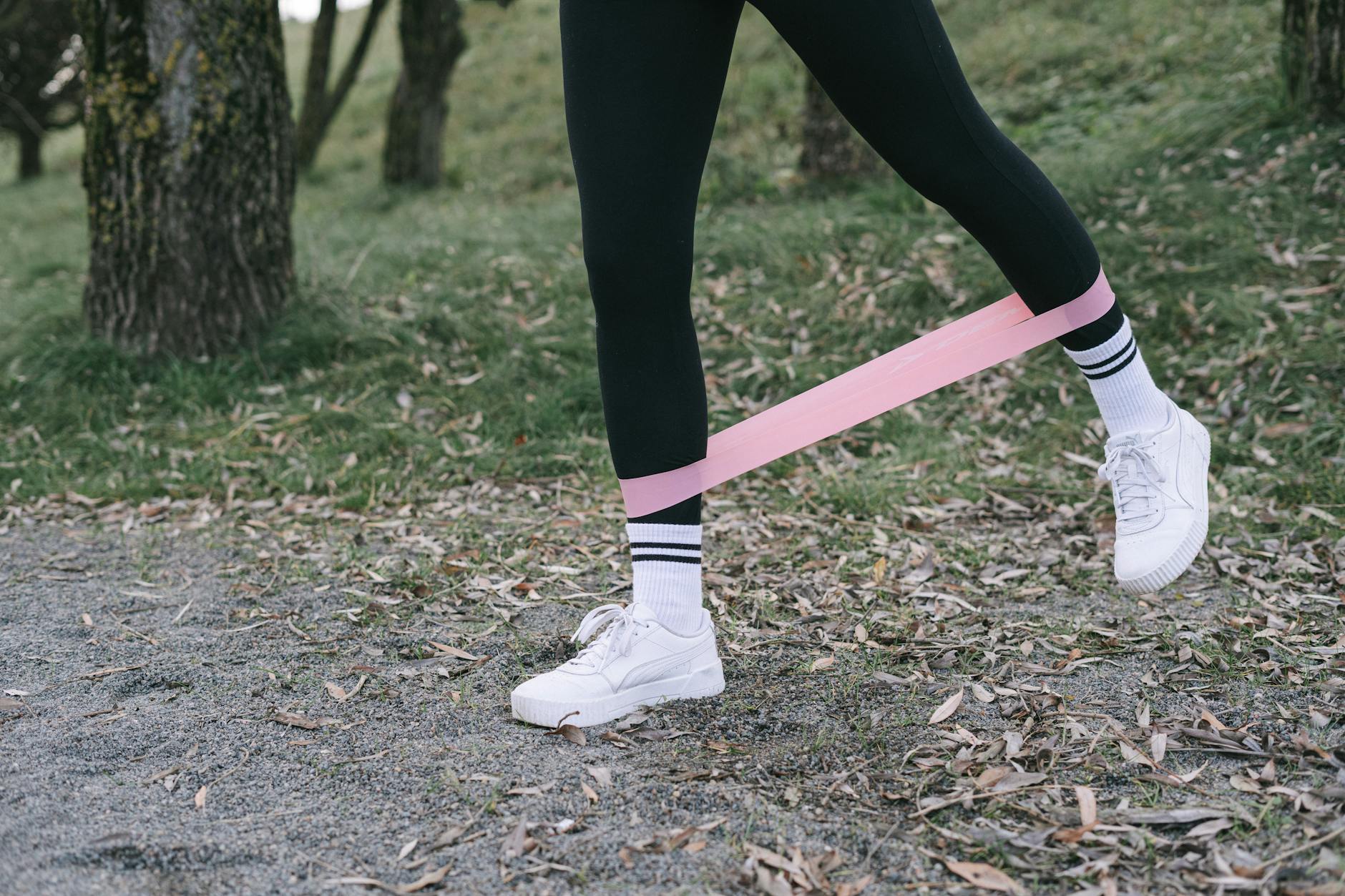
Hip strengthening — specifically targeting the gluteus medius and gluteus maximus — is the most well-supported treatment for IT band syndrome in runners. The logic is straightforward: when the hip abductors are weak or fatiguing during a run, the pelvis drops on the opposite side with each stride, increasing the compressive load where the IT band crosses the lateral knee. Exercises like side-lying hip abduction, clamshells, single-leg bridges, and lateral band walks have all shown benefit in clinical settings. A physical therapist working with a marathoner, for instance, might start with simple side-lying leg raises performed daily and progress over several weeks to single-leg deadlifts and lateral step-downs as strength improves. What distinguishes effective rehab from generic “do some glute exercises” advice is progression and consistency. Performing three sets of clamshells once a week will not meaningfully change your running mechanics.
The exercises need to be performed frequently — most rehabilitation protocols call for daily work initially — and they need to become progressively more challenging. Bodyweight work should eventually give way to resistance band and weighted variations. The goal is not just to activate the glutes in isolation but to build enough endurance and strength that the hip stabilizers hold up over the duration of a long run. It is also worth noting that core stability work plays a supporting role. A weak core contributes to trunk sway and pelvic instability during running, which places additional strain on the IT band. Planks, side planks, and dead bugs are commonly included in IT band rehabilitation programs not because they treat the band directly, but because they improve the overall stability of the kinetic chain.

Why Foam Rolling and Stretching the IT Band Are Not Enough
Foam rolling the IT band is one of the most common pieces of advice runners receive, and while it may provide temporary pain relief, it does not address the underlying problem. The IT band is not a muscle — it is an extremely dense, inelastic band of fascia. Research has shown that the force required to meaningfully deform the IT band would be far beyond what a foam roller can deliver. What foam rolling likely does is stimulate mechanoreceptors and temporarily reduce the sensation of tightness, which can feel good after a run but does not change the structural or biomechanical issue causing the pain. Stretching presents a similar problem. Traditional IT band stretches — the standing cross-legged lean, for example — may create a sensation of stretch along the outer thigh, but the evidence that they produce meaningful lengthening of the band is weak.
However, if stretching the hip flexors, quads, or hamstrings feels beneficial and helps you maintain range of motion, there is no reason to stop. The key distinction is that stretching and rolling should be viewed as supplementary comfort measures, not as the core of your treatment plan. If you have been foam rolling for weeks without improvement, that is a strong signal that you need to shift your focus to strengthening. One important caveat: some runners confuse IT band syndrome with other conditions. Lateral meniscus injuries, popliteus tendinopathy, and even referred pain from the lumbar spine can mimic IT band symptoms. If your outer knee pain does not respond to a structured rehab program within four to six weeks, it is worth getting a proper evaluation to confirm the diagnosis.
How Training Errors Contribute to IT Band Syndrome
The majority of IT band syndrome cases in runners are tied to training errors — specifically, doing too much too soon. A sudden increase in weekly mileage, adding hill repeats without adequate preparation, or jumping from flat road running to trail running with lots of camber and uneven terrain can all overload the IT band. One common example is a runner who increases weekly volume by 30 percent in preparation for a race and develops lateral knee pain within two to three weeks of the increase. The classic 10-percent rule for weekly mileage increases exists for exactly this reason. Running surface and terrain also matter. Consistently running on a cambered road — where one side is slightly higher than the other for drainage — creates an asymmetrical load on the hips and knees.
Track running, where every turn is in the same direction, can produce a similar effect. Trail runners may develop IT band issues on the downhill portions of runs, where the knee is under greater compressive force at the point of IT band contact. Varying your surfaces and routes is a simple but often overlooked way to reduce repetitive strain. Speed work deserves specific mention. Faster running paces generally involve greater hip adduction and internal rotation during the stance phase, both of which increase IT band loading. This does not mean you should never run fast, but it does mean that adding intervals or tempo runs should be done gradually and ideally after you have established a solid base of hip strength and running volume.

How to Modify Your Training While Recovering from IT Band Syndrome
The tradeoff every runner faces with IT band syndrome is between resting long enough to let the irritation calm down and maintaining enough fitness that you do not lose months of training. Complete rest is rarely necessary and often counterproductive — sitting on the couch for three weeks does nothing to fix the weakness that caused the problem, and you lose cardiovascular fitness in the process. A better approach is relative rest: reducing your running volume and intensity to a level that does not provoke pain, while filling the gap with cross-training. Cycling, swimming, and pool running are the most commonly recommended alternatives during IT band recovery. Cycling is generally well-tolerated because the knee moves through a different range of motion and the IT band is not loaded in the same way as during running. However, some riders do experience IT band irritation from cycling if their saddle height or cleat position is off, so pay attention to how it feels.
Pool running — running in deep water with a flotation belt — closely mimics the cardiovascular demands of running without the impact, making it one of the best options for maintaining run-specific fitness. When you return to running, start with short, easy efforts on flat terrain. Walk-run intervals are a reasonable first step: something like one minute of running followed by two minutes of walking, repeated for 20 to 30 minutes. If that is pain-free, gradually increase the running intervals and decrease the walking intervals over the course of one to two weeks. The moment you feel the familiar lateral knee sting, back off. Pushing through IT band pain almost always makes it worse and extends the recovery timeline.
When IT Band Syndrome Does Not Respond to Conservative Treatment
Most cases of IT band syndrome resolve within six to eight weeks of consistent strengthening and activity modification. But some cases are stubborn, and it is important to recognize when your approach is not working. If you have been diligent with hip strengthening, modified your training appropriately, and the pain persists beyond two months, you should consult a sports medicine physician or a physical therapist who specializes in running injuries. Corticosteroid injections are sometimes used for IT band syndrome that does not respond to conservative care. They can reduce inflammation and provide a window of reduced pain that allows for more aggressive rehabilitation.
However, they are not a standalone treatment, and repeated injections carry risks including tissue weakening. Platelet-rich plasma injections have also been explored, though the evidence for their effectiveness in IT band syndrome specifically remains limited. Surgical intervention — typically a release or lengthening of the IT band at the knee — is considered a last resort and is only relevant for cases that have failed prolonged conservative management. One warning: be cautious about practitioners who recommend expensive, unproven treatments like extracorporeal shockwave therapy or dry needling as primary interventions for IT band syndrome without first establishing a solid strengthening program. These modalities may have roles as adjuncts, but they should not replace the foundational work of hip and core strengthening. The most effective and least costly approach is almost always the simplest one.
The Role of Running Gait and Footwear
Running form can contribute to IT band stress, and a gait analysis — either through a running clinic or a knowledgeable physical therapist — can reveal patterns worth correcting. Overstriding, where the foot lands well ahead of the body’s center of mass, increases braking forces and tends to exaggerate hip adduction, both of which load the IT band. Increasing cadence by five to ten percent is one of the simplest gait modifications and has been shown to reduce forces at the knee. A runner who naturally runs at 160 steps per minute, for instance, might aim for 168 to 170 and often finds that lateral knee pain diminishes.
Footwear is less directly connected but still worth evaluating. A shoe with significant wear or one that does not match your foot mechanics can alter your loading patterns. If you have been running in the same pair for 400-plus miles, replacing them is a reasonable step. Stability shoes or motion-control shoes may help runners with excessive pronation that contributes to internal rotation of the tibia, but they are not a universal fix.
Preventing IT Band Syndrome from Coming Back
The most important thing to understand about IT band syndrome is that it has a high recurrence rate if the underlying weaknesses are not maintained. Runners who complete a rehab program, feel better, and immediately drop their strengthening routine are the ones who show up in a physical therapist’s office six months later with the same complaint. Hip strengthening should become a permanent part of your routine — not at the intensity of active rehab, but as a maintenance program performed two to three times per week.
Looking ahead, the running medicine community continues to study the role of load management, individualized biomechanical assessment, and wearable technology in preventing overuse injuries like IT band syndrome. As gait analysis tools become more accessible and affordable, runners may be able to identify risk factors earlier, before symptoms develop. But even without technology, the fundamentals remain the same: build hip strength, progress your training gradually, vary your terrain, and listen to your body when it starts to complain.
Conclusion
IT band syndrome is one of the most common and frustrating injuries in distance running, but it is also one of the most treatable when approached correctly. The core of effective treatment is strengthening the hip abductors and glutes, modifying training volume to allow irritation to subside, and addressing any biomechanical or training factors that contributed to the problem. Foam rolling and stretching may feel good, but they are not substitutes for the real work of building strength and correcting movement patterns.
If you are dealing with IT band pain right now, start with daily hip strengthening exercises, cut your running volume in half, and cross-train to maintain fitness. Give it a genuine four to six weeks of consistent effort before drawing conclusions. If progress stalls, get a professional evaluation. And once the pain resolves, keep doing the exercises — the runners who stay healthy long-term are the ones who treat prevention as a non-negotiable part of their training.
Frequently Asked Questions
How long does IT band syndrome take to heal?
Most runners see significant improvement within four to eight weeks of consistent hip strengthening and training modification. However, severe or chronic cases can take three to six months. The timeline depends largely on how quickly you begin a proper strengthening program and how willing you are to reduce running volume during recovery.
Can I run through IT band pain?
Running through sharp or worsening IT band pain is not advisable — it typically prolongs recovery. However, if the discomfort is very mild and does not escalate during or after a run, some careful, reduced-volume running may be acceptable. The key distinction is between mild tightness that resolves quickly and pain that builds as you run.
Is IT band syndrome caused by tight muscles?
Not directly. The IT band itself cannot be meaningfully stretched or loosened because it is dense connective tissue, not muscle. The real issue is usually weakness in the hip stabilizers — particularly the gluteus medius — which causes abnormal loading at the knee. Tightness in surrounding muscles like the hip flexors may be a contributing factor but is not the primary cause.
Do I need a cortisone shot for IT band syndrome?
Most runners do not. Cortisone injections are typically reserved for cases that have not responded to several weeks of conservative treatment. They can reduce inflammation and create a window for more effective rehab, but they do not fix the underlying biomechanical issue and carry risks with repeated use.
Should I switch to a different type of running shoe?
Shoes alone rarely cure IT band syndrome, but worn-out shoes or shoes poorly matched to your foot mechanics can be a contributing factor. If your current pair has significant mileage on it, replacing them is a reasonable step. A gait analysis can help determine whether a different shoe type might reduce abnormal loading.