The best treatment for ankle pain depends on the cause, but for the most common culprit — the ankle sprain — the evidence points to a combination of early ice and compression, short-term anti-inflammatory medication, and structured rehabilitation exercises. That combination, applied consistently in the first days and weeks after injury, gives most runners the fastest path back to training without chronic instability down the road. Consider a runner who rolls an ankle on a trail run: the difference between a two-week recovery and a four-month ordeal often comes down to what happens in the first 48 hours and whether rehab is taken seriously afterward. Ankle sprains are staggeringly common.
Roughly 25,000 occur every day in the United States, affecting about 7 per 1,000 Americans annually, according to NCBI StatPearls. They account for 40 percent of all ankle injuries, and runners are far from immune — basketball players see a 45 percent sprain rate, but any sport involving lateral movement, uneven surfaces, or fatigue puts the joint at risk. Recovery typically takes two to six weeks, though severe ligament tears can stretch that timeline to four months. This article covers the full spectrum of ankle pain treatment, from immediate first aid protocols to physical therapy strategies, professional interventions like steroid injections and shockwave therapy, and the specific considerations for chronic ankle arthritis. Whether you tweaked your ankle on a morning jog or you have been grinding through persistent soreness for months, the goal here is to lay out what actually works, what the latest clinical guidelines recommend, and when it is time to stop self-treating and see a specialist.
Table of Contents
- What Is the Most Effective Immediate Treatment for Ankle Pain?
- How NSAIDs and Medications Fit Into Ankle Pain Recovery
- Why Physical Therapy and Rehabilitation Are the Real Game-Changers
- Bracing, Taping, and Orthotics — Choosing the Right External Support
- When Ankle Pain Becomes Chronic — Advanced Treatment Options
- Red Flags — When to Stop Self-Treating and See a Doctor
- What Updated Guidelines Mean for Runners in 2025 and Beyond
- Conclusion
- Frequently Asked Questions
What Is the Most Effective Immediate Treatment for Ankle Pain?
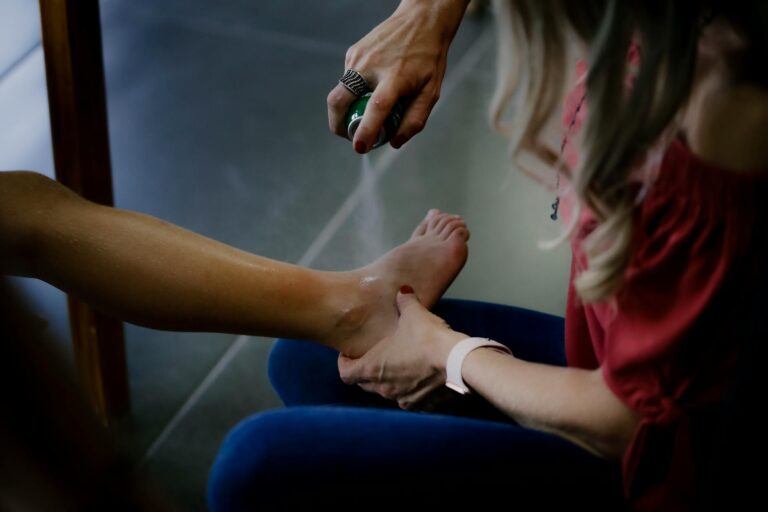
The gold standard for acute ankle injury treatment has evolved from the familiar RICE protocol — rest, ice, compression, elevation — to what clinicians now call the POLICE method: Protection, Optimal Loading, Ice, Compression, and Elevation. The key update, emphasized in a 2024 review published in Joints Journal, is the shift from strict rest to early mobilization and gradual weight-bearing. Complete immobilization for days on end can actually promote stiffness and delay healing. Instead, you protect the joint from further damage while introducing gentle, controlled movement as soon as pain allows. Ice remains a cornerstone.
Applied for 20 minutes every two to three hours in the acute phase, cryotherapy has been shown to reduce pain more effectively than analgesic drugs alone, according to a 2022 systematic review in PMC. Compression with an elastic bandage controls swelling, and elevation — propping the ankle above heart level — helps fluid drain away from the injury site. For a runner who sprains an ankle during a Saturday long run, the practical takeaway is straightforward: get ice on it within the first hour, wrap it, elevate it, and start gentle ankle circles and toe movements the next day if pain permits. The limitation here is that POLICE works best for mild to moderate sprains. If you cannot bear weight at all, if there is significant bruising that spreads rapidly, or if the ankle looks visibly deformed, these are signs of a potential fracture or severe ligament rupture. In those cases, first aid is a stopgap — you need imaging and a professional evaluation before any loading protocol makes sense.

How NSAIDs and Medications Fit Into Ankle Pain Recovery
Non-steroidal anti-inflammatory drugs like ibuprofen and naproxen are highly recommended in the acute phase of ankle sprains. Four high-quality clinical practice guidelines reviewed in a 2022 PRISMA systematic review in PMC all support NSAID use for short-term pain relief and inflammation reduction. For runners, this means a few days of ibuprofen after a sprain is well-supported by evidence — it can reduce swelling enough to allow earlier participation in rehabilitation exercises, which accelerates overall recovery. However, the same guidelines are clear that long-term NSAID use is not recommended. Chronic use carries risks of gastrointestinal bleeding, kidney damage, and cardiovascular complications.
If you find yourself reaching for ibuprofen before every run to manage lingering ankle pain weeks or months after an injury, that is a signal the underlying problem has not been addressed — not a cue to keep medicating. A 2025 paper in Signa Vitae reviewing multimodal pain management strategies for foot and ankle conditions reinforced this point, emphasizing combinations of regional approaches, NSAIDs, and non-opioid analgesics rather than prolonged reliance on any single drug class. There is also a timing consideration that runners sometimes get wrong. Taking NSAIDs before a run to preemptively blunt pain masks the body’s feedback system. Pain exists to tell you something is wrong, and suppressing it artificially can lead to compensatory movement patterns that injure the knee or hip. Use anti-inflammatories to manage pain at rest during the acute phase, not as a performance-enabling crutch during training.
Why Physical Therapy and Rehabilitation Are the Real Game-Changers
If there is one intervention that separates runners who fully recover from those who deal with recurring ankle problems, it is structured rehabilitation. A meta-analysis published in PLOS One in 2022 found that exercise-based rehabilitation produced significant reductions in re-injury prevalence at 12 months compared to usual care alone. That finding matters enormously for runners, because a first ankle sprain that is poorly rehabbed often becomes the gateway to chronic ankle instability — a condition that affects approximately 8 percent of the general population, according to a 2025 systematic review in MDPI. Rehabilitation programs typically include static and dynamic balance training, proprioceptive exercises, neuromuscular therapy, and progressive strengthening. A practical example: standing on one leg with eyes closed for 30 seconds, then progressing to single-leg balance on an unstable surface, then adding movement challenges like catching a ball while balancing.
These exercises retrain the neural pathways that control ankle stability — the same pathways that get disrupted when ligaments are damaged. Manual therapy also shows strong results. Multiple clinical guidelines rate the evidence as high that even a single manual therapy session can produce measurable improvement in both swelling and pain. For runners who struggle with access to in-person physical therapy, there is encouraging data on remote alternatives. A 2021 PMC study on digital rehabilitation found that fully remote, home-based programs achieved complete recovery in 81.7 percent of patients with acute ankle sprains. That is not a replacement for hands-on care in complex cases, but it suggests that consistency with a structured program matters more than the setting in which it is delivered.
Bracing, Taping, and Orthotics — Choosing the Right External Support
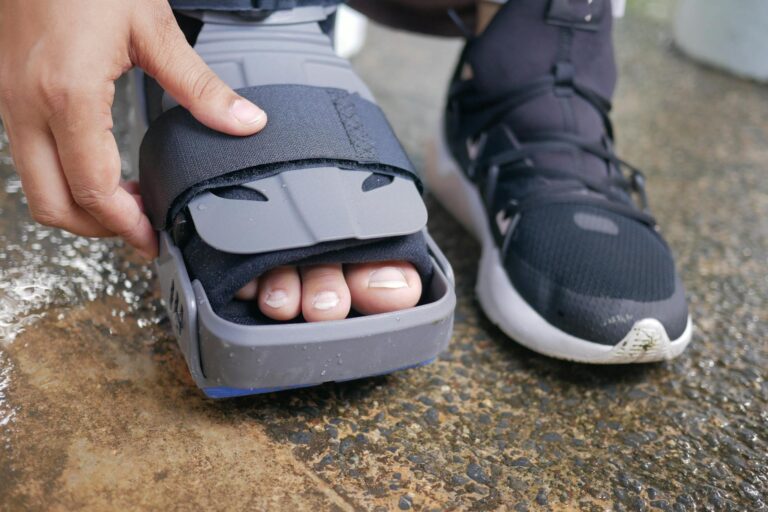
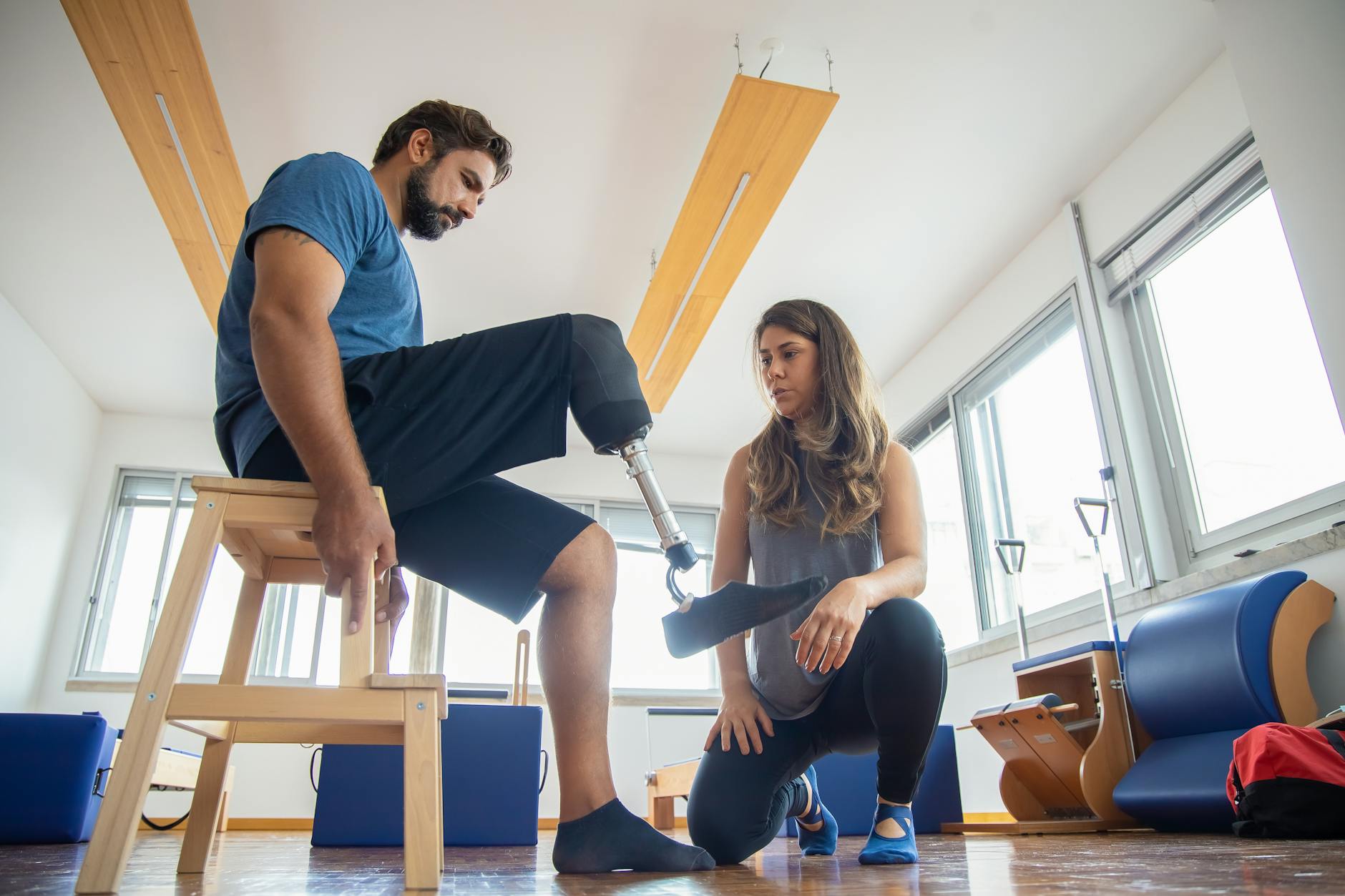
External support for an injured ankle comes in several forms, and the choice involves real tradeoffs. A 2018 Dutch evidence-based guideline published in PubMed found that bracing or taping combined with exercise provides the best outcomes for patients with acute lateral ankle ligament rupture. For runners returning from a sprain, a lace-up ankle brace during the first few weeks of training can provide enough stability to prevent re-injury while still allowing the range of motion needed for a natural gait. Taping — particularly athletic tape applied in a figure-eight or heel-lock pattern — offers similar support but loosens over time. During a long run, tape that felt supportive at mile one may be doing almost nothing by mile eight. Braces maintain their support more consistently, which makes them the better option for distance runners.
Custom orthotics, recommended by Cleveland Clinic for ongoing ankle issues, address alignment problems in the foot that may contribute to ankle stress. An overpronator who repeatedly sprains the same ankle, for instance, may benefit more from a corrective insole than from any amount of taping. The tradeoff with all external support is the risk of dependence. Wearing a brace indefinitely can lead to weakening of the muscles and ligaments it is designed to protect. The goal should always be to use bracing as a bridge — providing stability while rehabilitation strengthens the ankle’s own support system — and then gradually phase it out as confidence and function return. The updated American Physical Therapy Association clinical practice guidelines for ankle ligament sprains reinforce this approach, emphasizing early functional activity and targeted exercises over prolonged immobilization or reliance on external devices.
When Ankle Pain Becomes Chronic — Advanced Treatment Options
Not all ankle pain resolves with ice, ibuprofen, and balance exercises. When pain persists for months or recurs with increasing frequency, it may indicate chronic ankle instability, tendon damage, or early-stage arthritis — conditions that require interventions beyond standard rehabilitation. Steroid injections, according to Cleveland Clinic, produce symptom improvement within a couple of days for most patients and can be valuable for breaking a cycle of inflammation that prevents effective rehab. But they are not a long-term fix. Repeated steroid injections can weaken connective tissue over time, which is the last thing a runner’s ankle needs.
Shockwave therapy — which uses strong soundwaves directed at pressure points to reduce pain and stimulate healing — has gained traction as a non-invasive option for stubborn tendon and ligament issues. It is particularly relevant for conditions like Achilles tendinopathy and plantar fasciitis that often accompany or mimic ankle pain. The treatment typically requires multiple sessions and is not universally covered by insurance, so runners should weigh cost against the likelihood of benefit based on their specific diagnosis. For ankle arthritis specifically, NYU Langone Health recommends corticosteroid injections and hyaluronic acid injections to provide relief, along with custom-molded braces and orthotic devices to redistribute weight and reduce joint pressure. A runner with early ankle arthritis faces a difficult conversation about training volume and surface selection. The honest reality is that high-mileage road running on arthritic ankles accelerates joint degradation, and treatment is more effective when paired with intelligent modifications to training — more soft-surface running, lower weekly mileage, or a shift toward cycling or swimming for some cardiovascular sessions.

Red Flags — When to Stop Self-Treating and See a Doctor
The Mayo Clinic and Cleveland Clinic both outline clear criteria for seeking professional evaluation: if pain does not improve within a few days, if it is actively getting worse rather than gradually improving, if you cannot bear weight on the ankle, or if you notice significant swelling and bruising that seems disproportionate to the injury mechanism. A runner who steps off a curb awkwardly and has mild soreness the next day is in a different category than someone whose ankle balloons up and turns purple within hours. Fractures, high ankle sprains involving the syndesmosis ligament, and complete ligament tears all require imaging and sometimes surgical intervention.
Treating a fracture like a simple sprain — “walking it off” and returning to running too soon — can result in malunion, chronic pain, and months of additional recovery time. When in doubt, a simple X-ray or MRI can save weeks of misguided self-treatment. The cost of overreacting is a copay and an afternoon. The cost of underreacting can be a season-ending complication.
What Updated Guidelines Mean for Runners in 2025 and Beyond
The trend in ankle injury management is clearly toward earlier movement, personalized rehabilitation, and multimodal approaches that combine several evidence-based treatments rather than relying on any single intervention. The American Physical Therapy Association’s updated clinical practice guidelines emphasize movement coordination and targeted exercises as central to recovery, moving away from the outdated advice to simply stay off the ankle until the pain stops. For runners, this is good news — it aligns with the instinct to stay active, as long as that activity is structured and progressive rather than reckless.
The growing evidence base for digital rehabilitation also opens doors for runners in rural areas or those without easy access to sports-focused physical therapists. With 81.7 percent of patients achieving complete recovery through home-based programs in published research, the barrier to effective rehab is increasingly about discipline and consistency rather than geography or insurance coverage. The runners who recover best from ankle injuries in 2026 will likely be those who combine immediate first aid with a structured rehab plan — whether delivered in person or through a screen — and who respect the timeline rather than rushing back to full training volume.
Conclusion
Treating ankle pain effectively comes down to a layered approach: immediate management with the POLICE protocol and short-term NSAIDs, followed by structured rehabilitation that includes balance training, proprioceptive exercises, and progressive strengthening. External support like braces and orthotics can bridge the gap during recovery, and advanced treatments like steroid injections or shockwave therapy exist for cases that do not respond to conservative care. The evidence consistently shows that active rehabilitation — not passive rest — is what prevents re-injury and chronic instability.
For runners, the most important takeaway is that ankle pain is almost always treatable, but rarely with a single magic bullet. The 25,000 ankle sprains that happen daily in the United States produce a wide range of outcomes, and the difference between a quick recovery and a long battle with recurring problems usually comes down to whether the injury was managed with a plan. Take the first 48 hours seriously, commit to a rehabilitation program that challenges your balance and stability, and do not hesitate to seek professional evaluation if progress stalls. Your ankles carry you through every mile — they deserve more than a bag of frozen peas and wishful thinking.
Frequently Asked Questions
How long does it take to recover from a sprained ankle?
Most ankle sprains recover within two to six weeks with proper treatment, but severe sprains involving complete ligament tears can take up to four months. The timeline depends heavily on the grade of the sprain and how consistently rehabilitation exercises are performed during recovery.
Should I use heat or ice for ankle pain?
Ice is recommended in the acute phase — the first 48 to 72 hours — applied for 20 minutes every two to three hours. A 2022 systematic review found that cryotherapy reduces pain more effectively than analgesic drugs alone during this period. Heat can be introduced later in recovery to promote blood flow and loosen stiff tissues before rehabilitation exercises.
Can I run with a mild ankle sprain?
Running on a sprained ankle before adequate healing has occurred increases the risk of re-injury and chronic instability. The POLICE protocol encourages early movement, but that means controlled, progressive loading — walking before jogging, jogging before running — not an immediate return to training. Most runners can begin light jogging two to three weeks after a mild sprain if pain allows.
Is it better to use an ankle brace or tape for running?
For distance runners, a lace-up brace generally outperforms tape because tape loosens during prolonged activity. A 2018 Dutch evidence-based guideline found that bracing combined with exercise provides the best outcomes for acute lateral ankle ligament injuries. However, both should be viewed as temporary support while rehabilitation strengthens the ankle.
When should I see a doctor for ankle pain?
Seek medical evaluation if pain does not improve within a few days, if it is worsening, if you cannot bear weight, or if there is significant swelling and bruising. These symptoms may indicate a fracture, high ankle sprain, or complete ligament tear that requires imaging and potentially different treatment than a standard sprain.
Do ankle strengthening exercises actually prevent future sprains?
Yes. A meta-analysis in PLOS One found that exercise-based rehabilitation produced significant reductions in re-injury rates at 12 months compared to usual care. Proprioceptive and balance training specifically retrain the neural pathways that control ankle stability, making future sprains less likely even during high-risk activities.