The best treatment for Achilles tendinitis is progressive tendon loading exercise, performed at least three times per week at the highest intensity you can tolerate. That is not a fringe opinion or a guess. The 2024 Clinical Practice Guideline from the Academy of Orthopaedic Physical Therapy, published in the Journal of Orthopaedic & Sports Physical Therapy (Vol. 54, No. 12), names tendon loading as the primary first-line treatment based on the strongest available evidence. Studies show measurable improvement in as little as two weeks, with an 18 to 21 point improvement on the VISA-A pain and function scale by 12 weeks.
If you are a runner dealing with that familiar morning stiffness and sharp pain just above your heel, the research is clear: structured loading, not rest, is what gets you back on the road. This matters because Achilles tendinopathy accounts for approximately 6 to 17 percent of all running injuries, and the lifetime incidence among former elite runners reaches as high as 52 percent. It hits hardest in the 30 to 50 age range, but it does not spare sedentary people either. A recreational marathoner in her early 40s who bumped her weekly mileage too fast and a desk worker who started a couch-to-5K program can end up with the same diagnosis. The good news is that the same evidence-based approach works for both. This article covers the specific exercise protocols that have the most research behind them, the supplementary treatments worth considering, the interventions you should avoid, and what to do when conservative treatment fails.
Table of Contents
- What Is the Most Effective Exercise Protocol for Achilles Tendinitis?
- Why Complete Rest Makes Achilles Tendinitis Worse
- Supplementary Treatments That Actually Have Evidence Behind Them
- Treatments to Avoid and Why They Persist
- When Conservative Treatment Fails and Surgery Becomes an Option
- The Role of Patient Education and Pain Science
- What Emerging Research Means for Runners with Achilles Pain
- Conclusion
- Frequently Asked Questions
What Is the Most Effective Exercise Protocol for Achilles Tendinitis?
The most studied protocol is the Alfredson eccentric heel drop program. It calls for three sets of 15 repetitions, performed twice daily, for 12 weeks. you stand on the edge of a step, rise onto your toes using both legs, then slowly lower your affected heel below the step level using only the injured leg. A 2023 systematic review and meta-analysis published in BMC Sports Science found that eccentric exercise is more effective than other exercise types for midportion achilles tendinopathy, with a mean difference of −1.21 on pain reduction scales (95% CI: −2.72 to −0.30). Approximately 60 percent of patients return to sport using eccentric exercise programs alone. Heavy slow resistance training has emerged as a strong alternative.
Some studies suggest it may be equally or slightly more effective than eccentric-only exercise. The difference is practical: heavy slow resistance uses both the lifting and lowering phase of a calf raise, often with added weight from a loaded backpack or a leg press machine, performed at a deliberately slow tempo. For runners who find twice-daily Alfredson sessions difficult to maintain alongside training, heavy slow resistance three times per week can be easier to stick with and may produce comparable outcomes. The comparison matters because adherence is half the battle. A protocol that works slightly better on paper but gets abandoned at week four loses to a slightly less optimal one that a runner actually completes. Talk to a sports physiotherapist about which approach fits your schedule, equipment access, and pain tolerance. Either way, the underlying principle is the same: the tendon needs progressive mechanical load to adapt and heal.
Why Complete Rest Makes Achilles Tendinitis Worse
One of the most counterintuitive findings in tendon rehabilitation is that complete rest is explicitly not recommended. The 2024 Clinical Practice Guideline advises patients to continue activities within pain tolerance rather than shut everything down. This runs against the instinct most runners have, which is to stop all activity at the first sign of tendon trouble. But tendons respond to load. Remove that stimulus entirely and the tendon loses stiffness, cross-sectional area, and its capacity to handle the forces running demands. You end up deconditioned and no closer to healthy. A 2022 controlled clinical trial demonstrated that 12 weeks of evidence-based high-loading tendon exercise led to increased tendon stiffness and cross-sectional area, indicating actual structural improvement in the tendon, not just symptom masking. This is a critical distinction.
You are not simply learning to tolerate pain. The tissue is physically adapting and getting stronger under the right loading conditions. However, if you are in the acute phase with significant swelling or pain that prevents you from performing a single-leg heel raise without limping, you may need to scale the load back substantially before building it up. Activity modification, meaning a temporary reduction in aggravating loads like hill sprints or speed work, is recommended alongside progressive loading. The goal is to find your entry point on the loading spectrum and push it upward over time. A runner doing 50-mile weeks might need to cut to 20 easy miles while beginning the Alfredson protocol. A runner doing 15 miles a week might only need to eliminate tempo runs for a few weeks. The prescription is not one size fits all, but the principle is universal: keep the tendon working.
Supplementary Treatments That Actually Have Evidence Behind Them
Not every case responds to loading alone, and several adjunct treatments have enough evidence to justify their use in specific situations. Manual therapy, including joint manipulation and soft tissue mobilization, is recommended for patients who have mobility deficits in the ankle or foot. If your dorsiflexion range is limited, a physiotherapist working on calf and ankle mobility can help create the mechanical conditions for your loading program to be effective. Intramuscular dry needling has shown promise, particularly for patients in acute phases who cannot yet tolerate progressive loading. A February 2026 randomized clinical trial published in Cureus compared dry needling to percutaneous electrolysis for Achilles tendinopathy, reflecting ongoing research interest in these modalities. Dry needling is not a standalone cure, but it can reduce pain enough to let someone begin or continue their exercise program.
Think of it as a bridge treatment. Heel lifts placed inside running shoes can temporarily reduce the demands on the Achilles by decreasing ankle dorsiflexion during activity. Therapeutic elastic tape, commonly known as kinesiotape, may reduce pain or improve function for some individuals. Extracorporeal shockwave therapy has some evidence supporting its use as an adjunct. None of these replace tendon loading. They are tools to be layered on top of a progressive exercise program when specific clinical needs justify them. A runner with restricted ankle mobility, for example, might benefit from manual therapy and temporary heel lifts while beginning eccentric exercises, then phase out the supplementary treatments as the tendon adapts.

Treatments to Avoid and Why They Persist
Despite weak or negative evidence, several treatments remain common in clinical practice. Low-level laser therapy should not be used for Achilles tendinopathy according to the 2024 guideline. Therapeutic ultrasound alone should also not be used. Both persist in some clinics because they are easy to administer and patients expect hands-on treatment, but neither has demonstrated meaningful benefit for this condition. Corticosteroid injections deserve special mention because they remain widely requested by patients who want fast relief. The evidence discourages their use for Achilles tendinopathy due to the associated risk of tendon rupture. A cortisone shot might reduce pain for a few weeks, but it can weaken an already compromised tendon and set you up for a far worse outcome. The tradeoff is not worth it.
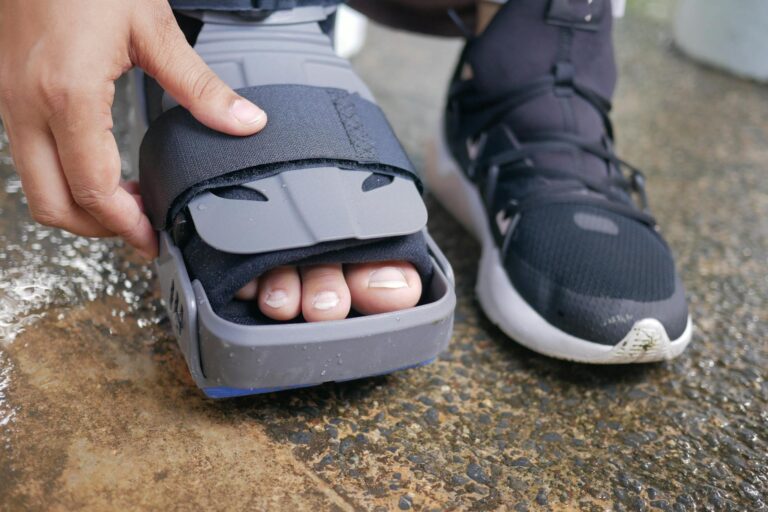
Orthoses and shoe inserts sit in a gray area. The evidence is contradictory, and the 2024 guideline makes no recommendation for or against their use. Some runners report that a firmer heel counter or a slight heel-to-toe drop change helps with symptoms. Others notice no difference. If you want to experiment with inserts, do so alongside a loading program, not as a replacement for one. Complete immobilization, such as a walking boot worn for weeks, is also not indicated. While a short period of reduced loading may be necessary in severe cases, prolonged immobilization leads to tendon deconditioning and muscle atrophy that makes the rehabilitation process longer and harder. The pattern here is consistent: passive treatments that do something to the tendon without requiring the tendon to do anything tend to underperform active loading strategies.
When Conservative Treatment Fails and Surgery Becomes an Option
Surgery is typically considered only after three to six months of failed conservative treatment. That timeline exists for a reason. Most patients who commit to a structured loading program will see meaningful improvement within 12 weeks. Jumping to surgical consultation at week six because progress feels slow is premature. Tendon healing does not follow a linear curve. Many runners report a frustrating plateau around weeks four through eight before significant gains appear in weeks 10 through 16.
When surgery is warranted, the options include debridement of damaged tendon tissue, flexor hallucis longus tendon transfer for insertional cases where the damage is at the heel bone attachment, and various minimally invasive procedures. Outcomes are generally favorable for appropriately selected patients, but recovery timelines are measured in months and the return-to-running process involves its own progressive loading program afterward. The warning here is about expectations. Surgery does not eliminate the need for rehabilitation. It changes the starting point. A runner who has surgery will still need to rebuild tendon capacity through the same progressive loading principles that form the basis of conservative treatment. If you were not willing to commit to an exercise-based rehab program before surgery, the post-surgical reality will be a difficult adjustment.

The Role of Patient Education and Pain Science
The 2024 guideline recommends that clinicians provide education and counseling alongside exercise, with pain science or pathoanatomic explanations delivered in person or via telehealth. This is not a throwaway recommendation. Runners who understand why their tendon hurts and how loading promotes healing are significantly more likely to adhere to a 12-week program that involves exercising into discomfort. A common example: a runner begins the Alfredson protocol, experiences soreness during the first week, and stops because they assume they are making the injury worse.
With proper education, that same runner understands that moderate discomfort during loading is expected and does not indicate damage. They push through, adapt, and by week six they are running pain-free at easy pace. The exercise is the same. The difference is understanding.
What Emerging Research Means for Runners with Achilles Pain
Research into Achilles tendinopathy treatment continues to evolve. The February 2026 trial comparing dry needling to percutaneous electrolysis reflects a broader trend toward studying combination and sequenced treatments rather than single interventions. Future guidelines will likely provide more specific recommendations about when to layer adjunct therapies on top of loading programs and for which patient subgroups. For now, the practical takeaway is stable and well-supported.
Start with progressive tendon loading exercise at an intensity you can tolerate, perform it consistently at least three times per week, modify your running volume to stay within manageable pain levels, and give the process at least 12 weeks before reassessing. The 2024 AOPT Clinical Practice Guideline represents the third revision of this evidence-based standard of care, and each revision has strengthened the case for active loading as the foundation of treatment. The tendon responds to what you ask it to do. Ask it to work, progressively and patiently, and the evidence says it will answer.
Conclusion
Achilles tendinitis treatment has a clear evidence-based hierarchy. Tendon loading exercise is the foundation, with eccentric heel drops and heavy slow resistance training carrying the strongest research support. Supplementary treatments like manual therapy, dry needling, heel lifts, and shockwave therapy serve specific roles for specific patients but do not replace structured loading. Corticosteroid injections, laser therapy, therapeutic ultrasound, and prolonged rest should be avoided.
Surgery remains a last resort after three to six months of committed conservative effort. If you are a runner dealing with Achilles pain, the most productive step you can take today is to find a sports physiotherapist who can assess your specific situation, determine where you fall on the loading tolerance spectrum, and design a progressive program tailored to your current capacity. Bring your running goals to that conversation. The objective is not just to eliminate pain but to rebuild a tendon that can handle the demands you intend to place on it. With the right approach and realistic expectations about the timeline, the majority of runners return to full activity without surgical intervention.
Frequently Asked Questions
How long does it take for Achilles tendinitis to heal with proper treatment?
Most patients see measurable improvement within two weeks of starting a progressive loading program, with significant gains of 18 to 21 points on the VISA-A scale by 12 weeks. Full recovery timelines vary, but three to six months of consistent rehabilitation is a reasonable expectation for most runners.
Can I keep running with Achilles tendinitis?
The 2024 Clinical Practice Guideline advises continuing activities within pain tolerance rather than complete rest. Most runners can maintain reduced mileage at easy effort while performing their rehabilitation exercises, though high-intensity work like hill repeats and speed sessions may need to be temporarily shelved.
Are cortisone shots safe for Achilles tendinitis?
Corticosteroid injections are generally discouraged for Achilles tendinopathy because they carry a risk of tendon rupture. While they may provide short-term pain relief, they can weaken the tendon structure and are not recommended by current clinical guidelines.
What is the Alfredson protocol for Achilles tendinitis?
The Alfredson protocol involves eccentric heel drops performed as three sets of 15 repetitions, done twice daily for 12 weeks. You lower your heel below step level using the affected leg only, which creates a controlled eccentric load on the tendon. Approximately 60 percent of patients return to sport using this protocol.
Should I use a heel lift or orthotic insert for Achilles pain?
Heel lifts can temporarily reduce strain on the Achilles by decreasing ankle dorsiflexion and may be helpful during the early rehabilitation phase. Evidence on orthoses and shoe inserts is contradictory, and the current guideline makes no strong recommendation for or against them. They should supplement, not replace, a loading program.
When should I consider surgery for Achilles tendinitis?
Surgery is typically reserved for patients who have failed three to six months of structured conservative treatment. Surgical options include debridement and tendon transfer, but post-surgical rehabilitation still requires progressive tendon loading, so the recovery process is lengthy.