The best stair climbing workout for fat loss is a high-intensity interval training approach — alternating between hard bursts and recovery periods on stairs or a stair machine. A 30-minute HIIT stair session can burn 400 to 600 calories, roughly double what you’d burn walking on flat ground for the same duration. More importantly, the interval format triggers excess post-exercise oxygen consumption, meaning your body continues burning calories well after you’ve finished climbing. For someone weighing 155 pounds, even a moderate 15-minute session torches around 135 to 150 calories, making stairs one of the most time-efficient fat loss tools available.
But calorie burn alone doesn’t tell the full story. A meta-analysis covering more than 480,000 participants across nine studies found that regular stair climbers had a 24 percent reduced risk of dying from any cause and a 39 percent lower risk of dying from heart disease. Stair climbing isn’t just a weight loss hack — it’s a genuine longevity exercise. This article breaks down the specific interval protocols that maximize fat burning, the science behind why stairs outperform most cardio alternatives, proper form that most people get wrong, and a realistic weekly schedule you can start this week regardless of your current fitness level.
Table of Contents
- Why Does Stair Climbing Burn More Fat Than Other Cardio?
- The HIIT Stair Protocol That Maximizes Fat Burning
- A Weekly Stair Climbing Schedule That Actually Works
- Stair Climbing vs. Running vs. Cycling for Fat Loss
- Form Mistakes That Sabotage Your Calorie Burn
- Using Stairs Outside the Gym
- Sustaining Stair Climbing for Long-Term Results
- Conclusion
- Frequently Asked Questions
Why Does Stair Climbing Burn More Fat Than Other Cardio?
stair climbing burns approximately 8 to 11 calories per minute, compared to just 3 to 5 calories per minute for flat walking. That gap exists because every step upward forces your body to lift its entire weight against gravity, recruiting your glutes, quadriceps, hamstrings, and calves simultaneously. Running up stairs for an hour burns over 1,050 calories for a 155-pound person, while walking up stairs for the same duration still burns around 560 calories. Even at a slow pace, climbing stairs provides what Allina Health describes as “more bang for your buck” than any flat-surface walking routine. The fat loss advantage goes beyond raw calorie numbers.
Research published in PMC and the National Institutes of Health shows that stair climbing interventions lasting eight or more weeks significantly increase VO2 max by 2 to 5 ml/kg/min. A higher VO2 max means your cardiovascular system becomes more efficient at using oxygen, which in turn improves your body’s ability to oxidize fat during both exercise and rest. A 2024 study published in PMC found that even short bouts of vigorous stair climbing improved cardiorespiratory fitness in women with overweight and obesity — sessions as brief as a few minutes produced measurable gains. Compare that to flat treadmill walking, where you’d need to walk for 30 to 45 minutes just to match the calorie burn of a brisk 15-minute stair session. For anyone pressed for time, the math is straightforward. However, it’s worth noting that stair climbing places significantly more stress on the knees and ankles than flat walking, so anyone with existing joint issues should consult a physician before committing to a stair-based program.

The HIIT Stair Protocol That Maximizes Fat Burning
The most effective stair climbing workout for fat loss follows a high-intensity interval format rather than a steady plod upward. The principle is simple: alternate between hard efforts and active recovery. For beginners, a nine-minute session works well — 30 seconds of fast climbing followed by 30 seconds at a slow pace, repeated for the full duration. Intermediate climbers can extend to 20 minutes using two-minute high-intensity intervals with two-minute recovery periods. Advanced athletes push to 30 minutes with a punishing one-minute on, one-minute off ratio. The reason HIIT outperforms steady-state climbing for fat loss comes down to the afterburn effect, scientifically known as excess post-exercise oxygen consumption. After an intense interval session, your metabolism stays elevated for hours as your body works to restore oxygen levels, clear lactate, and repair muscle tissue.
A steady-state session at moderate intensity burns calories only while you’re exercising. An interval session continues working for you long after you’ve left the stairwell. However, if you’re new to exercise or returning after a long break, jumping straight into HIIT stair climbing is a recipe for injury or burnout. Start with steady-state sessions of 10 to 15 minutes at a comfortable pace for two to three weeks. Build a base before introducing intervals. Research shows that as few as three flights of stairs, three times per day, three times per week was enough to boost fitness in previously sedentary individuals. You don’t need to destroy yourself on day one — consistency matters far more than intensity in the early weeks.
A Weekly Stair Climbing Schedule That Actually Works
A realistic fat loss schedule combines two to three HIIT stair sessions per week with one or two steady-state sessions, mixed with strength training on alternate days. Monday might look like a 20-minute interval session. Wednesday could be a 30-minute steady-state climb at a moderate pace. Friday brings another interval workout. On Tuesday and Thursday, you hit the weights. This structure prevents overuse injuries while keeping your weekly calorie expenditure high enough to drive fat loss when paired with a reasonable diet. The minimum effective dose appears to be 15 to 20 minutes per session.
Anything less and you’re not accumulating enough total work to meaningfully impact body composition over weeks and months. Anything beyond 45 minutes of stair climbing in a single session enters a territory of diminishing returns, where fatigue degrades form and injury risk climbs. Research on cardiovascular benefits found that climbing six to ten flights of stairs per day is associated with a 20 percent lower risk of heart disease, which translates to roughly 10 to 17 minutes of climbing spread across the day for most people. For a concrete example, consider someone who currently does no structured exercise. In week one, they climb stairs for 10 minutes three times. By week four, they’ve progressed to 15-minute sessions with light intervals. By week eight — the threshold where studies show significant VO2 max improvements — they’re completing 20-minute HIIT sessions and noticing real changes in endurance and body composition. That progression matters because fat loss is a months-long process, not a single workout achievement.
Stair Climbing vs. Running vs. Cycling for Fat Loss
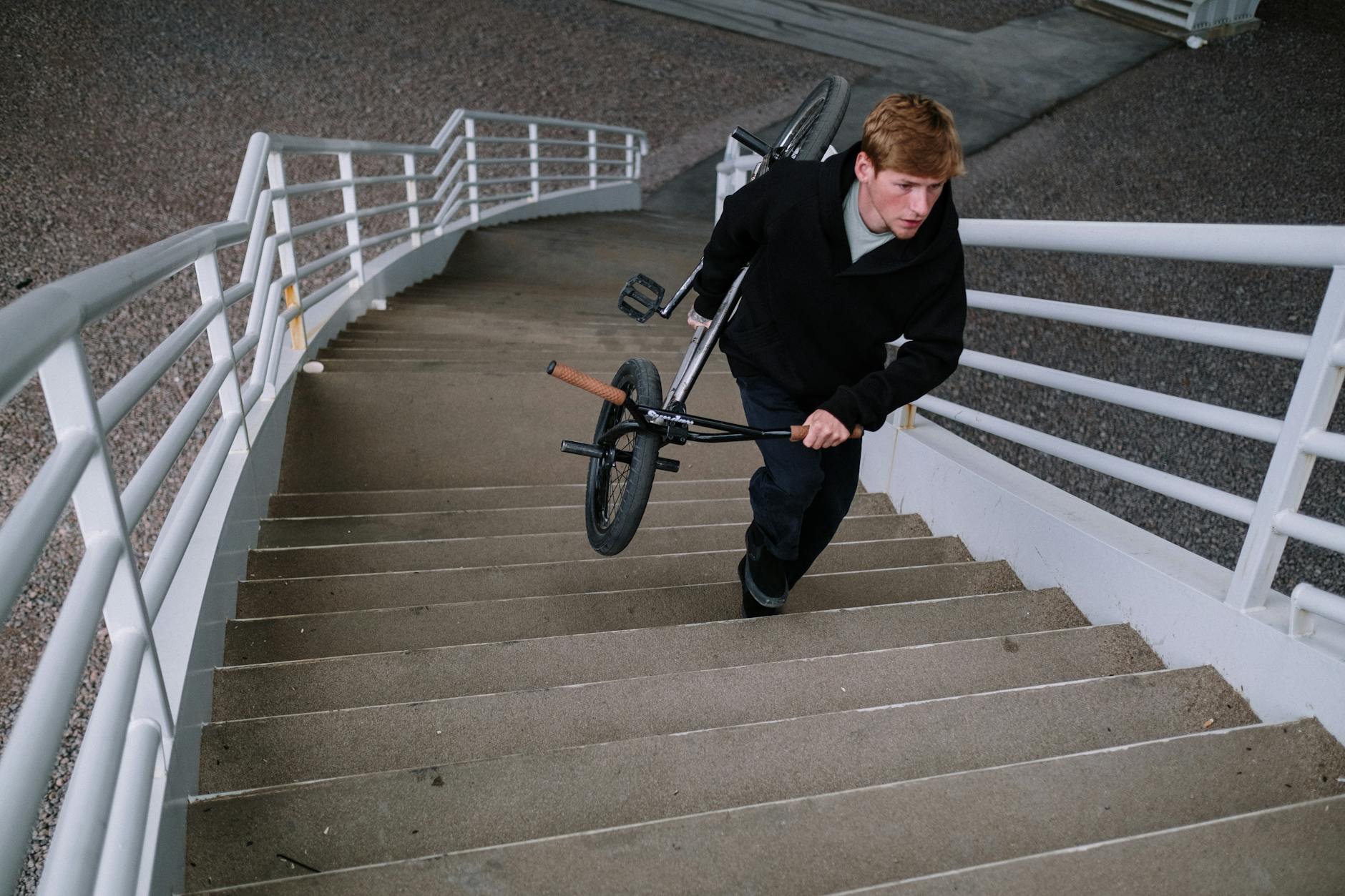
Stair climbing occupies a useful middle ground between running and cycling. Running burns slightly more calories per minute at high speeds, but it carries substantially higher impact forces and injury rates, particularly for heavier individuals. Cycling is gentler on joints but burns fewer calories per minute unless you’re pushing very hard. Stair climbing delivers running-level calorie burn — 8.5 to 9.2 calories per minute at moderate effort — with lower impact than running, though more joint stress than cycling. The tradeoff worth understanding is accessibility versus specificity. Almost everyone has access to stairs. You don’t need a gym membership, a bike, or safe running routes.
An office building, a park, a stadium, or a home stair machine all work. On the other hand, stair climbing is limited in how much variety you can introduce. You go up, you come down, you go up again. Running and cycling offer route variation, terrain changes, and social elements that help with long-term adherence — and adherence is the single biggest predictor of fat loss success. For someone who genuinely enjoys stair workouts, the 200 to 300 calories burned in a 20-minute moderate session competes favorably with a 30-minute moderate run. If you find running boring or painful but like the focused effort of climbing, stairs will serve you better simply because you’ll actually do the workouts. The best fat loss exercise is the one you perform consistently.
Form Mistakes That Sabotage Your Calorie Burn
The most common stair climbing error is leaning heavily on the handrails or console of a stair machine. This dramatically reduces your calorie burn because you’re offloading your body weight onto your arms instead of forcing your legs and core to do the work. Light fingertip contact for balance is acceptable. White-knuckling the rails while hunching forward is not. If you can’t maintain your pace without gripping the rails, slow down until you can climb with proper posture. Keep your back straight and your core engaged throughout each session. The temptation is to round forward as fatigue sets in, which compresses your spine and limits your breathing capacity.
Shallow breathing means less oxygen delivery to your muscles, which means earlier fatigue and fewer total calories burned. Stand tall, look ahead rather than down at your feet, and drive through your heels on each step to maximize glute engagement. One important limitation to acknowledge: stair climbing does not spot-reduce fat from your legs, thighs, or any other specific area. Fat loss occurs across the entire body based on genetics, hormonal factors, and overall energy balance. You cannot stair-climb your way to leaner legs while ignoring your diet. Regular stair climbing improves blood pressure, cholesterol levels, triglycerides, and insulin sensitivity, but these metabolic improvements only translate to visible fat loss when paired with a calorie deficit. No amount of stair climbing overcomes a consistently excessive diet.

Using Stairs Outside the Gym
You don’t need a StairMaster to build an effective stair climbing habit. Stadium bleachers offer long, uninterrupted flights that work well for both intervals and steady-state sessions. Office and apartment buildings provide shorter flights perfect for stacking multiple rounds with brief pauses on each landing.
Outdoor park stairs — the kind you’d find at a riverside trail or hillside path — add uneven surfaces that engage stabilizer muscles more than a machine does. A practical approach for someone who works in a multi-story building: take the stairs instead of the elevator for every trip during the workday, then add a dedicated 15 to 20 minute stair session three times per week. The daily incidental climbing builds your aerobic base, while the structured sessions deliver the intensity needed for meaningful fat loss. Research confirms that even this minimal dose — accumulating a few flights throughout the day — reduces metabolic syndrome risk factors over time.
Sustaining Stair Climbing for Long-Term Results
Fat loss plateaus hit every exercise modality eventually, and stair climbing is no exception. After six to eight weeks of consistent training, your body adapts to the demands and calorie burn per session begins to level off. The solution isn’t to add more volume indefinitely.
Instead, manipulate the variables: shorten rest intervals, increase speed during work periods, add a weighted vest once bodyweight climbing feels routine, or introduce double-step climbing to increase range of motion and muscle recruitment. The long-term research picture is encouraging. The association between daily stair climbing and a 24 percent reduction in all-cause mortality suggests that this isn’t just a short-term fat loss tactic — it’s a sustainable movement pattern that pays dividends across decades. The key is treating stair climbing as one component of a broader fitness practice that includes strength training, adequate protein intake, and sufficient recovery, rather than as a singular solution to body composition goals.
Conclusion
Stair climbing earns its reputation as one of the most efficient fat loss exercises available. The combination of high calorie burn — 8 to 11 calories per minute — meaningful cardiovascular adaptations, and minimal equipment requirements makes it accessible and effective for nearly everyone. HIIT stair protocols deliver the highest return on time invested, but steady-state sessions and even casual daily stair use produce measurable health improvements when maintained consistently. Start where you are.
If you’re sedentary, three short stair sessions per week is enough to build a foundation. If you’re already active, swap one or two weekly cardio sessions for 20-minute stair intervals and observe how your body responds over the next eight weeks. Pair the climbing with a modest calorie deficit and strength training, and you have a fat loss framework that doesn’t require expensive equipment, complex programming, or excessive time. The stairs are already there. Use them.
Frequently Asked Questions
How many calories does stair climbing burn per minute?
Stair climbing burns approximately 8 to 11 calories per minute depending on your weight, speed, and technique. For comparison, flat walking burns only 3 to 5 calories per minute. A 155-pound person can expect to burn roughly 135 to 150 calories in a 15-minute moderate session.
Is stair climbing better than running for fat loss?
Stair climbing and running burn comparable calories per minute, but stair climbing places less impact stress on joints while still engaging large muscle groups against gravity. Running offers more route variety, which may help with long-term adherence. Neither is objectively better — the best choice is the one you’ll perform consistently.
How long should a stair climbing workout be for fat loss?
The minimum effective dose is 15 to 20 minutes per session. A 20-minute moderate session burns 200 to 300 calories, while an intense 30-minute HIIT session can burn 400 to 600 calories. Sessions beyond 45 minutes offer diminishing returns and increase injury risk.
Can stair climbing reduce belly fat specifically?
No. Fat loss occurs across the entire body based on genetics and overall calorie balance. Stair climbing cannot spot-reduce fat from any particular area. However, it does improve metabolic markers including blood pressure, cholesterol, triglycerides, and insulin sensitivity, which support overall fat loss when combined with a calorie deficit.
How many times per week should I climb stairs for fat loss?
Aim for two to three HIIT stair sessions per week combined with one to two steady-state sessions. Research found that climbing as few as three flights of stairs, three times per day, three times per week was sufficient to improve fitness in sedentary individuals. Combine with strength training on alternate days for best results.