Over 40 fat loss requires effort you can feel, and that reality catches many people off guard when they discover the fitness strategies that worked in their twenties and thirties no longer produce the same results. The body undergoes significant metabolic and hormonal shifts during the fourth decade of life, fundamentally changing how it responds to exercise and dietary interventions. For runners and cardiovascular fitness enthusiasts, this means recalibrating expectations and embracing training approaches that demand genuine physiological challenge rather than comfortable, habitual movement patterns. The specific problem facing adults over forty centers on a cluster of interconnected changes: declining muscle mass at approximately one to two percent per year, reduced insulin sensitivity, shifting hormone profiles including lower testosterone and growth hormone in men and declining estrogen in women, and accumulated years of potential sedentary behavior or repetitive training that has allowed the body to adapt and plateau.
These factors combine to create an environment where the body stubbornly holds onto fat stores unless presented with stimulus significant enough to force adaptation. Casual jogging at the same pace for the same distance, while beneficial for cardiovascular health, often fails to create the metabolic disruption necessary for meaningful body composition changes after forty. By the end of this article, readers will understand the physiological mechanisms behind age-related fat loss resistance, learn why perceived exertion serves as a critical marker for effective training, discover specific cardiovascular and resistance strategies that create measurable metabolic demand, and develop a framework for progressive challenge that continues producing results through the decades ahead. The goal extends beyond simple weight loss to building a resilient, metabolically active body capable of sustained fitness performance and health well past conventional middle age.
Table of Contents
- Why Does Fat Loss After 40 Require More Effort Than Before?
- Understanding Perceived Effort as a Fat Loss Indicator Over 40
- The Role of High-Intensity Cardiovascular Training for Over 40 Fat Loss
- Combining Effort-Based Cardio with Resistance Training for Fat Loss After 40
- Overcoming Fat Loss Plateaus and Common Mistakes After 40
- The Psychological Dimension of Effort-Based Fat Loss Training
- How to Prepare
- How to Apply This
- Expert Tips
- Conclusion
- Frequently Asked Questions
Why Does Fat Loss After 40 Require More Effort Than Before?
The fundamental reason fat loss after forty demands greater effort relates to a concept called metabolic adaptation, compounded by age-related physiological changes. Between ages thirty and forty, most adults lose between three and eight percent of their muscle mass, a process called sarcopenia that accelerates without intervention. Since muscle tissue burns approximately six to ten calories per pound daily at rest compared to fat tissue’s two to three calories per pound, this reduction directly lowers basal metabolic rate. A person who has lost just five pounds of muscle over a decade burns roughly forty fewer calories daily at rest, translating to approximately four pounds of potential fat gain per year if caloric intake remains unchanged. Hormonal shifts amplify this metabolic slowdown considerably. Testosterone levels in men decline approximately one percent annually after age thirty, affecting muscle protein synthesis, fat distribution, and exercise recovery. Women approaching and entering perimenopause experience fluctuating and eventually declining estrogen levels, which influences where fat is stored, shifting deposits toward visceral abdominal fat that carries greater health risks.
Both sexes experience reduced growth hormone secretion during sleep, diminishing the body’s overnight repair and fat-burning processes. These hormonal changes mean the same exercise session that produced visible results at thirty-two may barely register metabolically at forty-five. The effort required to overcome these changes must reach a threshold the body recognizes as demanding adaptation. Low-intensity steady-state cardio, while providing cardiovascular benefits, often falls below this threshold for experienced exercisers over forty. The body has become efficient at this type of movement through years of adaptation. Creating the metabolic disturbance necessary for fat loss requires training that feels challenging, that elevates heart rate into zones that cause noticeable breathlessness, that creates muscular fatigue, and that leaves the body needing recovery. This perceived effort serves as a practical gauge that training intensity matches what the over-forty metabolism actually requires.
- Sarcopenia reduces resting metabolic rate by approximately two to three percent per decade after age thirty
- Hormonal changes affect fat storage patterns, muscle maintenance, and recovery capacity
- The body adapts to familiar exercise patterns, requiring progressive challenge to continue responding

Understanding Perceived Effort as a Fat Loss Indicator Over 40
Perceived effort, often measured through Rating of Perceived Exertion scales, provides one of the most practical tools for adults fat-by-training-easy/” title=”Over 50 Stop Protecting Fat by Training Easy”>over forty attempting to calibrate training intensity for fat loss. The traditional Borg scale ranges from six to twenty, where six represents no exertion and twenty represents maximal effort, while modified scales use one to ten. For fat loss purposes after forty, effective cardiovascular training generally needs to reach levels of fourteen to sixteen on the Borg scale or seven to eight on the ten-point scale during work intervals, corresponding to sensations of hard to very hard effort where carrying on a conversation becomes difficult. This subjective measure proves particularly valuable because it automatically accounts for individual variation in fitness level, daily readiness, sleep quality, stress load, and the accumulated effects of training. Heart rate zones provide useful data but can be affected by medication, caffeine, temperature, and cardiac drift during longer sessions. Pace-based training fails to account for terrain, wind, or how recovered the body feels on any given day.
Perceived effort integrates all these factors into a single metric based on actual physiological strain. When a training session feels genuinely challenging, when it produces heavy breathing, elevated body temperature, and the distinct sensation of working hard, metabolic processes associated with fat oxidation and post-exercise oxygen consumption activate more robustly. Research published in the Journal of Sports Sciences demonstrates that high-intensity intervals performed at high perceived exertion levels produce significantly greater excess post-exercise oxygen consumption compared to moderate steady-state exercise performed at lower perceived effort. This EPOC effect, sometimes called afterburn, represents continued elevated calorie expenditure for hours after training ends. For adults over forty seeking fat loss, this metabolic bonus becomes increasingly important as baseline metabolism declines. The practical application requires honest self-assessment: comfortable training sessions that could continue indefinitely without discomfort rarely generate the physiological stress necessary for body composition change in metabolically resistant individuals.
- Rating of Perceived Exertion scales provide individualized intensity guidance that adapts to daily readiness
- Fat loss-oriented training should reach levels where conversation becomes difficult
- Post-exercise oxygen consumption increases significantly when training is performed at challenging perceived effort levels
The Role of High-Intensity Cardiovascular Training for Over 40 Fat Loss
High-intensity interval training has emerged as one of the most time-efficient and effective approaches for adults over forty pursuing fat loss, precisely because it demands the kind of effort that produces metabolic adaptation. Traditional HIIT involves alternating periods of near-maximal effort with recovery intervals, creating repeated metabolic stress that the body must work to recover from both during the session and in the hours afterward. A meta-analysis in the British Journal of Sports Medicine found that interval training reduced total body fat by 28.5 percent more effectively than moderate-intensity continuous training when overall time commitment was equalized. For runners and cardiovascular fitness enthusiasts, interval sessions on the track, trail, or treadmill translate research findings into practical fat loss strategy. A typical effective protocol might include a ten-minute warm-up gradually building to moderate intensity, followed by six to ten repetitions of thirty seconds to two minutes at near-maximal sustainable effort with equal or slightly longer recovery periods, concluding with a five to ten minute cool-down. During work intervals, breathing should be labored, speaking should be nearly impossible, and the relief of approaching recovery intervals should be palpable.
This is effort you can feel, unmistakably demanding in a way that distinguishes it from routine aerobic training. The safety considerations for over-forty athletes require acknowledgment without becoming obstacles. High-intensity training places greater stress on joints, tendons, and the cardiovascular system, making adequate warm-up essential and recovery between sessions non-negotiable. Most adults over forty benefit from limiting true high-intensity sessions to two or three per week, allowing at least forty-eight hours between demanding efforts. Impact can be reduced by choosing cycling, swimming, or elliptical training for some interval sessions, preserving running for moderate-intensity days or lower-volume speed work. Building intensity gradually over weeks prevents injury while still creating the progressive overload necessary for continued adaptation. The goal remains consistent: training must challenge the body sufficiently that it recognizes the need to change.
- High-intensity interval training reduces body fat more effectively than moderate-intensity continuous exercise
- Work intervals should produce labored breathing and near-inability to speak
- Recovery between intense sessions becomes increasingly important with age
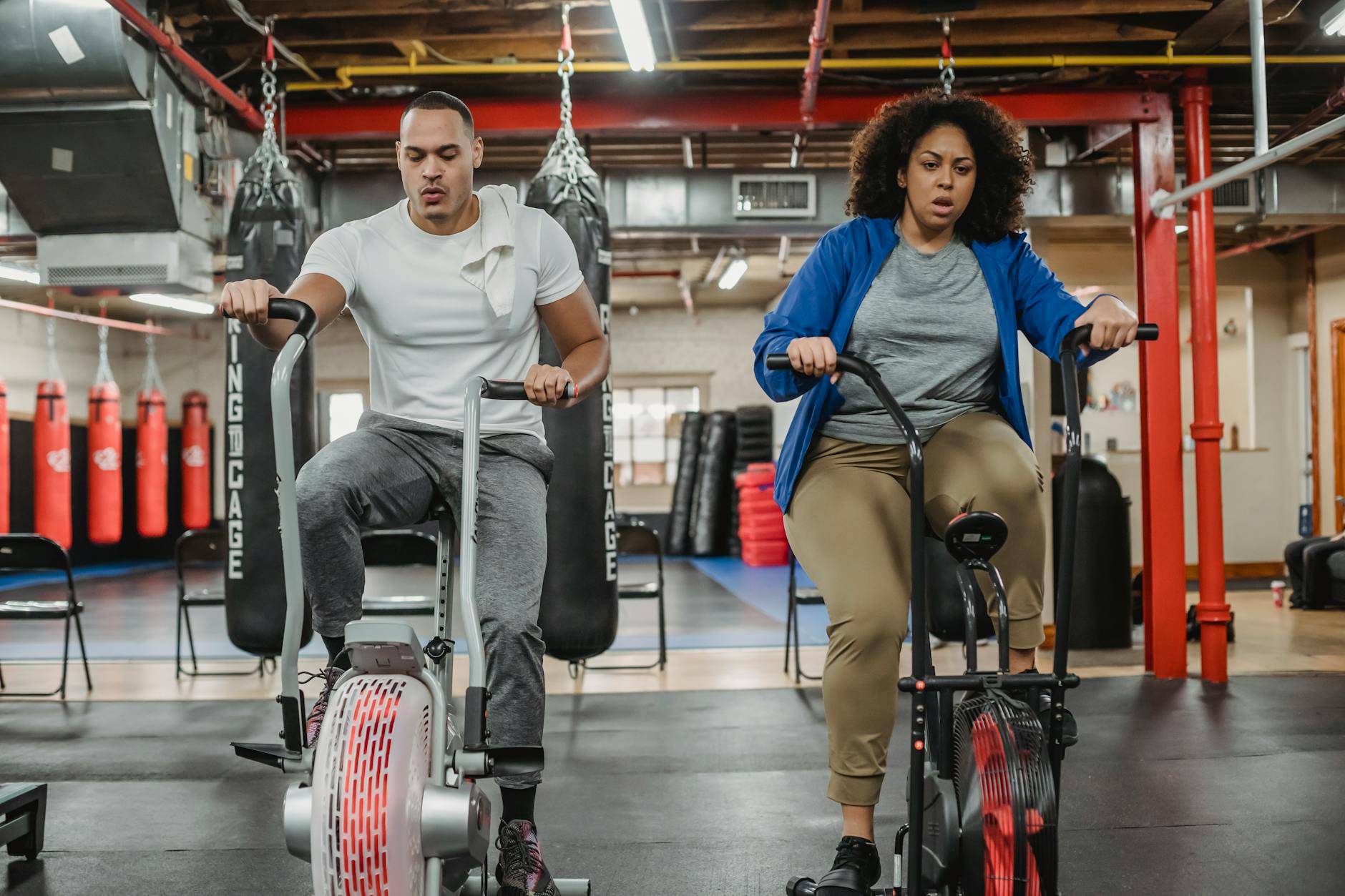
Combining Effort-Based Cardio with Resistance Training for Fat Loss After 40
The most effective approach to fat loss over forty combines demanding cardiovascular training with resistance exercise, creating a dual assault on metabolic stagnation that neither modality achieves as effectively alone. Resistance training directly addresses sarcopenia by stimulating muscle protein synthesis, potentially reversing or at least halting age-related muscle loss. Since each pound of maintained or gained muscle contributes to daily metabolic rate, this becomes an increasingly important component of long-term fat loss strategy as the decades progress. A study in the journal Obesity found that combined aerobic and resistance training produced significantly greater reductions in body fat percentage than either approach used independently. The integration of these modalities requires thoughtful programming rather than random addition of weights to a running schedule. Effective approaches include dedicated strength training sessions two to three times weekly focusing on compound movements such as squats, deadlifts, rows, and presses that recruit large muscle groups and create substantial metabolic demand.
These sessions should be challenging, with the final repetitions of each set requiring genuine effort to complete. Another effective approach involves circuit-style training that alternates resistance exercises with cardio intervals, maintaining elevated heart rate throughout while building or maintaining muscle tissue. For runners specifically, resistance training serves the dual purpose of supporting fat loss and reducing injury risk. Stronger glutes, hamstrings, and core muscles improve running economy, allowing faster paces at similar perceived effort levels, which in turn increases the caloric cost of training. Single-leg exercises such as Bulgarian split squats and step-ups address the unilateral nature of running mechanics while building functional strength. The key principle remains effort-based: resistance training that feels easy, with weights that could easily support additional repetitions, fails to create the stimulus necessary for muscle adaptation. Selecting loads that make the final two or three repetitions genuinely difficult ensures training intensity matches the demands of the over-forty metabolism.
- Resistance training directly addresses age-related muscle loss that contributes to metabolic decline
- Combined cardio and resistance training produces greater fat loss than either approach alone
- Compound movements and challenging loads create the metabolic demand necessary for adaptation
Overcoming Fat Loss Plateaus and Common Mistakes After 40
Plateaus represent the most frustrating aspect of fat loss efforts at any age, but their frequency and persistence increase after forty due to the body’s enhanced efficiency at adapting to repeated stimuli. The human body evolved to resist change, to maintain homeostasis even when that homeostasis includes unwanted fat stores. When the same training and dietary approach continues for weeks or months, the body becomes increasingly efficient at performing that work with minimal caloric expenditure, effectively neutralizing the fat loss stimulus. Recognizing plateau patterns early allows for proactive adjustments rather than prolonged frustration. Common mistakes amplify plateau risk for adults over forty. Chronic moderate-intensity training without variation ranks among the most prevalent errors, where runners log steady miles at comfortable paces week after week without intensity variation. While this approach builds aerobic base effectively, it rarely produces the metabolic disruption necessary for body composition change in adapted individuals.
Under-eating represents another counterintuitive mistake, where severe caloric restriction triggers metabolic slowdown and muscle loss, making fat loss harder rather than easier. Insufficient protein intake prevents muscle maintenance and recovery, while inadequate sleep disrupts the hormonal environment necessary for fat metabolism and tissue repair. Breaking plateaus requires systematic manipulation of training variables rather than simply doing more of the same. Introducing unfamiliar movement patterns forces the body to adapt to new demands. Periodizing intensity across weekly and monthly cycles prevents adaptation to predictable stimulus. Temporarily increasing training volume, then reducing it while maintaining intensity, creates metabolic confusion that can restart stalled fat loss. Dietary approaches such as periodic higher-calorie days interspersed within a moderate deficit can prevent metabolic slowdown without derailing overall progress. The unifying principle across all plateau-breaking strategies involves creating genuine challenge, presenting the body with demands significant enough that it must change to meet them.
- The body adapts to repeated training stimuli, requiring variation to continue progressing
- Common mistakes include chronic moderate intensity, under-eating, insufficient protein, and inadequate sleep
- Plateau-breaking requires introducing unfamiliar demands and periodizing training variables

The Psychological Dimension of Effort-Based Fat Loss Training
Sustainable fat loss after forty requires psychological adaptation alongside physical training, particularly acceptance that effective workouts will feel genuinely difficult. The comfort-seeking tendencies that increase with age and experience can undermine training effectiveness when they lead to unconscious intensity reduction. Developing comfort with discomfort becomes a trainable skill, one that distinguishes those who achieve and maintain body composition goals from those who struggle despite consistent training attendance. Mental strategies that support high-effort training include reframing discomfort as evidence of productive stimulus, using mantras or focus words during challenging intervals, and building environmental and social accountability structures.
The relationship between psychological stress management and fat loss also warrants attention for the over-forty population. Cortisol, the stress hormone, promotes visceral fat storage and muscle breakdown when chronically elevated. Adults in their forties and fifties often face peak career responsibilities, aging parents, financial pressures, and other significant stressors that compound physiological stress from training. This total stress load must be managed intelligently, with demanding training sessions balanced by genuine recovery practices including adequate sleep, stress-reducing activities, and recognition that more is not always better when baseline stress runs high. Sustainable effort means training hard enough to create adaptation without pushing into territory that raises cortisol chronically or leads to burnout.
How to Prepare
- **Establish baseline fitness through medical clearance**: Adults over forty beginning or intensifying training programs benefit from physician consultation, particularly those with cardiovascular risk factors, previous injuries, or extended sedentary periods. Basic screenings for blood pressure, resting heart rate, and lipid panels provide valuable baseline data and identify any conditions requiring monitoring or modification.
- **Build aerobic base before adding intensity**: Spend four to eight weeks developing consistent moderate-intensity cardiovascular fitness before introducing high-intensity intervals. This preparation period strengthens connective tissues, improves cardiac efficiency, and establishes movement patterns that reduce injury risk when intensity increases. Running or cardiovascular exercise four to five times weekly at conversational pace builds this foundation effectively.
- **Learn proper movement patterns for resistance training**: Quality instruction in fundamental resistance movements prevents injury and ensures training effectiveness. Consider working with a qualified trainer for several sessions to establish proper squat, hinge, push, and pull patterns. Video resources can supplement but rarely replace hands-on correction of form errors that feel normal to the untrained individual.
- **Establish recovery infrastructure**: Before adding demanding training, ensure sleep habits support seven to nine hours nightly, nutrition provides adequate protein at approximately 0.7 to 1.0 grams per pound of body weight daily, and hydration remains consistent. These recovery elements determine whether challenging training produces positive adaptation or accumulated fatigue and breakdown.
- **Create accountability and tracking systems**: Decide how training will be logged, whether through apps, written journals, or digital spreadsheets. Establish relationships with training partners, coaches, or online communities that provide external accountability for maintaining challenging training through periods when motivation wanes.
How to Apply This
- **Structure weekly training around effort variation**: Plan two to three high-intensity sessions weekly, incorporating intervals or tempo work where effort reaches genuinely challenging levels. Fill remaining training days with lower-intensity aerobic work and active recovery, creating a weekly rhythm that includes both demanding stimulus and adequate recovery.
- **Include progressive resistance training**: Schedule two to three resistance sessions weekly, focusing on compound movements with loads that create muscular fatigue within eight to twelve repetitions. Progress loads when all prescribed repetitions become achievable without the final two feeling difficult, typically adding five to ten percent resistance.
- **Monitor perceived effort honestly**: Use each training session to practice accurate self-assessment of effort levels. Rate sessions on the one to ten scale, aiming for seven to eight during work intervals in demanding sessions. Keep a record of these ratings to identify patterns of unconscious intensity reduction that may develop over time.
- **Implement periodic program changes**: Every four to six weeks, modify significant training variables to prevent adaptation. Options include changing interval durations, altering resistance exercises or rep ranges, adding new training modalities, or adjusting the ratio of high to moderate intensity sessions within the weekly structure.
Expert Tips
- **Train with a heart rate monitor occasionally but trust perceived effort primarily**: Heart rate data helps calibrate subjective ratings but can mislead on any given day due to hydration, caffeine, stress, and other variables. Use monitors to learn what different effort levels feel like, then trust those sensations even when heart rate data seems inconsistent.
- **Schedule demanding sessions when energy and recovery support them**: High-intensity training after poor sleep or during high-stress periods produces inferior results and increases injury risk. Move challenging sessions to days following good rest and adequate nutrition, even if this requires flexibility in weekly planning.
- **Prioritize protein timing around training sessions**: Consuming twenty to forty grams of protein within two hours after demanding workouts supports muscle protein synthesis and recovery. For adults over forty, this post-training window becomes increasingly important for maintaining training adaptations.
- **Accept that sustainable fat loss rates decrease with age**: Expecting to lose fat at the same rate possible at twenty-five sets up frustration and potential overtraining. Sustainable loss of 0.5 to 1.0 pounds weekly represents excellent progress for adults over forty maintaining muscle mass.
- **Build in planned recovery weeks**: Every fourth or fifth week, reduce training volume and intensity by thirty to fifty percent while maintaining frequency. These deload periods allow accumulated fatigue to dissipate and often precede breakthrough improvements in subsequent training blocks.
Conclusion
Fat loss after forty requires accepting and working within biological realities that differ substantially from those of younger years. Metabolic slowdown, hormonal shifts, and accumulated efficiency all conspire to make comfortable training increasingly ineffective for body composition change. The solution lies not in denial or frustration but in calibrating training to meet these changed circumstances, embracing effort levels that create genuine physiological challenge, and combining cardiovascular work with resistance training that maintains metabolically active muscle tissue.
Perceived effort becomes the practical compass guiding this work, providing real-time feedback about whether training intensity matches what the over-forty body actually requires. The runners and fitness enthusiasts who successfully maintain or achieve lean body composition through their forties, fifties, and beyond share common characteristics: they train with intention and genuine intensity during demanding sessions, they recover adequately between efforts, they continue learning and adjusting as their bodies evolve, and they maintain consistency across months and years rather than seeking rapid transformation through unsustainable approaches. The effort you can feel during training represents honest communication between body and mind, signaling that stimulus sufficient for adaptation is being applied. Embrace that effort, recover from it appropriately, and trust the process that has helped countless individuals achieve body composition goals well past the age when conventional wisdom suggests such changes become impossible.
Frequently Asked Questions
How long does it typically take to see results?
Results vary depending on individual circumstances, but most people begin to see meaningful progress within 4-8 weeks of consistent effort. Patience and persistence are key factors in achieving lasting outcomes.
Is this approach suitable for beginners?
Yes, this approach works well for beginners when implemented gradually. Starting with the fundamentals and building up over time leads to better long-term results than trying to do everything at once.
What are the most common mistakes to avoid?
The most common mistakes include rushing the process, skipping foundational steps, and failing to track progress. Taking a methodical approach and learning from both successes and setbacks leads to better outcomes.
How can I measure my progress effectively?
Set specific, measurable goals at the outset and track relevant metrics regularly. Keep a journal or log to document your journey, and periodically review your progress against your initial objectives.
When should I seek professional help?
Consider consulting a professional if you encounter persistent challenges, need specialized expertise, or want to accelerate your progress. Professional guidance can provide valuable insights and help you avoid costly mistakes.
What resources do you recommend for further learning?
Look for reputable sources in the field, including industry publications, expert blogs, and educational courses. Joining communities of practitioners can also provide valuable peer support and knowledge sharing.