For the majority of runners, expensive running shoes are not worth the premium price. Research published in the British Journal of Sports Medicine found that costly running shoes were actually associated with a greater injury incidence than cheaper alternatives, and low- to medium-cost shoes provided the same or better plantar pressure cushioning across multiple brands tested. Meanwhile, an analysis of over 320,000 consumer reviews by RunRepeat revealed that the ten cheapest running shoes, priced between $30 and $55, scored 84.6 out of 100, while the ten most expensive shoes, ranging from $150 to $300, scored just 82.7 — meaning budget shoes rated 8.1 percent higher at roughly one-third the cost. That said, the answer is not entirely black and white.
If you are a competitive racer chasing personal records, certain high-end shoes like the Nike Vaporfly have been shown in peer-reviewed research to shave two to nearly four minutes off marathon times for men and up to three and a half minutes for women. For that narrow use case, the investment may pay off. But for the recreational runner logging miles a few times a week, the science consistently shows no meaningful correlation between shoe price and injury prevention or comfort. This article breaks down what the research actually says about running shoe pricing, when spending more makes sense and when it does not, how to choose shoes based on evidence rather than marketing, and what the rising cost of running footwear means for your budget going forward.
Table of Contents
- Are Expensive Running Shoes Actually Better Than Budget Options?
- What the Science Says About Running Shoes and Injury Prevention
- When Premium Running Shoes Are Worth the Investment
- How to Choose Running Shoes Without Overspending
- The Rising Cost of Running Shoes and What It Means for Runners
- What Budget Runners Should Know About the Affordable Shoe Market
- The Future of Running Shoe Technology and Value
- Conclusion
- Frequently Asked Questions
Are Expensive Running Shoes Actually Better Than Budget Options?
The short answer from the available research is no, not in any way that matters for most people. The British Journal of Sports Medicine study that compared shoes across price tiers found that comfort was not correlated with cost. Runners in cheaper shoes reported similar or better cushioning experiences, and the expensive shoe group actually sustained more injuries. This runs directly counter to the assumption most of us carry into a running store — that spending more automatically buys better protection for your joints and feet. RunRepeat’s massive dataset of 320,000 consumer reviews tells a similar story from the user side.
Budget shoes outscored premium shoes by a clear margin, suggesting that the features packed into high-end models — whether it is proprietary foam compounds, engineered mesh uppers, or elaborate heel counters — do not translate into a better experience on the road. A pair of well-reviewed shoes in the $40 to $60 range can serve most runners just as well as a $200 flagship model. It is worth noting that the running shoe market does not necessarily price shoes based on performance value. Average running shoe MSRP hit $136.40 in 2024 and climbed to $139.18 in 2025, driven partly by material costs but also by brand positioning and marketing budgets. The mid-range tier between $50 and $100 holds the largest market share at 45 percent, which suggests that most consumers have already figured out, whether consciously or not, that the sweet spot is not at the top of the price range.

What the Science Says About Running Shoes and Injury Prevention
One of the biggest selling points for premium running shoes is that they prevent injuries. Brands invest heavily in technologies marketed as stability systems, motion control features, and advanced cushioning platforms — all framed as ways to keep you healthy. But the science does not back these claims up very well. A Cochrane systematic review published in 2022, which represents the gold standard in medical evidence synthesis, examined running shoes and injury prevention and concluded there is limited evidence that any specific shoe type prevents lower-limb injuries in adults. A separate review published in Frontiers in Sports and Active Living in 2022 went further, concluding that the running shoe industry’s injury-prevention claims often outpace the actual scientific evidence. This is not to say running shoes are useless — they clearly provide basic protection from terrain, weather, and impact.
But the specific claims tied to expensive technologies deserve skepticism. However, there is one important caveat. A randomized controlled trial of 848 recreational runners found that softer cushioning reduced injury risk specifically in lighter runners. This means shoe selection should be individualized based on body composition and running style, not on price or brand prestige. If you are a lighter runner, a softer shoe might genuinely help — but that softer shoe does not have to be the most expensive one on the shelf. Stanford Medicine advised in 2019 that choosing shoes based on price, brand, or arch type is not supported by science, and that comfort and fit should be the primary criteria.
When Premium Running Shoes Are Worth the Investment
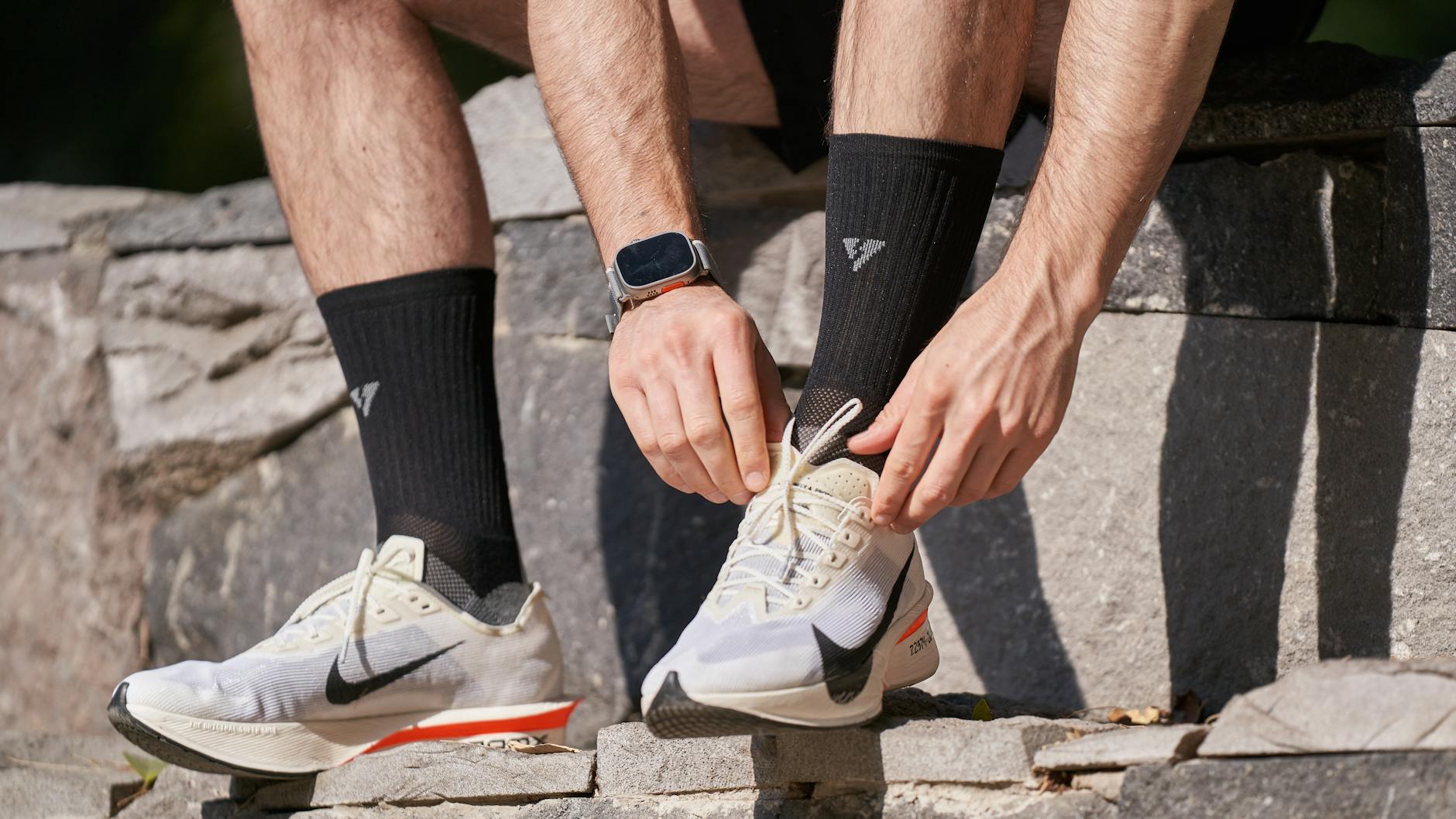
There is one category where the research genuinely supports spending more: carbon-fiber plated racing shoes. The Nike Vaporfly, which debuted at around $250, was shown in peer-reviewed studies to improve marathon finishing times by 2.0 to 3.9 minutes for men and 0.8 to 3.5 minutes for women. These gains come from the combination of a rigid carbon-fiber plate and a highly resilient energy-return foam that effectively acts like a spring under the foot. For a competitive marathoner where a two-minute improvement could mean a Boston qualifier or a podium finish, that price tag can be justified by the measurable performance return. The performance benefit also ties into a well-established principle in exercise science: lighter shoes reduce energy expenditure, which improves running economy. Race-day super shoes tend to be significantly lighter than traditional trainers, and when you are running 26.2 miles, small energy savings compound into meaningful time differences.
This is why virtually every elite marathoner now races in some version of a plated shoe. But here is the limitation that matters. These shoes are designed for racing, not for daily training. They typically have limited durability, with many runners reporting significant foam degradation after 100 to 150 miles. Using a $250 shoe for everyday runs is neither practical nor cost-effective. Additionally, research from ECU published in 2025 raised concerns that carbon-fiber plated shoes may alter foot mechanics in ways that could affect long-term foot health. If you are not competing at a level where minutes matter in a race, the tradeoffs do not add up in your favor.
How to Choose Running Shoes Without Overspending
The most evidence-based approach to shoe shopping ignores price tier entirely and focuses on two things: comfort and fit. Stanford Medicine’s guidance is straightforward — if a shoe feels good when you run in it, it is probably the right shoe for you. This aligns with the broader research showing no advantage to selecting shoes based on arch type, pronation analysis, or brand reputation. Start by trying on multiple pairs across different price points. Pay attention to how the shoe feels in the heel cup, across the midfoot, and in the toe box. A shoe that pinches or creates hot spots during a short trial run in the store will only get worse over longer distances.
Many specialty running stores offer treadmill trials or generous return policies for this reason. A $70 shoe that fits your foot well will serve you better than a $180 shoe that does not. One practical comparison worth considering is the cost-per-mile equation. If a $60 shoe lasts 350 miles and a $140 shoe lasts 500 miles, the cheaper shoe costs about 17 cents per mile while the pricier option costs 28 cents per mile. The budget shoe wins on value even with shorter lifespan. Of course, durability varies across models, so reading reviews that specifically mention mileage longevity is more useful than relying on the sticker price as a proxy for quality.
The Rising Cost of Running Shoes and What It Means for Runners
Running shoe prices are climbing steadily. The average MSRP was $132.90 in 2023, rose to $136.40 in 2024, and hit $139.18 in 2025. The global running shoe market is now valued at $54.84 billion and is projected to reach $77.68 billion by 2032, growing at a 5.1 percent CAGR. This growth is driven by more people running, increased brand competition in premium segments, and rising material and manufacturing costs. The discount landscape has also shifted. In 2020, 56 percent of running shoes were sold at a discount.
By 2022, that number dropped to just 40 percent, reflecting stronger demand and less incentive for retailers to mark down inventory. For budget-conscious runners, this means the days of easily finding last year’s model at 30 to 40 percent off are becoming less reliable. It pays to shop proactively, watch for seasonal sales, and consider lesser-known brands that offer comparable technology without the premium branding markup. A warning for runners who always buy the newest version of their favorite shoe: brands frequently change foam compounds, upper materials, and geometry between model years. A shoe that worked perfectly for you in version four may feel completely different in version five. Do not assume brand loyalty guarantees consistency. Always try before you buy, and be willing to switch if the new version does not meet your needs regardless of what you paid last time.

What Budget Runners Should Know About the Affordable Shoe Market
The affordable segment of the market, shoes priced under $50, currently holds 35 percent of total market share. That is a significant chunk, and it reflects the reality that a large portion of runners are finding adequate performance at lower price points. Brands like Decathlon’s Kiprun line, certain ASICS and New Balance models sold through outlet channels, and direct-to-consumer brands have expanded options in this tier considerably over the past few years.
One example worth highlighting is the contrast between the RunRepeat data and marketing narratives. When the cheapest shoes on the market collectively outscore the most expensive by 8.1 percent in consumer satisfaction, it strongly suggests that what makes a shoe “good” has more to do with basic fit, weight, and cushion feel than with proprietary technology stacks. Runners on a budget should feel confident that they are not sacrificing meaningful performance or protection by shopping in the under-$80 range.
The Future of Running Shoe Technology and Value
The next frontier in running shoes will likely deepen the split between race-day super shoes and everyday trainers. As carbon-fiber plate technology matures and more brands introduce their own versions, competition may eventually bring prices down in the racing category. At the same time, the ECU research flagging potential long-term foot health concerns with plated shoes suggests that regulation or revised guidelines could reshape how these products are marketed and used.
For the everyday runner, the most encouraging trend is that information asymmetry is shrinking. Large-scale review aggregation, independent biomechanics research, and more transparent testing are making it harder for brands to justify premium prices without delivering measurable value. The running shoe industry is a $55 billion market, and as consumers get better at distinguishing marketing from evidence, the brands that deliver genuine performance at fair prices will be the ones that earn loyalty.
Conclusion
The research paints a clear and consistent picture. For recreational runners, expensive shoes offer no meaningful advantage in comfort, injury prevention, or durability over mid-range and budget alternatives. The British Journal of Sports Medicine, Cochrane reviews, Stanford Medicine, and massive consumer datasets all converge on the same conclusion: fit and comfort matter far more than price.
Shoes in the $50 to $100 range represent the best value for the vast majority of runners, and even sub-$50 options can perform admirably. The exception is competitive racing, where carbon-plated super shoes have demonstrated real, measurable performance gains. If you are chasing a qualifying time or competing seriously, a dedicated race shoe is a justifiable expense — used sparingly on race day, not ground down in daily training. For everyone else, the best move is to ignore the price tag, try on multiple pairs, pick the one that feels right, and spend the savings on more miles instead of more marketing.
Frequently Asked Questions
Do expensive running shoes last longer than cheap ones?
Not necessarily. Durability depends on foam density, outsole rubber compound, and construction quality — factors that do not always correlate with price. Some budget shoes from established brands outlast premium models because they use denser, less reactive foams that break down more slowly.
Should I buy running shoes based on my arch type?
Stanford Medicine advises against it. The long-held practice of matching shoes to arch type or pronation pattern is not well supported by scientific evidence. Comfort and overall fit are more reliable selection criteria.
Are carbon-plated shoes safe for everyday training?
Research from ECU in 2025 raised concerns that carbon-fiber plated shoes may alter foot mechanics in ways that affect long-term foot health. Most coaches and researchers recommend reserving plated shoes for races and key workouts, not daily mileage.
How often should I replace my running shoes?
Most running shoes are designed for 300 to 500 miles. The specific lifespan depends on your weight, running surface, gait, and the shoe’s construction. When the midsole feels flat or you notice new aches, it is time to rotate in a fresh pair.
Does heavier body weight mean I need a more expensive shoe?
Not more expensive, but possibly different cushioning. A randomized controlled trial of 848 runners found that softer cushioning reduced injuries in lighter runners specifically, suggesting heavier runners may benefit from firmer support. The right shoe depends on your biomechanics, not the price.
Is it worth buying last season’s running shoe model at a discount?
Often yes. Previous model years frequently offer nearly identical technology at 20 to 40 percent less. Just confirm the shoe has not been significantly redesigned, as brands sometimes overhaul the fit and feel between versions.