For runners and cardio enthusiasts looking to build strength without sacrificing conditioning, kettlebells are one of the smartest equipment investments you can make. A single cast iron kettlebell starting at around $22 can deliver workouts that burn roughly 20 calories per minute — the metabolic equivalent of running a six-minute mile — while simultaneously building the core and posterior chain strength that makes you a more resilient athlete. When you compare that to an average gym membership running $58 per month, a basic kettlebell setup pays for itself in under 11 months and keeps working for decades with zero maintenance.
This article breaks down the real research behind kettlebell training effectiveness, walks through current pricing across budget and premium options, and examines where kettlebells genuinely shine versus where they fall short. Whether you are a distance runner looking for cross-training that won’t eat into recovery time, or someone trying to build a minimalist home gym that actually gets used, the numbers tell a compelling story. But kettlebells are not the right tool for every situation, and understanding those limitations matters just as much as knowing the benefits.
Table of Contents
- How Much Do Kettlebells Actually Cost, and Are They Worth the Investment?
- What Does the Research Say About Kettlebell Training for Cardiovascular Fitness?
- How Kettlebells Compare to Other Home Gym Equipment for Runners
- Adjustable vs. Fixed Kettlebells — Which Makes More Financial Sense?
- Common Mistakes That Reduce the Value of Your Kettlebell Investment
- How Kettlebell Training Fits Into a Running Program
- The Long-Term Value of Kettlebells as Home Gym Equipment
- Conclusion
- Frequently Asked Questions
How Much Do Kettlebells Actually Cost, and Are They Worth the Investment?
The kettlebell market in 2025–2026 spans a wide range, and the good news for budget-conscious buyers is that the entry point is genuinely low. Amazon Basics cast iron kettlebells run between $22 and $71 depending on weight, while BalanceFrom sets have dropped as low as $35 on sale. If you are shopping for a more complete setup, the general rule of thumb is $3 to $5 per pound when buying a set. Mid-range options like Kettlebell Kings start around $81.51, and Nike kettlebells fall between $52 and $158. At the premium end, Eleiko competition kettlebells run $80 to $215, built to international sport standards with precise tolerances that most home gym users will never need. For the typical runner or fitness enthusiast, a practical starting setup is one or two kettlebells in moderate weights.
That might mean spending $50 to $120 total. Compare that against the average U.S. gym membership at approximately $696 per year, and the math becomes straightforward. A full set of quality kettlebells across five sizes comes in under $600 as a one-time purchase — no recurring fees, no contract negotiations, no driving to a facility. Over five years, switching from a gym membership to a kettlebell-centered home gym can save you approximately $2,900 to $3,500. The caveat is that this comparison only holds if the kettlebell replaces what you were actually using at the gym. If your membership includes pool access, group classes, or specialized machines you rely on, the calculation shifts.
What Does the Research Say About Kettlebell Training for Cardiovascular Fitness?
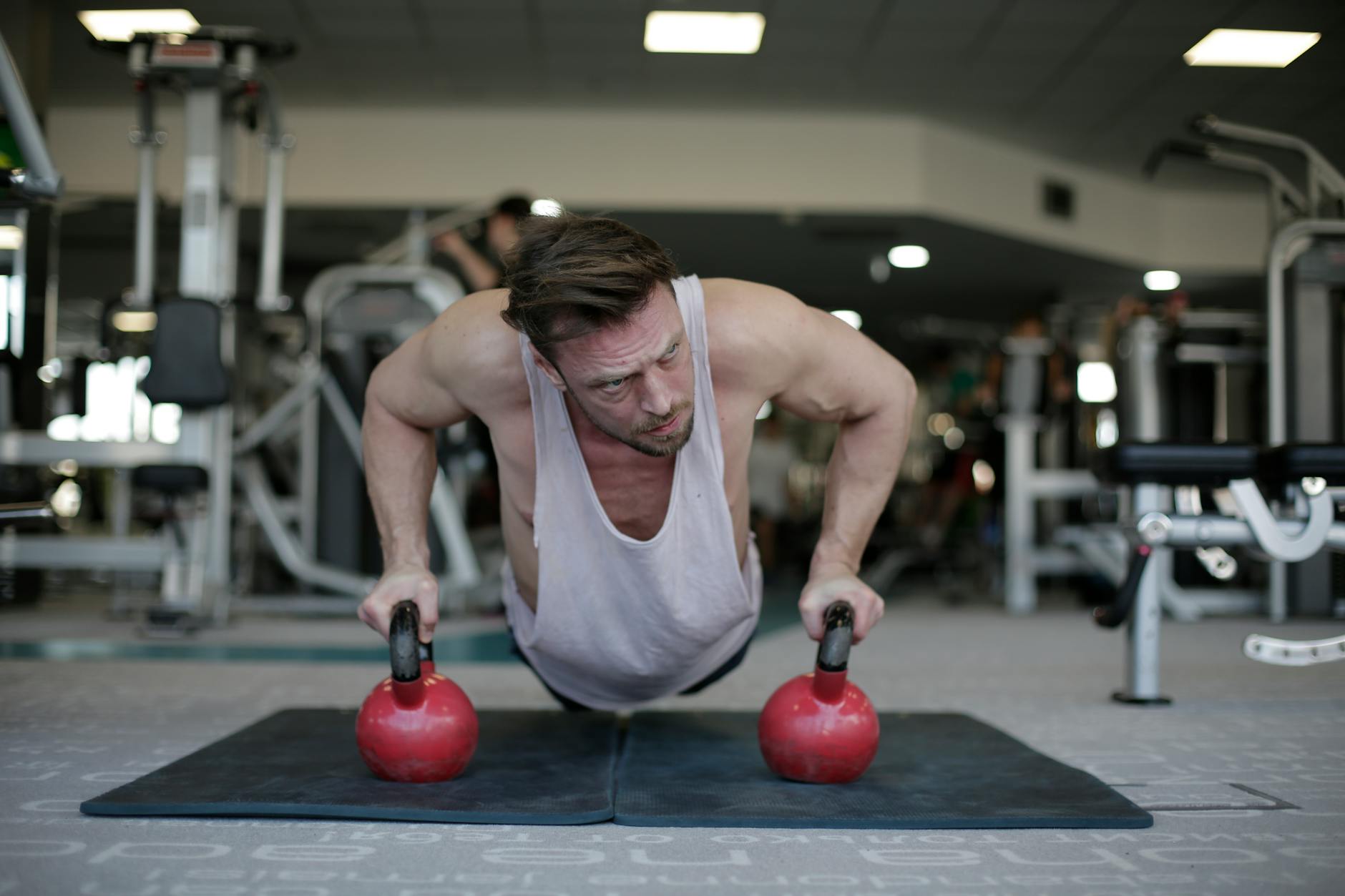
The most frequently cited evidence comes from an ACE-sponsored study conducted at the University of Wisconsin–La Crosse, which found that participants performing a kettlebell snatch workout burned approximately 20 calories per minute. That translates to roughly 400 calories in a 20-minute session, a caloric expenditure on par with cross-country skiing uphill at a fast clip. Heart rates during the workout reached 86 to 99 percent of maximum, while oxygen consumption hit 67 to 91 percent of VO2max. Those numbers place kettlebell training firmly in the territory of serious cardiovascular work, not just strength training with a cardio afterthought. A separate study examining 12 minutes of continuous kettlebell swings recorded 87 percent of HRmax and 65 percent of VO2max, producing aerobic improvements comparable to a regular cycling program. For runners, this is particularly relevant.
The kettlebell swing is a hip-hinge movement that hammers the glutes and hamstrings — the same muscles that drive your stride — while simultaneously demanding enough from your cardiovascular system to maintain or improve aerobic capacity. However, if your primary goal is building peak VO2max for race performance, kettlebell work should supplement your running rather than replace it. The aerobic stimulus is real but different in character from sustained steady-state running, and sport specificity still matters for competitive athletes. Additional research has shown that kettlebell training can increase core strength by 70 percent, with meaningful improvements in VO2max, leg press strength, grip strength, and dynamic balance. A 2024 BMC Sports Science study added further evidence, finding that kettlebell training produced significant physical fitness improvements in obese adults compared to bodyweight-only exercise. The takeaway across the literature is consistent: kettlebells deliver a genuine dual benefit that few other single pieces of equipment can match.
How Kettlebells Compare to Other Home Gym Equipment for Runners
When you stack kettlebells against other popular home gym options, the versatility-to-cost ratio is hard to beat. A single kettlebell enables dozens of exercises — swings, cleans, snatches, presses, squats, Turkish get-ups, rows, lunges, and carries, among others. A set of dumbbells offering comparable weight range would cost more and take up significantly more space. A quality treadmill runs $800 to $3,000 and replicates something you can do outside for free. Resistance bands are cheaper but cannot match the ballistic, power-generating movements that make kettlebell training distinctive. Fitness experts at Garage Gym Reviews, BarBend, and Men’s Journal have all rated kettlebells as a high-value home gym investment specifically because they combine strength and cardio in one tool, reducing the need for separate equipment.
For a runner who wants to cross-train at home without filling a spare room with machines, starting with just one or two kettlebells is sufficient to build a full workout routine. A 16-kilogram kettlebell for swings and Turkish get-ups paired with a 12-kilogram bell for presses and overhead work covers an enormous range of training possibilities. That said, kettlebells have a genuine limitation in progressive overload. With a barbell, you can add 2.5 pounds at a time. Kettlebells typically jump in 4-kilogram increments, which can be a steep increase on pressing movements. If your primary training goal is maximal strength — heavy squats, deadlifts, and bench press numbers — a barbell and rack setup will serve you better, though it will also cost considerably more and demand dedicated floor space.
Adjustable vs. Fixed Kettlebells — Which Makes More Financial Sense?
Adjustable kettlebells occupy an interesting middle ground in the market. Priced typically between $100 and $200, with premium options reaching $350, they promise the weight range of multiple kettlebells in a single unit. The Bowflex SelectTech 840, for example, runs $149 and lets you dial between several weight settings. On paper, an adjustable kettlebell replacing three or four fixed bells saves both money and space. In practice, the tradeoff involves durability and feel. Fixed cast iron kettlebells are virtually indestructible.
There are no moving parts, no adjustment mechanisms to wear out, and the balance point never changes. Adjustable models rely on internal plates or pin systems that can develop play over time, and the handle diameter or bell shape may feel different at various weight settings. For ballistic movements like swings and snatches — where the kettlebell is moving fast and momentum matters — a fixed bell with consistent geometry is noticeably more comfortable. If you are primarily doing slower, grind-based exercises like presses and goblet squats, an adjustable model works fine and can save you money during the building-out phase. The practical recommendation for most people is to start with one or two fixed kettlebells in weights you know you will use heavily, then consider an adjustable option only if you need a wider range and space is genuinely constrained. A runner who trains with kettlebells two or three times per week can accomplish a tremendous amount with a 16-kilogram and a 24-kilogram bell, a total investment well under $150 at budget price points.
Common Mistakes That Reduce the Value of Your Kettlebell Investment
The biggest risk with kettlebells is not the price tag — it is buying the wrong weight and either getting hurt or abandoning the tool entirely. New users, particularly runners accustomed to bodyweight and endurance work, frequently start too light. A 5-kilogram kettlebell is essentially useless for swings, the single most effective kettlebell exercise. Most adult men should start with a 16-kilogram bell for swings and most adult women with a 12-kilogram bell. Going lighter means you cannot generate the momentum needed for proper hip-hinge mechanics, which defeats the purpose and can lead to compensatory patterns that strain the lower back. The second common mistake is treating kettlebell training like a dumbbell workout, performing curls and lateral raises with an oddly shaped weight. Kettlebells are designed for ballistic and offset-load movements that exploit their unique center of gravity.
If your routine could be done identically with dumbbells, you are not getting the value the tool was built to deliver. Invest time learning the fundamental patterns — the swing, the Turkish get-up, and the clean — before branching out. Poor technique with a kettlebell is not just ineffective; it is a fast path to a wrist, shoulder, or back injury. A related limitation: kettlebell training has a genuine learning curve that is steeper than most home gym equipment. Unlike a stationary bike or a set of resistance bands, proper kettlebell technique requires coaching or careful self-study. Budget for a few sessions with a qualified instructor or commit to a reputable instructional program. The equipment is cheap, but the knowledge to use it well is the real investment.

How Kettlebell Training Fits Into a Running Program
For runners specifically, the value proposition of kettlebells extends beyond general fitness. The kettlebell swing is essentially a power-endurance exercise for the posterior chain, training the glutes and hamstrings to produce force repeatedly under fatigue — exactly the demand placed on those muscles during the late miles of a long run. Two to three kettlebell sessions per week, lasting 20 to 30 minutes each, can serve as effective cross-training without the joint impact of additional running volume.
With heart rates reaching 86 to 99 percent of max during intense kettlebell circuits, you are maintaining cardiovascular fitness on days when your legs need a break from pavement. A practical example: a runner training for a half marathon might replace one easy run per week with a 20-minute kettlebell session of swings, goblet squats, and Turkish get-ups. That session burns roughly 400 calories, builds hip stability and core strength, and generates enough cardiovascular stimulus to count as quality training — all without adding impact stress to already-tired legs.
The Long-Term Value of Kettlebells as Home Gym Equipment
Looking at the five-year horizon, kettlebells may be the most cost-effective piece of fitness equipment you can own. Cast iron does not wear out, does not require software updates, and does not need replacement parts. The $50 kettlebell you buy today will be functionally identical in 2036. Compare that to a smart fitness device with subscription fees, an exercise bike that needs pedal and belt replacements, or a gym membership that increases in price annually.
The accumulated savings of $2,900 to $3,500 over five years are real, but the less obvious benefit is consistency. Equipment that lives in your home and requires no preparation to use removes every friction point between you and a workout. The kettlebell market continues to expand with new manufacturers and designs, which is steadily pushing prices down at the budget end while improving quality. For anyone building a minimalist, effective home training setup — especially runners and endurance athletes who need strength work that complements rather than competes with their primary sport — a pair of well-chosen kettlebells remains one of the highest-return investments in fitness.
Conclusion
The research is clear and the economics are straightforward. Kettlebells deliver a rare combination of cardiovascular and strength training in a single, affordable, nearly indestructible tool. At 20 calories burned per minute with heart rates approaching maximum, the training stimulus rivals dedicated cardio equipment at a fraction of the cost. A basic setup pays for itself in under a year compared to a gym membership, and the savings compound significantly over time.
The key is buying the right weight, learning proper technique, and integrating kettlebell work into your existing training rather than treating it as a standalone program. For runners and endurance athletes, one or two quality kettlebells and 60 to 90 minutes per week of focused training can meaningfully improve your strength, durability, and performance. Start with a single kettlebell in a moderate weight, learn the swing and Turkish get-up, and build from there. The barrier to entry is low, the long-term value is high, and the evidence supports the investment.
Frequently Asked Questions
What size kettlebell should a runner start with?
Most male runners should begin with a 16-kilogram (35-pound) kettlebell, and most female runners with a 12-kilogram (26-pound) bell. These weights are heavy enough to perform swings with proper form and generate meaningful training stimulus for the posterior chain. Starting lighter often leads to poor mechanics because you cannot create the hip-hinge momentum that drives the movement.
Can kettlebell training replace running for cardiovascular fitness?
Kettlebell training can produce aerobic improvements comparable to cycling programs, and heart rates during intense sessions reach 86 to 99 percent of maximum. However, for competitive runners, it should supplement rather than replace running due to the principle of sport specificity. Kettlebells are excellent for cross-training days, active recovery, and building the strength base that supports your running.
How many kettlebells do I need for a complete home workout?
Starting with just one or two kettlebells is sufficient to build a full workout routine. A moderate bell for swings and lower body work paired with a slightly lighter bell for presses and overhead movements covers the vast majority of exercises. You can expand over time, but most people accumulate kettlebells faster than they actually need them.
Are cheap kettlebells safe to use?
Budget kettlebells from reputable manufacturers like Amazon Basics ($22 to $71) are perfectly safe for home use. The key quality indicators are a smooth handle without rough seams, a flat bottom that sits stable on the floor, and a single-cast construction without welds. Avoid kettlebells with painted finishes that chip easily, as loose paint can affect your grip during swings.
How long until a kettlebell home gym pays for itself versus a gym membership?
With the average U.S. gym membership running approximately $58 per month, a basic kettlebell home setup can pay for itself in under 11 months. Over five years, the savings reach approximately $2,900 to $3,500, assuming you cancel the gym membership entirely. If you maintain your membership for other amenities, the comparison becomes less favorable.