To use battle ropes properly, anchor the rope at its midpoint to a sturdy post or heavy kettlebell, stand with your feet shoulder-width apart and a slight bend in your knees, grip one end in each hand, and generate waves by alternating your arms in controlled, powerful movements that originate from your hips and core rather than just your shoulders. The most common mistake people make is standing bolt upright and flailing their arms — proper form requires you to sit back into a quarter squat, brace your midsection, and drive the motion from your entire posterior chain.
A 2015 study published in the Journal of Strength and Conditioning Research found that a 10-minute battle rope session can burn upward of 112 calories while simultaneously elevating heart rate into the 80-95 percent of max range, making it one of the most efficient conditioning tools available for runners and endurance athletes looking to cross-train without the joint impact of additional mileage. This article covers the foundational stance and grip that prevent injury, the specific wave patterns worth learning first, how to program battle ropes into a running schedule without compromising recovery, common form breakdowns that waste energy, and the real limitations of rope training that the fitness industry tends to gloss over. Whether you have access to a 30-foot rope at a commercial gym or you are considering buying one for your garage, the mechanics stay the same — and getting them right from day one matters more than you might expect.
Table of Contents
- What Is the Correct Stance and Grip for Battle Ropes?
- Essential Wave Patterns Every Beginner Should Learn First
- How Battle Rope Training Benefits Runners and Endurance Athletes
- Programming Battle Ropes Into a Weekly Running Schedule
- Common Form Breakdowns That Waste Energy and Cause Injury
- Choosing the Right Rope for Your Training Level
- Where Battle Rope Training Is Heading
- Conclusion
- Frequently Asked Questions
What Is the Correct Stance and Grip for Battle Ropes?
Your stance is the foundation of every battle rope movement, and getting it wrong will sabotage even the simplest wave pattern. Stand far enough from the anchor point that the ropes have a slight amount of slack — you should not be pulling them taut, because tension without slack eliminates the wave mechanics entirely. Your feet should be roughly shoulder-width apart or slightly wider, toes pointed forward or turned out just a few degrees. Drop your hips into a quarter squat so your knees track over your toes, and keep your chest up with a neutral spine. Think of the position you would hold if someone were about to throw a medicine ball at your stomach. That braced, athletic stance is your home base for every exercise. Grip the rope ends firmly but without a death squeeze. Overgripping is the fastest route to forearm burnout, and once your forearms give out, your set is effectively over regardless of how much cardiovascular capacity you have left.
Wrap your fingers around the rope with your thumbs on top, as if you were holding a hammer. Some ropes come with rubber handles; others are just raw manila or poly dacron ends. If your gym has the handle-less variety, you can wrap athletic tape around the ends or wear light gloves, but avoid thick padded gloves that reduce your proprioceptive feedback. A useful comparison: gripping battle ropes should feel like holding a steering wheel on a long highway drive — engaged but not white-knuckled. One detail that gets overlooked is hand position relative to your hips. Your hands should start roughly at hip height, not chest height. When people hold the ropes too high, they recruit their anterior deltoids almost exclusively and gas out in under 20 seconds. Starting lower allows you to use your lats, core, and hips as the primary movers, which distributes the work across far more muscle and lets you sustain output for meaningful intervals.

Essential Wave Patterns Every Beginner Should Learn First
The alternating wave is where everyone should start, and frankly, it is where most people should spend the majority of their battle rope time. Raise one arm while lowering the other in a controlled, rhythmic motion, generating a continuous serpentine wave that travels down the length of the rope to the anchor. The amplitude of the wave — how high each crest rises — matters more than speed in the early weeks. Focus on producing smooth, consistent waves that reach all the way to the anchor point. If the waves die out halfway down the rope, you are either standing too close or not generating enough force from your hips. Once the alternating wave feels natural, add the double wave (both arms moving in unison), the slam (raising both arms overhead and driving the ropes into the floor), and lateral waves (sweeping your arms side to side). Each pattern shifts the muscular emphasis slightly.
Double waves and slams hit the anterior chain harder and spike heart rate faster, while lateral waves challenge the obliques and rotational stabilizers that runners chronically underwork. However, if you have any history of shoulder impingement or rotator cuff issues, approach the overhead slam cautiously. The rapid shoulder flexion under fatigue can aggravate existing problems, and there is no conditioning benefit worth a shoulder injury that sidelines your running for eight weeks. A limitation worth noting: battle ropes are predominantly an upper-body and core tool. Despite what some trainers claim, they are not a meaningful lower-body strength builder. Your legs work isometrically to maintain the squat position, which has endurance value, but if you need actual leg strength development, squats and deadlifts are not replaceable. Understand what the tool does well and do not ask it to do everything.
How Battle Rope Training Benefits Runners and Endurance Athletes
Runners tend to develop strong legs and underdeveloped upper bodies, and this imbalance becomes increasingly problematic at longer distances. Watch any marathon past mile 20 and you will see runners whose arms have stopped swinging efficiently, whose torsos collapse forward, and whose cadence deteriorates — not because their legs have quit, but because their upper body and core can no longer maintain posture. Battle ropes directly address this gap. The sustained, rhythmic arm action under resistance builds the muscular endurance in the shoulders, arms, and trunk that running itself does not adequately develop. From a cardiovascular standpoint, battle ropes offer a genuinely non-impact conditioning stimulus.
A runner logging 40 miles per week who wants additional cardio without additional ground contact forces can substitute one or two 15-minute rope sessions for easy runs and maintain or even improve VO2 max markers without adding mechanical stress to the feet, ankles, and knees. Research from the American College of Sports Medicine has shown that high-intensity interval training with battle ropes produces comparable cardiovascular adaptations to sprint intervals on a track, with the obvious advantage of zero eccentric loading on the lower extremities. There is also a coordination benefit that transfers to running economy. Battle ropes demand contralateral arm timing — left arm up while right arm down — which mirrors the cross-body coordination pattern of the running gait. Athletes who spend time with ropes often report feeling more rhythmically connected during tempo runs, though this is admittedly more anecdotal than rigorously studied.
Programming Battle Ropes Into a Weekly Running Schedule
The tradeoff with any cross-training modality is balancing the benefit against the recovery cost, and battle ropes are no exception. A reasonable starting point for a runner training four to five days per week is two rope sessions of 10-15 minutes each, placed on easy run days or as a finisher after a short recovery jog. Avoid scheduling a hard rope session the day before a track workout or long run — your grip and core will be fatigued in ways that subtly compromise your running mechanics, even if your legs feel fine. Interval formatting works better than steady-state for rope training. A beginner protocol might be 20 seconds of work followed by 40 seconds of rest for 8-10 rounds.
An intermediate athlete can shift to 30 seconds on, 30 seconds off, and advanced users may push toward a Tabata-style 20 seconds on, 10 seconds off for 8 rounds — though this is genuinely brutal and should not be attempted until your form holds up under fatigue. The comparison to running intervals is useful here: just as you would not do 400-meter repeats at 5K pace before you could hold proper form through an easy 4-miler, you should not chase intensity on the ropes until your wave patterns remain clean when you are tired. One practical note — if you train ropes on the same day as a run, do the run first. Running with pre-fatigued arms and a spent core degrades your gait more than running with fresh legs and then finishing on the ropes. The exception is if you are deliberately practicing running in a fatigued state for ultra or obstacle course preparation, in which case the ropes-first order makes strategic sense.
Common Form Breakdowns That Waste Energy and Cause Injury
The single most prevalent error is what coaches call “arm-only roping,” where the athlete stands straight-legged with a rigid torso and generates all movement from the shoulder joint. This pattern overloads the deltoids and upper traps, creates poor wave mechanics, and typically results in shoulder or neck soreness rather than a productive training stimulus. The fix is simple but requires conscious effort: initiate each wave by slightly extending your hips and then channeling that force up through a braced core and into your arms. Your body should have a subtle pulsing quality, not a wooden rigidity. Another common breakdown is letting the rope go slack between waves. This usually happens as fatigue sets in and the athlete starts shortening the range of motion to survive the interval.
The problem is that slack rope eliminates the eccentric loading phase, which is where much of the metabolic cost and muscular stimulus actually occurs. If you cannot maintain full waves for the duration of your set, shorten the set rather than degrading the movement. Fifteen seconds of high-quality waves is more productive than 30 seconds of half-hearted arm wiggling. A warning for heavier athletes or those with high blood pressure: battle ropes can produce significant spikes in systolic blood pressure, particularly during bilateral slam movements. The combination of intense isometric core bracing, the Valsalva-like effect of forceful exhalation during slams, and the high heart rate response means this is not a tool to casually pick up without medical clearance if you have cardiovascular risk factors. The same intensity that makes ropes efficient makes them physiologically demanding in ways that differ from steady-state cardio.

Choosing the Right Rope for Your Training Level
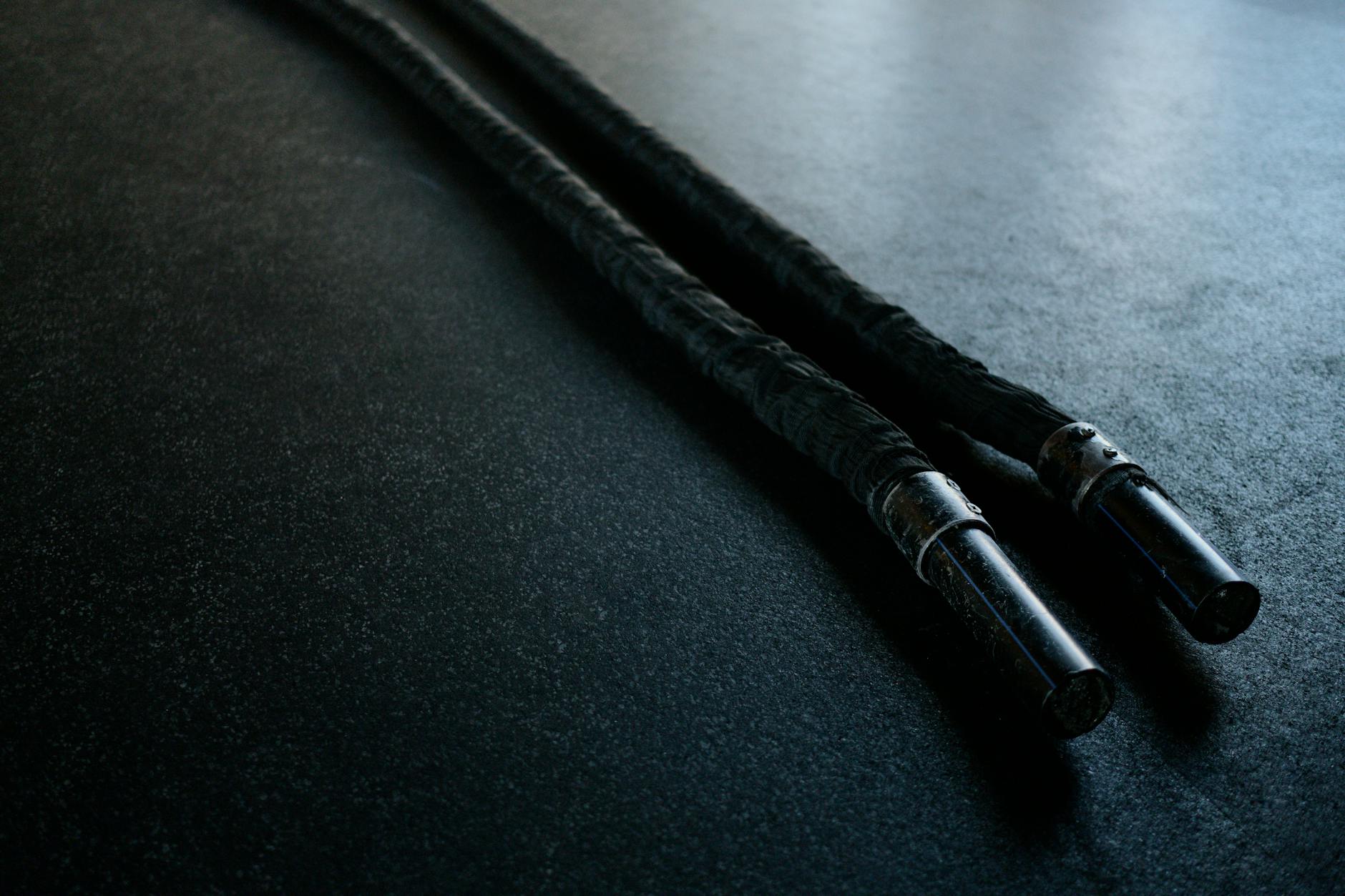
Battle ropes typically come in three diameters — 1.5 inches, 2 inches, and 2.5 inches — and two common lengths of 30 and 50 feet (which become 15 and 25 feet of usable rope per hand once folded at the anchor). For most runners and general fitness athletes, a 1.5-inch diameter, 30-foot rope weighing roughly 15-20 pounds is the right starting point. The 2-inch ropes weigh considerably more and shift the training emphasis toward raw strength-endurance rather than cardiovascular conditioning, which makes them better suited for football linemen than for someone whose primary sport is distance running. Material matters as well.
Manila ropes are the traditional option and feel satisfying to use, but they shed fibers, deteriorate outdoors, and can tear up your hands. Poly dacron ropes — a synthetic blend wrapped in a woven sheath — are more durable, weather-resistant, and easier on the skin. If you are buying a rope for home use and plan to anchor it around a tree or post outdoors, poly dacron is the practical choice. Expect to pay between $40 and $80 for a quality rope, which makes this one of the more affordable pieces of conditioning equipment you can own.
Where Battle Rope Training Is Heading
The integration of battle ropes into sport-specific conditioning programs continues to expand beyond the CrossFit and functional fitness communities where they first gained mainstream popularity. Collegiate and professional running programs are increasingly incorporating rope intervals into their supplemental training blocks, particularly during indoor seasons when weather limits outdoor cross-training options.
Several Division I track programs now include rope circuits as part of their pre-season general preparation phases, treating them as a low-impact alternative to sled pushes and prowler work. The emerging trend of combining battle ropes with movement — performing alternating waves while walking forward or backward, or while in a lateral shuffle — adds a locomotion component that has more direct transfer to running than stationary rope work. This hybrid approach is still relatively new and lacks extensive research, but early adoption by coaches and athletes suggests it fills a gap between pure upper-body conditioning and full-body dynamic movement that other tools have not efficiently addressed.
Conclusion
Battle ropes are a straightforward tool that rewards proper technique and punishes lazy form. Get the stance right — quarter squat, braced core, hands at hip height — and the cardiovascular and muscular endurance benefits come quickly and with minimal injury risk. For runners specifically, ropes address the upper body and core endurance deficit that accumulates over months of leg-dominant training, and they do so without adding impact stress to joints that are already absorbing thousands of foot strikes per week.
Start with two short sessions per week using alternating waves, prioritize wave quality over speed or duration, and progress by extending your work intervals before adding more complex patterns. Pay attention to how rope sessions affect your running on subsequent days and adjust placement in your weekly schedule accordingly. Like any conditioning tool, battle ropes are most valuable when they complement your primary training rather than compete with it — and knowing when to put them down is just as important as knowing how to pick them up.
Frequently Asked Questions
How long should a battle rope workout last?
For runners using ropes as supplemental conditioning, 10-15 minutes of interval work is sufficient. This typically translates to 8-12 rounds of 20-30 second efforts with equal or longer rest periods. Going beyond 20 minutes in a single session generally produces diminishing returns and increases recovery cost without proportional cardiovascular benefit.
Can battle ropes replace a cardio session on a rest day?
They can replace an easy run from a cardiovascular standpoint, but they are not truly “rest” for your body. A 15-minute rope interval session at moderate intensity is roughly equivalent to a 20-25 minute easy run in terms of caloric expenditure and heart rate response. However, your upper body and grip will need recovery afterward, so plan accordingly if you have upper body strength work scheduled nearby.
Do battle ropes build muscle or just burn calories?
They primarily build muscular endurance rather than hypertrophy. The resistance is too low and the rep ranges too high to stimulate meaningful muscle growth in most people. You will develop better endurance in your shoulders, arms, and core, and you may see some toning in the first few weeks if you are new to upper body training, but battle ropes are fundamentally a conditioning tool, not a muscle-building one.
What surface should I use battle ropes on?
Rubber gym flooring, short grass, or concrete all work. Avoid rough asphalt or gravel, which will shred the rope sheath over time. If you train on turf or carpet, the increased friction will make the rope feel heavier and the waves harder to sustain — this is not necessarily bad, but be aware that switching surfaces changes the effective difficulty. Indoor wooden or laminated floors work but can get scuffed by the rope.
How do I anchor battle ropes at home without a dedicated post?
Loop the rope around a heavy kettlebell (70 pounds or more), thread it through a ground-level fence post, or wrap it around the base of a squat rack. The anchor point needs to be low — ideally below knee height — and absolutely immovable. A common mistake is wrapping the rope around a lightweight object that slides toward you during use, which kills wave mechanics and creates a tripping hazard. If nothing in your space is heavy enough, you can buy a dedicated wall or floor anchor for $15-25 that bolts into a stud or concrete.