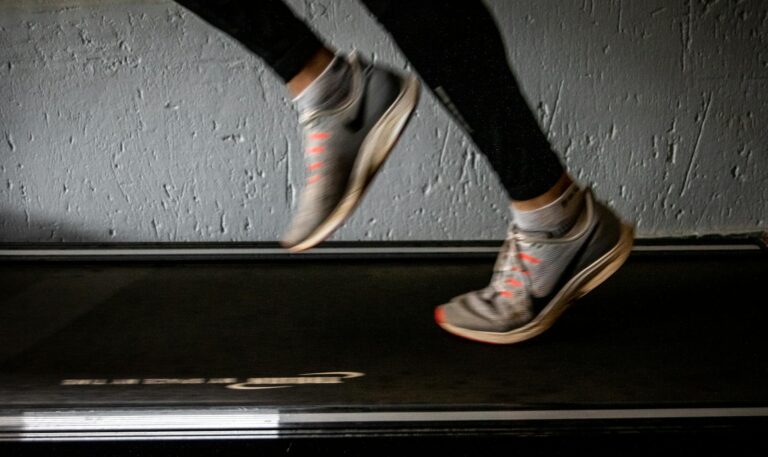
Starting a walking program as a complete beginner comes down to one straightforward commitment: lace up a pair of supportive shoes, step outside, and walk for ten to fifteen minutes at a comfortable pace. That is genuinely all it takes on day one. You do not need a fitness tracker, a training plan downloaded from the internet, or a gym membership. A woman named Karen, who shared her story on a popular running forum, started her fitness journey by walking to the end of her block and back — a distance of roughly 400 meters — every morning for two weeks before she felt ready to go farther.
Six months later she completed a 5K. The simplicity of walking is its greatest asset, but that simplicity also leads people to overthink it or, worse, skip it entirely in favor of something that feels more ambitious. This article covers how to structure your first few weeks of walking, what pace and duration to aim for, how to choose the right footwear without overspending, and how to progress from casual walks to a legitimate cardiovascular fitness routine. We will also address common mistakes that lead to early burnout or injury, the role walking plays as a gateway to running, and how to stay consistent when motivation fades. Whether you are recovering from an injury, returning to exercise after years away, or simply looking for a sustainable way to improve your health, walking is the most underrated entry point in fitness.
Table of Contents
- What Do You Actually Need to Start Walking for Fitness?
- How Far and How Fast Should a Beginner Walk?
- Choosing a Walking Route That Keeps You Consistent
- Building a Weekly Walking Schedule That Actually Sticks
- Common Beginner Mistakes That Lead to Quitting
- When and How to Transition from Walking to Walk-Run Intervals
- The Long-Term Health Case for Walking
- Conclusion
- Frequently Asked Questions
What Do You Actually Need to Start Walking for Fitness?
The honest answer is less than you think. You need a pair of shoes that provide reasonable arch support and cushioning, clothing that does not restrict your stride, and a route — even if that route is just your neighborhood sidewalk. The fitness industry has a way of complicating basic movement, but walking existed long before moisture-wicking base layers and GPS watches. If you already own a pair of sneakers that feel comfortable and are not completely worn flat, those will work fine for your first several weeks. That said, footwear is the one area where a small investment pays off.
Worn-out shoes with compressed midsoles can cause shin splints, plantar fasciitis, and knee pain, especially on concrete surfaces. You do not need a $180 performance shoe, but something from a reputable brand with decent cushioning — think the $60 to $80 range from Brooks, Asics, New Balance, or Saucony — will protect your joints as you build volume. A useful comparison: walking in old, flat-soled sneakers on pavement is roughly equivalent to the impact stress of running in proper shoes, because the cushioning technology is doing none of the work for you. One thing most beginners overlook is hydration. You probably will not need to carry water on a fifteen-minute walk, but once you extend beyond thirty minutes, especially in warm weather, bring a small bottle. Dehydration sneaks up on walkers because the effort feels modest compared to running, but you are still sweating and losing fluids.

How Far and How Fast Should a Beginner Walk?
For your first week, aim for ten to fifteen minutes of continuous walking at a pace where you can hold a full conversation without gasping. This is sometimes called the “talk test,” and it is a remarkably reliable gauge of appropriate intensity for beginners. In practical terms, most people naturally walk at about 3 to 3.5 miles per hour on flat ground, which translates to roughly a 17- to 20-minute mile. that is a perfectly fine starting pace, and there is no reason to push beyond it initially. A common progression framework is the 10 percent rule: increase your total weekly walking time by no more than 10 percent each week. So if you walk 15 minutes five times in your first week (75 minutes total), aim for around 82 minutes the following week.
This might mean adding two minutes to each walk, or adding one additional short walk. The gradual increase protects your connective tissue — tendons, ligaments, and fascia — which adapts more slowly than your cardiovascular system. Your heart and lungs might feel ready to do more after just a few days, but your Achilles tendons and plantar fascia need weeks to toughen up. However, if you have been completely sedentary for a year or more, or if you are significantly overweight, even the 10 percent rule can be aggressive. In that case, hold at your starting duration for two full weeks before adding volume. Shin splints and foot pain in new walkers almost always come from doing too much too soon, not from walking itself. Listen to persistent soreness — dull aches that show up the morning after a walk and linger — as a signal to hold steady or back off slightly.
Choosing a Walking Route That Keeps You Consistent
Route selection matters more than most beginners realize, because convenience is the single biggest predictor of long-term exercise adherence. Research published in the British Journal of Sports Medicine found that people who exercised within a ten-minute travel radius of their home were significantly more likely to maintain their habit over six months than those who drove to a specific location. Your ideal beginner route starts and ends at your front door. Walk your neighborhood first. Note the sidewalk quality, traffic patterns, and elevation changes. A route with a gentle hill is actually valuable because it introduces intensity variation without requiring you to walk faster.
If your neighborhood lacks sidewalks or feels unsafe, look into local school tracks — most are open to the public outside of school hours, and the flat, rubberized surface is forgiving on joints. Parks with paved loops are another strong option, and they offer the added psychological benefit of green space, which studies have linked to lower cortisol levels during exercise. For a concrete example, consider mapping out three routes of different lengths — say, a 10-minute loop, a 20-minute loop, and a 30-minute out-and-back — so you can choose based on your energy level and schedule on any given day. Having options prevents the all-or-nothing thinking that kills walking programs. On a day when you are exhausted, a 10-minute loop still counts. It still moves the needle.

Building a Weekly Walking Schedule That Actually Sticks
The tradeoff every beginner faces is frequency versus duration, and for new walkers, frequency wins. Five 15-minute walks per week will build your habit faster and produce better cardiovascular adaptations than two 40-minute walks, even though the total weekly volume is lower. This is because consistency reinforces the neural pathways of habit formation — you are training your brain to expect and accept daily movement, not just training your legs. A practical beginner schedule for the first four weeks looks like this: walk five days per week, take two rest days (they do not need to be consecutive), and start at 10 to 15 minutes per session during week one. By week four, aim for 20 to 25 minutes per session.
Morning walks tend to have the highest adherence rates because they happen before the day’s obligations pile up, but the best time to walk is whatever time you will actually do consistently. An evening walker who never misses is fitter than a morning walker who skips half their sessions. The comparison to running schedules is worth noting: beginner runners are typically advised to run three days per week with rest days between each session to allow for recovery. Walking is low-impact enough that daily sessions are safe for most people, which is actually an advantage — you build the habit loop faster because there are fewer gaps. If you are using walking as a precursor to a couch-to-5K running program, this daily habit foundation will make the transition significantly easier.
Common Beginner Mistakes That Lead to Quitting
The most frequent mistake is not the one you would guess. It is not going too hard or walking too far — it is abandoning the program after missing a few days. Life interrupts routines. You get sick, work runs late, the weather turns terrible. Beginners interpret a broken streak as failure and quietly stop walking altogether. The fix is to reframe the goal: you are not building a streak, you are building a default behavior. Missing Wednesday does not erase what you did on Monday and Tuesday. The second mistake is walking with poor posture, which leads to lower back pain and neck stiffness that beginners blame on the activity itself rather than their form.
Walk tall with your shoulders pulled back slightly, your gaze forward (not down at your phone), and your arms swinging naturally. Overstriding — taking steps that are too long — is another common form issue that increases impact on your heel and can cause shin pain. Your foot should land roughly beneath your body, not out in front of it. A less obvious pitfall is comparing yourself to runners. Walking and running exist on a fitness continuum, not a hierarchy. Walking at a brisk pace burns roughly 300 to 400 calories per hour for a 160-pound person, which is about 60 percent of what jogging burns. But walking produces far less joint stress, carries a much lower injury rate, and is sustainable every single day without recovery protocols. If your goal is long-term cardiovascular health rather than race performance, walking is not a lesser choice — it is a strategic one.

When and How to Transition from Walking to Walk-Run Intervals
Once you can comfortably walk for 30 minutes at a brisk pace without significant fatigue, you are physiologically ready to introduce running intervals if you choose to. A standard walk-run protocol starts with one minute of easy jogging followed by four minutes of walking, repeated for your full session duration. Over the course of several weeks, the ratio shifts: two minutes running to three minutes walking, then three to two, and eventually continuous running for those who want it. Not everyone needs or wants this transition, and that is perfectly legitimate.
But for those aiming to eventually run a 5K or improve their VO2 max more aggressively, the walk-run method — popularized by Olympian Jeff Galloway — is the safest bridge. A key warning: do not skip the walking base. Runners who jump straight into jog intervals without building four to six weeks of walking volume are the ones who end up with IT band syndrome, stress reactions, and other overuse injuries. The walking phase is not wasted time — it is structural preparation.
The Long-Term Health Case for Walking
The long-term data on walking is, frankly, staggering. A 2023 meta-analysis published in the European Journal of Preventive Cardiology found that walking just 3,967 steps per day — well below the often-cited 10,000 — was associated with a measurable reduction in all-cause mortality risk. Every additional 1,000 steps reduced that risk further, with no upper plateau identified in the data.
For context, a 20-minute walk at a moderate pace covers roughly 2,000 steps, meaning even a single daily walk puts you in a meaningfully healthier category. As wearable technology continues to improve and public health messaging shifts away from the outdated “no pain, no gain” mentality, walking is being recognized as the most accessible, sustainable, and evidence-supported form of cardiovascular exercise available. The future of fitness is not more extreme — it is more consistent. And nothing is more consistently achievable than putting one foot in front of the other.
Conclusion
Starting a walking program requires no special equipment, no prior fitness experience, and no radical lifestyle changes. Begin with 10 to 15 minutes at a conversational pace, increase your weekly volume gradually, choose a route that starts at your front door, and prioritize showing up five days a week over walking longer distances. Pay attention to your footwear and your posture, and do not let a missed day become a missed month. The barrier to entry for walking is as low as it gets in fitness — the only thing separating you from being a walker is the decision to start. Once walking feels routine, you have options.
You can increase your pace, extend your distance, add hilly terrain, or transition to walk-run intervals as a bridge toward jogging. But none of those progressions are mandatory. Walking at a moderate pace for 30 minutes most days of the week meets the American Heart Association’s physical activity guidelines and delivers the majority of the cardiovascular, metabolic, and mental health benefits associated with exercise. You do not have to run to be fit. You just have to move.
Frequently Asked Questions
How many days per week should a complete beginner walk?
Aim for five days per week, starting at just 10 to 15 minutes per session. Walking is low-impact enough that daily sessions are safe for most people, unlike running, which requires built-in rest days. Take two days off each week, but they do not need to be consecutive.
Is walking actually good enough exercise, or do I need to run eventually?
Walking is a legitimate form of cardiovascular exercise backed by decades of research. Brisk walking for 30 minutes most days meets physical activity guidelines from every major health organization. Running offers additional benefits for speed and VO2 max, but for general health and longevity, consistent walking delivers most of the same outcomes with far less injury risk.
What shoes should I buy for a walking program?
You do not need high-end running shoes, but avoid walking in completely flat or worn-out sneakers, especially on concrete. A cushioned shoe in the $60 to $80 range from brands like Brooks, New Balance, Asics, or Saucony will protect your joints. If you already own comfortable athletic shoes with intact cushioning, start with those and upgrade later.
How fast should I walk as a beginner?
Walk at a pace where you can comfortably hold a conversation without needing to pause for breath. For most people, this is about 3 to 3.5 miles per hour, or roughly a 17- to 20-minute mile. Speed is not the priority in the first month — consistency and duration are.
I missed a week of walking. Should I start over?
No. Fitness is not a streak you can break. Resume at a slightly reduced duration if you have been off for more than a week, but you do not lose all your adaptations from a short break. The biggest risk of a missed week is the psychological spiral of feeling like you have failed, so resist that narrative and simply walk again.
When is it safe to start adding jogging intervals?
Once you can walk briskly for 30 continuous minutes without significant fatigue or joint pain, you can begin walk-run intervals. Start with one minute of easy jogging followed by four minutes of walking, and gradually shift the ratio over several weeks. Do not skip the walking base — four to six weeks of consistent walking prepares your tendons and ligaments for the impact of running.