To start power walking as a complete beginner, you need three things: a pair of supportive shoes, a commitment to walking at a pace of roughly 3.5 to 4.5 miles per hour, and a simple schedule that starts with three sessions per week lasting 20 minutes each. That is genuinely all it takes. Power walking differs from casual strolling because it demands a purposeful stride, an elevated heart rate, and deliberate arm movement, but it does not require any athletic background or gym membership.
A 45-year-old office worker who has not exercised in a decade can begin a power walking program this weekend and, within six to eight weeks, be covering three miles in under 45 minutes with noticeably better cardiovascular fitness. This article covers the mechanics of a proper power walking stride, how to structure your first month of training, what gear actually matters versus what is marketing noise, how to avoid the most common beginner injuries, and when power walking might not be the right choice for your goals. Whether you are looking to lose weight, improve heart health, or simply build a sustainable exercise habit that does not wreck your joints, the information here will give you a concrete plan rather than vague encouragement.
Table of Contents
- What Exactly Is Power Walking and How Does It Differ from Regular Walking?
- How to Build Your First Four-Week Power Walking Schedule
- Choosing the Right Shoes and Gear for Power Walking
- Mastering Power Walking Form and Technique
- Common Beginner Injuries and How to Avoid Them
- Using Heart Rate Zones to Measure Intensity
- When to Progress Beyond Beginner Power Walking
- Conclusion
- Frequently Asked Questions
What Exactly Is Power Walking and How Does It Differ from Regular Walking?
power walking occupies a specific middle ground between a leisurely stroll and jogging. The defining characteristic is pace: you maintain a speed that elevates your heart rate to 60 to 70 percent of your maximum, which for most adults means walking fast enough that holding a full conversation becomes slightly uncomfortable. Your feet stay in contact with the ground at all times, which is what technically separates walking from running. At a competitive level, racewalkers maintain speeds above six miles per hour with strict form requirements, but as a beginner, you are simply aiming to walk with urgency and intention rather than meandering. The biomechanical differences matter more than most beginners realize. In a casual walk, your arms hang loosely, your stride is short, and your posture tends to slouch.
In a proper power walk, your arms are bent at roughly 90 degrees and swing forward and back like pendulums, not across your body. Your stride lengthens slightly, your heel strikes first with a deliberate roll through the foot, and your core stays engaged to keep your torso upright. A study published in the British Journal of Sports Medicine found that brisk walking at these intensities reduces all-cause mortality risk by roughly 24 percent compared to slow walking, which is nearly the same benefit as jogging but with a fraction of the joint impact. One useful comparison: a 160-pound person walking at a casual 2.5 miles per hour burns approximately 180 calories in an hour. That same person power walking at 4 miles per hour burns closer to 350 calories. The difference is not trivial, and it accumulates significantly over weeks and months.

How to Build Your First Four-Week Power Walking Schedule
The biggest mistake beginners make is starting with too much volume or too high an intensity. your cardiovascular system adapts faster than your tendons, ligaments, and feet, so you can feel like you are ready to walk for an hour before your body is structurally prepared for it. A smarter approach is to follow a graduated schedule. During week one, walk three times for 20 minutes at a pace where you can still talk in short sentences but would not want to sing. During week two, increase to 25 minutes. By week three, push to 30 minutes and add a fourth session. By week four, you should be comfortable with four 30-minute sessions, and you can begin experimenting with one longer walk of 40 to 45 minutes on a weekend.
However, if you are significantly overweight, have been sedentary for more than a year, or have any joint issues, scale that progression back by 50 percent. There is no shame in spending two weeks at each level instead of one. A physical therapist I spoke with years ago put it well: the goal of the first month is not fitness improvement, it is building the habit and letting your connective tissue catch up. Pushing through foot or shin pain in week two is how people end up quitting in week four. If you experience sharp pain in your shins, the arch of your foot, or your knees, take a rest day and drop back to the previous week’s duration. Time of day matters less than consistency, but morning walks have one practical advantage: they are harder to skip. Evening plans change, work runs late, and motivation fades after a long day. If you can establish a routine of walking before or immediately after your morning starts, your adherence rate will be significantly higher.
Choosing the Right Shoes and Gear for Power Walking
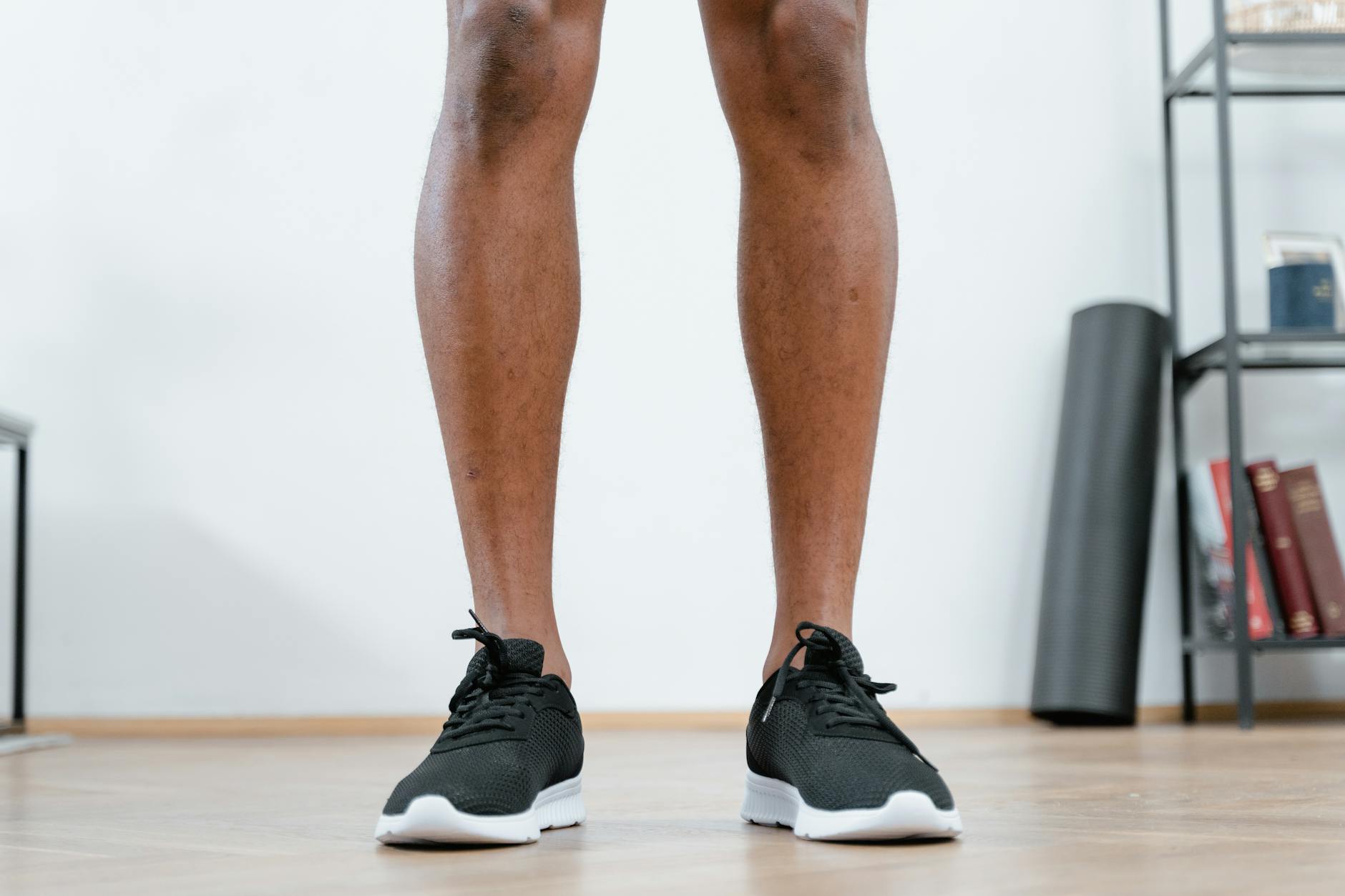
Footwear is the single gear decision that genuinely affects your experience and injury risk. You want a shoe designed for walking or light training, not a running shoe. Running shoes typically have a higher heel-to-toe drop, which encourages a forefoot or midfoot strike. Walking shoes have a flatter profile that supports the heel-to-toe rolling motion of a walking gait. Brands like New Balance, Brooks, and ASICS all make walking-specific models in the $80 to $130 range that will serve a beginner well. Go to a store that measures your feet and watches you walk if possible. If you overpronate, which means your ankle rolls inward excessively, you will need a stability shoe, and no amount of online quiz results can substitute for someone actually watching your gait. Beyond shoes, almost everything marketed to walkers is optional.
Moisture-wicking socks are worth the $12 to $15 per pair because cotton socks hold sweat and cause blisters. A simple digital watch or your phone can track time and distance. Clothing should be layered in cool weather and light in warm weather. You do not need walking poles, a heart rate monitor, or a hydration vest for walks under 90 minutes in moderate temperatures. A water bottle is sufficient. One specific example worth noting: a friend of mine started power walking in old basketball shoes because they were the most comfortable pair he owned. Within two weeks, he had developed plantar fasciitis that took three months to fully resolve. The shoes felt fine for standing but provided zero support for the repetitive heel strike of walking thousands of steps. Proper footwear is not a luxury purchase; it is injury prevention.
Mastering Power Walking Form and Technique
Good form is the difference between power walking being a mediocre exercise and an excellent one. The tradeoff is simple: walking with proper technique is more tiring and feels less natural at first, but it engages more muscle groups, burns more calories, and protects your joints. Walking with sloppy form is easier in the short term but limits your speed, reduces the training effect, and can create chronic issues in your hips and lower back. Start from the top down. Your head should be level with your eyes forward, not looking at the ground. Dropping your chin even slightly rounds your upper back and compresses your breathing. Your shoulders should be down and relaxed, not hunched up toward your ears. Your arms bend at about 90 degrees and swing from the shoulder, not the elbow.
The forward swing should bring your hand to about chest height, and the back swing should send your elbow behind your torso. This arm motion is not decorative; it drives your pace and engages your upper body. Your core stays lightly braced, as if someone might gently push you from the side and you want to stay balanced. Your hips rotate slightly with each stride, which is where much of your power comes from. At the feet, the sequence is heel strike, roll through the midfoot, and push off from the toes. Overstriding, where you plant your foot far in front of your center of gravity, is the most common form error and it acts as a brake with every step. Instead, focus on quicker, shorter steps. A cadence of 130 to 140 steps per minute is a reasonable target for a brisk power walk. You can count steps for 15 seconds and multiply by four, or use a free metronome app to set the rhythm until it becomes natural.
Common Beginner Injuries and How to Avoid Them
Shin splints are the most frequent complaint among new power walkers, and they almost always result from doing too much too soon on hard surfaces. The tibialis anterior muscle along the front of your shin is relatively weak in most sedentary people, and it works hard during the heel-strike phase of walking. When you suddenly ask it to perform thousands of repetitions per session, it rebels. The fix is progressive loading: start with shorter walks, avoid consecutive days of walking in your first two weeks, and if possible, walk on softer surfaces like packed dirt trails or rubberized tracks rather than concrete sidewalks. Plantar fasciitis, an inflammation of the thick tissue along the bottom of the foot, is the second most common issue.
It typically presents as a stabbing pain in the heel, especially with your first steps in the morning. This is almost always a shoe problem, a volume problem, or both. If you develop heel pain, cut your walking volume in half, roll the bottom of your foot on a frozen water bottle for 10 minutes after walking, and evaluate whether your shoes provide adequate arch support. One important limitation to acknowledge: power walking is not appropriate for everyone as a starting exercise. If you have severe osteoarthritis in your knees or hips, peripheral neuropathy that limits sensation in your feet, or a cardiovascular condition that has not been cleared by a physician, you should get medical guidance before starting any walking program. The low-impact reputation of walking is generally earned, but “low impact” is not the same as “no impact,” and 30 minutes of brisk walking still places meaningful stress on compromised joints.

Using Heart Rate Zones to Measure Intensity
If you want to move beyond guessing whether you are walking hard enough, heart rate monitoring provides objective feedback. A rough formula for maximum heart rate is 220 minus your age, though this varies by individual. For power walking, you want to sustain 60 to 70 percent of that number during steady walks and occasionally push to 75 percent during faster intervals. For a 50-year-old, that means a target zone of roughly 102 to 119 beats per minute, pushing to 128 during harder efforts.
A basic chest strap monitor from Polar or Garmin costs $40 to $60 and is more accurate than wrist-based optical sensors, though modern wrist monitors from Apple Watch or Fitbit are accurate enough for this purpose. As a practical example, a client I trained years ago discovered through heart rate monitoring that what she considered a “hard walk” was actually keeping her at only 55 percent of her max. She felt out of breath because she was deconditioned, but she had significant room to increase her pace. Within a month of using heart rate targets rather than perceived effort, her fitness improved noticeably faster.
When to Progress Beyond Beginner Power Walking
After roughly eight to twelve weeks of consistent power walking, most beginners reach a plateau where their usual route at their usual pace no longer feels challenging. This is a sign that your cardiovascular fitness has improved, and it is time to introduce variety. You have several options: increase your walking speed, add hilly terrain, incorporate interval sessions where you alternate between fast and moderate paces, or extend your longest weekly walk. Some people at this stage also begin to consider transitioning to a walk-run program, which is a legitimate next step but not a necessary one.
Lifelong power walkers who maintain speeds above 4 miles per hour achieve fitness levels comparable to casual joggers with significantly fewer orthopedic injuries over time. The broader trend in exercise science increasingly supports walking as a primary form of cardiovascular training, not just a gateway to running. Research from the American Heart Association has consistently shown that total volume of moderate-intensity movement, measured in minutes per week, matters more than the specific modality. A person who power walks 200 minutes per week is doing more for their long-term health than someone who runs 60 minutes per week. The cultural bias that walking is somehow lesser exercise is not supported by outcomes data, and the sustainability advantage of walking, meaning people actually stick with it for years rather than months, gives it a practical edge that intensity-focused programs often lack.
Conclusion
Starting a power walking practice requires minimal equipment, no prior fitness experience, and about 60 to 90 minutes per week in the first month. Focus on getting proper shoes, building your schedule gradually, learning correct arm and foot mechanics, and listening to your body when it signals that you are progressing too quickly. The physiological benefits, including improved cardiovascular health, better blood pressure regulation, weight management, and reduced risk of type 2 diabetes, begin accumulating within the first few weeks and compound over time.
Your immediate next step is simple: pick three days this week, set a timer for 20 minutes, and walk fast enough that you would rather not hold a conversation. Do not overthink the route, the gear, or the technique on day one. Just move with purpose. Refinement comes naturally as the habit takes hold, and within a few months, you will have built a foundation of fitness that supports virtually any other physical goal you might pursue.
Frequently Asked Questions
How fast do I need to walk for it to count as power walking?
Most definitions place power walking between 3.5 and 4.5 miles per hour. A practical test is that you should be slightly breathless but still able to speak in short phrases. If you can sing comfortably, you are walking too slowly. If you cannot speak at all, you are either walking too fast or should consult a physician.
Can power walking help me lose weight?
Yes, but with a caveat. A 160-pound person burns roughly 300 to 400 calories per hour of power walking. That contributes to a caloric deficit, but weight loss ultimately depends on your total energy balance, including diet. Walking alone, without dietary changes, typically produces modest weight loss of one to two pounds per month for most people.
Is power walking easier on the joints than running?
Significantly. Running produces ground reaction forces of roughly 2.5 times your body weight with each stride, while walking generates forces of about 1.2 times your body weight. For a 180-pound person, that is the difference between 450 pounds and 216 pounds of force per step, multiplied by thousands of steps per session.
Do I need to stretch before power walking?
Static stretching before walking is unnecessary and may slightly reduce performance. A better approach is to start your walk at a moderate pace for the first three to five minutes as a dynamic warmup, then increase to your target speed. Save static stretching for after your walk when your muscles are warm.
How long before I notice fitness improvements?
Most beginners notice improved energy levels and easier breathing within two to three weeks. Measurable cardiovascular changes, such as a lower resting heart rate, typically appear after four to six weeks of consistent training. Visible body composition changes usually take eight to twelve weeks.