Starting hiking as a complete beginner comes down to three things: pick a short, well-marked trail near you, wear shoes with decent traction, and bring more water than you think you need. That really is the barrier to entry. You do not need expensive gear, a gym-honed physique, or wilderness survival skills to walk through the woods for an hour or two.
A friend of mine started hiking last spring by driving fifteen minutes to a local state park, walking a two-mile loop in old running shoes, and coming home sore but hooked. Six months later she was doing eight-mile ridge hikes on weekends. This article covers the practical side of getting started, from choosing your first trail and assembling basic gear without overspending, to building the fitness base that makes longer hikes enjoyable rather than punishing. We will also talk about common mistakes that discourage new hikers, how to stay safe when you are still learning to read terrain, and the point at which hiking starts feeding back into your overall cardiovascular health in measurable ways.
Table of Contents
- What Gear Do You Actually Need to Start Hiking as a Beginner?
- How to Choose Your First Trail Without Getting in Over Your Head
- Building Hiking Fitness When You Are Starting From Zero
- Pacing Strategy on the Trail — Walking Versus Pushing
- Safety Mistakes That Catch Beginners Off Guard
- When Hiking Becomes Cardio Training
- Growing Beyond Beginner Trails
- Conclusion
- Frequently Asked Questions
What Gear Do You Actually Need to Start Hiking as a Beginner?
Far less than outdoor retailers would have you believe. For hikes under five miles on established trails, you need footwear with grip, a way to carry water, and clothing appropriate for the weather. That is the non-negotiable list. Everything else, from trekking poles to moisture-wicking base layers to GPS watches, is a convenience you can add later once you know you enjoy the activity and understand what your personal weak points are. A twenty-dollar daypack from a thrift store works fine for your first dozen hikes. Footwear deserves the most attention, but even here, beginners overcomplicate things. Trail runners have largely replaced heavy leather boots for most day hiking. If you already own a pair of running shoes with lugged soles, those will handle groomed dirt paths without issue.
Where people get into trouble is wearing flat-soled sneakers on loose gravel or wet rock. The distinction matters more than the price tag. A forty-dollar pair of trail runners from a discount retailer will outperform two-hundred-dollar road running shoes on a muddy switchback every time. The one item worth investing in early is a water reservoir or a couple of simple water bottles. Dehydration is the most common reason beginners have a miserable first hike. A good rule is half a liter per hour of moderate hiking, more in heat or at elevation. If you bring too much, the worst consequence is a slightly heavier pack. If you bring too little, you cut the hike short or end up with a headache that sours you on the whole experience.

How to Choose Your First Trail Without Getting in Over Your Head
The single most important factor for your first hike is not scenery or Instagrammability. It is distance and elevation gain matched to your current fitness. A beautiful six-mile trail with two thousand feet of climbing will destroy a sedentary beginner and possibly put them off hiking for good. start with trails rated easy or beginner on platforms like AllTrails or your local land trust’s website, and look for routes under three miles with less than five hundred feet of total elevation change. Loop trails are better than out-and-back trails for your first outing, because there is a psychological advantage to always moving forward rather than turning around and retracing your steps. However, if the only beginner-friendly option near you is an out-and-back, do not let that stop you.
Just know that you can turn around at any point, and the distance you walk in is the distance you have to walk out. This sounds obvious but new hikers routinely push to a destination when they are already tired, forgetting they still have the return trip. State parks and county parks are usually better starting points than national forests or wilderness areas. They tend to have better trail signage, more maintained paths, cell service in case of emergency, and restroom facilities at the trailhead. National forest trails can be poorly marked, have confusing junctions, and put you genuinely far from help. Those are fine once you have some experience, but for your first handful of hikes, stick to places where getting lost is difficult.
Building Hiking Fitness When You Are Starting From Zero
If you have a cardiovascular fitness base from running, cycling, or any other aerobic activity, you already have a head start. Hiking is fundamentally walking with variable terrain, and your heart and lungs do not care whether the stimulus comes from a treadmill or a mountain path. Where hikers get surprised is the muscular demand. Downhill sections load your quadriceps eccentrically in a way that flat-surface exercise does not prepare you for, and uneven footing taxes stabilizer muscles in your ankles and hips that a smooth gym floor ignores. A practical approach is to start walking on inclines. If you have access to a treadmill, set it to a six to ten percent grade and walk at a pace that elevates your heart rate but still lets you hold a conversation.
Twenty to thirty minutes of this, three times a week, builds the specific leg endurance hiking demands. Stair climbing works similarly. A colleague of mine trained for his first fourteener by walking up and down the stairwell in his office building during lunch breaks for six weeks. It was tedious, but when he hit the trail, his legs held up while other members of his group were cramping by mile three. Do not neglect your ankles. Single-leg balance exercises, even just standing on one foot while brushing your teeth, build the proprioceptive awareness that prevents rolled ankles on rocky trails. This is not glamorous training, but ankle sprains are the most common hiking injury and the easiest to prevent with a few minutes of daily balance work.
Pacing Strategy on the Trail — Walking Versus Pushing
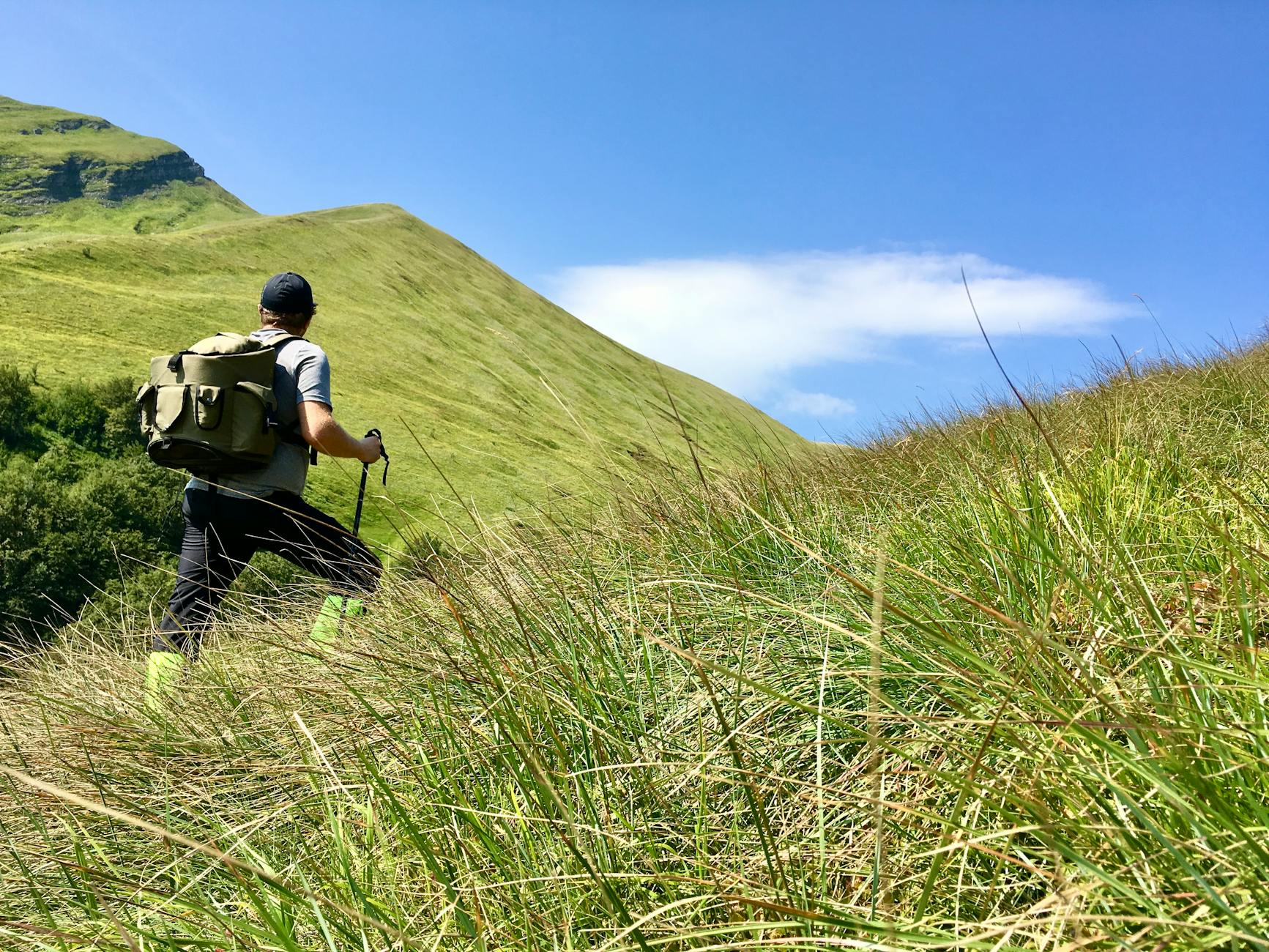
New hikers almost always start too fast. The excitement of being outdoors, combined with the habit of associating exercise with intensity, leads people to charge up the first hill and then bonk hard thirty minutes in. Hiking pace should feel conversational. If you cannot talk in full sentences, you are going too hard for a sustained effort. This is especially true on uphill sections where the instinct is to power through and rest at the top. The tradeoff between speed and sustainability is worth understanding explicitly.
Walking slowly and steadily up a long climb will get you to the top faster than alternating between bursts of effort and recovery stops, even though it feels counterintuitive. Frequent stops also cool your muscles and make restarting harder. The mountaineering concept of “rest stepping,” where you briefly lock your downhill knee on each step to let your skeleton bear weight instead of your muscles, is worth learning even for moderate trails. It looks odd but dramatically reduces fatigue on sustained climbs. Compared to running, where you can often push through discomfort because the effort is time-limited, hiking demands patience with your pace over hours. A trail that takes three hours at a comfortable pace might only take two hours and fifteen minutes if you push hard, but you arrive wrecked instead of energized. For beginners especially, finishing a hike feeling good is more valuable than finishing it fast, because it is what makes you want to come back next weekend.
Safety Mistakes That Catch Beginners Off Guard
The most dangerous mistake new hikers make is not telling anyone where they are going. A quick text to a friend or family member with the trail name and your expected return time is a simple habit that can save your life if something goes wrong. Even on a short, popular trail, a turned ankle in the wrong spot can leave you unable to walk out, and if no one knows to start looking for you, the situation escalates quickly. Weather is the other variable that catches beginners. Conditions at a trailhead can be completely different from conditions two thousand feet higher or on an exposed ridge. Mountain weather changes fast, and hypothermia can develop at surprisingly moderate temperatures if you are wet and wind-exposed.
Check the forecast for the specific area, not just the nearest city, and bring a lightweight rain layer even if the sky looks clear. However, do not let weather anxiety keep you indoors on every imperfect day. Learning to hike in light rain or moderate cold is part of becoming a competent hiker, and some of the best trail days happen under overcast skies when fair-weather crowds stay home. One limitation worth acknowledging: hiking alone is riskier than hiking with a partner, period. Solo hiking has real rewards, including pace autonomy and a meditative quality that group hikes lack, but a beginner solo hiking on an unfamiliar trail is stacking risk factors. Build some experience with a companion or group first. Most areas have hiking meetup groups that welcome newcomers, and these are genuinely good ways to learn trail etiquette, navigation basics, and local route knowledge from more experienced hikers.

When Hiking Becomes Cardio Training
For runners and fitness enthusiasts, hiking occupies a useful niche as a low-impact, high-duration aerobic workout. A moderately paced hike with elevation gain can keep your heart rate in zone two for hours, which is exactly the kind of extended aerobic stimulus that improves fat oxidation and mitochondrial density. Many ultramarathon coaches prescribe hiking uphill intervals as part of training plans because the cardiovascular demand is high while the impact stress is a fraction of running’s.
A concrete example: a 160-pound person hiking at a moderate pace on a trail with steady climbing burns roughly 430 to 500 calories per hour, comparable to jogging at a ten-minute mile pace but with significantly less joint stress. For runners dealing with shin splints, plantar fasciitis, or other overuse injuries, substituting one or two weekly runs with hikes can maintain aerobic fitness while reducing cumulative impact load. It is not a perfect substitute for running-specific training, but as a cross-training tool, hiking punches above its weight.
Growing Beyond Beginner Trails
The natural progression from beginner hiking is longer distances, more elevation, and eventually less maintained trails. This progression should be gradual. A reasonable escalation is to add a mile and two hundred to three hundred feet of elevation gain every few outings, giving your body and your gear knowledge time to keep pace with your ambition. Jumping from three-mile nature walks to a ten-mile mountain traverse is how people end up hating hiking or getting hurt.
As trails get longer and more remote, gear requirements genuinely increase. Navigation tools, a first aid kit, extra food, and emergency shelter become more than paranoid accessories. They become reasonable precautions. But that gear knowledge develops naturally if you build up gradually. By the time you need a map and compass, you will have spent enough time on trails to understand why you need them, which makes learning those skills feel relevant rather than abstract.
Conclusion
Hiking is one of the most accessible forms of outdoor exercise precisely because the entry requirements are low. Reasonable shoes, water, a short trail, and the willingness to walk at a pace your body can sustain for more than twenty minutes. The mistakes that derail beginners are almost all avoidable: starting on trails that are too ambitious, going too fast, carrying too little water, or not telling someone where you are headed. Address those four things and your first hike will almost certainly be a positive experience.
The long-term payoff is substantial. Hiking builds aerobic capacity, strengthens stabilizer muscles that other cardio neglects, and provides a mental reset that treadmill workouts rarely match. It also scales with your fitness. The same activity that challenges you as a beginner continues to challenge you years later when you are covering longer distances on steeper terrain. Start small, stay consistent, and let the trails get harder as you get stronger.
Frequently Asked Questions
How far should my first hike be?
Between one and three miles on a well-marked, relatively flat trail. This is enough to get a feel for hiking without overcommitting. If you finish feeling strong, you can go longer next time. If you are exhausted after two miles, you have learned something valuable about your current fitness baseline without being stranded far from your car.
Do I need hiking boots or are running shoes fine?
For groomed dirt trails and moderate terrain, trail running shoes or any shoe with a lugged sole works well. Traditional hiking boots offer more ankle support and are better for rocky, uneven terrain or when carrying a heavy pack. Most day hikers on established trails do not need boots, and many experienced hikers have moved away from them entirely.
Is hiking alone safe for beginners?
It is not the safest option. Solo hiking removes your safety net if something goes wrong, and beginners are more likely to make navigational or pacing errors. Start with a partner or join a group hike. Once you are comfortable with trail navigation, weather reading, and your own physical limits, solo hiking becomes a reasonable choice with appropriate precautions.
How do I prevent blisters on a hike?
Wear shoes you have already broken in, not brand new ones. Use moisture-wicking socks rather than cotton, which holds sweat against your skin. If you feel a hot spot developing, stop immediately and cover it with moleskin or athletic tape before it becomes a full blister. Ignoring a hot spot almost always results in a blister that ruins the rest of your hike.
Can hiking replace running for cardiovascular fitness?
It can supplement running effectively, especially uphill hiking, which elevates heart rate into productive training zones. However, hiking does not replicate the neuromuscular demands of running, so it is not a one-to-one substitute if you are training for a race. It works well as cross-training and is particularly useful during recovery periods or when managing impact-related injuries.