Starting to dance as a complete beginner comes down to three things: pick a style that matches your fitness level, find a beginner-friendly class or video series, and commit to showing up twice a week for at least a month before you judge your progress. That is genuinely all it takes. You do not need rhythm, coordination, or a background in athletics. A 2019 study published in the Scandinavian Journal of Medicine and Science in Sports found that adults who had never danced before showed measurable improvements in balance, coordination, and cardiovascular endurance after just eight weeks of once-weekly dance sessions.
If sedentary office workers in a clinical trial can do it, so can you. What makes dance particularly interesting for runners and cardio enthusiasts is that it trains your body in ways that steady-state running does not. You will work through lateral movement, rotational force, rapid deceleration, and dynamic balance, all of which reduce injury risk and improve overall athleticism. Many distance runners who cross-train with dance report fewer overuse injuries because they are finally strengthening muscles and movement patterns that logging miles on a straight path neglects. This article walks through how to choose the right dance style for your goals, what to expect in your first class, how to practice effectively at home, the cardiovascular demands of different dance forms, common beginner mistakes that lead to frustration or injury, and how to integrate dance into an existing running or fitness routine without overtraining.
Table of Contents
- What Is the Best Dance Style for a Complete Beginner With No Experience?
- What to Expect in Your First Beginner Dance Class
- How Dance Improves Cardiovascular Fitness Differently Than Running
- How to Practice Dance at Home Without a Studio
- Common Beginner Mistakes That Lead to Frustration or Injury
- How to Integrate Dance Into a Running Training Plan
- Where Beginner Dance Is Heading
- Conclusion
- Frequently Asked Questions
What Is the Best Dance Style for a Complete Beginner With No Experience?
The honest answer is that the best style is whichever one you will actually do consistently, but some styles have a genuinely lower barrier to entry than others. Hip hop foundations, social Latin dances like salsa and bachata, and contemporary or lyrical classes tend to be the most forgiving for newcomers because they emphasize feeling and groove over rigid technique. Ballet, by contrast, demands precise alignment from day one and can feel punishing if you lack baseline flexibility. Ballroom styles like waltz or foxtrot sit somewhere in the middle: the steps are structured and repetitive, which some beginners find reassuring but others find tedious. If your primary goal is cardiovascular conditioning, the data points toward higher-tempo styles. A study from the University of Brighton measured energy expenditure across dance forms and found that an hour of salsa burns roughly 400 to 480 calories, comparable to a moderate-pace five-mile run. Swing dancing and Afrobeat classes can push even higher.
Slower styles like waltz or contemporary will not drive your heart rate the same way, but they build body awareness and mobility that pays off in other training. One useful comparison: think of choosing a dance style the way you might choose a race distance. A 5K is accessible and forgiving. A marathon demands months of specific preparation. Hip hop and salsa are your 5K equivalents. Ballet and competitive ballroom are the marathon, rewarding but requiring patience and a tolerance for slow progress. Start with the 5K version. You can always move up.
What to Expect in Your First Beginner Dance Class
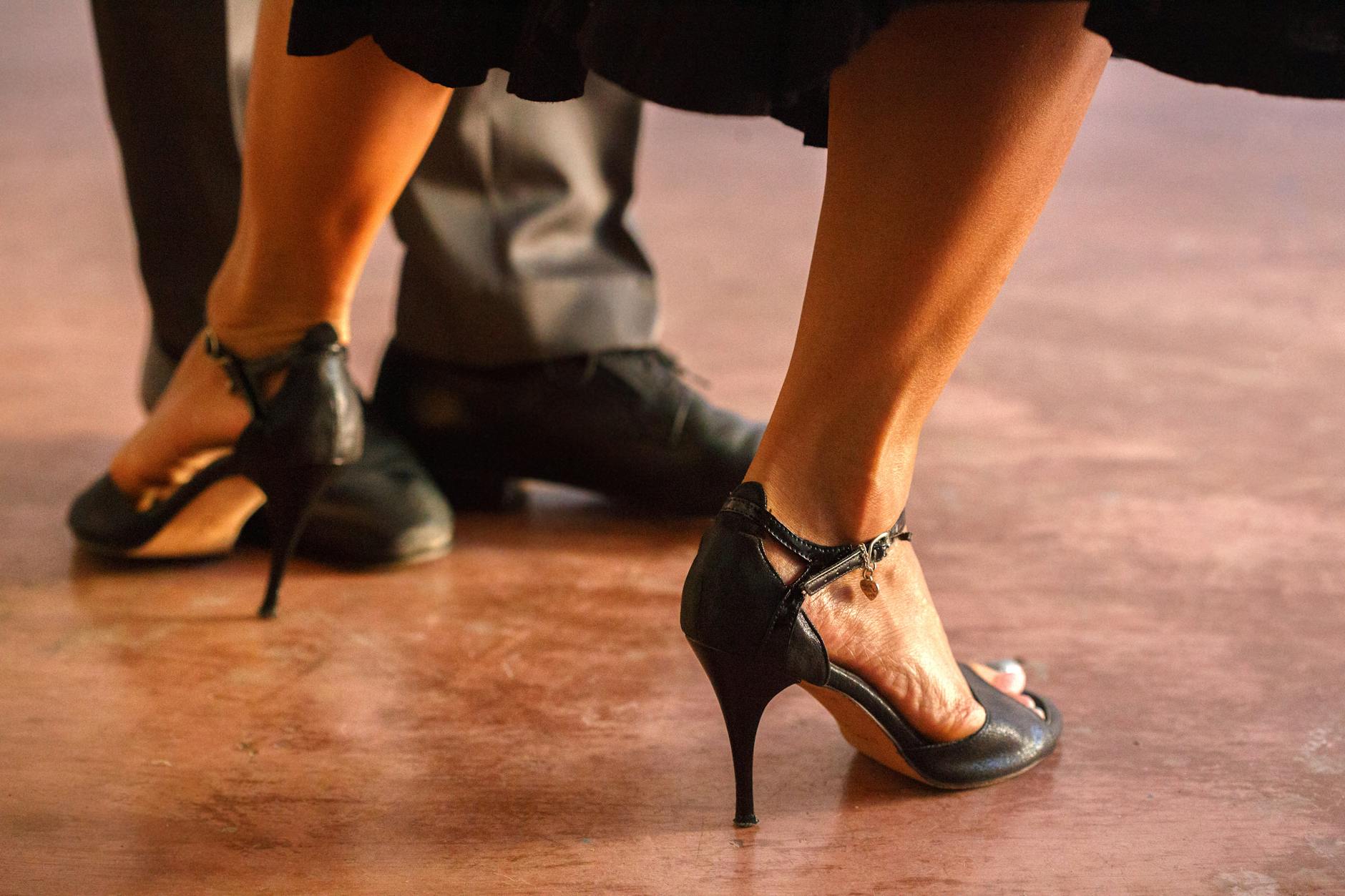
Walk into your first class expecting to feel awkward, because you will, and that is entirely normal. A good beginner class spends the first ten to fifteen minutes on a warmup that doubles as basic movement vocabulary. The instructor will break down foundational steps slowly, often counting them out loud, and you will repeat those steps far more times than feels necessary. This repetition is the point. Most studios explicitly label their beginner classes as “Level 1” or “Absolute Beginner” and separate them from intermediate sessions, so you will not be thrown in with experienced dancers. However, if a studio does not clearly distinguish its class levels, that is a red flag.
Mixed-level classes are one of the fastest ways to demoralize a new dancer because the instructor will inevitably cater to the middle of the room, leaving beginners lost and advanced dancers bored. Before signing up, ask the studio directly: is this class designed for people who have never danced before? If the answer is vague, look elsewhere. Most cities have multiple options, and community centers or parks and recreation departments often run affordable beginner series that are less intimidating than dedicated dance studios. Wear whatever you would wear to a gym workout for your first class. Athletic shoes with some sole flexibility work for hip hop and most social dances. Avoid running shoes with heavy treads, as they grip the floor too aggressively and make turns difficult. If you try a Latin or ballroom class and stick with it, you will eventually want dance shoes with suede soles, but that purchase can wait a month or two.
How Dance Improves Cardiovascular Fitness Differently Than Running
Running is a sagittal-plane dominant activity. You move forward, in a straight line, for extended periods. This is excellent for building aerobic base and left-ventricle cardiac efficiency, but it leaves gaps. Dance fills those gaps by demanding multi-directional movement, explosive bursts, and recovery within the same session, a pattern that mirrors interval training more than steady-state cardio. Researchers at the University of Bern compared the cardiovascular profiles of trained dancers and recreational runners and found that dancers had comparable VO2 max scores but significantly better anaerobic threshold tolerance and heart rate variability.
In practical terms, dancers could sustain higher-intensity efforts relative to their max heart rate without tipping into oxygen debt. For a runner, this translates to better kick speed in the last mile of a race and faster recovery between interval repeats. A specific example: Zumba, which is essentially choreographed dance cardio set to Latin and pop music, was shown in a 2012 study in the Journal of Sports Science and Medicine to produce average heart rates of 79 percent of maximum over a one-hour session, with peaks above 90 percent during high-energy tracks. That profile is almost identical to a well-structured tempo run. The difference is that you are also training lateral agility, hip mobility, and rotational core strength, none of which a tempo run addresses.
How to Practice Dance at Home Without a Studio
The tradeoff between studio classes and home practice is straightforward: classes give you real-time feedback, social motivation, and structured progression. Home practice gives you flexibility, zero commute, and the privacy to look ridiculous without witnesses. The ideal approach uses both, but if budget or schedule makes studio classes difficult, home practice alone can absolutely get you moving. YouTube remains the most accessible free resource, but quality varies wildly. Channels like STEEZY Studio, CLI Studios, and MihranTV offer structured beginner progressions rather than random one-off routines. The key distinction is between tutorial-style videos that break down movements step by step and performance-style videos that just show choreography at full speed.
As a beginner, you need the former. A good test: if the instructor spends less than thirty seconds explaining each new movement, the video is not designed for true beginners regardless of what the title claims. You need surprisingly little space to practice at home. A clearing of roughly six feet by six feet handles most beginner material. A mirror helps enormously because dance is partly a visual skill, and watching yourself move builds the mind-body connection faster than relying on feel alone. If you do not have a full-length mirror, prop your phone up and record yourself. Watching playback, as uncomfortable as it is, accelerates learning in a way that nothing else replicates.
Common Beginner Mistakes That Lead to Frustration or Injury
The single most common mistake is trying to learn choreography before mastering foundational movement. This is the dance equivalent of signing up for a marathon before you can run a continuous mile. Social media amplifies this problem because the most visible dance content is polished choreography, not drills. A beginner who tries to learn a trending routine without first understanding basic isolations, weight transfers, and rhythm patterns will hit a wall almost immediately and conclude they are simply not a dancer. The second major mistake is neglecting warmup and cooldown, especially if you are coming from a running background where your warmup might just be a slow first mile. Dance demands sudden directional changes, deep lunges, and spinal rotation that can strain cold muscles.
Groin pulls, ankle rolls, and lower back tweaks are the most common beginner dance injuries, and they are almost entirely preventable with ten minutes of dynamic stretching beforehand. If you are also running regularly, be especially cautious about your hip flexors and calves, which are already under significant load from your mileage. A less obvious pitfall is comparing your progress to dancers who started younger. Neuroplasticity research confirms that adults can absolutely learn new motor patterns, but the timeline is longer than for children or teenagers. Expect to spend four to six weeks feeling uncoordinated before movements start to feel natural. This is not a failure of talent. It is the normal adaptation curve for adult motor learning, and pushing through that initial discomfort is where most people quit unnecessarily.

How to Integrate Dance Into a Running Training Plan
If you are currently running three to five days per week, the simplest integration is to replace one easy run with a dance session and add one additional dance session on a cross-training or rest day. This keeps your weekly training volume stable while introducing the multi-directional stimulus your body is missing. A runner training for a half marathon, for instance, might run Tuesday, Thursday, and Saturday with a long run on Sunday, then dance on Monday and Wednesday, leaving Friday as a full rest day.
Watch for cumulative fatigue in your calves and ankles during the first two to three weeks of adding dance. These structures are loaded differently in dance than in running, and the novel stress can create soreness that feels disproportionate to the effort. If you notice your running pace slipping or your Achilles tendons feeling tender, scale the dance back to once per week until your body adapts.
Where Beginner Dance Is Heading
The accessibility of dance education has shifted dramatically in the past five years, and the trend is accelerating. Apps like STEEZY and Groov now offer AI-powered feedback that analyzes your movement through your phone camera and provides corrections in real time, a capability that previously required an in-person instructor. While these tools are not yet as nuanced as a skilled teacher, they are good enough to catch major errors in timing and body positioning for beginner-level material.
The broader fitness industry is also catching on. Peloton, Apple Fitness Plus, and similar platforms have expanded their dance cardio offerings significantly, recognizing that dance occupies a sweet spot between structured workout and genuine enjoyment that keeps adherence rates higher than traditional exercise. For runners and cardio athletes looking to diversify their training, the barrier to trying dance has never been lower, and the evidence supporting its benefits has never been stronger.
Conclusion
Starting to dance as a beginner is less about innate ability and more about removing the friction that keeps you from trying. Choose a style that interests you and matches your current fitness level. Find a genuinely beginner-level class, whether in a studio or online. Give yourself at least a month of consistent practice before evaluating whether dance is for you.
The cardiovascular, balance, and coordination benefits are well-documented and directly transferable to running performance and general athleticism. The practical next step is small and specific: search for a beginner dance class within twenty minutes of your home or bookmark one structured YouTube tutorial series, then schedule your first session within the next seven days. Do not wait for motivation or the right moment. Treat it the way you would treat the first run of a new training block. Show up, do the work badly, and trust that repetition will close the gap between where you are and where you want to be.
Frequently Asked Questions
Do I need any sense of rhythm to start dancing?
No. Rhythm is a trainable skill, not an inborn trait. Research from McGill University has shown that rhythm perception improves with practice in virtually all adults. Clapping along to music for five minutes a day for two weeks measurably improves your ability to find and stay on a beat.
How long does it take to look decent as a beginner dancer?
Most people feel noticeably more comfortable after six to eight weeks of practicing twice per week. Looking “good” by social standards takes roughly six months to a year of consistent training, depending on the style and your baseline coordination.
Will dance make me a better runner?
It can. Dance improves lateral stability, hip mobility, and anaerobic capacity, all of which contribute to running economy and injury resilience. It will not replace running-specific training for race performance, but it addresses weaknesses that running alone does not.
Is dance a good enough workout to replace a run?
That depends on intensity. A high-energy dance class like Zumba, Afrobeat, or up-tempo hip hop can match or exceed the caloric burn and cardiovascular demand of a moderate run. A slower style like waltz or beginner contemporary will not hit the same intensity but offers mobility and balance benefits.
What should I wear to my first dance class?
Comfortable athletic clothing and flexible-soled shoes. Avoid bulky running shoes with aggressive tread. For most styles, lightweight cross-trainers or indoor court shoes work well. Bare feet or socks are standard for contemporary and some hip hop classes.