Starting cycling as a complete beginner comes down to three things: get a bike that fits you, ride short distances at a comfortable pace, and build consistency before you chase speed or distance. That really is it. You don’t need expensive gear, a training plan, or lycra.
A person who hasn’t exercised in years can start with ten-minute rides around their neighborhood and, within six to eight weeks, comfortably handle an hour on the bike. One of my neighbors bought a used hybrid from a local shop for $250, started riding to the coffee shop a mile away three mornings a week, and within two months was doing 15-mile weekend loops along the local rail trail. This article walks through the practical steps of getting into cycling, from choosing the right type of bike and dialing in your fit, to building your first few weeks of riding, staying safe on the road, and avoiding the common mistakes that sideline new riders. Whether you want cycling as a cross-training tool for running, a low-impact cardio alternative, or just a way to get outside more, the path in is simpler than the cycling industry would have you believe.
Table of Contents
- What Kind of Bike Do You Actually Need to Start Cycling as a Beginner?
- Setting Up Your Bike Fit to Avoid Pain and Injury
- Your First Rides and Building a Base
- Essential Gear Without Overspending
- Road Safety and Riding in Traffic
- Cross-Training Benefits for Runners
- Staying Motivated Beyond the First Month
- Conclusion
- Frequently Asked Questions
What Kind of Bike Do You Actually Need to Start Cycling as a Beginner?
The single most common mistake new cyclists make is overthinking the bike purchase. There are road bikes, gravel bikes, hybrids, mountain bikes, and e-bikes, and the differences matter far less than the cycling world suggests when you’re just starting out. For most beginners, a flat-bar hybrid bike is the best entry point. It gives you an upright, comfortable riding position, handles both pavement and light gravel paths, and typically costs between $400 and $700 new. Compare that to a road bike, which puts you in an aggressive forward-leaning position that can cause neck and wrist pain for riders who haven’t built up the core strength to sustain it. If you already own any rideable bike, even an old mountain bike sitting in the garage, start with that. Spend $30 to $50 at a local shop to get the tires inflated, brakes checked, and chain lubed.
You’ll learn far more about what you actually want in a bike after a few weeks of riding than you ever will reading reviews online. The exception is if the bike is genuinely the wrong size. A frame that’s too large or too small will cause knee pain, back strain, and an overall miserable experience that has nothing to do with your fitness level and everything to do with poor geometry. When you are ready to buy, visit a local bike shop rather than ordering online. The staff will measure your inseam, adjust the saddle height, and set the handlebar reach. This fitting process takes ten minutes and makes a dramatic difference. A bike that fits you properly will feel like an extension of your body. One that doesn’t will feel like you’re fighting it every pedal stroke.

Setting Up Your Bike Fit to Avoid Pain and Injury
Bike fit is the single most important factor in whether a new cyclist sticks with riding or quits after two weeks with a sore back. The basics are straightforward: when you sit on the saddle and place your heel on the pedal at its lowest point, your leg should be fully extended. When you clip in or ride with the ball of your foot on the pedal, you should have a slight bend in your knee, roughly 25 to 30 degrees. Saddle height that‘s too low wastes energy and strains your knees. Too high, and your hips will rock side to side, creating saddle sores and lower back problems. Handlebar height matters too, though it gets less attention.
For beginners, the handlebars should be at or slightly above saddle height. This keeps you upright enough to see traffic, breathe comfortably, and avoid the neck strain that comes from craning upward in an aggressive road position. However, if you’re coming from a running background and already have strong core muscles, you may be comfortable with a slightly lower bar position sooner than a completely sedentary beginner. Listen to your body in the first two weeks and adjust accordingly. One limitation worth noting: bike fit guides and YouTube videos can get you about 80 percent of the way there, but they can’t account for individual biomechanics. If you develop persistent knee pain, numbness in your hands, or lower back soreness that doesn’t resolve after your body adapts over two to three weeks, a professional bike fitting session, typically $150 to $250, is worth the investment. It’s cheaper than the physical therapy you’ll need if you ignore a bad fit for months.
Your First Rides and Building a Base
Your first ride should be boring. Deliberately, strategically boring. Ride for 15 to 20 minutes at a pace where you could hold a full conversation. If you’re gasping, you’re going too hard. The goal is to get your body accustomed to the seated position, the pedaling motion, and the act of balancing and steering, not to get a workout. A runner who can comfortably knock out a 5K might find themselves struggling on a 30-minute bike ride, not because of fitness limitations but because cycling uses different muscle groups, particularly the quadriceps, in ways that running doesn’t emphasize. For the first two weeks, aim for three rides of 20 to 30 minutes each. In weeks three and four, extend one of those rides to 45 minutes while keeping the others short.
By week six, you should be able to handle a 60-minute ride at a conversational pace without feeling destroyed afterward. This progression sounds slow, and it is. That’s the point. The most common beginner error is doing a big ambitious ride on a Saturday, feeling wrecked for four days, and not riding again for two weeks. Consistency at lower intensity beats sporadic heroic efforts every time. A specific example: a structured first month might look like three rides per week of 20 minutes in week one, 25 minutes in week two, 30 minutes in week three, then introduce one longer ride of 40 to 45 minutes in week four while keeping the other two rides at 30 minutes. Total weekly riding time goes from 60 minutes to about 100 minutes over the course of a month. That’s a manageable, sustainable increase.

Essential Gear Without Overspending
The cycling gear industry thrives on convincing you that you need $200 bib shorts, a $150 jersey, clip-in shoes, and a $300 helmet before your first ride. You don’t. Here’s what you actually need versus what can wait. You need a properly fitting helmet. Not the most expensive one, just one that meets CPSC or MIPS certification and fits snugly without sliding around. A $60 helmet protects your head exactly as well as a $250 one in most crash scenarios. The expensive helmets are lighter and better ventilated, which matters on a four-hour ride in July but not on a 30-minute Tuesday evening spin. You also need a rear light, even for daytime riding.
A $15 rechargeable red blinker dramatically increases your visibility to drivers. And you need a floor pump with a gauge, because riding on underinflated tires makes every ride harder than it needs to be and increases your chance of getting a flat. What can wait: cycling-specific clothing, clip-in pedals and shoes, a bike computer or GPS unit, and most accessories. Ride in athletic shorts and a t-shirt for the first month. Padded cycling shorts become genuinely useful once your rides exceed 45 minutes regularly, but they’re unnecessary for shorter spins. Clip-in pedals improve pedaling efficiency by perhaps 5 to 10 percent, a meaningless gain for someone riding 20 minutes three times a week. The tradeoff is that they require practice to clip in and out of, and new riders regularly fall over at stop signs while learning. Flat pedals with grippy pins are perfectly fine for months or even years of recreational riding.
Road Safety and Riding in Traffic
The number one concern that keeps potential cyclists off the bike is fear of traffic, and it’s a legitimate concern. Cycling fatalities in the United States hover around 1,000 per year, and the overwhelming majority involve motor vehicles. But the risk is manageable with the right habits, and certain common behaviors actually increase danger rather than reducing it. Ride with traffic, never against it. This is counterintuitive to some beginners who feel safer seeing cars approach, but riding against traffic makes you invisible to turning vehicles and dramatically increases the closing speed of any collision. Use hand signals before turning.
Take the full lane when the road is too narrow for a car to pass you safely within the lane, because riding in the gutter invites drivers to squeeze past with inches to spare. And avoid wearing headphones in both ears. You need to hear vehicles approaching from behind, sirens, and other riders calling out warnings. One important limitation: no amount of defensive riding eliminates the risk entirely. Poorly designed roads, distracted drivers, and door zones near parked cars remain real hazards. If your area lacks bike lanes, shoulders, or multi-use paths, consider starting on car-free trails or quiet residential streets and gradually expanding your range as your bike-handling confidence improves. Early morning weekend rides, before traffic volume picks up, are another way to get road experience in lower-risk conditions.
Cross-Training Benefits for Runners
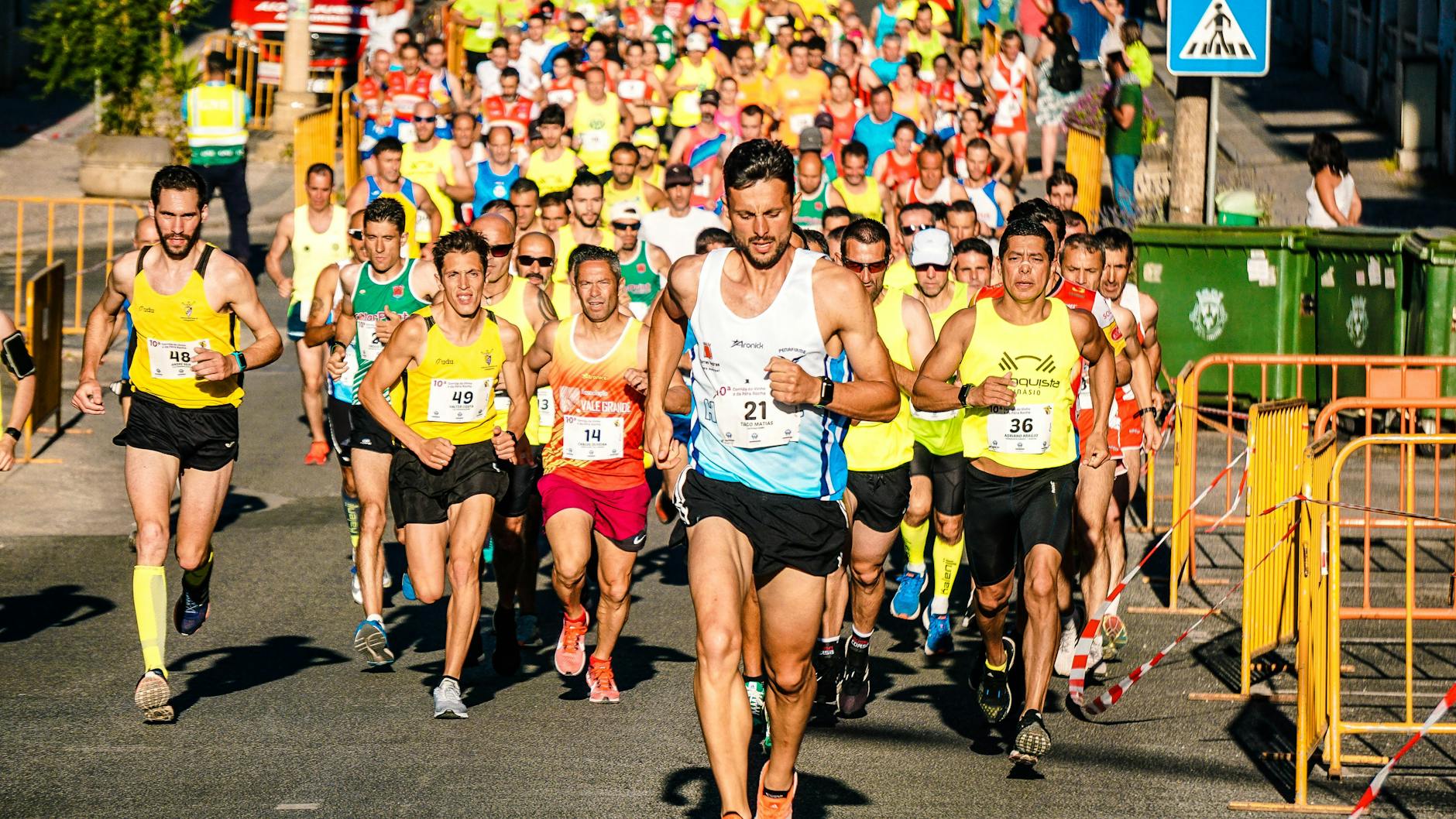
Cycling is one of the best cross-training options for runners because it builds cardiovascular fitness without the impact stress that causes overuse injuries. A 45-minute moderate bike ride elevates your heart rate into the same aerobic zone as an easy run but puts zero impact load on your knees, shins, and feet. Many running coaches prescribe cycling as an active recovery tool, replacing one or two easy runs per week with bike sessions to reduce cumulative training load while maintaining aerobic volume.
For example, a runner training for a half marathon who typically runs five days a week might swap two of those runs for 45-minute to 60-minute bike rides. Total aerobic training time stays the same, but weekly running mileage drops by 30 to 40 percent, significantly reducing injury risk. The key is keeping the cycling effort truly easy. If you’re hammering hills on the bike, you’re adding training stress rather than replacing it, and the recovery benefit disappears.
Staying Motivated Beyond the First Month
The initial excitement of a new activity carries most people through the first two to three weeks. After that, motivation becomes a real challenge, especially on days when the weather is marginal or your legs feel heavy. The riders who stick with it tend to have one thing in common: they’ve built cycling into a routine rather than treating it as a standalone workout they have to psych themselves up for. Commuting by bike, even partially, is one of the most effective retention strategies.
If you live within five miles of your workplace, riding in even two or three days a week gives your rides a purpose beyond exercise. You’re not “going for a ride,” you’re going to work, and the fitness is a side effect. For those who can’t commute, joining a local group ride or finding a riding partner creates social accountability that solo motivation can’t match. Most bike shops host beginner-friendly group rides on weekends, and the pace is typically conversational. Looking ahead, the growth of protected bike infrastructure in cities across the country is steadily making cycling more accessible and safer, which means the barriers to entry will only continue to drop in the coming years.
Conclusion
Getting into cycling requires less than most people think. A bike that fits, a helmet, a rear light, and the discipline to start with short, easy rides and build gradually. The mechanical aspects of bike fit, gear selection, and road safety are all learnable within the first few weeks. The physical adaptation, building the leg strength and saddle tolerance to ride comfortably for an hour or more, takes roughly six to eight weeks of consistent riding. The most important thing is to protect the habit during those early weeks.
Ride short enough that you finish wanting more rather than dreading the next ride. Skip the gear upgrades until you know you’re committed. And if you’re a runner, recognize that cycling is one of the few cross-training activities that genuinely complements your running rather than competing with it. Start this week with a 20-minute ride. That’s all it takes to find out if you like it.
Frequently Asked Questions
How far can a complete beginner cycle on their first ride?
Most beginners can comfortably ride 3 to 5 miles on their first outing, which takes about 15 to 25 minutes at an easy pace. The limiting factor is usually saddle discomfort and unfamiliar muscle engagement rather than cardiovascular fitness, especially for people who already run or do other cardio.
Is cycling harder on the knees than running?
Cycling is significantly easier on the knees because it’s a non-impact activity. The circular pedaling motion doesn’t produce the ground reaction forces that stress the knee joint during running. However, a poorly fitted bike, particularly one with the saddle too low, can cause knee pain that wouldn’t occur with proper setup.
Do I need to wear padded cycling shorts?
Not for rides under 30 to 45 minutes. Regular athletic shorts work fine for short rides. Once you start riding longer, padded shorts reduce friction and pressure on your sit bones. Avoid wearing underwear beneath padded shorts, as the extra seam creates chafing.
How often should a beginner cycle per week?
Three days per week is the sweet spot for most beginners. It provides enough frequency to build fitness and riding skills while allowing recovery between rides. Two rides will maintain your current fitness but progress slowly. Four or more is fine if you keep the intensity low and listen to your body.
Is an expensive bike worth it for a beginner?
No. A $500 to $700 hybrid bike provides everything a new rider needs. The performance differences between a $700 bike and a $3,000 bike are real but only matter when you’re riding fast enough and far enough to notice them. Most beginners won’t reach that point for six months to a year, by which time they’ll have a much better idea of what features actually matter to them.