

Recovering after a track workout comes down to a handful of non-negotiable basics: cool down properly, refuel within the first hour, hydrate aggressively, and sleep enough to let your body actually rebuild what the session broke down. That might sound simple, but most runners botch at least one of those steps on a regular basis. Consider a collegiate 800-meter runner who nails her interval splits on Tuesday but shows up flat for Thursday’s tempo run. The culprit is almost never fitness — it is almost always recovery. She skipped her cool-down, ate nothing for two hours, and stayed up late. The workout was fine.
Everything after it was not. This matters more for track work than for easy mileage because the intensity is substantially higher. Repeat 400s, hill sprints, and tempo intervals create deeper muscle damage and greater glycogen depletion than a steady aerobic run. The recovery demands scale with the effort. Research from the International Society of Sports Nutrition and multiple systematic reviews have outlined clear, evidence-based protocols for what works and what does not — and some popular recovery methods come with real caveats that runners should understand before adopting them blindly. This article covers the full recovery sequence: immediate post-workout steps, nutrition timing and composition, hydration strategies, sleep optimization, cold water immersion and its tradeoffs, active recovery methods, and the mental side of bouncing back. Each section draws on current sports science rather than tradition or marketing claims.
Table of Contents
- What Should You Do Immediately After a Track Workout to Start Recovery?
- How Nutrition Timing and Composition Affect Track Recovery
- Why Sleep Is the Most Underrated Recovery Tool for Runners
- Cold Water Immersion — When It Helps and When It Hurts
- Active Recovery and the Risk of Doing Too Much
- How Stress and Mental State Influence Physical Recovery
- Building a Personalized Recovery Protocol
- Conclusion
- Frequently Asked Questions
What Should You Do Immediately After a Track Workout to Start Recovery?
The first ten minutes after your last rep matter more than most runners realize. A cool-down of five to ten minutes with light jogging or walking helps your cardiovascular system transition gradually from high output back toward a resting state. Stopping abruptly after intense intervals can cause blood to pool in the legs, which contributes to dizziness and may delay the clearance of metabolic byproducts. Research has shown that low-intensity aerobic exercise during the cool-down period is associated with performance benefits in subsequent sessions, making it one of the simplest and most effective habits a track athlete can adopt. After the cool-down jog, static stretching and foam rolling are worth the time, though runners should calibrate their expectations. Studies indicate these modalities may help decrease perceived muscle soreness, but research has not demonstrated a clear direct performance benefit.
In practical terms, that means stretching probably makes you feel better without necessarily making you faster the next day. That is still worthwhile — perceived soreness affects motivation, willingness to train hard, and overall training consistency. A runner who feels wrecked is a runner who sandbaggs the next workout. The cool-down is also the right time to begin rehydrating. Even mild dehydration worsens muscle soreness and slows recovery. One study found that dehydrated athletes reported significantly more soreness after workouts compared to hydrated counterparts. Start sipping water or an electrolyte drink before you leave the track, not an hour later when you finally get home and realize your mouth is dry.

How Nutrition Timing and Composition Affect Track Recovery
Post-workout nutrition follows what researchers call the 4R’s framework: Rehydration, Refuel, Repair, and Rest. This evidence-based model, outlined in a 2021 PMC systematic review, provides a structured approach to recovery nutrition that eliminates guesswork. The most time-sensitive element is refueling. The optimal window for glycogen resynthesis is thirty to sixty minutes after your run, and track workouts burn through glycogen stores faster than easy runs because of the anaerobic energy demands of high-intensity repeats. The International Society of Sports Nutrition recommends consuming a high-quality protein meal or snack within two hours of finishing a workout, with a carbohydrate-to-protein ratio of 3:1 or 4:1. For a 70-kilogram runner, that might look like a bowl of rice with chicken and vegetables, a smoothie with banana, oats, and whey protein, or even chocolate milk — which hits roughly the right macronutrient ratio and also addresses rehydration.
Milk-based beverages and electrolyte solutions are effective for maintaining fluid balance post-exercise because they replace both fluid and electrolyte losses simultaneously. However, if your track session was a short, low-volume workout — say, four repetitions of 200 meters with full rest — the urgency of immediate refueling drops considerably. The 30-to-60-minute glycogen window matters most after prolonged or high-volume sessions where depletion is significant. For shorter speed work, eating a normal balanced meal within a couple of hours is sufficient. The ISSN recommends a daily protein intake of approximately 1.4 to 2.0 grams per kilogram of body weight for building and maintaining muscle mass, with research suggesting around 1.6 grams per kilogram per day is sufficient to maximize muscle protein synthesis. Meeting that daily target matters more than obsessing over the exact minute you eat your post-workout snack.
Why Sleep Is the Most Underrated Recovery Tool for Runners
Sleep is the single most effective free recovery tool available to athletes, and it is the one most frequently shortchanged. During the deepest stage of NREM sleep, the body enters an anabolic state: muscle and tissue building occurs, energy reserves are replenished, and growth hormone is released to catalyze muscle repair. This is not a marginal effect. The hormonal environment during deep sleep is fundamentally different from waking hours, and no supplement, device, or recovery gadget replicates what happens during a full night of quality rest. Athletes should aim for seven to nine hours of sleep per night, with younger athletes — high schoolers and college-age runners — needing eight to ten hours.
Research has demonstrated that extended sleep improves reaction time, accuracy, and mood in athletes. For a track athlete, that translates to better neuromuscular coordination during speed work, sharper decision-making in race tactics, and greater psychological resilience when workouts get uncomfortable. A miler who sleeps six hours a night is leaving performance on the table in a way that no amount of foam rolling or ice baths can compensate for. The practical challenge, of course, is that competitive runners often have early morning practices, demanding academic or professional schedules, and the kind of type-A personalities that do not shut down easily at night. Prioritizing sleep means treating it like a training session — non-negotiable and scheduled. This might mean setting a hard bedtime, limiting screen exposure in the evening, or shifting a morning lift to the afternoon if it means gaining an extra hour of rest.
Cold Water Immersion — When It Helps and When It Hurts
Cold water immersion has become a staple in track and field recovery rooms, and the research supports its use under specific conditions. Studies show that immersion at 10 to 15 degrees Celsius for 14 to 15 minutes is effective for reducing soreness and improving subsequent performance. Contrast water therapy — alternating between cold water at 10 to 15 degrees Celsius and hot water at 38 to 40 degrees Celsius — has also shown positive effects in selected studies. For a runner coming off a brutal set of 1,000-meter repeats at threshold pace, a cold plunge can meaningfully reduce next-day soreness and help maintain training quality later in the week. But there is an important caveat that many runners overlook. Frequent cold exposure after strength training sessions may blunt muscle adaptation. The anti-inflammatory response that makes ice baths feel so good is the same inflammatory response that signals your muscles to rebuild stronger.
Suppressing it too often can limit the training adaptations you are working so hard to trigger. This means cold water immersion is best reserved for high-intensity track days, competition periods, or situations where you need to recover quickly between same-day sessions. Using it after every easy run or every gym session is counterproductive. The tradeoff is straightforward: cold immersion trades long-term adaptation for short-term recovery. During a heavy racing block with meets every weekend, that tradeoff makes sense. During a base-building phase where the goal is to accumulate fitness, it probably does not. Athletes need to be strategic rather than habitual about when they use cold therapy.
Active Recovery and the Risk of Doing Too Much
Active recovery — light jogging, cycling, aqua jogging, or swimming the day after a hard track session — enhances blood flow to exercised muscles and aids clearance of lactate and metabolic waste products. For endurance athletes, active recovery is generally considered superior to complete passive rest. A 20-to-30-minute easy jog or pool session the morning after a hard interval day keeps the legs from tightening up and maintains the body’s movement patterns without adding meaningful training stress. The warning here is about intensity creep. Active recovery only works if it stays genuinely easy. A runner who turns a recovery jog into a moderate-effort run is no longer recovering — they are adding training load to an already fatigued system.
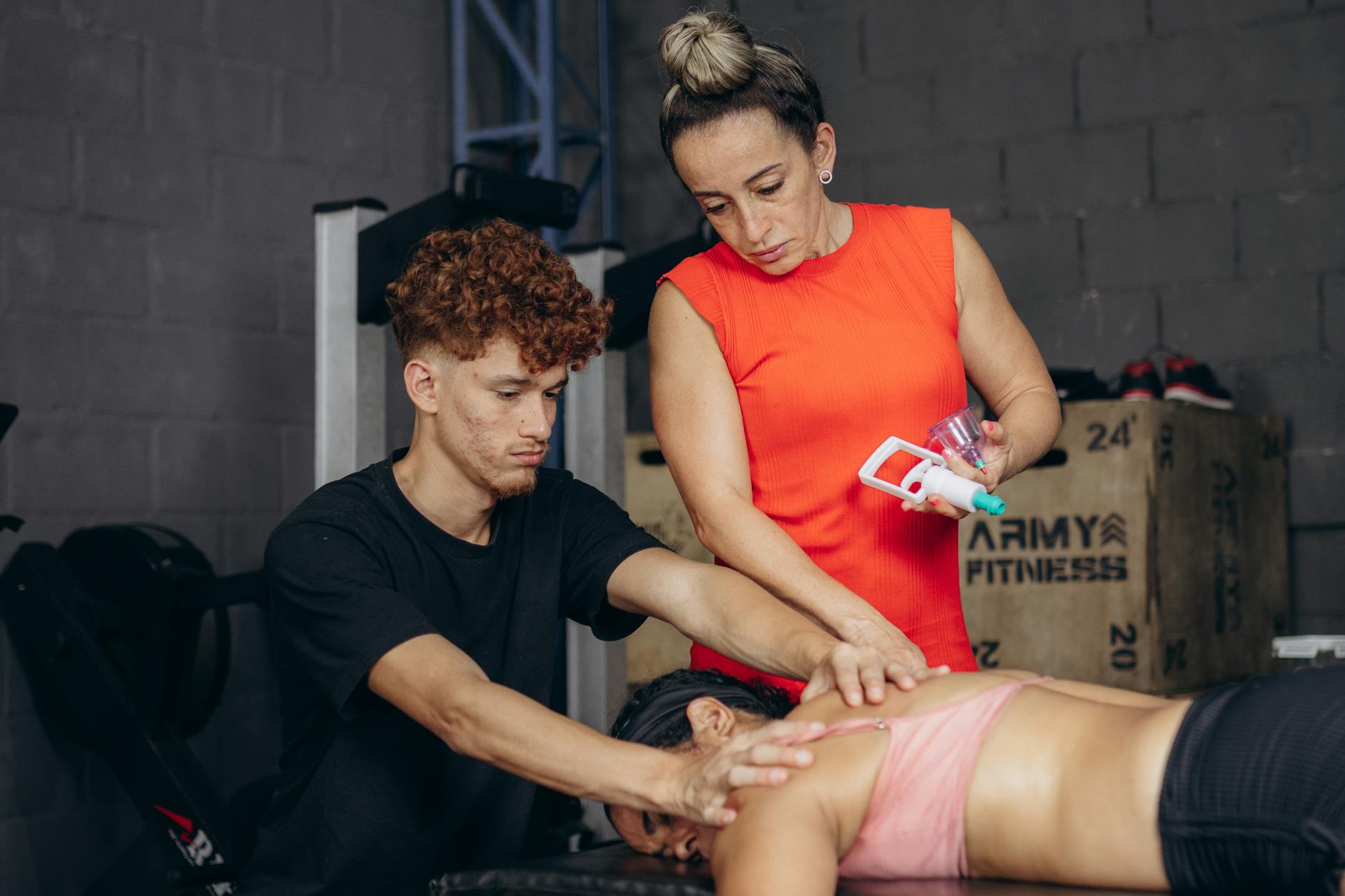
This is one of the most common mistakes among competitive track athletes, particularly those who feel guilty about running slowly or who define their self-worth through training volume. If your heart rate is elevated, if you are breathing through your mouth, or if the effort feels like work, you have crossed the line from recovery into training. At that point, you would have been better off staying on the couch. Compression garments and pneumatic compression boots are among the most popular recovery tools in track and field today, and they work through a similar mechanism — promoting blood flow and reducing swelling. Massage is also supported as a recovery strategy that may reduce perceived soreness and fatigue. These tools are supplementary, not foundational. They can enhance recovery at the margins, but they cannot substitute for sleep, nutrition, and appropriate training load.

How Stress and Mental State Influence Physical Recovery
Researchers have found that periods of high psychological stress are associated with slower physical recovery, while lower stress levels are linked to faster recovery times. This is not a vague wellness platitude — it reflects real physiological mechanisms. Chronic stress elevates cortisol, which impairs muscle protein synthesis and disrupts sleep architecture, undermining two of the most important recovery processes simultaneously.
For a track athlete preparing for a conference championship while juggling exams, relationship issues, or work deadlines, the mental load is not separate from the physical load. A runner under significant life stress may need to reduce training volume or increase recovery time between hard sessions, even if their legs technically feel fine. Ignoring this connection leads to the kind of unexplained fatigue and stalled progress that coaches and athletes often misattribute to overtraining when the root cause is under-recovery driven by psychological stress.
Building a Personalized Recovery Protocol
Experts consistently emphasize that athletes should experiment with multiple strategies to find which recovery methods work best for their individual physiology and training demands. What works for a 100-meter sprinter will differ from what works for a 5,000-meter runner. What works during a high-volume base phase will differ from what works during a sharpening phase. Recovery is not a fixed checklist — it is a practice that evolves alongside your training.
Omega-3 fatty acids, for instance, show promise in reducing post-workout inflammation and muscle damage, but individual responses to supplementation vary. Some runners swear by contrast water therapy; others find it does nothing for them. The non-negotiables — sleep, nutrition, hydration, and appropriate training load — apply universally. Everything else is worth trying, tracking, and keeping only if it produces results you can actually feel. The best recovery protocol is the one you will consistently follow, built on the fundamentals and customized with the tools that genuinely help you show up ready for the next session.
Conclusion
Recovery after a track workout is not passive. It is an active, deliberate process that begins the moment your last interval ends and extends through the next 24 to 48 hours. The evidence points clearly to a hierarchy: sleep and nutrition form the foundation, hydration and cool-down procedures are essential supporting habits, and tools like cold water immersion, compression, and massage provide additional benefit when used strategically. Neglecting the basics while investing in expensive recovery gadgets is like putting premium gasoline in a car with no oil — you are optimizing the wrong thing. Start with the fundamentals. Cool down for five to ten minutes after every track session.
Eat a meal with a 3:1 or 4:1 carb-to-protein ratio within an hour. Drink enough fluid to replace what you lost. Sleep seven to nine hours. Then, and only then, layer in the supplementary tools that work for your body and your schedule. Track what you do and how you feel in subsequent workouts. Recovery is trainable, just like speed and endurance — but only if you treat it with the same intentionality.
Frequently Asked Questions
How long should I wait to eat after a track workout?
The optimal window for glycogen resynthesis is 30 to 60 minutes post-workout, and the ISSN recommends consuming a high-quality protein source within two hours. For high-volume sessions with significant glycogen depletion, eating sooner matters more. For shorter speed work, a normal meal within a couple of hours is fine.
Are ice baths worth it after every track session?
No. Research supports cold water immersion at 10 to 15 degrees Celsius for 14 to 15 minutes for reducing soreness, but frequent use after strength-focused sessions may blunt muscle adaptation. Reserve ice baths for high-intensity days or competition periods.
Is complete rest or active recovery better the day after hard intervals?
Active recovery — light jogging, cycling, or swimming — is generally considered superior to complete passive rest for endurance athletes. The key is keeping the intensity genuinely low so you are promoting blood flow without adding training stress.
How much protein do runners need daily for recovery?
The International Society of Sports Nutrition recommends 1.4 to 2.0 grams of protein per kilogram of body weight per day for building and maintaining muscle mass. Research suggests approximately 1.6 grams per kilogram per day is sufficient to maximize muscle protein synthesis.
Does mental stress actually affect physical recovery?
Yes. Research has found that high psychological stress is associated with slower physical recovery, likely through mechanisms including elevated cortisol, impaired muscle protein synthesis, and disrupted sleep quality.
How much sleep do competitive runners actually need?
Seven to nine hours per night for adult athletes, and eight to ten hours for younger athletes. Research shows extended sleep improves reaction time, accuracy, and mood — all of which affect training quality and race performance.