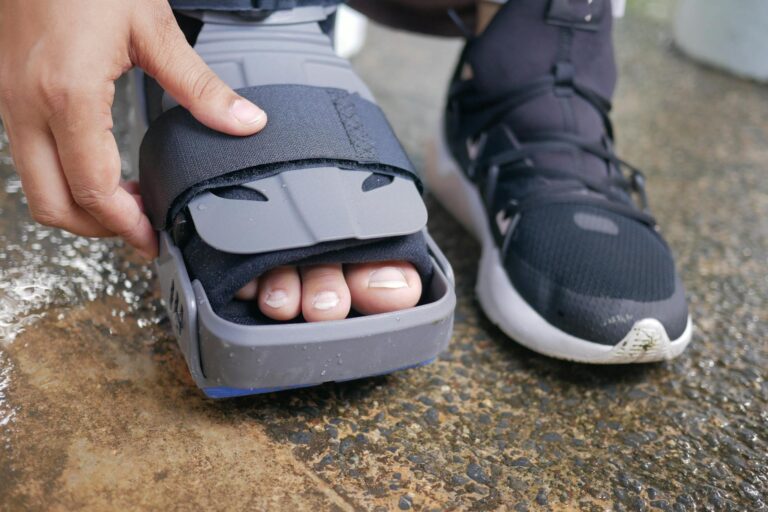
The fastest way to fix ankle pain is to reduce the load on the joint immediately, apply ice in 20-minute intervals every two to three hours, and use an over-the-counter anti-inflammatory like ibuprofen or naproxen to cut swelling before it compounds. If you caught it early — say, you rolled your ankle on a trail run this morning — you can realistically be walking without a limp in three to five days. Wait too long or push through it, and you’re looking at weeks of compromised training.
According to the National Library of Medicine, ankle sprains are the most common sports-related injury, which means the medical playbook for treating them is well-established and, for most cases, doesn’t require a clinic visit. This article breaks down exactly what to do in the first 72 hours, why the old-school RICE protocol has been partially revised by the doctor who invented it, and how to transition from acute care into active recovery. We’ll cover when heat therapy and Epsom salt soaks actually help versus when they’re a waste of time, which rehab exercises restore stability fastest, and the specific warning signs that mean you need imaging rather than home treatment. Whether you’re dealing with a mid-run sprain, chronic tendinitis from overtraining, or post-run soreness that won’t quit, the goal here is the same: get you back to running without creating a bigger problem.
Table of Contents
- What Should You Do Immediately to Fix Ankle Pain Fast?
- Why the RICE Method Isn’t the Full Story Anymore
- How Runners Can Rehab Ankle Pain Without Losing Fitness
- Ice, Heat, and Epsom Salt — What Actually Works and When
- When Ankle Pain Means Something More Serious Than a Sprain
- How Custom Orthotics and Footwear Changes Support Ankle Recovery
- Building Ankle Resilience to Prevent the Next Injury
- Conclusion
What Should You Do Immediately to Fix Ankle Pain Fast?
The first 72 hours after ankle pain starts are the window that matters most. The standard protocol — Rest, Ice, Compression, Elevation — remains the frontline approach recommended by both the Cleveland Clinic and the Mayo Clinic. Rest means genuinely staying off the ankle, not just “taking it easy” on a shorter run. Ice should go on for 20 minutes every two to three hours, but never directly against skin; a thin towel or cloth barrier prevents nerve and skin damage. Compression with an elastic bandage controls swelling, and elevation above heart level lets gravity help drain excess fluid. If you skip elevation at night, you’ll wake up to a noticeably puffier ankle than if you’d propped it on a pillow. For medication, OTC NSAIDs like ibuprofen or naproxen are the go-to because they address both pain and inflammation simultaneously. Topical NSAID gels, available at most pharmacies, can be applied directly to the ankle and penetrate the skin to reduce joint and tissue pain without the gastrointestinal side effects of oral options.
This matters for runners who already take NSAIDs more often than they probably should. If you’re choosing between acetaminophen and ibuprofen, ibuprofen is the better pick here because acetaminophen handles pain but does nothing for swelling — and swelling is the primary enemy in the first few days. Here’s the comparison that trips people up: ice versus heat. During the first 48 to 72 hours, ice is correct. Heat applied too early increases blood flow to an already inflamed area and makes swelling worse. Think of it this way — if the ankle is still visibly puffy and warm to the touch, it’s not ready for heat. Once the initial inflammation has genuinely subsided, usually around the three-day mark, you can switch to heat therapy or warm Epsom salt soaks one to two times per day to loosen stiff muscles and ligaments. Getting this sequence wrong is one of the most common mistakes people make with home treatment.
Why the RICE Method Isn’t the Full Story Anymore
For decades, RICE was treated as settled science. Then in 2015, Dr. Gabe Mirkin — the physician who originally coined the RICE acronym in 1978 — publicly revised his own recommendation. His updated position, covered by Yale Medicine and other outlets, acknowledged that prolonged ice application and sustained rest may actually slow the body’s natural inflammatory healing process. Inflammation, it turns out, isn’t purely a problem to suppress. It’s the mechanism through which your body sends immune cells and nutrients to damaged tissue. Shutting that process down too aggressively or for too long can delay recovery rather than accelerate it. This doesn’t mean you should skip ice entirely.
The current expert consensus, as outlined by the Cleveland Clinic and Yale Medicine, favors what’s called “load or activity management” — a gradual return to movement rather than sustained immobilization. Two newer frameworks have emerged as alternatives. The MEAT protocol (Movement, Exercise, Analgesics, Treatment) encourages gentle, controlled motion after the acute phase. The PEACE & LOVE framework goes further: Protection, Elevation, Avoid anti-inflammatory modalities, Compression, and Education in the early phase, followed by Load, Optimism, Vascularisation, and Exercise in the recovery phase. Both protocols share the same core insight — passive rest alone produces weaker outcomes than structured, progressive loading. However, if your injury is severe — meaning you heard a pop, can’t bear weight at all, or the joint looks visibly deformed — these active-recovery frameworks don’t apply yet. You need imaging first. The nuance that gets lost in the “RICE is outdated” conversation is that the revision applies mainly to moderate sprains and overuse injuries, not to fractures or complete ligament tears where immobilization is still medically necessary.
How Runners Can Rehab Ankle Pain Without Losing Fitness
The fear for most runners isn’t the pain itself — it’s the fitness loss. A rolled ankle can feel like it’s going to cost you weeks of base-building or race prep. But physical therapy and targeted rehab exercises can restore strength and flexibility to weakened tissues while simultaneously maintaining cardiovascular conditioning through non-impact alternatives. Pool running, cycling, and upper-body circuit work keep your aerobic engine turning over while the ankle heals. A runner training for a spring half marathon who sprains an ankle in week six, for example, can typically maintain enough fitness through cross-training to still race — provided they don’t short-circuit the rehab timeline. The specific exercises that matter most for ankle recovery are proprioception and balance drills.
Single-leg stands on an unstable surface, alphabet tracing with the foot, and resistance band inversion and eversion exercises rebuild the neuromuscular pathways that prevent reinjury. The Cleveland Clinic emphasizes that physical therapy is particularly important for joints that feel unstable after a sprain, because ligaments that heal without proper loading tend to heal longer and looser, making future sprains more likely. This is the mechanism behind the familiar pattern of rolling the same ankle over and over — it’s not bad luck, it’s inadequate rehab from the first time. Orthotics, either custom-made or quality over-the-counter inserts, can also support feet and ankles during the transition back to running. They won’t fix a structural problem on their own, but they reduce the mechanical stress on healing tissue during the period when you’re increasing mileage again. Think of them as a bridge, not a solution.
Ice, Heat, and Epsom Salt — What Actually Works and When
The practical question runners ask most often is which home remedy to use and when. Here’s the direct comparison. Ice is best in the first 48 to 72 hours post-injury, applied for 20 minutes at a time with at least a two-hour gap between sessions. Its primary value is numbing pain and limiting the initial swelling cascade. Heat therapy — a warm towel, heating pad, or warm bath — becomes appropriate after the acute swelling phase ends. Heat increases circulation, which helps deliver nutrients to healing tissue and reduces stiffness. Using both in the wrong order is counterproductive. Epsom salt soaks sit in a gray area.
Soaking the ankle in warm water with Epsom salt one to two times per day may help soothe sore muscles and ligaments and reduce joint stiffness, according to multiple sources. The warm water itself provides the heat therapy benefit, and magnesium sulfate absorbed through the skin may offer modest muscle-relaxation effects. The tradeoff is time — a 15- to 20-minute soak twice a day is a meaningful commitment, and the evidence for Epsom salt specifically (as opposed to just warm water) is more anecdotal than clinical. If you enjoy the routine and it makes the ankle feel better, there’s no downside. But don’t skip icing in the acute phase because you’d rather do a warm soak — the sequencing matters more than the modality. Topical NSAID gels offer a middle path worth considering. Applied directly to the skin over the ankle joint, they deliver anti-inflammatory medication locally without the systemic load of oral pills. For runners who are already managing gut issues or who take NSAIDs frequently during training cycles, topicals can be the smarter choice during the recovery window.
When Ankle Pain Means Something More Serious Than a Sprain
Not all ankle pain responds to home treatment, and the biggest risk for runners is assuming every ankle issue is a simple sprain. Common causes of ankle pain include not just sprains but also tendinitis, stress fractures, tarsal tunnel syndrome, and arthritis — each of which requires a different treatment approach. Tendinitis from overuse, for example, won’t improve with the same aggressive icing protocol that works for an acute sprain. It needs load management, eccentric strengthening, and sometimes a period of reduced volume that runners find psychologically difficult to accept. The Mayo Clinic’s guidance is clear on when to escalate: if ankle pain doesn’t improve within a few days of home treatment, or if it’s actively getting worse rather than plateauing, see a doctor.
Go to the emergency room if you can’t bear weight on the ankle at all, if the joint looks deformed or angulated, or if there’s severe swelling and bruising that developed rapidly. These signs suggest a possible fracture or significant ligament tear that won’t heal properly without medical intervention. Severe injuries, especially fractures, may require surgery — and delaying that evaluation doesn’t make the problem smaller, it makes the recovery longer. A specific warning for distance runners: stress fractures in the ankle and foot can masquerade as soft-tissue pain for weeks before imaging reveals the real issue. If your ankle pain came on gradually during a training block, hurts more with impact than with passive movement, and has a pinpoint tender spot on the bone, don’t assume it’s just a sprain. A stress fracture that progresses to a complete fracture because you kept running on it is one of the worst-case outcomes in recreational running — and it’s preventable with timely imaging.

How Custom Orthotics and Footwear Changes Support Ankle Recovery
One overlooked factor in recurring ankle pain is what’s on your feet. Worn-out running shoes with collapsed midsoles offer less lateral stability, and runners who overpronate or supinate place asymmetric stress on ankle ligaments with every stride. The Cleveland Clinic notes that orthotics — both custom and over-the-counter shoe inserts — can support feet and ankles during recovery by correcting mechanical imbalances that contributed to the injury in the first place. A runner who repeatedly sprains the same ankle, for instance, may benefit more from a stability-oriented shoe and a supportive insole than from another round of RICE and rest.
The limitation here is cost and access. Custom orthotics fitted by a podiatrist can run several hundred dollars and aren’t always covered by insurance. Quality OTC inserts from brands with genuine biomechanical research behind them can bridge the gap for most runners at a fraction of the price. The key is matching the insert to your foot mechanics rather than grabbing the first cushioned insole off the rack.
Building Ankle Resilience to Prevent the Next Injury
The most effective long-term fix for ankle pain isn’t any single treatment — it’s making the ankle strong enough that the next trail root or curb edge doesn’t send you back to square one. Proprioceptive training, which teaches the ankle’s stabilizing muscles to react faster than conscious thought, is the single most evidence-supported intervention for preventing recurrent sprains. This means balance board work, single-leg exercises on uneven surfaces, and lateral agility drills incorporated into your regular strength routine — not just during rehab, but as an ongoing practice. The shift in sports medicine toward active recovery frameworks like PEACE & LOVE reflects a broader understanding that joints don’t get more resilient through protection alone.
They get more resilient through progressive, controlled stress. For runners, that translates to a simple principle: once the acute pain is managed, the rehab goal isn’t to get back to where you were before the injury. It’s to build the ankle past that baseline so it’s harder to injure next time. The runners who do this work consistently are the ones who stop showing up to the same injury cycle every training season.
Conclusion
Fixing ankle pain fast comes down to doing the right things in the right order: manage swelling aggressively in the first 72 hours with ice, compression, elevation, and NSAIDs, then transition to controlled movement, heat therapy, and targeted rehab exercises once the acute phase passes. The old advice to rest completely until the pain is gone has been revised even by the doctor who originally popularized it — modern recovery emphasizes a graduated return to activity because passive rest alone produces weaker, more re-injury-prone tissue. The most important decision you’ll make isn’t which home remedy to use — it’s whether your ankle pain warrants professional evaluation.
Most mild to moderate sprains respond well to home treatment within a week. But pain that doesn’t improve after several days, worsens instead of stabilizing, or came on gradually during a training block deserves imaging and a clinical assessment. Treat the acute injury, rehab the underlying weakness, and build the ankle stronger than it was before. That’s the protocol that actually keeps runners running.