The single most effective way to avoid shin splints while running is to control how quickly you increase your training load. Most cases of medial tibial stress syndrome, the clinical name for shin splints, develop not because a runner has bad form or cheap shoes, but because they added too much mileage or intensity before their tibias could adapt to the repeated impact. A runner who jumps from 15 miles per week to 30 miles per week over the course of two weeks is practically guaranteeing herself a date with that familiar burning ache along the inner edge of the shinbone.
The general guideline of increasing weekly volume by no more than 10 percent exists for good reason, even if it feels painfully conservative when motivation is high. Beyond managing training volume, preventing shin splints involves a combination of strengthening the muscles that support the tibia, choosing appropriate footwear, adjusting running surface and cadence, and recognizing early warning signs before they become a weeks-long forced break. Some runners are structurally more prone to this injury than others, particularly those with flat feet or a history of stress fractures, but even high-risk individuals can usually stay healthy with deliberate preparation. This article covers the biomechanics behind shin splints, specific strengthening exercises that have clinical support, how to evaluate your shoes and running surface, cadence adjustments that reduce tibial loading, warning signs that mean you need to stop, and how to come back after a flare-up without repeating the cycle.
Table of Contents
- Why Do Runners Get Shin Splints in the First Place?
- How Footwear Choices Affect Shin Splint Risk
- Strengthening Exercises That Protect the Tibia
- Running Surface and Cadence Adjustments to Lower Impact
- Warning Signs That Shin Splints Are Becoming a Stress Fracture
- How to Return to Running After a Shin Splint Episode
- Building Long-Term Resilience Against Shin Splints
- Conclusion
- Frequently Asked Questions
Why Do Runners Get Shin Splints in the First Place?
shin splints develop when the cumulative stress on the tibia and the muscles attached to it, primarily the tibialis posterior and soleus, exceeds the body’s ability to repair and remodel between runs. Every foot strike sends a bending force through the shinbone. In healthy, adapted tissue, that force stimulates bone remodeling that actually makes the tibia stronger over time. But when the frequency or magnitude of those forces outpaces recovery, microdamage accumulates in the bone’s cortex and the periosteum, the membrane surrounding the bone, becomes inflamed. This is why shin splints tend to cluster in specific populations: new runners, runners returning from a layoff, and experienced runners who suddenly change a major training variable like surface, shoe type, or hill volume. The comparison to a credit card is useful here. Every run is a withdrawal from your skeletal tolerance account, and every rest day is a deposit. If you only make withdrawals, you go into debt, and the interest rate is steep. A 2009 study published in the British Journal of Sports Medicine found that runners who increased their weekly mileage by more than 30 percent over a two-week window were roughly three times more likely to develop a bone stress injury than those who kept increases modest.
Importantly, this was true regardless of the runner’s experience level. A veteran marathoner who takes six weeks off for vacation and then tries to resume prior volume is just as vulnerable as a total beginner. One common misconception is that shin splints are purely a soft tissue problem, just inflammation. In reality, research using MRI has shown that shin splints exist on a continuum with tibial stress fractures. The periosteal inflammation stage is the early warning. If a runner pushes through it, the underlying bone can progress to a stress reaction and eventually a frank stress fracture. This is why the “just run through it” advice that circulates in some running communities is genuinely dangerous. Shin splints are not a toughness test. They are your skeleton asking for more recovery time.
How Footwear Choices Affect Shin Splint Risk
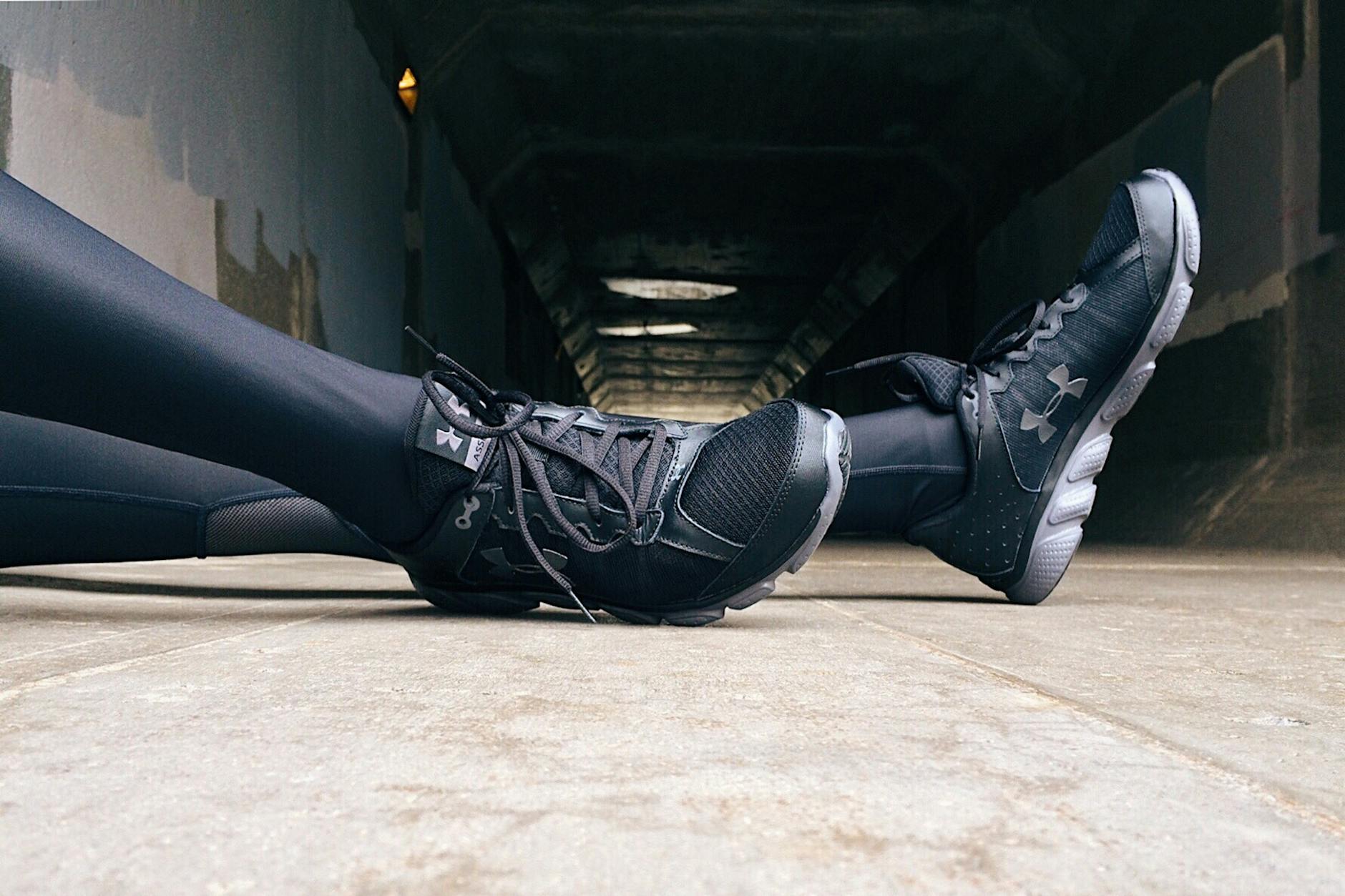
Running shoes play a real but often overstated role in shin splint prevention. The right shoe can reduce certain risk factors, particularly for runners with biomechanical traits like overpronation, but no shoe will compensate for a reckless training progression. That said, two footwear-related factors deserve attention: the age of the shoe and the degree of support relative to the runner’s foot mechanics. Running shoes lose their shock-absorbing capacity well before they look worn out. Most manufacturers recommend replacement between 300 and 500 miles, but the actual threshold depends on the runner’s weight, the shoe’s construction, and the surfaces used. A 180-pound runner training primarily on asphalt will compress a midsole faster than a 130-pound runner on groomed trails. When the foam loses its rebound, the tibia absorbs a larger share of each impact.
If you have been running in the same pair for eight months and shin pain starts creeping in, the shoes are suspect number one. However, if you are a relatively new runner experiencing shin splints in shoes you bought last month, the problem is almost certainly training load, not the shoes. Buying a more expensive pair will not fix a volume problem. The minimalist shoe movement of the early 2010s produced a wave of shin splint and metatarsal stress fracture injuries that illustrates the footwear-transition risk well. Runners who abruptly switched from traditional cushioned shoes to zero-drop minimalist models changed the loading pattern on their lower legs dramatically, shifting stress from the knee toward the ankle and shin. The muscles and bones of the lower leg were not adapted to that loading pattern, and injuries followed. The lesson was not that minimalist shoes are inherently bad, but that any major change in footwear requires the same conservative ramp-up you would apply to mileage. If you want to transition to a lower-drop shoe, do it over months, not days, and use the new shoes for only a fraction of your runs at first.
Strengthening Exercises That Protect the Tibia
Targeted strength work is one of the most underused shin splint prevention tools among recreational runners. The muscles most relevant to tibial protection are the tibialis anterior, which runs along the front of the shin, the tibialis posterior, which supports the arch and controls pronation, and the calf complex including the soleus and gastrocnemius. When these muscles are strong and fatigue-resistant, they absorb and distribute more of the impact load that would otherwise pass directly into the bone. The single most recommended exercise in sports medicine literature for shin splint prevention is the eccentric heel drop, performed on a step. Stand on the edge of a stair with your heels hanging off, rise up on both feet, then slowly lower yourself on one foot over three to four seconds until your heel drops below the step level. Three sets of 15 repetitions per leg, performed daily, builds soleus endurance that directly reduces tibial strain during running. A 2012 randomized controlled trial in the Scandinavian Journal of Medicine and Science in Sports found that runners who added a six-week eccentric calf strengthening program to their routine had a significantly lower incidence of tibial stress injuries over the following competitive season compared to controls.
For the tibialis anterior, toe raises are effective and require no equipment. Stand with your back against a wall and lift your toes off the ground while keeping your heels planted, holding at the top for two seconds. This is a small movement that produces surprisingly intense fatigue in the muscle along the front of your shin. Another useful exercise is the towel scrunch, where you sit with your foot on a towel and use your toes to pull the towel toward you, which strengthens the intrinsic foot muscles that support the arch. These exercises are boring. They do not feel like real training. But they are significantly more effective at preventing shin splints than any compression sleeve or massage gun, both of which address symptoms without touching the underlying cause.
Running Surface and Cadence Adjustments to Lower Impact
Not all running surfaces load the tibia equally, and understanding the tradeoffs helps when building a training plan. Concrete is the hardest common surface, followed by asphalt, packed dirt, groomed trails, grass, and finally a treadmill, which has the most mechanical give. Switching some runs from concrete sidewalks to asphalt roads can reduce peak tibial loading modestly, and incorporating trail or grass running adds variety that distributes stress across slightly different movement patterns. However, softer is not always better. Running on very soft sand, for example, increases the workload on the calf and tibialis posterior because the foot sinks and the ankle has to stabilize through a greater range of motion. Uneven trail surfaces can also increase tibial torsion if your ankles are not conditioned for them. The practical takeaway is to use surface variety as a tool, not a rule.
If all your runs are on concrete, shifting one or two sessions per week to a softer surface is reasonable. If you are already running mostly on trails, adding a concrete session for specificity before a road race is fine as long as you manage the volume adjustment. Cadence, the number of steps you take per minute, has a measurable relationship with tibial loading. Research from Iowa State University’s biomechanics lab found that increasing running cadence by just 5 to 10 percent, without changing pace, reduced peak tibial shock by approximately 20 percent. The mechanism is straightforward: shorter, faster steps reduce the vertical oscillation of each stride, which reduces the braking force at ground contact. Most recreational runners naturally land at 155 to 165 steps per minute, and nudging that toward 170 to 180 often improves the loading profile. The tradeoff is that higher cadence at the same pace feels different and requires a cardiovascular adjustment period, so it should be incorporated gradually, perhaps during easy runs first, rather than applied to every workout immediately.
Warning Signs That Shin Splints Are Becoming a Stress Fracture
The most dangerous period with shin splints is the gray zone between persistent ache and actual bone injury, because the symptoms overlap heavily and many runners convince themselves they are still in the less serious category when they have already progressed. There are a few clinical indicators that distinguish worsening shin splints from a developing stress fracture, and knowing them can save months of recovery time. The hallmark of a standard shin splint is diffuse tenderness along several inches of the inner shin, pain that warms up and fades during a run, and soreness that dissipates within a day or two of rest. A stress fracture, by contrast, typically presents with focal point tenderness, meaning you can press one specific spot with a fingertip and produce sharp pain. The pain tends to worsen as the run continues rather than warming up. If you find yourself limping or altering your gait to avoid the pain, that is a red flag.
Another useful test is the tuning fork test or the hop test: if standing on the affected leg and performing a single-leg hop produces a sharp, localized pain, the probability of a stress reaction is high enough to justify medical imaging. The limitation of self-diagnosis here is real. A standard X-ray will miss most stress fractures in their early stages because the bone changes are too subtle. MRI is the gold standard for diagnosis but requires a physician’s order. If you have had shin pain that does not improve with two weeks of complete rest, or if it has been getting progressively worse despite reducing your mileage, do not keep experimenting with foam rolling and ice. See a sports medicine physician and specifically request MRI if X-rays are negative. The cost of an unnecessary scan is far less than the cost of running through a stress fracture that progresses to a complete break.

How to Return to Running After a Shin Splint Episode
The return-to-running phase is where most repeat shin splint injuries happen, because the pain disappears before the bone and soft tissue have fully adapted. A reliable approach is the walk-run protocol: begin with 20 to 30 minutes of alternating walking and jogging, such as two minutes of walking followed by one minute of easy jogging, and progress by shifting the ratio toward more jogging over a period of two to three weeks. If pain returns during any session, drop back to the previous week’s ratio. A specific example helps illustrate the timeline.
A runner who develops shin splints after ramping up to 25 miles per week should expect to take at least one to two weeks of complete rest, possibly with cross-training like swimming or cycling that does not load the tibia, followed by two to three weeks of walk-run progression, followed by another three to four weeks of gradual mileage building back to the pre-injury level. That means roughly six to eight weeks from the onset of significant pain to full training resumption. Trying to compress that timeline is the single most common mistake, and it is why some runners deal with recurring shin splints for years. The bone remodeling process has its own schedule, and impatience does not accelerate biology.
Building Long-Term Resilience Against Shin Splints
Runners who never deal with shin splints after their first year or two usually share a few habits: they increase mileage conservatively and in cycles rather than in a straight line, they include at least two strength sessions per week that target the lower legs and hips, and they vary their running surfaces and shoe rotation. The concept of periodization, building mileage for three weeks and then taking a lower-volume recovery week, gives the tibia regular windows for remodeling and prevents the cumulative overload that triggers most injuries.
Looking forward, wearable technology is beginning to offer real-time tibial load monitoring. Devices that measure ground reaction force and tibial acceleration are moving from research labs into consumer products, and within a few years it may be possible to get an alert on your watch when your cumulative tibial load for the week is approaching a risky threshold. Until then, the low-tech version works fine: keep a training log, track weekly mileage and intensity, follow the 10 percent rule with periodic recovery weeks, and treat any new shin discomfort as a signal to reduce load immediately rather than a nuisance to push through.
Conclusion
Shin splints are among the most common running injuries and also among the most preventable. The core strategy is straightforward: manage your training load progression conservatively, strengthen the muscles that protect the tibia, choose and maintain appropriate footwear, and adjust your cadence and surface to distribute impact forces. None of these interventions require expensive equipment or elite-level knowledge.
They require patience and consistency, which are harder to sell than a new pair of shoes but far more effective. If you are currently dealing with shin pain, resist the urge to train through it and begin a structured return-to-running protocol once the acute pain subsides. If you are healthy and want to stay that way, invest ten minutes per day in the eccentric heel drops and tibialis raises described above, track your weekly mileage increases, and rotate your running surfaces when possible. Shin splints are a solvable problem, but only if you stop treating the symptoms and start addressing the load management that caused them.
Frequently Asked Questions
Can compression sleeves prevent shin splints?
Compression sleeves may reduce the perception of pain and provide some proprioceptive feedback during a run, but there is no clinical evidence that they prevent the underlying bone stress that causes shin splints. They are a comfort measure, not a preventive tool. If you find them helpful for managing mild soreness, use them, but do not rely on them as a substitute for load management and strengthening.
Should I stop running completely when shin splints start?
It depends on severity. If the pain is mild and only present during the first few minutes of a run before warming up, you can often continue with reduced volume, around 50 percent of your current mileage, while adding strengthening exercises. If the pain worsens during the run, persists afterward, or is present when walking, you should stop running and cross-train until you can walk without discomfort for several consecutive days before beginning a walk-run return protocol.
Do flat feet make shin splints more likely?
Flat feet, or overpronation, are a moderate risk factor because the tibialis posterior works harder to control arch collapse during each stride, which increases traction forces on the medial tibia. However, many flat-footed runners never develop shin splints if their training load is managed well. Stability shoes or custom orthotics can help by reducing the pronation demand on the tibialis posterior, but they are not universally necessary. If you have flat feet and recurring shin issues despite conservative training, a gait analysis from a sports podiatrist is worth the investment.
Is it better to run on a treadmill to avoid shin splints?
Treadmills do provide more shock absorption than pavement, and they offer the advantage of a controlled, flat surface. For runners returning from shin splints, treadmill running can be a useful transition step before resuming outdoor runs. However, treadmill running is not immune from causing shin splints if the volume is too high. The surface is a contributing factor, but load management remains the primary variable regardless of where you run.
How long does it take for shin splints to fully heal?
Mild shin splints caught early often resolve in two to three weeks with rest and modified activity. Moderate cases that have been developing over several weeks typically need four to six weeks. If the condition has progressed to a stress reaction, visible on MRI but not yet a fracture, expect six to twelve weeks before full return to running. A complete tibial stress fracture can require three to six months. The wide range underscores why early intervention matters so much.