The single most effective way to avoid Achilles tendinitis while running is to manage your training load — specifically, never increasing your weekly mileage by more than ten percent at a time, and building in recovery weeks every three to four weeks where you cut volume by twenty to thirty percent. That rule sounds simple, but it accounts for the majority of Achilles injuries in recreational runners. A 2019 study published in the British Journal of Sports Medicine found that training load errors were the primary contributor in roughly sixty percent of running-related tendon injuries. If you ran twenty miles last week and jump to thirty this week because the weather finally broke and you feel great, your Achilles tendons are absorbing forces they haven’t adapted to handle yet.
But load management alone won’t protect you if your calves are weak, your shoes are worn out, or your running form dumps excessive strain on the tendon. Achilles tendinitis — the painful inflammation or degeneration of the thick tendon connecting your calf muscles to your heel bone — tends to creep up gradually, then sideline you for weeks or months. This article covers the biomechanical reasons runners are vulnerable, specific strengthening exercises that build tendon resilience, how footwear choices matter more than most people think, the role of warmup and cooldown routines, warning signs you should never ignore, and what to do if you’re already feeling that familiar stiffness at the back of your ankle. The Achilles tendon bears loads of up to twelve times your body weight during running, which means a 160-pound runner is asking that tendon to handle nearly a ton of force with every stride. Understanding why this structure fails — and what you can do before it does — is worth the ten minutes it takes to read what follows.
Table of Contents
- Why Are Runners So Prone to Achilles Tendinitis?
- The Strengthening Exercises That Actually Build Tendon Resilience
- How Your Running Shoes Affect Achilles Tendon Stress
- Building a Warmup and Cooldown Routine That Protects the Achilles
- Warning Signs You Should Never Run Through
- The Role of Running Surface and Terrain Selection
- Long-Term Tendon Health and What the Research Is Pointing Toward
- Conclusion
- Frequently Asked Questions
Why Are Runners So Prone to Achilles Tendinitis?
The achilles tendon is the largest and strongest tendon in the human body, but it also has a notoriously poor blood supply in its midsection, roughly two to six centimeters above where it attaches to the heel bone. That watershed zone is exactly where most mid-portion Achilles tendinitis develops. Unlike muscles, which receive generous blood flow during exercise, tendons rely on a slower repair cycle. When you run, each foot strike loads the tendon eccentrically — meaning it lengthens under tension as your foot lands and your ankle dorsiflexes — and the cumulative micro-damage from thousands of repetitions outpaces the tendon’s ability to remodel if you don’t give it adequate recovery time. Compare running to cycling: a cyclist’s Achilles tendon rarely experiences the same high-impact eccentric loading because there’s no ground strike. This is why cross-training with cycling or swimming during high-mileage blocks can reduce Achilles stress without sacrificing cardiovascular fitness. Runners who do nothing but run, particularly on hard surfaces, are loading the same tissue in the same pattern day after day.
A runner training for a fall marathon who adds hill repeats, increases long run distance, and throws in tempo work all in the same week is compounding load in a way that tendons simply cannot absorb. The muscle adapts in days; the tendon takes weeks to months. There’s also an age factor that deserves honest discussion. After about age thirty-five, tendons lose water content and become less elastic. The collagen cross-links stiffen, and the tendon’s capacity to absorb and return energy diminishes. This doesn’t mean older runners are doomed, but it does mean a forty-five-year-old returning to running after a winter off needs a longer ramp-up than a twenty-five-year-old with the same fitness history. Ignoring this biological reality is one of the most common mistakes in masters running.
The Strengthening Exercises That Actually Build Tendon Resilience
Eccentric calf raises are the gold standard for Achilles tendon health, supported by more than two decades of research since the Alfredson protocol was first published in 1998. The exercise is straightforward: stand on the edge of a step on one foot, rise up on your toes, then slowly lower your heel below the level of the step over three to five seconds. Three sets of fifteen repetitions, twice daily, on each leg. The slow lowering phase is what stimulates the tendon to remodel and strengthen. However, if you’re already dealing with significant Achilles pain — a four or above on a ten-point scale during the exercise — you should modify the load or consult a sports physiotherapist before grinding through the protocol, because pushing through acute irritation can worsen the condition rather than help it. Heavy slow resistance training has emerged as an equally effective alternative.
Research from Kongsgaard and colleagues in 2009 showed that performing seated and standing calf raises with heavy weight — three to four sets of six to eight reps, using a slow tempo of three seconds up and three seconds down — produced outcomes comparable to the Alfredson protocol with better patient compliance because you only do it three times per week instead of twice daily. The tradeoff is you need access to a gym or at minimum a weighted backpack and a sturdy step. Beyond calf-specific work, single-leg balance exercises and hip strengthening matter more than most runners realize. Weak glutes and poor single-leg stability cause compensatory movement patterns that increase the load on the Achilles. A runner whose hip drops excessively on one side during stance phase is effectively asking the opposite calf and Achilles to work harder to stabilize the ankle. Single-leg Romanian deadlifts, lateral band walks, and Copenhagen planks address the chain above the ankle that indirectly protects the tendon below.
How Your Running Shoes Affect Achilles Tendon Stress
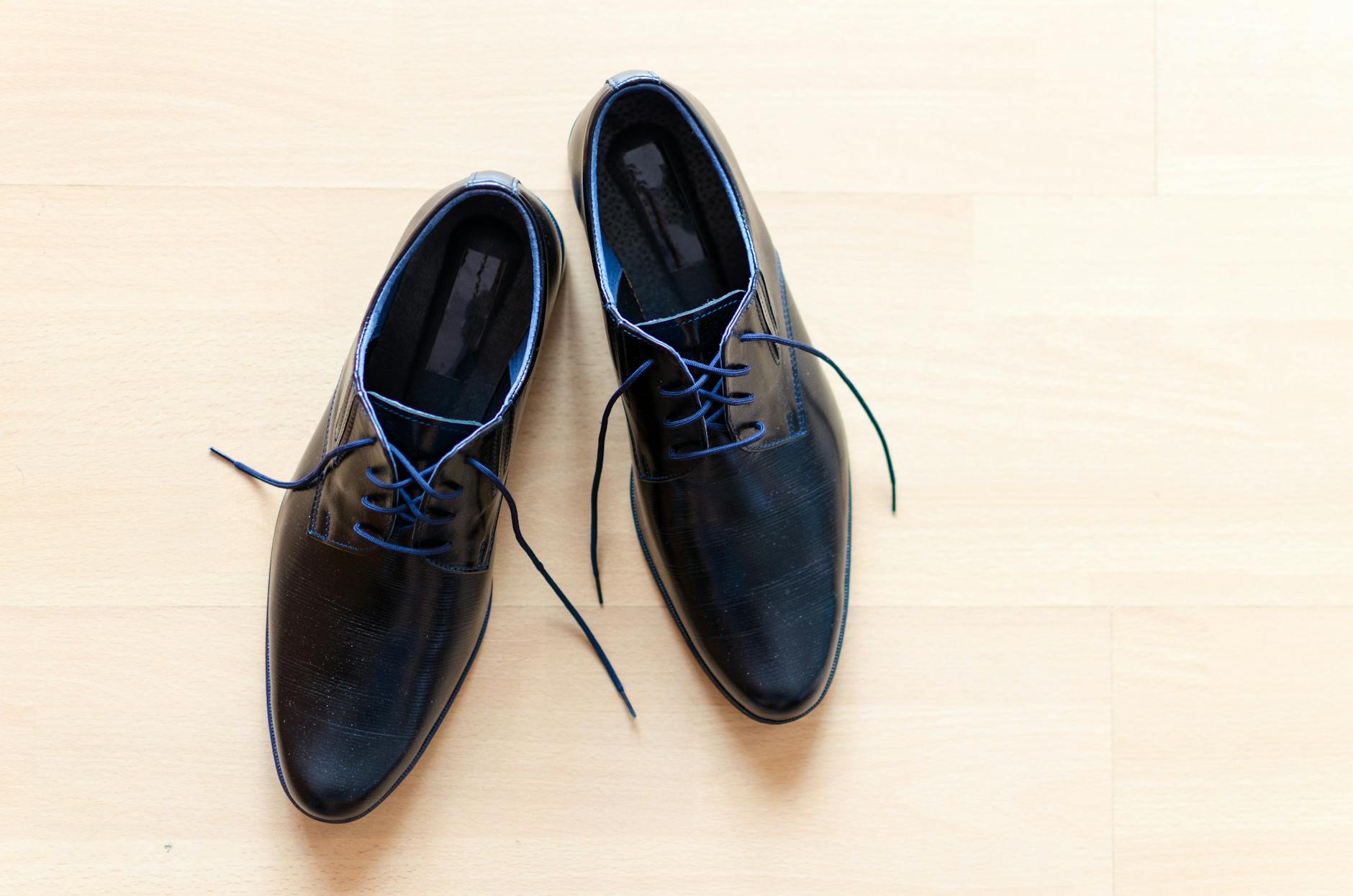
Shoe choice has a measurable impact on Achilles tendon loading, and the relationship is more nuanced than “buy expensive shoes.” The heel-to-toe drop — the difference in stack height between the heel and forefoot — directly influences how much your Achilles tendon stretches during each stride. A shoe with a ten-to-twelve millimeter drop positions your heel higher relative to your forefoot, which shortens the tendon’s working range and reduces peak strain. A zero-drop shoe, by contrast, allows the heel to sit level with the forefoot, increasing the demands on the Achilles and calf complex. Neither is inherently better, but switching abruptly from a traditional ten-millimeter drop shoe to a zero-drop minimalist shoe is one of the fastest ways to provoke Achilles tendinitis. The tendon hasn’t adapted to the new range of motion. For example, when the minimalist running movement peaked around 2012 and 2013, sports medicine clinics saw a surge in Achilles and metatarsal injuries among runners who transitioned too quickly.
The lesson wasn’t that minimalist shoes are dangerous — it’s that any significant change in footwear requires a gradual transition period of four to eight weeks where you alternate between old and new shoes and limit mileage in the new pair. Shoe age matters too. Most running shoes lose meaningful cushioning and support after 300 to 500 miles, depending on the model, your weight, and your running surfaces. A runner averaging thirty miles per week should be rotating shoes out roughly every three to four months. Running in dead shoes increases ground reaction forces that travel directly through the Achilles. If you track your mileage with a GPS watch or app, tag your shoes and retire them on schedule rather than waiting until the outsole is visibly worn through.
Building a Warmup and Cooldown Routine That Protects the Achilles
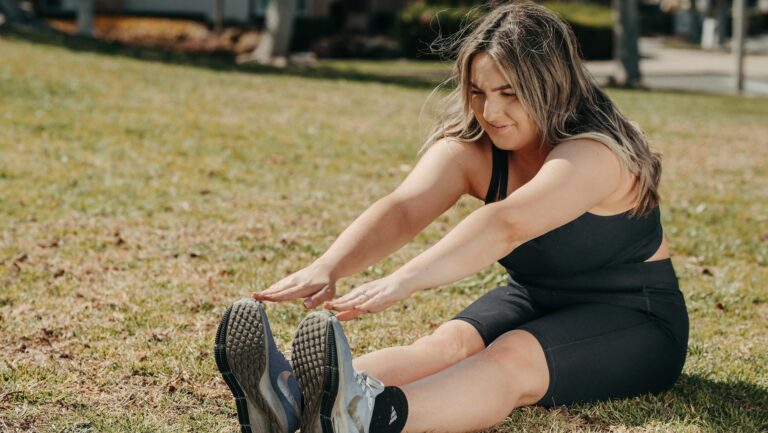
A proper warmup before running isn’t optional if you’re serious about avoiding Achilles problems, yet it’s the step most runners skip because they “don’t have time.” The goal is to increase blood flow to the calf and Achilles complex and take the tendon through its working range of motion before asking it to handle high-speed loading. Five to ten minutes of brisk walking followed by dynamic calf raises — slow, controlled raises on flat ground, not bounced — and ankle circles primes the tissue. Static stretching before a run, on the other hand, has not been shown to reduce injury risk and may actually decrease tendon stiffness in a way that temporarily reduces its ability to store and release elastic energy. Save static stretching for after your run. The warmup versus no-warmup difference is particularly stark in cold weather. Tendons are viscoelastic, meaning their mechanical properties change with temperature.
A cold Achilles tendon is stiffer and less compliant, which raises the risk of micro-tearing during the first mile. Runners in northern climates who step out the door in January and immediately start running at pace are asking for trouble. Even a brief indoor warmup — marching in place, bodyweight calf raises, gentle lunges — before heading outside makes a meaningful difference. Cooldowns matter for a different reason. Easy jogging or walking for five to ten minutes after a hard effort helps clear metabolic byproducts and gradually reduces tendon temperature. Abruptly stopping after an intense session leaves the tendon in a state of elevated inflammation without the benefit of continued low-level blood flow. Following your cooldown with two to three minutes of gentle calf stretching — a straight-knee wall stretch for the gastrocnemius and a bent-knee version for the soleus — maintains flexibility in the muscles that attach to the Achilles without overstretching the tendon itself.
Warning Signs You Should Never Run Through
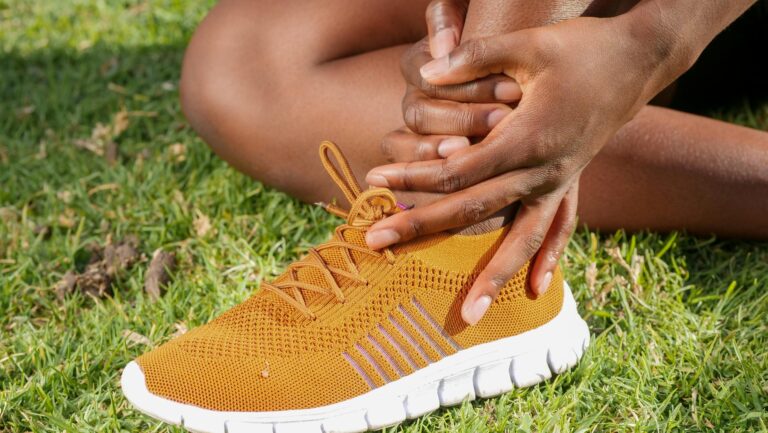
Achilles tendinitis rarely appears overnight. It begins as morning stiffness — that creaky, tight feeling in the back of your ankle when you first get out of bed that loosens up after a few minutes of walking. Many runners dismiss this as normal, and sometimes it is. But if that morning stiffness persists for more than a week, or if it starts appearing at the beginning of runs and takes longer than a mile to warm out of, you’re past the early warning stage and into early tendinopathy. The dangerous pattern is what clinicians call the “warm-up phenomenon” paired with progressive worsening. The tendon hurts when you start running, feels better in the middle, and then aches again afterward. Runners use the mid-run relief as evidence that they’re fine, but the post-run pain tells the real story.
If you reach the point where pain is present during your run and doesn’t resolve within twenty-four hours afterward, you need to reduce your training load immediately — not gradually over weeks, but now. Continuing to run through this stage converts a reversible inflammatory condition into a degenerative one that can take six months or longer to resolve. One important limitation: not all Achilles pain is tendinitis. Insertional Achilles tendinopathy — pain right where the tendon meets the heel bone — behaves differently from mid-portion tendinopathy and responds poorly to some of the standard treatments like eccentric heel drops below neutral. Retrocalcaneal bursitis, which causes pain in the same area, is a different condition entirely. If your pain is at the insertion point rather than the midsection of the tendon, or if it’s accompanied by visible swelling, redness, or a lump, get a proper diagnosis before self-treating. An ultrasound or MRI can distinguish between these conditions, and the treatment protocols differ significantly.
The Role of Running Surface and Terrain Selection
Where you run affects your Achilles more than casual runners appreciate. Concrete is roughly ten times harder than asphalt, which is itself significantly harder than packed dirt trails or grass. A runner who does all their mileage on concrete sidewalks is subjecting their tendons to higher peak impact forces on every stride compared to someone splitting time between asphalt roads and dirt paths. Trails offer the additional benefit of variable terrain, which distributes load across slightly different muscle and tendon angles with each step rather than repeating the exact same loading pattern thousands of times. Hills deserve special mention.
Uphill running shortens the Achilles tendon’s working range and isn’t usually problematic. Downhill running is another story — it increases eccentric loading on the tendon as your foot lands ahead of your center of mass and your calf muscles brake against gravity. Runners training on hilly courses or doing hill repeat workouts should account for the added tendon stress in their weekly load calculations. A six-mile hilly run may stress the Achilles as much as an eight-mile flat run. If you’re coming back from any Achilles soreness, flatten your routes until the irritation fully resolves.
Long-Term Tendon Health and What the Research Is Pointing Toward
The emerging consensus in sports science is that tendons are trainable, but they operate on a different timeline than muscles and cardiovascular fitness. While your VO2 max can improve noticeably within six to eight weeks of consistent training, tendon remodeling takes three to six months of progressive loading to produce structural adaptation. This mismatch is the fundamental reason Achilles injuries are so common in runners — your heart and lungs say go, your tendons say wait.
Ongoing research into tendon biology, including the role of the protein lubricin in reducing tendon friction and studies on collagen supplementation timed before exercise, may offer additional tools in the coming years. Some early evidence suggests that consuming fifteen grams of gelatin or hydrolyzed collagen with vitamin C about an hour before tendon-loading exercise may support collagen synthesis, though the research is preliminary and the effect sizes are modest. What isn’t going to change is the fundamental principle: if you want to run for decades without Achilles problems, you need to strengthen your calves consistently, manage your training load honestly, wear appropriate shoes, and respect the warning signs when they appear. The runners who avoid chronic Achilles issues aren’t lucky — they’re disciplined about the boring stuff.
Conclusion
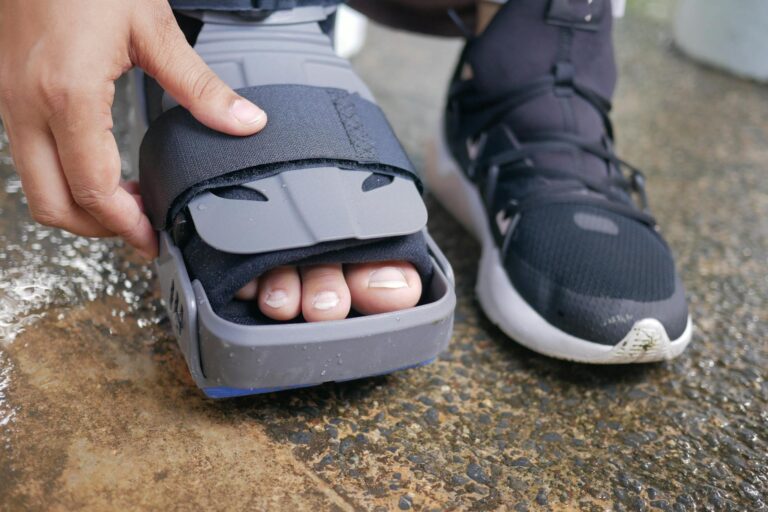
Avoiding Achilles tendinitis while running comes down to a handful of principles applied consistently: respect the ten-percent rule for mileage increases, perform eccentric or heavy slow resistance calf training year-round, transition between shoe types gradually, warm up before every run, and treat early morning stiffness as the signal it is rather than something to push through. None of this is glamorous, and none of it will show up on your Strava feed, but these habits are the difference between running through your forties, fifties, and beyond versus spending months in a boot. If you’re currently pain-free, start adding eccentric heel drops to your routine three times per week and audit your recent training load for any sudden spikes.
If you’re already dealing with Achilles stiffness or pain, reduce your running volume by at least fifty percent, avoid hills and speed work temporarily, and begin a structured strengthening program. Give it at least twelve weeks before judging the results. And if the pain doesn’t respond to conservative measures within six to eight weeks, see a sports medicine physician or physiotherapist for imaging and a tailored rehabilitation plan. The Achilles tendon is remarkably resilient when treated well — and remarkably stubborn when you ignore it.
Frequently Asked Questions
How long does it take for Achilles tendinitis to heal?
Mild cases caught early may resolve in two to four weeks with load modification and eccentric strengthening. Moderate tendinopathy typically takes eight to twelve weeks. Chronic or degenerative cases — where the tendon has been painful for months and shows structural changes — can take four to six months or longer, and some require interventions like shockwave therapy or, rarely, surgery.
Should I use ice or heat on an irritated Achilles tendon?
Ice can help with acute pain and swelling in the first 48 to 72 hours of a flare-up. After that initial phase, many physiotherapists now favor gentle heat or contrast therapy (alternating warm and cool) to promote blood flow to the tendon’s poorly vascularized midsection. Icing a chronic tendon issue can actually slow the healing process by further restricting already limited blood supply.
Can I still run with mild Achilles tendinitis?
In many cases, yes — but with significant modifications. Keep your pain level below a three out of ten during the run, reduce your total volume by at least fifty percent, eliminate hills and speed work, and ensure the pain doesn’t worsen within twenty-four hours after running. If it does, you need more time off. Running through moderate-to-severe Achilles pain almost always makes the condition worse and extends recovery time.
Are compression sleeves or KT tape helpful for Achilles tendinitis?
Compression sleeves may provide modest symptom relief by increasing proprioceptive feedback and maintaining warmth around the tendon, but they don’t address the underlying cause. KT tape has limited evidence supporting its effectiveness for tendinopathy. Neither should be used as a substitute for load management and strengthening. Think of them as comfort measures, not treatments.
Does body weight affect Achilles tendinitis risk?
Yes. Since the Achilles tendon bears forces proportional to body weight — up to twelve times body weight during running — heavier runners experience greater absolute tendon loading. A runner who weighs 200 pounds generates substantially more force per stride than one who weighs 150 pounds. This doesn’t mean heavier runners can’t run safely, but it does mean they may need longer adaptation periods when increasing mileage and should prioritize calf strengthening.
Is stretching the Achilles tendon a good idea?
Gentle stretching after running can help maintain calf muscle flexibility, which indirectly reduces tendon strain. However, aggressive stretching of an irritated Achilles tendon — particularly insertional tendinopathy where the tendon meets the heel — can compress the tendon against the heel bone and worsen symptoms. Stretch the calf muscles with moderate, sustained holds of twenty to thirty seconds rather than forcing the tendon into extreme ranges of motion.