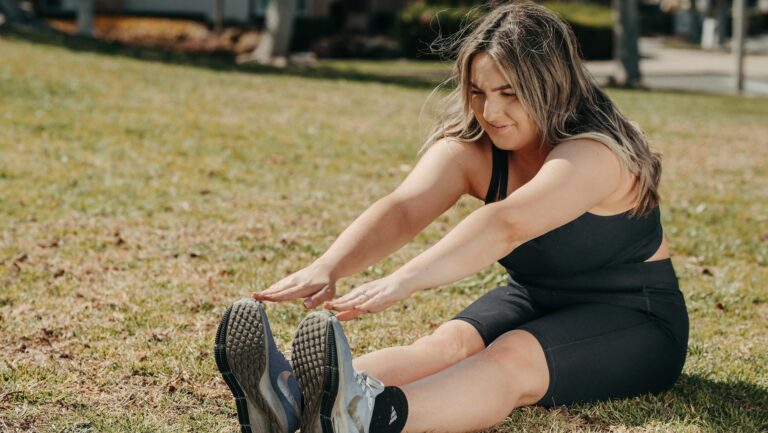
A 15-minute Zumba session burns approximately 100 to 150 calories for most people, making it one of the more efficient short workouts you can squeeze into a busy day. That estimate comes from research funded by the American Council on Exercise, which found that participants burned an average of 9.5 calories per minute during a Zumba class. At that rate, 15 minutes of dancing works out to roughly 142 calories, though your actual number will shift depending on your body weight, how hard you push yourself, and your overall fitness level. To put that in perspective, 142 calories is roughly equivalent to a medium banana and a tablespoon of peanut butter.
It does not sound dramatic on paper, but consider that many people struggle to find even 15 free minutes for exercise. If you can burn that much in the time it takes to watch a couple of YouTube videos, the math starts to look more appealing for anyone building a consistent fitness habit. A 185-pound person pushing hard could clear 170 calories or more in the same window. This article breaks down exactly where those calorie estimates come from, how your weight and intensity level change the equation, how Zumba stacks up against other cardio options, and what you can realistically expect from short sessions over time. Whether you are considering Zumba as a supplement to your running routine or as a standalone workout on recovery days, the numbers are worth understanding clearly.
Table of Contents
- How Many Calories Does a 15-Minute Zumba Session Actually Burn?
- Why Your Actual Calorie Burn May Be Higher or Lower Than Expected
- How Zumba Compares to Running and Other Cardio Workouts
- How to Maximize Your Calorie Burn in a Short Zumba Session
- Common Mistakes That Reduce Your Zumba Calorie Burn
- Can You Lose Weight With 15-Minute Zumba Sessions Alone?
- The Role of Short Zumba Sessions in a Broader Fitness Plan
- Conclusion
How Many Calories Does a 15-Minute Zumba Session Actually Burn?
The most widely cited research on Zumba calorie expenditure is a 2012 study conducted at the University of Wisconsin-La Crosse, funded by the American Council on Exercise. Researchers monitored 19 healthy female participants between the ages of 18 and 22 during a 39-minute Zumba class. The average calorie burn across the group came out to 9.5 calories per minute, totaling roughly 369 calories for the full session. Extrapolating that rate to a 15-minute window gives you approximately 142 calories, which sits comfortably in the 100 to 150 calorie range that most fitness professionals reference. That said, body weight is the single biggest variable. A person weighing around 125 pounds can expect to burn approximately 105 to 120 calories in 15 minutes, while someone at 155 pounds lands closer to 130 to 145 calories.
At 185 pounds, the estimate rises to roughly 155 to 170 calories. These ranges exist because heavier bodies require more energy to move through the same choreography. If you weigh more, you are doing more mechanical work with every step, jump, and hip rotation, and your calorie burn reflects that. One important caveat about the ACE-funded study is that its participants were young, healthy women in their late teens and early twenties. That demographic tends to have higher exercise tolerance and may push harder during a class than, say, a 50-year-old who is returning to fitness after years away from structured exercise. The 9.5 calories per minute figure is a useful benchmark, but it is not a universal guarantee.
Why Your Actual Calorie Burn May Be Higher or Lower Than Expected
Zumba carries a MET value of approximately 7.0 to 8.0, which classifies it as a vigorous-intensity aerobic activity on par with jogging or competitive basketball. MET stands for Metabolic Equivalent of Task, and it represents how much energy an activity demands relative to sitting still. A MET of 7.0 means you are burning roughly seven times more calories than you would at rest. This classification is useful because it places Zumba firmly in the high-effort category, not in the moderate-exercise bin where brisk walking lives. However, if you are a beginner who spends much of the class learning the choreography rather than executing it at full intensity, your actual MET value will be lower. The difference between following along tentatively and fully committing to every movement is substantial.
Research on high-intensity Zumba sessions shows that aggressive effort can burn between 283 and 405 calories in 30 minutes, which extrapolates to roughly 140 to 200 calories in just 15 minutes. That upper end represents a significant jump from the average, and it is only achievable if you are genuinely working at or near your maximum capacity. Age and fitness level also matter in ways that are easy to underestimate. A well-trained runner who adds Zumba as a cross-training activity might find that their cardiovascular efficiency actually works against a high calorie burn. Their heart does not have to work as hard to sustain the same movements, so the metabolic cost drops. Conversely, someone who is relatively new to exercise will burn more calories doing the same routine because their body is less efficient at the task. This is one of the frustrating paradoxes of fitness: the better shape you are in, the harder you have to work to burn the same number of calories.
How Zumba Compares to Running and Other Cardio Workouts
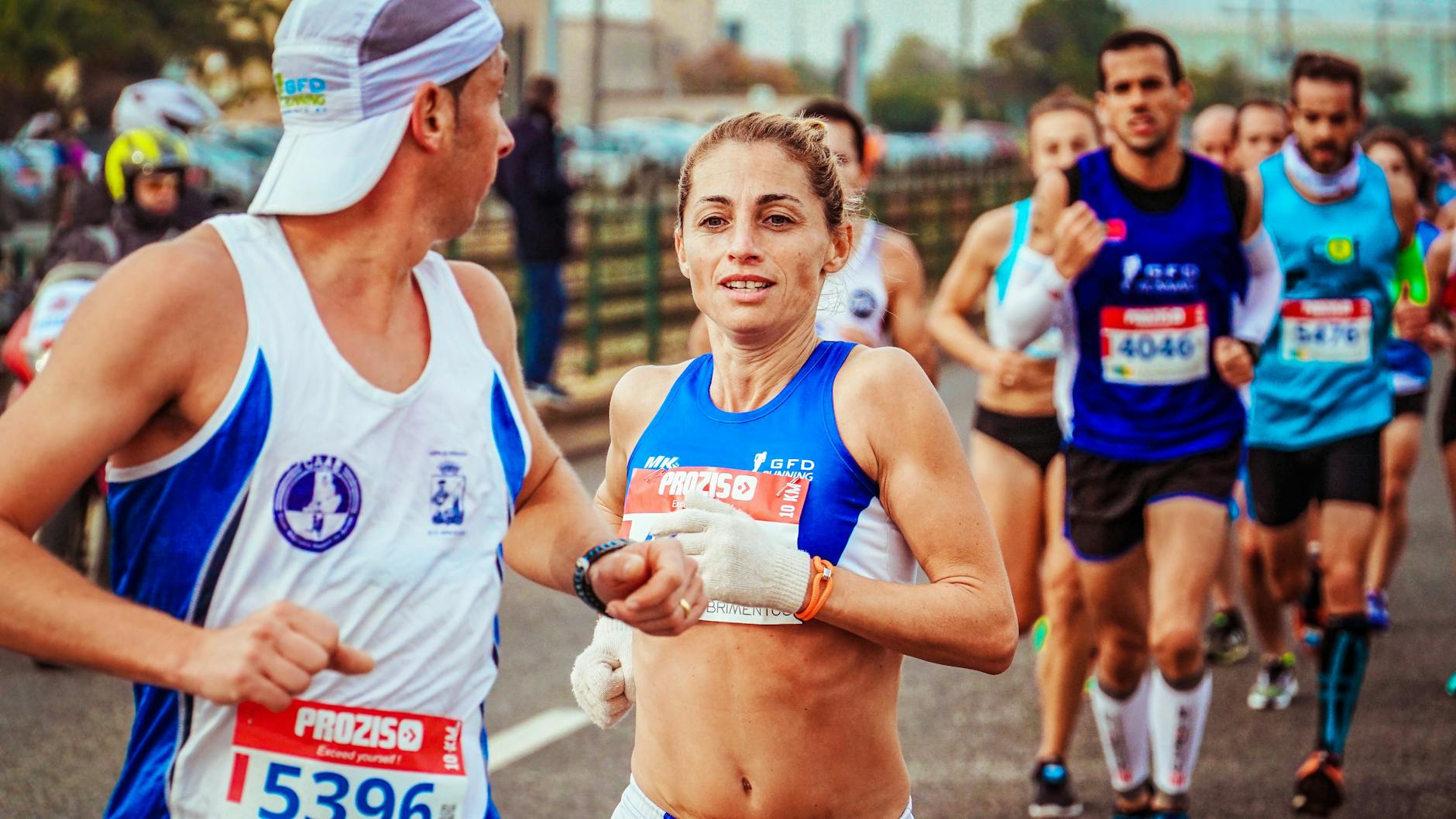
For readers of a running-focused site, the natural question is how Zumba stacks up against logging miles. A 155-pound person running at a moderate pace of about 5 miles per hour burns roughly 140 calories in 15 minutes, which is nearly identical to the Zumba estimate for the same weight. The comparison gets more interesting at higher running speeds, where calorie burn pulls ahead of most dance-based workouts. But at a conversational jogging pace, Zumba is competitive, and for some people it is more sustainable because the choreography distracts from the discomfort of exertion. According to the ACE-funded research, Zumba burns more calories per minute than kickboxing, step aerobics, or power yoga. That ranking surprised many fitness professionals when the study was published, particularly the edge over kickboxing, which has a reputation as one of the more demanding group fitness formats.
The difference likely comes down to the continuous movement pattern in Zumba. There are fewer rest periods than in a typical kickboxing class, where you might pause between combinations or spend time on technique drills. Where Zumba falls short compared to running is in scalability. You can always run faster, run longer, or add hills to increase your calorie burn without any ceiling. Zumba intensity is partly dictated by the instructor and the choreography, which means your ability to push harder has natural limits unless you are deliberately exaggerating every movement. For serious runners, Zumba works best as a complementary activity rather than a primary calorie-burning tool, offering joint-friendly variety and lateral movement patterns that straight-line running does not provide.
How to Maximize Your Calorie Burn in a Short Zumba Session
If you only have 15 minutes, every second counts, and the difference between a half-hearted session and an all-out effort can be 50 or more calories. The simplest way to increase your burn is to exaggerate your movements. Wider arm swings, deeper squats during low sections, and higher jumps during explosive transitions all demand more energy. A person who stays low and compact through the choreography will burn meaningfully fewer calories than someone who uses their full range of motion. Another practical strategy is to choose high-intensity Zumba formats specifically designed for short sessions.
Zumba HIIT, for example, alternates between bursts of maximum effort and brief recovery periods, which pushes your heart rate higher than a standard class. The tradeoff is that HIIT-style sessions are harder to sustain if you are new to exercise or carrying an injury. For someone with healthy joints and a baseline level of fitness, though, a 15-minute HIIT Zumba workout can push calorie burn toward the 170 to 200 range for a 155-pound person, well above the standard average. The tradeoff worth acknowledging is that maximizing calorie burn in a short window increases injury risk. Zumba involves rapid direction changes, pivots, and jumps, and going all out without a proper warm-up in a 15-minute session means your muscles and connective tissues are working hard before they are fully prepared. If you are using Zumba as a quick standalone workout rather than part of a longer session, spend at least two of those 15 minutes easing into the movements rather than launching straight into peak intensity.
Common Mistakes That Reduce Your Zumba Calorie Burn
The most common mistake is overestimating your calorie burn based on how you feel rather than what the data supports. Zumba feels like a hard workout partly because of the music, the social energy, and the unfamiliar movement patterns, but perceived effort does not always correlate with actual calorie expenditure. Many fitness trackers overestimate Zumba calorie burn by 15 to 30 percent because their algorithms are calibrated for steady-state activities like running or cycling, not for the variable intensity of a dance class. If your smartwatch says you burned 200 calories in 15 minutes and you weigh 140 pounds, that number is almost certainly inflated. A second mistake is treating Zumba calorie burn as a license to eat back the calories immediately afterward. At 100 to 150 calories for a 15-minute session, you are looking at roughly the caloric equivalent of a granola bar or a small latte. If you finish your workout and reward yourself with a post-exercise smoothie that contains 300 calories, you have created a caloric surplus rather than a deficit.
This is not an argument against smoothies or against enjoying food. It is simply a reminder that short workouts, no matter how intense, do not generate the kind of caloric deficit that offsets significant dietary choices. A third limitation worth naming is that calorie burn during the session itself is only part of the picture. Vigorous exercise creates an afterburn effect, technically called excess post-exercise oxygen consumption, where your body continues burning calories at an elevated rate after you stop moving. However, for a 15-minute session, this afterburn is modest. Studies on EPOC suggest that it adds roughly 5 to 10 percent to total calorie expenditure for short bouts of vigorous activity. That might mean an extra 7 to 15 calories, which is real but not transformative.
Can You Lose Weight With 15-Minute Zumba Sessions Alone?
The honest answer is that 15-minute Zumba sessions alone are unlikely to produce significant weight loss for most people, but they can absolutely be a meaningful piece of a larger strategy. Burning 100 to 150 calories per session, done five days a week, adds up to 500 to 750 calories weekly. Over the course of a month, that is roughly 2,000 to 3,000 extra calories burned, which translates to just under one pound of fat loss if your diet stays constant.
That is slow, but it is also sustainable in a way that extreme workout programs often are not. Where short Zumba sessions provide outsized value is in building the exercise habit itself. A person who commits to 15 minutes of movement every day is far more likely to eventually increase their duration or intensity than someone who sets an unrealistic goal of running five miles daily and quits after a week. The 15-minute session is a gateway, not a destination, and the calorie burn it provides along the way is a legitimate bonus rather than the entire point.
The Role of Short Zumba Sessions in a Broader Fitness Plan
The trend in exercise science is moving away from the idea that workouts need to be long to be effective. Recent research supports the concept of exercise snacking, where multiple short bouts of activity spread throughout the day can produce cardiovascular and metabolic benefits comparable to a single longer session. A 15-minute Zumba session in the morning followed by a 20-minute walk at lunch and a brief bodyweight routine in the evening creates a cumulative training effect that many people find easier to maintain than one 45-minute block.
For runners specifically, short Zumba sessions offer something that additional miles do not: lateral movement, rotational strength, and coordination training that can reduce injury risk over time. The muscles and movement patterns you develop dancing are different from those you use running in a straight line, and that variety has protective value for joints, tendons, and stabilizer muscles that running alone tends to neglect. Viewed through that lens, the calorie burn from a 15-minute Zumba session is almost secondary to the functional benefits it adds to your overall training.
Conclusion
A 15-minute Zumba session burns roughly 100 to 150 calories for most people, with the specific number depending on your body weight, effort level, and fitness background. The 9.5 calories per minute average from the ACE-funded University of Wisconsin-La Crosse study remains the most reliable benchmark, and it places Zumba among the more calorie-efficient forms of group exercise, outpacing kickboxing, step aerobics, and power yoga on a per-minute basis. Heavier individuals and those who push into high-intensity territory can approach or exceed 200 calories in that same 15-minute window.
The practical takeaway is that 15 minutes of Zumba is a genuinely productive use of your time, but it is not a standalone weight-loss solution. Pair it with a broader fitness routine that includes running, strength training, or other cardio formats, and treat it as a high-energy complement to your existing program. If you are currently doing nothing, 15 minutes of Zumba is a meaningful starting point. If you are already active, it is a fun and efficient way to add variety and lateral movement to your training without a significant time commitment.