Jump rope transforms your body by simultaneously building cardiovascular endurance, burning significant calories, and developing lean muscle tone in the calves, shoulders, forearms, and core. A 150-pound person jumping rope at a moderate pace burns roughly 300 calories in 20 minutes, which outpaces jogging, cycling, and most gym machines minute for minute. The exercise also forces your body to coordinate upper and lower limb movements while stabilizing through the midsection, which over weeks produces visible changes in posture, leg definition, and overall body composition that runners and casual gym-goers often struggle to achieve through single-modality training.
Beyond the calorie burn, consistent jump rope work reshapes how your body moves. It strengthens the small stabilizer muscles around your ankles and knees, increases bone density in the lower legs, and develops the elastic recoil capacity of your Achilles tendons and calves, making you a more efficient runner if you cross-train with it. This article covers how jump rope affects specific muscle groups, what realistic body composition changes look like over 30 to 90 days, who should be cautious about jumping into a rope routine, and how to structure sessions whether your goal is fat loss, athletic performance, or general conditioning.
Table of Contents
- What Muscles Does Jump Rope Work and How Does It Reshape Your Body?
- How Jump Rope Changes Your Body Composition Over Time
- Jump Rope as a Cross-Training Tool for Runners
- How to Structure Jump Rope Sessions for Different Goals
- Common Injuries and Who Should Be Cautious
- Equipment and Surface Choices That Actually Matter
- Why Jump Rope Is Gaining Ground in Modern Fitness Culture
- Conclusion
- Frequently Asked Questions
What Muscles Does Jump Rope Work and How Does It Reshape Your Body?
jump rope is often categorized as pure cardio, but it is a full-body movement that loads muscles most people neglect. The calves do the most obvious work, absorbing and producing force with each hop. After four to six weeks of regular jumping, most people notice their calves become visibly more defined and harder to the touch. The shoulders and forearms handle the rope itself, maintaining a constant rotational effort that, over hundreds of revolutions per session, creates real endurance-based hypertrophy. Your core stays engaged the entire time to keep your torso upright and stable, functioning as an isometric plank that happens to last 10 or 20 minutes rather than 60 seconds. Compare this to running, where the upper body is largely along for the ride.
A distance runner develops strong quads, hamstrings, and hip flexors but often has underdeveloped calves relative to their mileage and minimal upper body engagement. A jump rope athlete, by contrast, distributes the training stimulus more evenly. Boxers have understood this for decades, which is why rope work has been a staple in fight camps since at least the 1920s. The visible result is a lean, balanced physique with particular development through the lower legs and shoulders, a body shape that looks athletic rather than specialized. The one muscle group jump rope does not train heavily is the posterior chain above the knee. Your glutes and hamstrings contribute minimally during standard two-foot bouncing. If you are using jump rope as your primary form of exercise, you will want to supplement with hip hinges like deadlifts or kettlebell swings to avoid creating an imbalance.
How Jump Rope Changes Your Body Composition Over Time
The body composition changes from jump rope follow a fairly predictable timeline if you are consistent with three to five sessions per week. In the first two weeks, the primary adaptation is neurological. You will feel less clumsy, trip on the rope less often, and your heart rate will drop for the same pace. Visible changes are minimal, though some people notice reduced bloating from the increased cardiovascular output and sweat volume. Between weeks three and six, the calorie deficit from regular sessions starts to show. If your diet is reasonably controlled, expect to lose one to two pounds per week of body fat while retaining or slightly gaining lean mass, particularly in the lower legs and shoulders.
By week eight to twelve, the changes become obvious to other people. Your waist measurement typically drops, your calves and shoulders look more defined, and your resting heart rate may fall by five to ten beats per minute. A 2019 study published in the Research Journal of Pharmacy and Technology found that 12 weeks of jump rope training reduced body fat percentage by an average of 3.2 percent in young adults who were previously sedentary. However, if you are already lean and well-trained, the visual changes will be more subtle and slower. An experienced runner at 15 percent body fat adding jump rope will notice improved calf definition and possibly better ankle stiffness during runs, but they should not expect dramatic body recomposition. The most striking transformations happen in people moving from a sedentary or lightly active baseline, where the caloric expenditure and new muscle stimulus produce rapid, noticeable results.
Jump Rope as a Cross-Training Tool for Runners
For runners specifically, jump rope offers benefits that few other cross-training options match. It trains the same elastic energy return system that propulsion during running depends on, specifically the stretch-shortening cycle of the Achilles tendon and calf complex. Plyometric research has consistently shown that this kind of reactive, repetitive bouncing improves running economy, meaning you use less oxygen at a given pace. A competitive 5K runner who adds two or three 15-minute rope sessions per week may find their easy pace feels more effortless within a month, not because their aerobic system changed dramatically, but because their lower legs became stiffer and more efficient springs. The impact profile is also surprisingly favorable.
Each jump rope hop involves landing on the balls of the feet with relatively low ground contact force, roughly 1.0 to 1.5 times body weight per foot, compared to 2.5 to 3.0 times body weight during running. This makes rope work a lower-impact way to accumulate cardiovascular training volume on easy or recovery days without the joint stress of additional mileage. Marathon runners in heavy training blocks sometimes use rope sessions to maintain aerobic stimulus while giving their knees and hips a break from the repetitive linear pounding of road running. One practical example comes from elite obstacle course racers, many of whom rope daily. The combination of calf endurance, grip strength, and cardiovascular capacity maps almost perfectly onto their sport demands. If you compete in any event that requires sustained lower-leg output combined with grip endurance, jump rope is one of the most specific cross-training tools available.
How to Structure Jump Rope Sessions for Different Goals
The way you program jump rope should depend on what you are after. For pure fat loss, longer moderate-intensity sessions work best. Aim for 20 to 30 minutes of continuous jumping at a pace where you can maintain a conversation but would rather not. This keeps your heart rate in the 65 to 75 percent zone where fat oxidation is highest relative to effort, and it accumulates enough total calorie burn to create meaningful weekly deficits. A 170-pound person doing this four times per week will burn an additional 1,200 to 1,600 calories, which translates to roughly a third to half a pound of fat per week from exercise alone. For athletic performance and power development, interval formats work better.
Try 30 seconds of maximum-speed double-unders followed by 60 seconds of easy single bounces, repeated for 10 to 15 rounds. This approach trains your anaerobic system, improves fast-twitch muscle fiber recruitment, and develops the kind of explosive calf power that transfers directly to sprinting and cutting sports. The tradeoff is that interval sessions burn fewer total calories per minute of work than steady-state sessions, but they create a larger post-exercise oxygen consumption effect, meaning your metabolism stays elevated for hours afterward. For runners using rope as a supplement rather than a primary exercise, the simplest approach is two sessions per week of 10 to 15 minutes at moderate intensity, placed on easy run days or rest days. This is enough to capture the tendon stiffness and running economy benefits without creating so much additional training stress that it interferes with your running program. Keep the intensity conversational and focus on rhythm rather than speed.
Common Injuries and Who Should Be Cautious
Jump rope is low-impact relative to running, but it is not zero-impact, and certain populations need to approach it carefully. The most common overuse injury is Achilles tendinopathy, which develops when the calf and tendon complex is loaded beyond its current capacity. This typically happens when enthusiastic beginners jump from zero rope work to 20-plus minutes daily without a gradual buildup. The repetitive plantarflexion cycle stresses the Achilles in a way that running does not perfectly prepare you for, even if you are already a high-mileage runner. People with significant excess body weight, generally above a BMI of 35, should start with very short sessions of two to three minutes and progress slowly over weeks.
The repetitive impact, even at low individual force, accumulates quickly when multiplied by hundreds of jumps and higher body mass. Shin splints are the other common complaint, particularly in people jumping on hard surfaces like concrete or thin gym mats. A thick rubber surface, a purpose-built jump rope mat, or an outdoor tennis court provides far better shock absorption. There is also a meaningful limitation for people with existing knee or ankle instability. The lateral ankle ligaments are loaded during every hop, and if you have a history of chronic ankle sprains without proper rehabilitation, jump rope can expose that weakness. In this case, start with slow, controlled single bounces on a forgiving surface and stop immediately if you feel any lateral shifting or giving way in the ankle joint.

Equipment and Surface Choices That Actually Matter
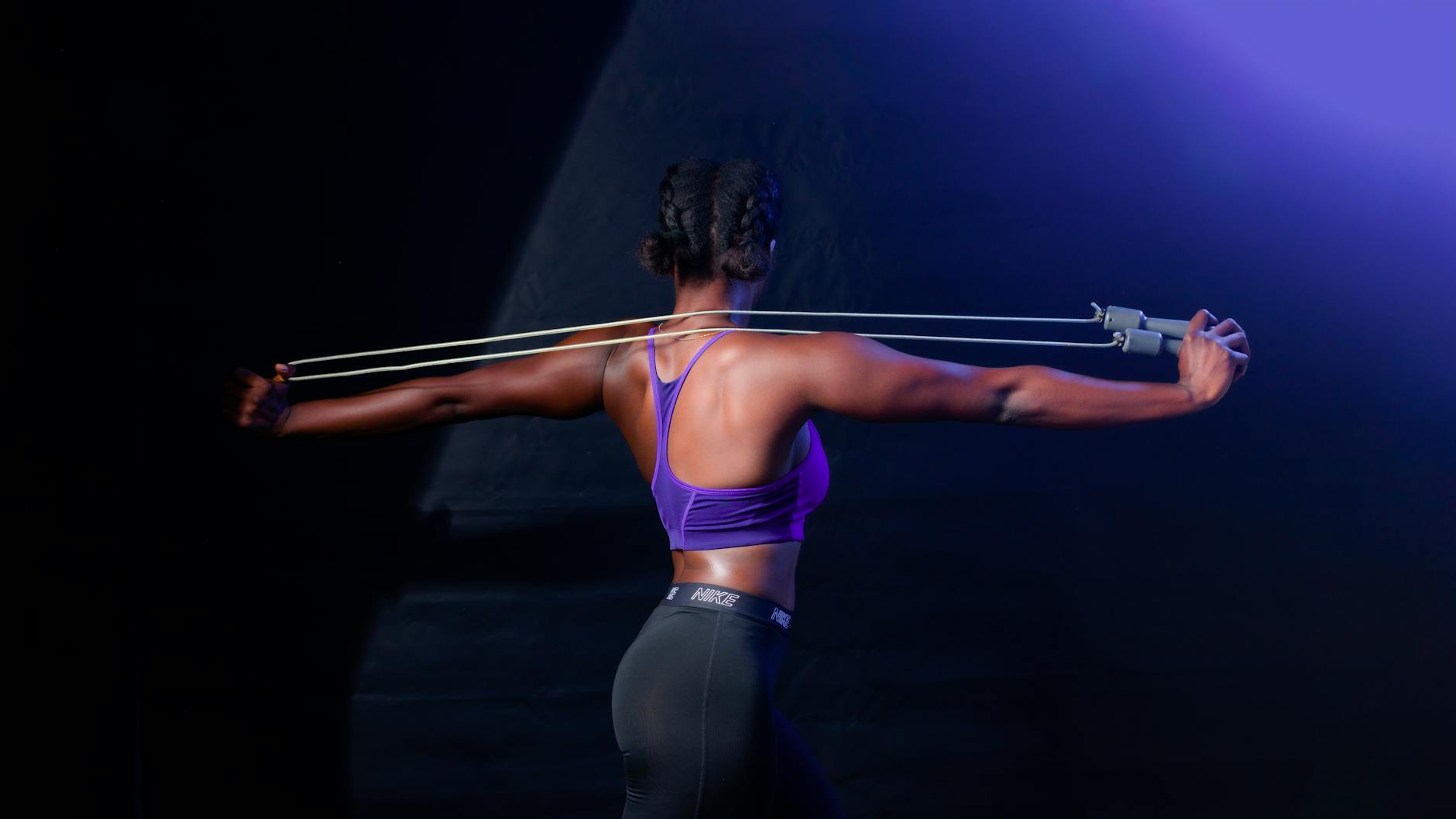
The rope itself makes more difference than most beginners realize. A lightweight speed rope with thin PVC cord and ball-bearing handles costs between 10 and 25 dollars and allows fast, consistent rotation that a thick cotton or leather rope cannot match. Beaded ropes are excellent for outdoor use because they maintain shape in wind and provide audible feedback on timing. Weighted ropes, typically one to two pounds in the handles, shift the training emphasis toward the shoulders and forearms and are useful for building upper-body endurance, but they slow your cadence and reduce the cardiovascular intensity compared to a speed rope at maximum turnover.
Surface selection is the single most underrated variable. Jumping on concrete produces roughly 40 percent more ground reaction force than jumping on a suspended wood floor or rubber mat. If you plan to jump rope regularly, investing 30 to 50 dollars in a six-by-four-foot rubber mat is one of the cheapest injury-prevention measures available. It also extends the life of your rope by preventing the cable from grinding against rough surfaces.
Why Jump Rope Is Gaining Ground in Modern Fitness Culture
Jump rope has experienced a genuine resurgence over the past five years, driven partly by social media exposure and partly by the practical reality that it requires almost no equipment, almost no space, and delivers measurable results faster than most alternatives. Competitive jump rope athletes and freestyle rope communities have pushed the skill ceiling higher than ever, demonstrating that the activity has depth far beyond the basic two-foot bounce that most people associate with elementary school gym class.
For the running and endurance community specifically, the growing body of research on tendon health, running economy, and low-impact cross-training has made jump rope harder to ignore. As more coaches and physical therapists recommend it for injury prevention and return-to-running protocols, its reputation is shifting from childhood pastime to legitimate training tool. The athletes who benefit most will be those who treat it as a skill to develop gradually rather than a workout to survive, building consistency over intensity and letting the body transformation follow.
Conclusion
Jump rope transforms the body through a combination of high caloric expenditure, full-body muscular engagement, and cardiovascular conditioning that few single exercises can match. The calves, shoulders, forearms, and core bear the primary training load, producing visible definition and improved functional capacity within weeks of consistent practice. For runners, the additional benefits of Achilles tendon stiffness, improved running economy, and lower-impact cardiovascular supplementation make it one of the most practical cross-training tools available.
Start with what you can manage, even if that is two minutes of uncoordinated hopping. Progress by adding one to two minutes per session each week, prioritize a good surface and a decent rope, and let consistency do the work. If you are currently running three or more days per week and looking for something to fill your cross-training days, jump rope slots in with minimal equipment cost and maximum return on time invested.
Frequently Asked Questions
How long should I jump rope per day to see body changes?
Most people see noticeable body composition changes with 15 to 20 minutes of jump rope, three to four days per week, within six to eight weeks. Beginners should start with five-minute sessions and add time gradually to avoid overuse injuries.
Is jump rope better than running for fat loss?
Minute for minute, jump rope burns slightly more calories than running at a moderate pace. However, most people can sustain a run for 30 to 60 minutes more easily than they can sustain jumping, so total caloric burn per session often favors running for beginners. The best choice is whichever you will do consistently.
Will jump rope make my legs bulky?
No. Jump rope primarily develops slow-twitch endurance capacity in the calves rather than the fast-twitch hypertrophy that produces significant size gains. The result is lean, defined lower legs rather than bulky ones. Genetic calf shape plays a larger role in overall appearance than rope volume.
Can I jump rope with bad knees?
It depends on the specific condition. Jump rope is lower-impact than running per stride, but the high repetition count means cumulative load can still aggravate conditions like patellar tendinitis. If you have an active knee issue, consult a physical therapist before starting and begin on a soft surface with very short sessions.
Does jump rope build abs?
Jump rope engages the core isometrically throughout every session, which builds endurance and stability in the abdominal muscles. However, it will not produce visible abs on its own if body fat percentage is too high. The combination of caloric burn and core engagement makes it a useful tool for ab development, but diet remains the primary factor in abdominal visibility.