Body weight is one of the single biggest factors determining how many calories you burn during a Zumba class, and the relationship is roughly linear. A person weighing 125 pounds will burn approximately 350 to 400 calories in a standard 60-minute Zumba session, while someone at 185 pounds can expect to burn closer to 530 to 600 calories doing the same routine at the same intensity. That difference of nearly 200 calories per hour comes down to basic physics: moving a heavier body through space requires more energy, period.
A 155-pound participant typically lands somewhere around 450 to 500 calories for that same hour, making Zumba a solid cardiovascular workout across a wide range of body sizes. Understanding this relationship matters whether you are trying to lose weight, maintain your current fitness level, or simply figure out how Zumba stacks up against other cardio options like running or cycling. This article breaks down exactly why heavier individuals burn more calories during dance-based fitness, how to estimate your own calorie expenditure more accurately, where heart rate monitoring fits into the picture, and what other variables beyond weight play a meaningful role. We will also look at how Zumba compares to other popular cardio workouts when body weight is factored in, and address some common misconceptions about calorie burn estimates.
Table of Contents
- Why Does a Heavier Person Burn More Calories in Zumba Than a Lighter One?
- How Accurate Are Calorie Estimates Based on Body Weight Alone?
- The Role of Heart Rate in Refining Calorie Burn Estimates
- How Zumba Calorie Burn Compares to Other Cardio Workouts by Body Weight
- Common Mistakes When Estimating Zumba Calorie Burn
- Does Losing Weight During a Zumba Program Reduce Your Calorie Burn Over Time?
- The Future of Personalized Calorie Tracking in Group Fitness
- Conclusion
- Frequently Asked Questions
Why Does a Heavier Person Burn More Calories in Zumba Than a Lighter One?
The answer comes down to the energy cost of movement. Your body is essentially an engine, and the amount of fuel it burns depends on how much mass it has to move. during Zumba, you are jumping, stepping, turning, and shifting your weight constantly. Each of those movements requires your muscles to generate force against gravity, and the more you weigh, the more force is required. This is the same reason a loaded truck uses more fuel than an empty one driving the same route at the same speed. Researchers quantify this using a unit called the MET, or metabolic equivalent of task. Zumba generally falls between 6.0 and 9.0 METs depending on intensity, and the calorie formula multiplies METs by body weight in kilograms and duration in hours.
To put concrete numbers on it, consider two friends attending the same Tuesday evening Zumba class. Sarah weighs 130 pounds (59 kg) and Maria weighs 200 pounds (91 kg). Assuming the class runs at a moderate-to-vigorous intensity of about 7.5 METs for one hour, Sarah burns roughly 440 calories while Maria burns roughly 680 calories. Maria burns about 55 percent more calories despite doing the exact same choreography. This is not because Maria is working harder in a relative sense; it is because her body simply requires more energy to perform the same movements. One important caveat: this calorie advantage does not mean heavier individuals are getting a “better” workout. Relative intensity, cardiovascular stress, and perceived effort may actually be higher for the heavier person, which brings its own set of considerations.

How Accurate Are Calorie Estimates Based on Body Weight Alone?
While body weight is a strong predictor of calorie expenditure, relying on it as the sole variable can lead to estimates that are off by 15 to 30 percent in either direction. The standard MET-based formula assumes a resting metabolic rate of 3.5 milliliters of oxygen per kilogram per minute for everyone, but this value varies significantly between individuals. A person with a higher proportion of muscle mass will have a higher resting metabolic rate than someone of the same weight with more body fat, because muscle tissue is metabolically more active. Two people who both weigh 170 pounds can have meaningfully different calorie burns during the same Zumba class if one is a former athlete with substantial lean mass and the other is relatively sedentary. Fitness level introduces another layer of inaccuracy.
As your body adapts to Zumba over weeks and months, it becomes more efficient at performing the movements. Your muscles recruit fibers more economically, your coordination improves so you waste less energy on extraneous motion, and your cardiovascular system delivers oxygen more efficiently. The result is that a seasoned Zumba participant who weighs 160 pounds might burn fewer calories than a complete beginner at the same weight, even in the same class. However, if you are using calorie estimates primarily for general guidance rather than precise tracking, the weight-based MET formula remains a reasonable starting point. Just understand that the number on your fitness tracker or the estimate from an online calculator is an approximation, not a lab-verified measurement.
The Role of Heart Rate in Refining Calorie Burn Estimates
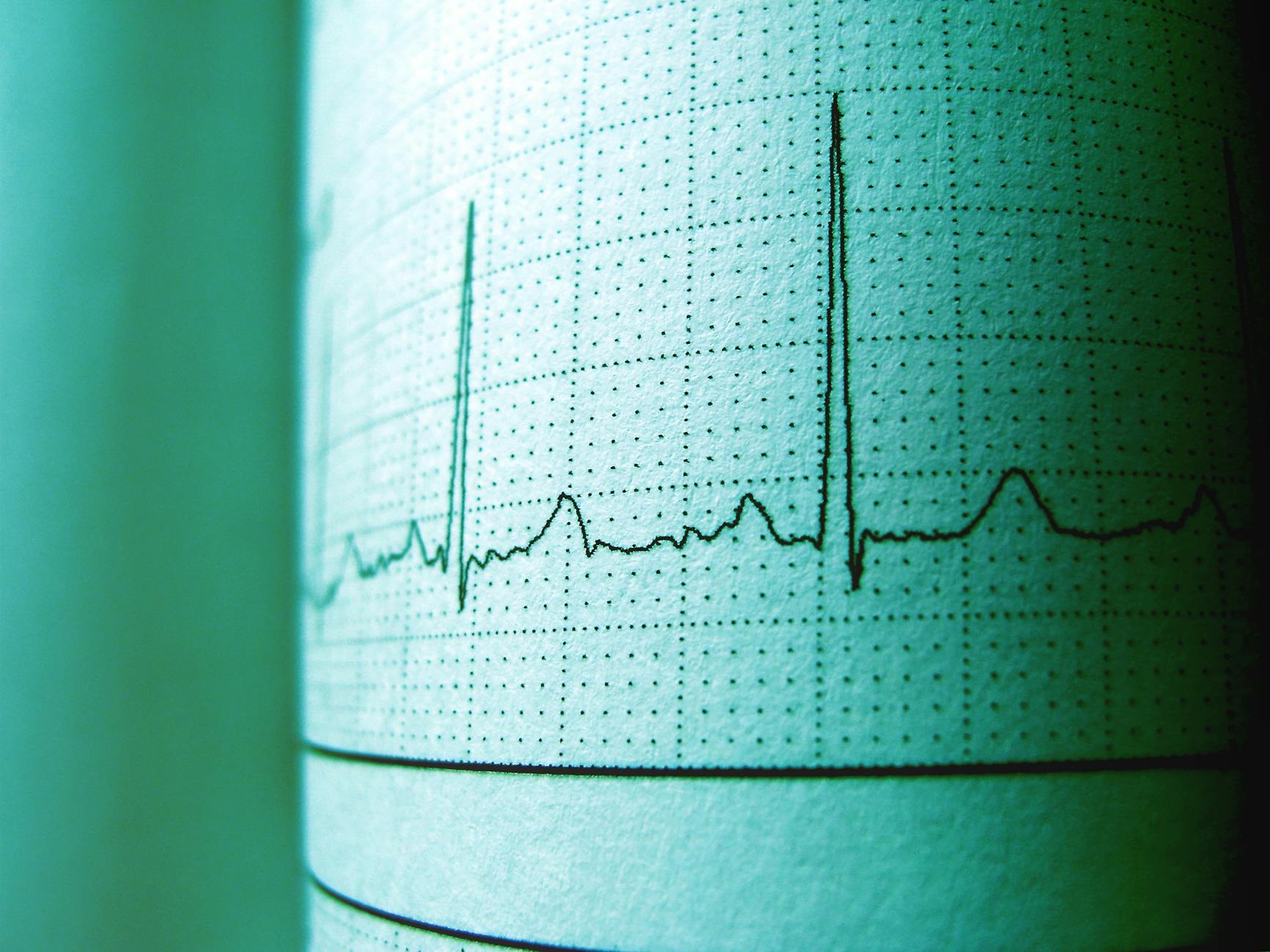
Heart rate monitoring adds a second data point that can significantly improve calorie estimation accuracy beyond weight alone. Your heart rate reflects how hard your cardiovascular system is actually working during a given moment, which captures variables that weight alone misses, including fitness level, effort, environmental temperature, and even hydration status. Most chest strap and optical wrist monitors use algorithms that combine heart rate, weight, age, and sex to produce a calorie estimate that is generally within 10 to 15 percent of laboratory-measured values, though accuracy varies by device and brand. For example, a 150-pound woman wearing a chest strap heart rate monitor during a high-energy Zumba class might see her heart rate averaging 155 beats per minute, producing a calorie estimate of around 520 calories for the hour.
The same woman in a lower-intensity Zumba Gold class might average 125 beats per minute and see an estimate closer to 350 calories. Without the heart rate data, a weight-only calculation would give the same number for both classes, which is clearly wrong. That said, optical wrist sensors can be less reliable during Zumba specifically because the constant arm movements and wrist rotations can cause the sensor to lose consistent skin contact. If accuracy matters to you, a chest strap monitor will generally outperform a wrist-based device during dance fitness classes.
How Zumba Calorie Burn Compares to Other Cardio Workouts by Body Weight
Zumba holds up well against other popular cardiovascular exercises when you compare calorie burn across different body weights, though it does not top the list. For a 155-pound person exercising for one hour, running at 6 miles per hour burns approximately 590 calories, cycling at a vigorous pace burns around 520, swimming laps burns about 500, and Zumba burns roughly 450 to 500 depending on intensity. At 200 pounds, those numbers scale up proportionally: running hits about 760, vigorous cycling around 670, swimming around 640, and Zumba around 580 to 650.
The tradeoff is that Zumba tends to be more sustainable for many people over the long term compared to higher-calorie-burning activities like running. Joint impact is lower, the social environment increases adherence, and the perceived effort is often lower than the actual cardiovascular demand because the music and choreography provide distraction. A workout you actually do four times per week will always beat a theoretically superior workout you quit after three weeks. For heavier individuals in particular, Zumba offers a meaningful advantage over running because the dance-based movements distribute impact differently than repetitive foot strikes, reducing the risk of overuse injuries in the knees and ankles that can sideline progress.
Common Mistakes When Estimating Zumba Calorie Burn
One of the most frequent errors people make is trusting the calorie display on gym machines or generic fitness apps without inputting their actual body weight. Many Zumba calorie calculators online default to a 155-pound reference weight, which means a 200-pound user could be underestimating their burn by 30 percent, while a 120-pound user might be overestimating by 25 percent. Always input your current weight into whatever tool you are using, and update it regularly if your weight is changing. Another common mistake is assuming that calorie burn during Zumba is constant throughout the class.
Most Zumba sessions alternate between high-intensity peaks during fast songs and recovery periods during slower tracks. The calorie burn rate during a high-intensity merengue segment can be double or triple what it is during a cool-down stretch segment. This interval-like structure is actually one of Zumba’s strengths for calorie burning, but it means that a 45-minute class is not simply 75 percent of a 60-minute class in terms of calories. The warm-up and cool-down segments, which are typically lower intensity, occupy a larger proportion of a shorter class. Be cautious about scaling calorie estimates linearly by time, especially for classes shorter than 50 minutes or longer than 70 minutes.

Does Losing Weight During a Zumba Program Reduce Your Calorie Burn Over Time?
Yes, and this is one of the frustrations that consistent Zumba participants encounter. As you lose weight, your body requires less energy to perform the same movements, which means your calorie burn per session gradually decreases.
A person who starts at 210 pounds and loses 30 pounds over six months might see their per-class calorie burn drop from around 620 calories to roughly 530 calories, a decline of about 15 percent. Combined with the efficiency gains from improved fitness, the total reduction can be even steeper. This is one reason weight loss plateaus are so common and should not be interpreted as the workout “stopping working.” The solution is to progressively increase intensity, whether by choosing more vigorous Zumba formats like Zumba HIIT or Zumba Step, moving more enthusiastically during class, or adding resistance training on alternate days to preserve muscle mass and metabolic rate.
The Future of Personalized Calorie Tracking in Group Fitness
Wearable technology is moving toward more individualized calorie estimation that goes well beyond simple weight-based calculations. Newer devices are beginning to incorporate continuous glucose monitoring data, skin temperature, respiratory rate, and motion pattern analysis to build a more complete picture of energy expenditure during activities like Zumba.
Some Zumba-affiliated programs already integrate with heart rate display systems that show each participant’s effort zone on a screen during class, which adds both accountability and more personalized feedback. As these tools become more accessible and accurate, the gap between estimated and actual calorie burn should narrow, giving participants better data for making informed decisions about nutrition, recovery, and training frequency regardless of their body weight.
Conclusion
Body weight is the most influential single variable in determining how many calories you burn during Zumba, with heavier individuals burning substantially more than lighter ones performing identical routines. However, weight is just the starting point. Muscle mass, fitness level, effort, class format, and measurement method all play meaningful roles in the final number.
Using a heart rate monitor alongside your body weight will give you the most reliable estimate without stepping into an exercise physiology lab. Rather than fixating on exact calorie numbers, focus on consistency and progressive intensity. If you are using Zumba as a tool for weight management, understand that your calorie burn will decrease as you lose weight, and plan accordingly by increasing effort or adding complementary training. Track trends over weeks rather than obsessing over single-session numbers, and remember that the best workout for burning calories is the one you enjoy enough to keep showing up for.
Frequently Asked Questions
How many calories does a 200-pound person burn in one hour of Zumba?
A 200-pound person can expect to burn approximately 580 to 650 calories during a standard 60-minute Zumba class at moderate-to-vigorous intensity. The exact number depends on effort level, class format, and individual fitness.
Does Zumba burn more calories than walking for heavier individuals?
Yes, significantly more. A 180-pound person burns roughly 300 to 350 calories per hour walking at a brisk pace compared to 500 to 570 calories per hour during Zumba. The gap widens as body weight increases because Zumba involves more full-body, multi-directional movement.
Will I burn fewer calories at Zumba as I lose weight?
Yes. As your body weight decreases, the energy cost of performing the same movements decreases proportionally. You can offset this by increasing your effort, choosing higher-intensity Zumba formats, or adding supplementary exercise.
Is the calorie count on my fitness tracker accurate for Zumba?
Most fitness trackers are within 10 to 25 percent of actual calorie expenditure during Zumba. Chest strap heart rate monitors tend to be more accurate than wrist-based optical sensors, which can struggle with the arm movements typical of dance fitness.
Does muscle mass affect calorie burn during Zumba independently of total body weight?
Yes. A person with more muscle mass at a given weight will generally burn more calories than someone with less muscle mass at the same weight, because muscle tissue has higher metabolic demands both at rest and during activity.