The most important things to look for when buying an exercise bike are the resistance system, the flywheel weight, adjustability of the seat and handlebars, and the overall build quality relative to your budget. A bike that nails those four factors will serve you well for years, while a bike that skimps on any of them will end up as an expensive clothes rack within six months.
For example, a direct-contact brake pad resistance system on a budget bike will wear down and become inconsistent after a few hundred hours of use, whereas a magnetic resistance system on a mid-range model like the Schwinn IC4 will feel smooth and consistent for thousands of sessions without any maintenance. Beyond those core factors, this article covers the different types of exercise bikes and who each one suits best, how to evaluate the console and connectivity features without overpaying for gimmicks, what to expect at each price tier, how to properly fit a bike to your body, and common problems buyers run into after purchase. Whether you are training for a triathlon, rehabbing a knee injury, or just looking for a reliable cardio option on days when the weather keeps you off the road, this guide will help you spend your money wisely.
Table of Contents
- What Type of Exercise Bike Should You Buy?
- How Resistance Type and Flywheel Weight Affect Your Ride Quality
- Getting the Fit Right — Seat, Handlebar, and Pedal Adjustments
- Evaluating Consoles, Connectivity, and Smart Features Without Overpaying
- Common Problems Buyers Discover After Purchase
- What to Expect at Each Price Tier
- Where the Home Exercise Bike Market Is Heading
- Conclusion
- Frequently Asked Questions
What Type of Exercise Bike Should You Buy?
There are three main categories of exercise bikes, and choosing the wrong type is the single most common mistake new buyers make. Upright bikes mimic the posture of a traditional road bicycle, with the pedals directly below the rider and a forward lean toward the handlebars. Recumbent bikes place you in a reclined position with the pedals out in front, distributing your weight across a larger seat and backrest. Spin bikes, also called indoor cycling bikes, are built for high-intensity interval training and closely replicate the aggressive geometry of a racing bicycle, with a heavier flywheel and the ability to stand on the pedals during sprints.
If your primary goal is general cardiovascular fitness and you have no joint issues, an upright bike is the most versatile choice and typically the most affordable. If you have lower back pain, are recovering from surgery, or are over sixty and want something that feels secure, a recumbent bike is worth the extra floor space it requires. Spin bikes are best suited for people who already enjoy cycling or who plan to follow structured interval programs, but they demand more from your core and can aggravate wrist or shoulder problems if you are not accustomed to the riding position. A person who buys a spin bike expecting a casual pedaling experience will likely find it uncomfortable, while someone who buys a basic upright when they really want Peloton-style classes will feel limited within weeks.

How Resistance Type and Flywheel Weight Affect Your Ride Quality
The resistance mechanism is the heart of any exercise bike, and it determines how natural the pedaling motion feels, how quiet the bike operates, and how much maintenance you will deal with over time. Friction-based systems use a felt or leather pad that presses against the flywheel. They are inexpensive to manufacture but generate noise, create dust, and the pads wear out. Magnetic resistance systems use magnets positioned near the flywheel to create drag without any physical contact. They are virtually silent, require no replacement parts, and allow for precise, repeatable resistance levels. Eddy current resistance, found on higher-end commercial bikes, is a more advanced form of magnetic resistance that offers even finer control.
Flywheel weight matters more than most buyers realize. A heavier flywheel stores more kinetic energy, which means the transition between pedal strokes feels smoother rather than choppy. Most decent spin bikes have flywheels between 30 and 50 pounds, while uprights tend to range from 13 to 25 pounds. However, if you weigh under 140 pounds or are primarily doing low-intensity steady-state cardio, a 40-pound flywheel is overkill, and a lighter flywheel with a good magnetic resistance system will feel perfectly fine. Conversely, a 200-pound rider doing standing sprints on a bike with a 15-pound flywheel will notice an unpleasant lurching sensation at the top of each pedal stroke. The Keiser M3i, a commercial-grade bike with a rear-mounted flywheel of only 8 pounds, proves that flywheel weight alone does not tell the whole story, because its magnetic resistance system and precision engineering compensate for the lighter wheel.
Getting the Fit Right — Seat, Handlebar, and Pedal Adjustments
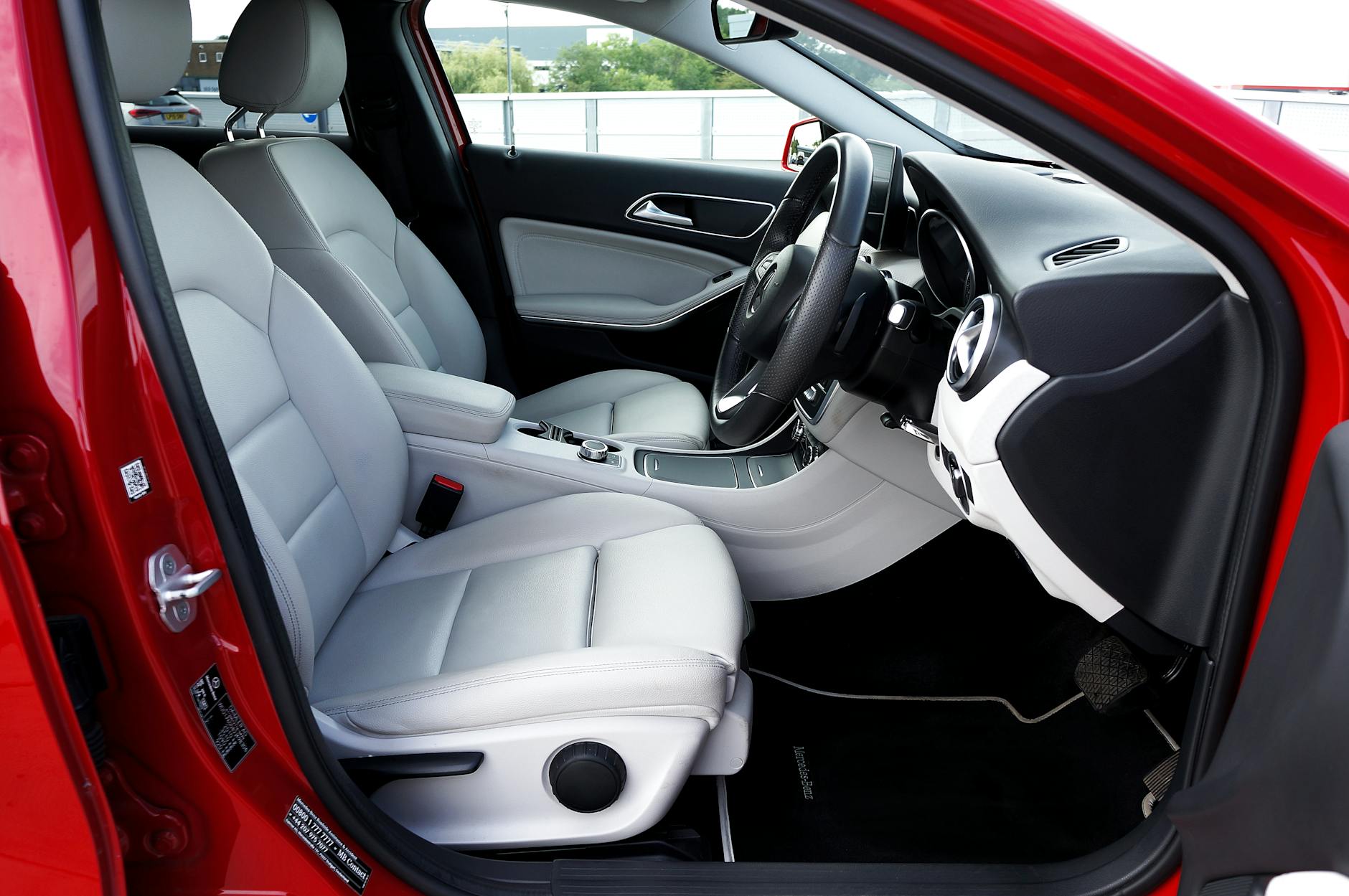
A bike that does not fit your body will cause knee pain, saddle soreness, and numbness in your hands, and no amount of padding or accessories will fix fundamental geometry problems. At minimum, the seat should adjust vertically and horizontally, and the handlebars should adjust in height. On budget bikes, the handlebars often only move up and down, while mid-range and premium models add fore-aft handlebar adjustment, which is important for riders with longer torsos or those who spend more than 30 minutes per session. The seat height test is simple: when your foot is at the bottom of the pedal stroke with the ball of your foot on the pedal, your knee should have a slight bend of roughly 25 to 35 degrees. If your hips rock side to side while pedaling, the seat is too high.
If your knees feel compressed at the top of the stroke, it is too low. Horizontal seat position matters just as much. Slide the seat forward or back until your kneecap is directly above the pedal spindle when the crank arm is at the 3 o’clock position. The Peloton Bike, for instance, has a seat that adjusts both vertically and horizontally with clearly marked numerical positions, making it easy to find and return to your ideal setup. Cheaper bikes like the Sunny Health SF-B1805 also offer four-way adjustment but use friction knobs without position markers, so you may want to mark your settings with tape after dialing them in.
Evaluating Consoles, Connectivity, and Smart Features Without Overpaying
The console and software ecosystem are where exercise bike pricing gets wildly inflated, and this is the area where buyers most often spend money they did not need to. A basic LCD console that displays time, speed, distance, cadence, and an estimated calorie count costs manufacturers very little to include and is perfectly adequate for most riders. A large touchscreen with built-in streaming classes, Bluetooth speakers, and a front-facing camera can add $500 to $1,500 to the purchase price, plus $15 to $44 per month in subscription fees. The tradeoff is real but worth examining honestly.
If you are the kind of person who quits exercise programs because you get bored, a platform like Peloton or iFit with live and on-demand classes may genuinely keep you on the bike. But if you already know you will watch television, listen to podcasts, or follow your own training plan, you are paying a premium for a tablet bolted to a bike. A more cost-effective approach is to buy a bike with Bluetooth connectivity and ANT+ support, then pair it with a tablet or phone running a third-party app like Zwift, Kinetic, or even the free Peloton app. The Bowflex C6, which retails for roughly half the price of a Peloton, takes exactly this approach — it ships without a built-in screen but connects seamlessly to most major cycling apps. The downside is that you lose the polished, integrated experience and may need to fiddle with connections occasionally.
Common Problems Buyers Discover After Purchase
The most frequent complaint among exercise bike owners is noise, and it almost always comes from one of three sources: the resistance system, the drivetrain, or the bike shifting on the floor. Belt-drive systems are significantly quieter than chain-drive systems. If you live in an apartment or plan to ride early in the morning while others sleep, a chain-drive bike is a poor choice regardless of its other merits. Even a belt-drive bike will transmit vibration through the floor at higher intensities, so a thick rubber equipment mat underneath is not optional in shared living spaces — it is essential. Another problem that surfaces after a few months is the pedal-to-floor clearance on bikes placed on carpet or uneven surfaces.
If the bike rocks even slightly during hard efforts, the motion compounds over time and loosens bolts. Check the leveling feet on any bike you buy and adjust them on a hard, flat surface before your first ride. The maximum user weight rating is also worth taking seriously. Manufacturers list these ratings conservatively for liability reasons, but riding consistently within 20 pounds of the maximum will accelerate wear on the bottom bracket and crank arms. If you weigh 275 pounds and a bike is rated for 300, you will likely experience creaking and play in the pedals within a year. Look for a bike rated at least 50 pounds above your body weight for long-term durability.

What to Expect at Each Price Tier
Under $300, you are getting a basic upright or spin bike with a friction resistance pad, a simple LCD console, and limited adjustability. These work for light, casual use but are not built for daily intense sessions. The Sunny Health SF-B1002 is a common entry point in this range and is adequate for someone pedaling three times a week at moderate effort.
Between $500 and $1,000, magnetic resistance becomes standard, build quality improves substantially, flywheels get heavier, and Bluetooth connectivity usually appears. The Schwinn IC4 and Bowflex C6, which are essentially the same bike sold under different brand names, sit right in the sweet spot of this range and satisfy the vast majority of home riders. Above $1,000, you enter the territory of commercial-grade frames, integrated screens, and subscription ecosystems. The Peloton Bike at roughly $1,450, the NordicTrack S22i at around $1,500, and the Keiser M3i at approximately $2,000 each justify their price in different ways — Peloton through software and community, NordicTrack through incline and decline simulation, and Keiser through bulletproof commercial construction and a rear-drive design that gyms swear by.
Where the Home Exercise Bike Market Is Heading
The explosion of connected fitness during 2020 and 2021 led to oversaturation, and several direct-to-consumer brands have since folded or pivoted. Peloton’s financial struggles and subsequent restructuring are the most visible example, but smaller brands like MYX Fitness and Echelon have also scaled back hardware ambitions. The practical effect for buyers is that the used market is flooded with lightly used premium bikes at steep discounts, and manufacturers are increasingly competing on subscription flexibility and content quality rather than hardware alone.
Looking forward, expect more bikes to adopt open ecosystems rather than locking you into a single app. The trend toward compatibility with Zwift, Apple Fitness Plus, and other third-party platforms benefits consumers by reducing switching costs. Power meter accuracy, once exclusive to $2,000-plus bikes, is also trickling down into sub-$1,000 models, which matters if you follow structured training plans that rely on precise wattage targets rather than arbitrary resistance levels.
Conclusion
Buying an exercise bike comes down to matching the bike’s type, resistance system, and adjustability to your specific body and goals, then spending only as much on technology and connectivity as your habits genuinely demand. A $600 magnetic resistance bike with Bluetooth and a solid frame will outperform a $1,500 bike with a flashy screen if the expensive one has a friction pad, poor adjustability, and a lightweight flywheel. Prioritize the mechanical fundamentals first, then layer on the software experience.
Before you buy, measure your available floor space, check the ceiling height if you plan to stand on the pedals, confirm the maximum user weight rating, and read owner reviews that are at least six months old to surface durability issues that do not appear in first-impression reviews. If possible, test ride the bike or buy from a retailer with a reasonable return window. Your body will tell you within three or four rides whether the geometry works for you, and no spec sheet can substitute for that direct feedback.
Frequently Asked Questions
How much should I spend on an exercise bike for home use?
Between $500 and $1,000 gets you a reliable bike with magnetic resistance, Bluetooth, and solid build quality. Spending less is fine for occasional light use, and spending more makes sense only if you specifically value a built-in screen, subscription content, or commercial-grade durability.
Are exercise bikes good for weight loss?
Yes, but only if you use them consistently and manage your nutrition. A 155-pound person burns roughly 260 calories in 30 minutes of moderate cycling and about 390 calories at vigorous intensity. The bike is a tool — the caloric deficit is what drives fat loss.
How long do exercise bikes last?
A well-built bike with magnetic resistance and a belt drive should last 7 to 10 years with minimal maintenance under regular home use. Friction-based bikes may need pad replacements every 1 to 2 years depending on usage intensity.
Is a spin bike or upright bike better for beginners?
An upright bike is generally more comfortable and forgiving for beginners. Spin bikes require more core engagement and can cause discomfort in the hands, wrists, and saddle area until you build up tolerance. Start with an upright unless you specifically want to do high-intensity interval classes.
Do I need a bike with a screen?
No. A bike with Bluetooth connectivity paired with a tablet or phone provides the same functionality at a fraction of the cost. Built-in screens are a convenience, not a necessity, and they lock you into one platform’s subscription model.
Can I use an exercise bike with bad knees?
Cycling is one of the best low-impact options for people with knee issues because it eliminates the ground impact of running. A recumbent bike is the safest choice for significant knee problems because it reduces shear force on the joint. Set the seat height so your knee never bends past 90 degrees at the top of the pedal stroke.