When shopping for dumbbells, the most important factors to narrow down are material type, grip quality, and weight range for your current strength level. A runner who wants to add upper-body work twice a week has very different needs than someone building a full home gym. For most cardiovascular athletes looking to cross-train, a pair of rubber hex dumbbells in the 10-to-30-pound range will cover the vast majority of useful exercises, from shoulder presses to single-leg deadlifts, without taking over your living room.
Beyond those basics, the details matter more than most buyers expect. Knurling pattern, handle diameter, shape, and even the finish on the weight plates all affect how a dumbbell feels during a sweaty conditioning circuit versus a slow strength set. Price per pound varies wildly too — from under a dollar per pound for basic cast iron to over three dollars per pound for premium urethane-coated sets. This guide walks through what actually matters when choosing dumbbells, where to save money, where to spend it, and which features are pure marketing fluff.
Table of Contents
- What Should You Look for When Buying Dumbbells for Home Workouts?
- How Dumbbell Materials Affect Durability and Performance
- Fixed Weight vs. Adjustable Dumbbells — Which Makes Sense for Runners?
- How to Choose the Right Dumbbell Weight Range for Cross-Training
- Common Dumbbell Problems That Buyers Overlook
- When Specialty Dumbbells Are Worth Considering
- The Dumbbell Market Going Forward
- Conclusion
- Frequently Asked Questions
What Should You Look for When Buying Dumbbells for Home Workouts?
Start with the weight heads. Hex-shaped dumbbells won’t roll away on the floor, which sounds minor until you set a round dumbbell down on a slightly tilted garage floor and watch it drift into your car. Round pro-style dumbbells look better on a rack and feel more balanced during presses, but they demand a rack — you can’t safely leave them on the ground. For home use, especially in shared spaces or small apartments, hex wins on practicality alone. Grip diameter is the next filter. Standard dumbbell handles measure about 28 to 32 millimeters.
If you have smaller hands, a 28-millimeter handle lets you close your grip fully, which reduces forearm fatigue during longer sets and conditioning work. Larger hands may prefer 32 millimeters for a more secure feel during heavy rows. Most budget dumbbells don’t list handle diameter, so if you’re ordering online without handling them first, stick with well-reviewed brands like CAP Barbell or Rep Fitness that maintain consistent sizing across their product lines. The knurling — that crosshatch texture on the handle — matters more than most people realize until they’re mid-set with sweaty palms. Aggressive knurling is great for deadlifts but tears up your hands during high-rep circuits. Medium knurling with a smooth center ring is the sweet spot for runners and endurance athletes who tend to do higher-rep, moderate-weight work.

How Dumbbell Materials Affect Durability and Performance
Cast iron is the oldest and cheapest option, typically running $0.75 to $1.50 per pound. Bare cast iron works fine in a garage gym but will rust if exposed to humidity or sweat, and it chips concrete floors on impact. If your training space has hard flooring or you tend to drop weights during the last rep of a tough set, bare iron is going to cause problems. Rubber-coated dumbbells solve the floor and noise issue and add a small price premium, usually $1.00 to $2.00 per pound. However, cheap rubber coatings can off-gas a strong chemical smell for weeks after purchase, especially in enclosed spaces.
Higher-quality brands use virgin rubber rather than recycled material, which significantly reduces the odor. If you’re training in a basement or bedroom, this distinction matters. Urethane-coated dumbbells are the commercial gym standard — they resist scuffing, don’t smell, and hold up to years of daily abuse, but they typically cost $2.50 to $4.00 per pound. For a home setup used a few times per week, urethane is overkill unless you plan to resell down the line, since they hold their value better. Neoprene-coated dumbbells are popular in the one-to-ten-pound range and are fine for physical therapy or very light accessory work. They’re not appropriate for serious strength training because the coating degrades under heavier loads and repeated impact, and the soft surface makes them difficult to grip securely once your hands sweat.
Fixed Weight vs. Adjustable Dumbbells — Which Makes Sense for Runners?
For runners and cardio-focused athletes who use dumbbells as a supplement rather than a primary training tool, adjustable dumbbells often make more practical sense. A single pair of adjustable dumbbells like the PowerBlock Elite or Bowflex SelectTech 552 replaces an entire rack of fixed weights, covering 5 to 52.5 pounds in one compact unit. That’s a meaningful space savings when your home gym shares real estate with a treadmill, bike trainer, or foam rolling area. The tradeoff is speed and feel. Adjustable dumbbells take a few seconds to change weight between exercises, which slows down supersets and circuits.
They also feel bulkier in-hand because the adjustment mechanism adds length and width to the dumbbell head. During exercises where the dumbbell passes close to your body — like renegade rows or clean-and-presses — that extra bulk is noticeable and occasionally annoying. Fixed dumbbells feel more natural and transition instantly, but a full set from 5 to 50 pounds means owning ten pairs of dumbbells and the rack to hold them. A common compromise for runners building a cross-training setup: buy a pair of adjustable dumbbells for your main working range and a pair or two of light fixed dumbbells (5 and 10 pounds) for warm-ups and rehab exercises. The fixed pairs are cheap enough that doubling up doesn’t break the budget, and having them ready to grab without adjusting anything keeps your warm-up moving.
How to Choose the Right Dumbbell Weight Range for Cross-Training
The biggest mistake most runners make when buying dumbbells is underbuying on weight. Strength adapts faster than you expect, especially in untrained muscle groups. A runner with strong legs who has never done upper-body work might struggle with 15-pound shoulder presses initially but could need 25 or 30 pounds within two months. Buying dumbbells you’ll outgrow in six weeks is throwing money away. A practical starting strategy: test your working weight using a one-set-of-twelve rule. Pick up a weight and do twelve strict reps of the exercise you plan to use it for.
If you can complete all twelve reps with good form but the last two or three feel genuinely difficult, that’s your working weight. If you cruise through twelve easily, go heavier. If you can’t reach ten reps, go lighter. For most runners adding strength work, this means the 15-to-35-pound range will cover bench presses, rows, lunges, shoulder work, and farmer carries for a solid year or more. If budget is tight, a pair of 20s and a pair of 30s will handle an enormous variety of exercises. The 20s serve shoulder presses, lateral raises, and lighter accessory work, while the 30s cover rows, goblet squats, and pressing movements. As you progress, add a pair of 40s or 45s for lower-body dominant exercises like Romanian deadlifts and split squats, which demand more load than upper-body movements.
Common Dumbbell Problems That Buyers Overlook
Loose weight plates are the most dangerous issue with cheap adjustable dumbbells. Spinlock-style dumbbells — the old-school kind with a threaded bar and screw-on collars — loosen during use, especially during exercises with rotation or momentum. Mid-set, a collar can unscrew enough to let a plate slide off, which turns a routine set of hammer curls into a dropped weight and a potential foot injury. If you go the traditional adjustable route, use spring clips as backup collars and check tightness between every set. Weight accuracy is another problem nobody thinks about until they notice one arm is stronger than the other. Cheap dumbbells can be off by five to ten percent from their labeled weight, meaning your “20-pound” dumbbells might actually be 19 and 21 pounds.
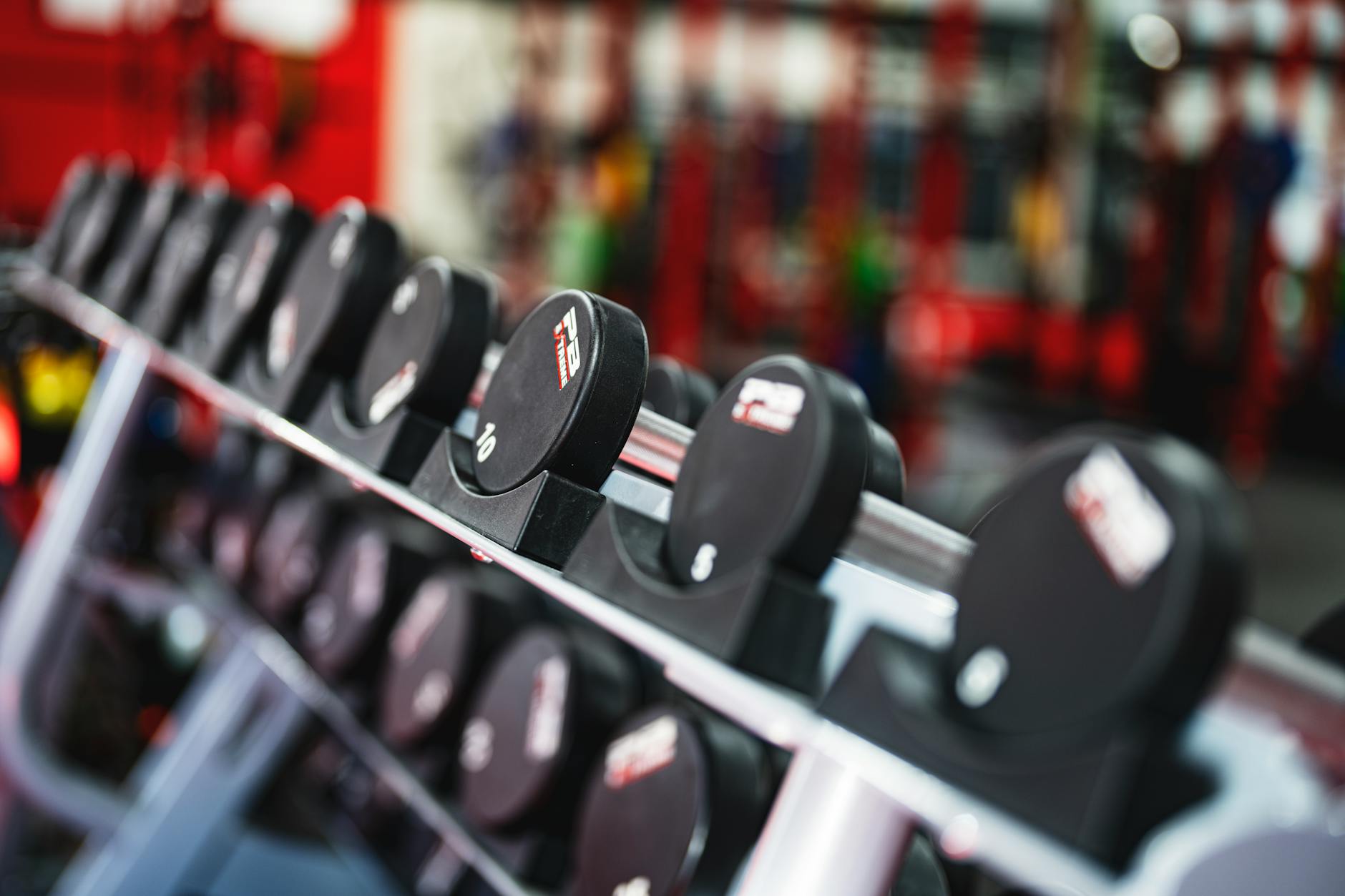
That imbalance won’t matter for casual use, but it can create or mask asymmetries over months of training. If balanced loading matters to you, weigh your dumbbells on a bathroom scale after purchase. Name brands like Rogue, Rep Fitness, and Ironmaster hold tighter manufacturing tolerances. Storage seems trivial but becomes a real issue once you own more than two pairs. Dumbbells left on the floor are a tripping hazard, and stacking them without a rack leads to scratched coatings and dented floors. Budget $40 to $80 for a basic dumbbell rack if you plan to own three or more pairs. A-frame racks are compact and stable, while horizontal racks hold more weight but take up more floor space.

When Specialty Dumbbells Are Worth Considering
Loadable dumbbells — handles that accept standard Olympic or specialty plates — deserve a mention for runners who already own a barbell setup. If you have a home gym with bumper plates, a pair of loadable dumbbell handles from Titan Fitness or Rep Fitness costs $50 to $80 and lets you use plates you already own. This eliminates the need to buy a separate set of fixed dumbbells entirely.
The downside is that plate-loaded dumbbells are longer and clumsier than fixed dumbbells, and changing weights between exercises means sliding plates on and off, which is slower than any other adjustment system. Hex trap bar dumbbells and other unconventional designs occasionally show up in specialty fitness stores. Unless you have a very specific training need, stick with conventional designs. The aftermarket for standard dumbbells is strong if you decide to sell, while niche products tend to sit unsold.
The Dumbbell Market Going Forward
The home fitness equipment market corrected sharply after the pandemic-era price spike, and dumbbells are now closer to their historical price-per-pound averages. For buyers, this is a good time to invest. Used dumbbells from Facebook Marketplace, Craigslist, and Play It Again Sports often run 40 to 60 percent below retail, and cast iron doesn’t wear out — a used dumbbell performs identically to a new one as long as the handle isn’t bent.
Adjustable dumbbell technology continues to improve, with newer systems offering faster weight changes and more compact profiles. Products like the NUOBELL and Pepin adjustable dumbbells use a rotation mechanism that changes weight in under two seconds, which largely eliminates the speed disadvantage adjustable dumbbells once had. As these designs mature and come down in price, the argument for buying a full rack of fixed dumbbells at home gets harder to justify for anyone outside serious bodybuilding.
Conclusion
For runners and cardiovascular athletes, dumbbells are the single most versatile piece of strength equipment you can own. The right pair supports everything from injury-prevention exercises to full-body conditioning circuits. Focus your buying decision on material quality, appropriate weight range, and grip comfort rather than brand prestige or visual design.
Rubber hex dumbbells in the 15-to-35-pound range remain the best all-around value for most home gym users, balancing durability, floor protection, and price. Before you buy, handle the dumbbells in person if possible, check weight accuracy after purchase, and plan for storage from the start. Whether you choose fixed or adjustable depends on your space, budget, and how much variety you need in loading. Either way, a modest investment in a good pair of dumbbells pays off quickly in stronger running form, better injury resilience, and more balanced fitness.
Frequently Asked Questions
How heavy should dumbbells be for a beginner runner adding strength training?
Most beginner runners should start with 10-to-20-pound dumbbells for upper-body exercises and 20-to-30-pound dumbbells for lower-body movements like goblet squats and Romanian deadlifts. Expect to increase by about 5 pounds within the first one to two months as your muscles adapt.
Are adjustable dumbbells safe?
Modern selectorized adjustable dumbbells from reputable brands like PowerBlock, Bowflex, and Ironmaster are safe when used as directed. Avoid dropping them, as the adjustment mechanisms are not designed to handle impact the way solid fixed dumbbells are. Traditional spinlock adjustable dumbbells require more vigilance — always check collar tightness between sets.
Do rubber-coated dumbbells smell?
Many do, especially when new. Dumbbells made with recycled rubber tend to off-gas more than those made with virgin rubber. The smell usually fades within two to four weeks in a ventilated space. If odor sensitivity is a concern, urethane-coated or bare iron dumbbells are odor-free alternatives.
How much space do I need for a dumbbell setup?
A pair of adjustable dumbbells and a small bench requires roughly a 6-by-4-foot area. A full fixed dumbbell set with an A-frame rack needs about 3 by 2 feet of floor space for the rack, plus the same workout area. Most runners can fit a functional dumbbell setup in a corner of a bedroom or garage.
Is it worth buying used dumbbells?
Almost always, yes. Cast iron and rubber hex dumbbells are nearly indestructible, and used prices are typically 40 to 60 percent below retail. Inspect handles for bending or excessive rust, check that weight plates are firmly attached, and weigh them to verify accuracy. Avoid used adjustable dumbbells unless you can test the adjustment mechanism in person.