High-intensity dance styles can burn as many calories as running, and in some cases, even more. Researchers at the University of Brighton found that 30 minutes of contemporary dance burns approximately 534 calories, while 30 minutes of running burns around 528 calories. Street dance goes further, torching roughly 606 calories in the same timeframe. So if you have been assuming that lacing up your running shoes is the only serious way to burn calories, the data says otherwise.
That said, the answer is not as simple as “dance beats running.” The calorie burn from dancing varies enormously depending on the style and intensity. A casual social foxtrot is not going to rival a tempo run. Competitive ballroom burns between 340 and 442 calories per 30 minutes, while a gentle jog at 5 mph burns about 298 calories in the same window. The real variable is effort, not the activity label. This article breaks down the calorie comparisons by dance style and running pace, examines why certain dance forms demand so much energy, and helps you figure out which option actually fits your goals.
Table of Contents
- How Many Calories Does Dancing Burn Compared to Running?
- Why High-Intensity Dance Burns So Many Calories
- The Joint Health Advantage of Dancing Over Running
- Choosing the Right Dance Style for Maximum Calorie Burn
- When Running Still Wins for Calorie Burn
- Combining Dance and Running for Better Results
- The Future of Dance as Recognized Fitness Training
- Conclusion
- Frequently Asked Questions
How Many Calories Does Dancing Burn Compared to Running?
The numbers depend heavily on what kind of dancing and what pace of running you are comparing. For a 155-pound person, running at 5 mph (a 12-minute mile) burns roughly 298 calories in 30 minutes. Bump that to 6 mph and you hit around 372 calories. At 7.5 mph, a fairly aggressive pace for most recreational runners, the burn climbs to about 465 calories per half hour. Running at a steady pace typically falls in the range of 340 to 550 calories per hour. Dancing, meanwhile, spans a much wider range. At the low end, casual social dancing might burn around 200 calories per hour.
At the high end, street and commercial dance styles hit roughly 606 calories in just 30 minutes, which outpaces all but the fastest running speeds. Swing dancing lands at about 586 calories per 30 minutes, and contemporary dance sits at approximately 534. Ballet, often underestimated, burns around 462 calories in a half-hour session. The takeaway is that the calorie gap between dancing and running narrows or disappears entirely once you move beyond recreational, low-effort dance and into structured, high-intensity styles. One important caveat: these numbers shift based on body weight, muscle mass, and individual effort level. A 200-pound person doing the same swing dance routine will burn more calories than a 130-pound person. The University of Brighton study measured dancers performing at full effort, not casually going through the motions, which matters when you try to apply these numbers to your own workouts.

Why High-Intensity Dance Burns So Many Calories
Running is a repetitive, linear movement. Your body moves in one direction, at a relatively consistent pace, using a predictable set of muscles. Dancing, by contrast, involves constant changes in direction, speed, and movement pattern. You are accelerating, decelerating, jumping, turning, dropping low, and reaching high, often within a few seconds. That variability forces your body to recruit more muscle fibers and increases metabolic demand compared to steady-state cardio. Dance also engages more muscle groups simultaneously. Running primarily works the lower body, with some core engagement for stability.
A street dance routine hits your legs, glutes, core, shoulders, and arms in rapid succession. That full-body recruitment is a major reason why calorie burn can rival or exceed running despite the fact that dancers are not covering miles of ground. It is closer to a high-intensity interval workout than a steady jog. However, this only holds true if you are actually dancing at high intensity. A beginner learning choreography, pausing frequently to watch the instructor, and working at half speed will not hit those 600-calorie numbers. The research measured experienced dancers performing routines at performance-level intensity. If your dance session involves standing around for half the class, the calorie comparison to running falls apart quickly.
The Joint Health Advantage of Dancing Over Running
Running puts significant repetitive stress on your knees, hips, and ankles. Every footstrike delivers an impact force of roughly two to three times your body weight, and over thousands of steps per run, that load accumulates. For runners who are overweight, returning from injury, or simply aging out of their peak joint tolerance, this becomes a limiting factor. Plenty of people who want to run for fitness cannot sustain it because their joints give out before their cardiovascular system does. Dancing generally offers lower joint impact than running. The movements are more varied, so no single joint absorbs the same repetitive load over and over. You land differently each time, distribute force across multiple planes of motion, and spend less time in the pure ground-pounding cycle that defines running.
This does not mean dancing is zero-impact. Ballet dancers, for instance, deal with significant foot and ankle stress. But for someone choosing between a 30-minute run and a 30-minute dance session for general calorie burning, the dance option tends to be kinder to the body over time. There is also a cognitive dimension. Memorizing choreography, responding to musical cues, and coordinating complex sequences engages your brain in ways that running on a treadmill does not. This added cognitive demand is not just a bonus. Some research suggests it may contribute to better long-term brain health, making dance a dual-purpose workout for body and mind.

Choosing the Right Dance Style for Maximum Calorie Burn
If your primary goal is burning calories, not all dance styles are created equal. Street and commercial dance tops the charts at roughly 606 calories per 30 minutes, making it the best option for raw energy expenditure. Swing dancing follows closely at 586 calories, and it has the added benefit of being a social activity that most people find genuinely fun rather than punishing. Contemporary dance, at 534 calories per half hour, demands significant athleticism and flexibility but may not be accessible to beginners. Ballet burns about 462 calories in 30 minutes, which is respectable but falls below the high-intensity dance styles and sits in the same range as running at 7.5 mph. Competitive ballroom, depending on the specific dance, ranges from 340 to 442 calories per 30 minutes.
Social ballroom, where you are chatting with your partner and moving at a leisurely pace, drops well below that. The tradeoff is accessibility versus intensity. Running requires almost no skill. You can walk out your door and start. High-calorie dance styles require instruction, practice, and usually a class or studio. You will not burn 600 calories in your first street dance class because you will spend half of it learning the basics. Running delivers a more predictable calorie burn from day one, while dancing has a higher ceiling but a steeper learning curve to reach it.
When Running Still Wins for Calorie Burn
Despite the impressive numbers for dance, running holds some practical advantages that are worth acknowledging. First, running provides a consistent and predictable energy expenditure. If you run at 6 mph for 30 minutes, you will burn roughly 372 calories regardless of whether it is your first week or your fiftieth. Dance calorie burn is far more variable because it depends on how hard you push, how well you know the routine, and how much rest you take between sequences. Second, running is easier to scale. Want to burn more? Run faster or longer. The relationship between effort and output is straightforward.
With dance, increasing calorie burn means learning harder choreography or moving to a more demanding style, which is not something you can do on a whim. If you are training for a specific calorie deficit or tracking energy expenditure closely, running gives you more control over the numbers. There is also the consistency problem. Most people do not dance at performance intensity for 30 unbroken minutes. Dance classes include warm-ups, cooldowns, instruction time, and water breaks. A 60-minute dance class might include only 30 to 40 minutes of actual high-intensity movement. A 60-minute run is 60 minutes of sustained effort. When you account for real-world conditions rather than lab measurements, running often edges ahead in total calories burned per session simply because more of the session is spent working.
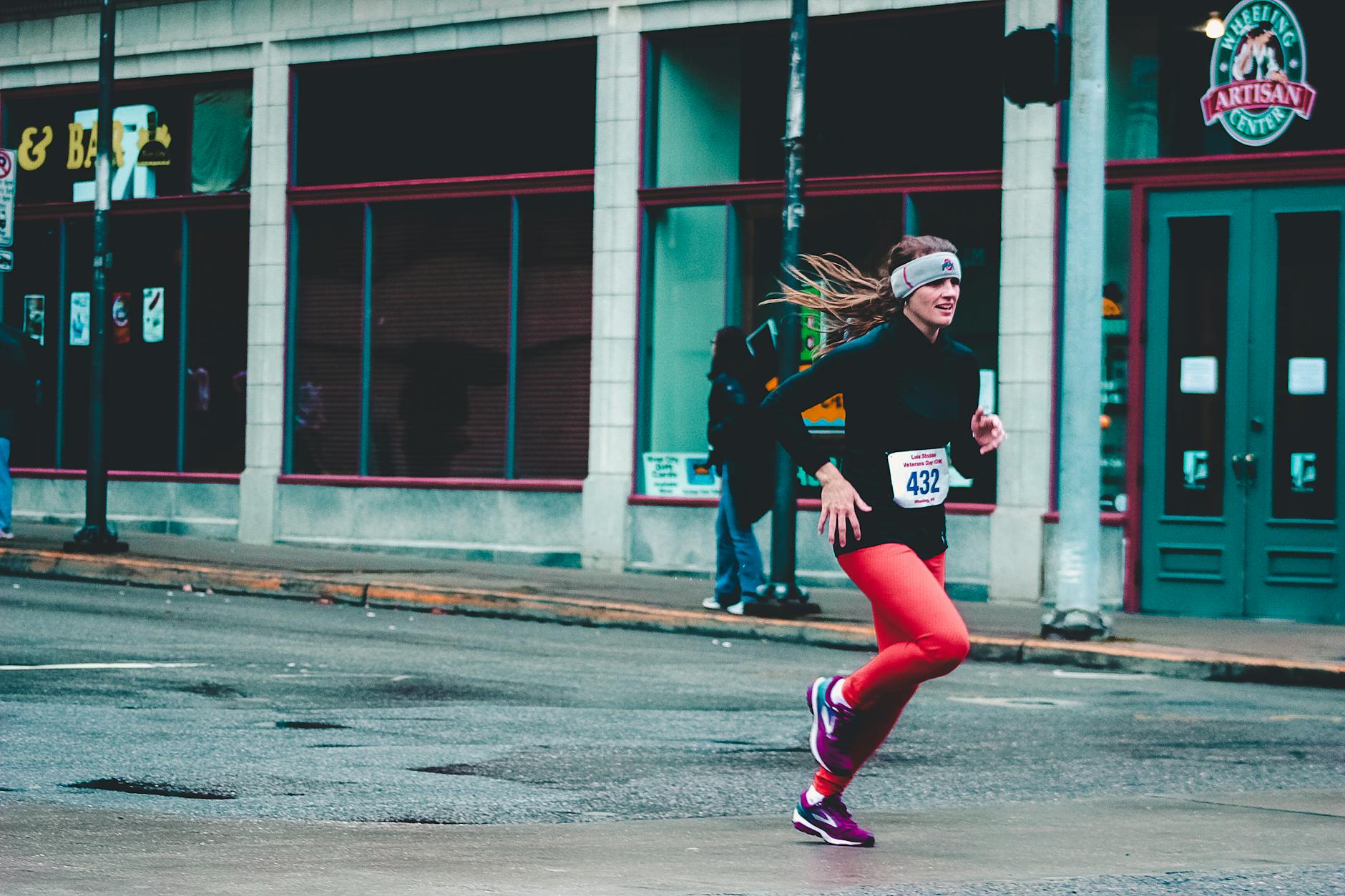
Combining Dance and Running for Better Results
Some of the best fitness outcomes come from doing both rather than picking one. Running two or three times per week builds aerobic endurance and gives you a reliable calorie-burning foundation. Adding one or two dance sessions per week introduces lateral movement, coordination work, and upper-body engagement that running neglects. A runner who also takes a weekly swing or street dance class is training a broader set of movement patterns, which can reduce injury risk and prevent the muscular imbalances that pure runners tend to develop.
This combination also solves the boredom problem. One of the biggest threats to any exercise program is monotony. If running feels like a chore on certain days, swapping in a dance session keeps you active without the mental grind. The variety alone can improve long-term adherence, which matters far more than any single-session calorie number.
The Future of Dance as Recognized Fitness Training
Dance fitness is gaining credibility in the exercise science community, and the University of Brighton study is part of a broader shift toward taking dance seriously as cardiovascular training. As more research quantifies the metabolic demands of various dance styles, expect to see dance-based fitness programs showing up in gyms and training plans alongside traditional cardio options. The data supports it, and the appeal is obvious: an activity that burns 600 calories, builds coordination, and does not feel like punishment has a built-in advantage over the treadmill.
For runners, this is not a threat but an opportunity. The question is not really whether dancing or running burns more calories. It is whether you are willing to expand your definition of cardio to include an option that the research shows is just as effective, and in some cases, more so.
Conclusion
The calorie battle between dancing and running is closer than most people expect. High-intensity dance styles like street dance, swing, and contemporary can match or exceed running in calories burned per minute, while lower-intensity social dancing falls well short. The deciding factors are intensity, skill level, and how much of your session is spent in actual movement versus learning or resting. Neither activity is universally better. Running offers simplicity, predictability, and easy scalability.
Dancing offers full-body engagement, lower joint impact, cognitive stimulation, and for many people, a lot more fun. The best choice is the one you will actually do consistently. If running bores you into skipping workouts, a high-energy dance class that burns the same number of calories is the smarter move. If you thrive on the meditative rhythm of a long run, there is no reason to force yourself into a studio. Use the data, pick what fits your life, and stop assuming that serious calorie burn requires a pair of running shoes.
Frequently Asked Questions
Does dancing really burn more calories than running?
It depends on the style and intensity. Street dance burns approximately 606 calories in 30 minutes, which exceeds moderate-pace running. However, a casual social dance session burns significantly less than a steady run. The University of Brighton study confirmed that certain dance styles at full intensity match or surpass running.
What type of dance burns the most calories?
Street and commercial dance leads at roughly 606 calories per 30 minutes, followed by swing dancing at about 586 calories and contemporary dance at approximately 534 calories. Competitive ballroom ranges from 340 to 442 calories per 30 minutes.
How many calories does running burn compared to dancing?
A 155-pound person running at 5 mph burns about 298 calories in 30 minutes, at 6 mph about 372 calories, and at 7.5 mph roughly 465 calories. Running at a steady pace generally falls between 340 and 550 calories per hour, while dancing ranges from 200 to 700 calories per hour depending on style and effort.
Is dancing better than running for weight loss?
Neither is inherently better. What matters is calorie expenditure over time and consistency. If you dance at high intensity several times per week, the calorie burn can rival a running program. The best exercise for weight loss is the one you stick with long enough to create a sustained calorie deficit.
Can beginners burn as many calories dancing as experienced dancers?
Generally no. The calorie figures from research reflect experienced dancers performing at full intensity. Beginners spend more time learning movements, pausing, and working at lower intensity, which significantly reduces calorie burn. As skill improves, the calorie expenditure increases.
Is dancing easier on your joints than running?
In most cases, yes. Dancing involves more varied movement patterns, so repetitive stress on any single joint is reduced compared to running. Running delivers two to three times your body weight in impact force with each stride, repeated thousands of times per session. However, certain dance styles like ballet can still create significant joint stress, particularly in the feet and ankles.