The biggest cycling mistakes wasting your time come down to a short list: riding at the same moderate pace every session, neglecting recovery, obsessing over gear instead of fitness, skipping strength work, and ignoring bike fit. A rider who logs 200 miles a week in a gray zone — too hard to recover from, too easy to trigger adaptation — will see fewer gains than someone riding 120 well-structured miles with purposeful intensity and genuine rest days. It sounds counterintuitive, but doing less of the wrong thing and more of the right thing is where months of stagnation finally break.
This article covers the most common time-wasting habits cyclists fall into, whether you are commuting, training for a century ride, or cross-training to support your running. We will look at pacing errors, nutrition timing, the diminishing returns of expensive equipment, how poor bike fit quietly saps your power, and the recovery mistakes that leave you perpetually tired without getting faster. Each section includes practical fixes you can apply on your next ride.
Table of Contents
- What Are the Most Common Pacing Mistakes That Waste Your Cycling Time?
- Why Ignoring Bike Fit Is Silently Killing Your Efficiency
- The Gear Trap That Costs Money Without Adding Speed
- How to Structure Recovery So You Actually Get Faster
- Nutrition Timing Mistakes That Undermine Your Rides
- Skipping Strength Training and Paying for It on the Bike
- Why Your Indoor Training Might Be Holding You Back
- Conclusion
- Frequently Asked Questions
What Are the Most Common Pacing Mistakes That Waste Your Cycling Time?
The single most prevalent pacing error is riding in the moderate-intensity no-man’s-land, sometimes called “junk miles.” Research from Stephen Seiler’s polarized training model shows that elite endurance athletes spend roughly 80 percent of their training time at low intensity and 20 percent at high intensity, with very little time in the middle. Recreational cyclists tend to do the opposite: they push tempo on easy days because it feels productive, then show up too fatigued for the interval sessions that actually drive VO2max and lactate threshold improvements. The result is a lot of effort for very little physiological return. A concrete example: say you have five hours a week to ride. Spending all five hours at a heart rate of 155 beats per minute — moderate for most adults — generates chronic fatigue without sufficient stimulus to force adaptation.
A better split would be four hours genuinely easy, where you can hold a full conversation, and one hour of structured intervals at or above threshold. That single change can produce more measurable fitness improvement over eight weeks than doubling your moderate-effort volume. However, polarized training has a caveat. If you are brand new to cycling or returning after a long layoff, spending a base-building phase at moderate intensity is appropriate because your body needs aerobic foundation before it can absorb hard efforts. The junk-mile problem applies most to riders who have been at it for several months and have plateaued.

Why Ignoring Bike Fit Is Silently Killing Your Efficiency
A poorly fitted bike does not just cause discomfort — it measurably reduces power output. Studies in the Journal of Sports Sciences have found that saddle height errors of as little as two centimeters can decrease pedaling efficiency by five to eight percent. Over a 40-mile ride, that is the equivalent of pedaling an extra two to three miles worth of effort for the same distance. Riders often blame tired legs or poor fitness when the real culprit is a seat post that is too low or handlebars that force them into an excessively aggressive position their flexibility cannot support. The most common fit mistakes are saddle too low, saddle too far forward, and handlebars too low for the rider’s hip and hamstring flexibility.
A saddle that is too low causes excessive knee flexion at the bottom of the pedal stroke, which loads the quadriceps disproportionately and underutilizes the glutes and hamstrings. Riders compensate by rocking their hips, which introduces lateral movement and wastes energy. A professional bike fit typically costs between 150 and 300 dollars, and for anyone riding more than three hours a week, the return on investment in comfort and power dwarfs the cost of a carbon handlebar upgrade. However, if you ride multiple bikes — say a road bike and an indoor trainer bike — the fit needs to be consistent across both. A common scenario is a rider who gets professionally fitted on their outdoor bike but rides a generic spin bike at the gym with completely different geometry. The muscle recruitment patterns conflict, and neither position gets properly reinforced.
The Gear Trap That Costs Money Without Adding Speed
Upgrading components is the most seductive time-waster in cycling because it feels like progress without requiring physical effort. The hard truth is that for riders below a competitive racing level, the difference between a 2,000-dollar bike and a 5,000-dollar bike is roughly 30 to 60 seconds over 40 kilometers in aerodynamic drag and rolling resistance savings. Meanwhile, improving your functional threshold power by just 10 watts through structured training — achievable for most people in six to eight weeks — saves two to three minutes over that same distance. A specific example makes this stark. Deep-section carbon wheels, a popular upgrade costing 1,200 to 2,500 dollars, save approximately 30 to 45 seconds over 40 kilometers at 30 kilometers per hour in wind-tunnel testing.
Losing two kilograms of body fat — free, though admittedly harder — saves roughly the same amount on a hilly course and more on steep climbs. The wheels do not make you fitter; the fat loss does. This is not to say equipment never matters. Aerodynamic helmets, properly inflated tires at the right width, and a well-maintained drivetrain are genuine low-cost improvements. The mistake is prioritizing a groupset upgrade over intervals, or buying a power meter and never actually following a training plan that uses the data.

How to Structure Recovery So You Actually Get Faster
Recovery is where adaptation happens, and most time-crunched cyclists treat it as wasted time. The pattern looks like this: ride hard Monday, ride hard Tuesday because Monday felt good, ride hard Wednesday out of habit, then wonder why Thursday’s intervals feel terrible. Fitness gains occur during rest, not during the ride itself. The training stimulus breaks muscle fibers down and stresses the cardiovascular system; sleep, nutrition, and easy days rebuild those systems stronger. The tradeoff is psychological. Taking a genuine rest day — or doing a 30-minute spin so easy it feels pointless — requires trusting the process.
Compared to adding another hard ride, active recovery feels like slacking. But the research is consistent: a 2018 meta-analysis in Sports Medicine found that athletes who included at least two easy or rest days per week showed greater performance improvements over 12-week training blocks than those who trained hard six or seven days. For runners who cross-train on the bike, this is doubly important because cycling volume stacks on top of running stress. A practical framework: if you ride four days a week, make two of those days genuinely easy — zone one or two heart rate, conversational pace, under 90 minutes. Save your intensity for the other two sessions. If you cannot resist going hard on an easy day, leave your cycling computer at home or cover the screen. Pace by feel and breathing, not numbers.
Nutrition Timing Mistakes That Undermine Your Rides
Fueling errors waste cycling time in two ways: bonking during a ride because you underfueled, or feeling sluggish because you ate too much or too close to the start. The general guideline for rides over 90 minutes is 60 to 90 grams of carbohydrates per hour, starting 20 to 30 minutes into the ride. Most recreational cyclists consume far less than this, either because they are trying to lose weight by riding fasted or because they simply forget. Fasted riding has a specific and limited use case: short, low-intensity sessions under 75 minutes where the goal is to improve fat oxidation. For anything longer or harder, riding without carbohydrates degrades performance, increases muscle protein breakdown, and suppresses the immune system.
A warning here: cyclists who are also running high weekly mileage are at particular risk for relative energy deficiency in sport, known as RED-S. Chronically underfueling across both disciplines leads to hormonal disruption, bone density loss, and ironically, fat gain as the body downregulates metabolism. Post-ride nutrition matters too, but not in the obsessive “30-minute anabolic window” way that supplement companies market. The practical rule is to eat a meal containing protein and carbohydrates within two hours of finishing a hard ride. A normal meal works fine. The riders who waste time are the ones who skip eating after a morning ride, then overeat at dinner and wonder why their body composition is not changing.
Skipping Strength Training and Paying for It on the Bike
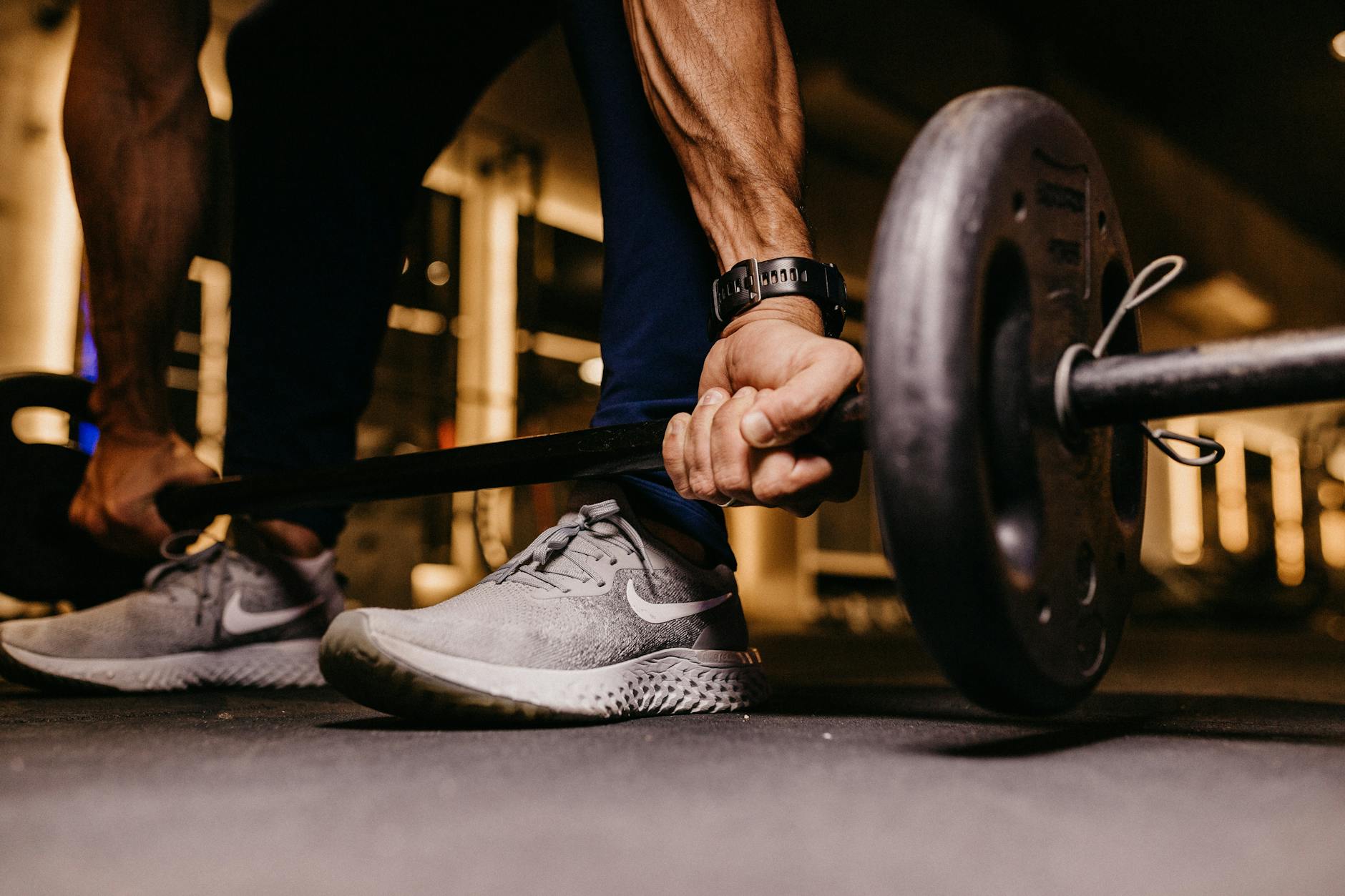
Cyclists who avoid the weight room because they fear gaining mass are leaving power on the table. A 2019 systematic review in the British Journal of Sports Medicine found that adding two strength sessions per week to a cycling program improved time-trial performance by two to four percent without increasing body weight. The key exercises are not complicated: squats, deadlifts, lunges, and single-leg press target the primary movers, while core work — planks, pallof presses, dead bugs — stabilizes the pelvis on the saddle.
For example, a rider who can squat 1.5 times their body weight will generally produce more force per pedal stroke at lower relative effort than a rider who never loads their legs outside of cycling. This translates directly to less fatigue on long climbs and better sprint capacity. Two 30-minute sessions per week is enough; it does not need to be a bodybuilding program.
Why Your Indoor Training Might Be Holding You Back
Smart trainers and virtual platforms have made indoor cycling more engaging, but they have also introduced a subtle problem: many riders default to structured workouts indoors and unstructured riding outdoors. This is backward for most people. Outdoor rides offer variable terrain, wind, and real-world bike handling that indoor riding cannot replicate, while indoor sessions are ideal for controlled interval work where you can hit exact power targets without traffic, hills, or weather interfering.
The forward-looking trend is hybrid training plans that assign indoor sessions for intensity and outdoor sessions for endurance and skill. As power meter accuracy improves on indoor platforms and outdoor head units alike, the gap between indoor and outdoor training data is narrowing. The riders who will improve fastest in the coming years are those who use each environment for what it does best rather than treating indoor riding as a lesser substitute or outdoor riding as unstructured recreation.
Conclusion
The cycling mistakes that waste the most time share a common thread: they substitute effort or spending for strategy. Riding hard every day, buying faster equipment instead of getting fitter, neglecting bike fit, underfueling, skipping strength work, and misusing indoor training are all ways of being busy without being productive. The fix in almost every case is not doing more — it is doing the right things with intention and allowing recovery to do its work. Start with the changes that cost nothing.
Structure your weekly rides so that easy days are truly easy and hard days are genuinely hard. Get your bike fit checked. Eat enough on long rides. Add two short strength sessions. These adjustments are unsexy compared to a new wheelset, but they are where months of plateau turn into measurable, lasting improvement.
Frequently Asked Questions
How many days per week should I cycle to see improvement?
Three to four quality rides per week is sufficient for most recreational and fitness-oriented cyclists. The emphasis should be on the distribution of intensity — at least two easy rides and one or two hard sessions — rather than simply adding more days.
Is it worth getting a professional bike fit if I only ride casually?
Yes, if you ride more than two to three hours per week. Poor fit causes discomfort that discourages riding and reduces efficiency. Even casual riders benefit from a basic fit, which many local bike shops offer for 100 to 150 dollars.
Should I eat before a morning ride?
For rides under 75 minutes at easy intensity, riding fasted is fine if you tolerate it. For anything longer or harder, eat a small carbohydrate-rich snack — a banana, toast with jam, or a granola bar — 30 to 60 minutes before you start.
Do I need a power meter to train effectively?
No. Heart rate monitoring and perceived exertion are effective tools for structuring training. A power meter adds precision, but only if you follow a plan that uses the data. Buying a power meter without a training plan is another form of the gear trap.
How do I know if I am riding too hard on easy days?
The conversation test is the simplest check. If you cannot speak in full sentences without gasping, you are above easy intensity. A heart rate monitor set to alert you above zone two is another reliable method.