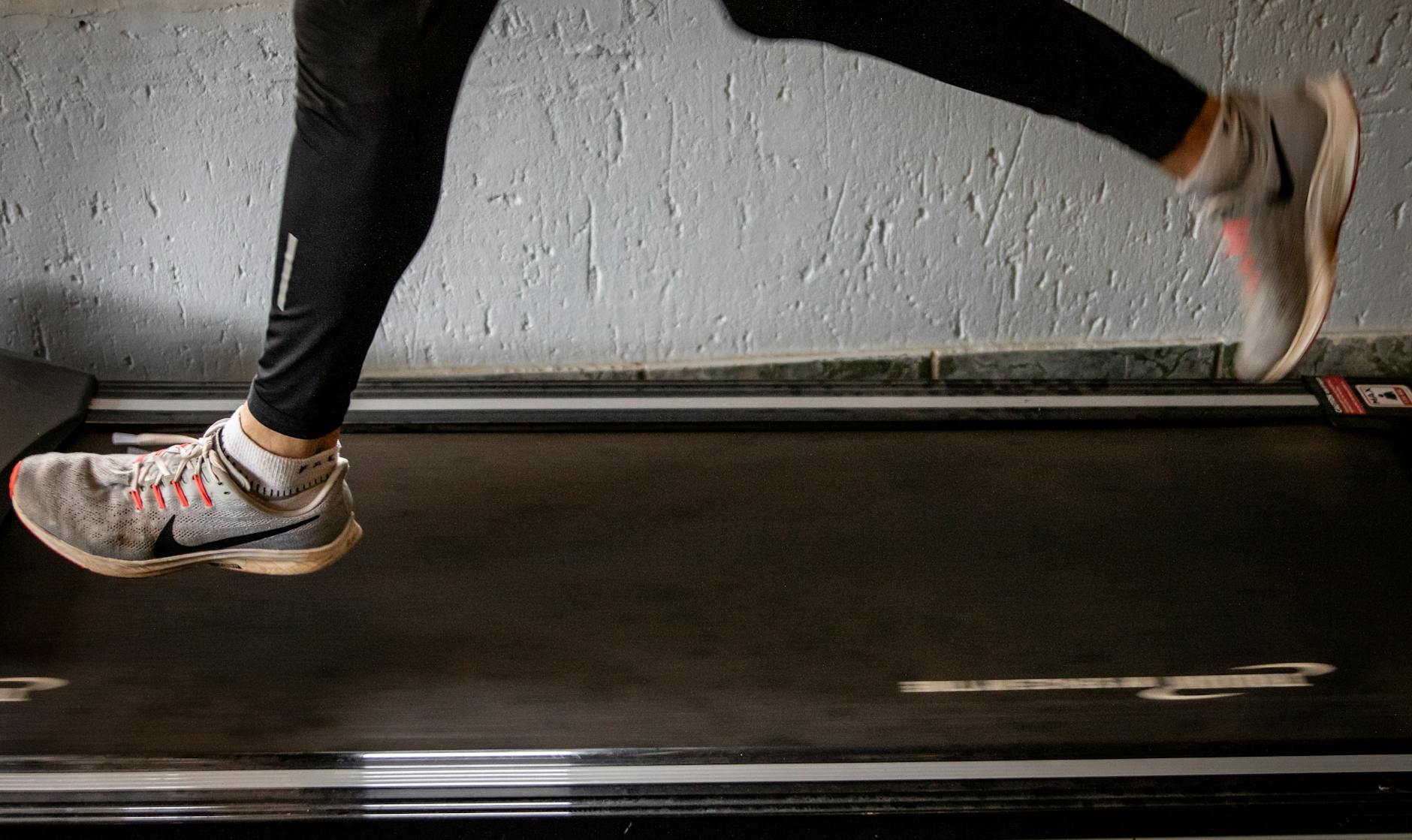
When it comes to treadmill running shoes, most people fixate on cushioning as the primary feature worth considering””but cushion is not enough for what treadmill runners actually need from their footwear. The controlled environment of indoor running creates a unique set of demands that differ substantially from outdoor road running, and understanding these differences can mean the distinction between comfortable, injury-free training and chronic discomfort that derails your fitness goals. The treadmill’s belt surface, the repetitive nature of the motion, and the climate-controlled (often warm) environment all place specific stresses on your feet that a simple “more cushion equals better” approach fails to address. The treadmill running population has expanded dramatically in recent years, with health clubs, home gyms, and rehabilitation facilities all relying on this equipment as a cornerstone of cardiovascular training.
Yet the footwear industry has largely marketed the same shoes for treadmill use as for outdoor running, overlooking the biomechanical and environmental realities that indoor runners face. Temperature regulation, lateral stability on a moving belt, durability concerns from the abrasive surface, and the psychological monotony that can lead to form breakdown all require thoughtful consideration when selecting treadmill-specific footwear. By the end of this article, you will understand the complete picture of what treadmill runners actually need from their shoes beyond just cushioning. We will examine the biomechanical differences between treadmill and outdoor running, explore the specific features that matter most for belt running, discuss how to evaluate shoes for indoor use, and provide practical guidance for making informed purchasing decisions. Whether you run exclusively indoors or split your training between the treadmill and outdoor routes, this knowledge will help you protect your joints, improve your running economy, and extend the lifespan of your footwear investment.
Table of Contents
- Why Do Treadmill Runners Need Different Shoes Than Outdoor Runners?
- The Critical Role of Ventilation and Breathability for Treadmill Footwear
- Stability and Support Features That Matter on the Treadmill Belt
- How to Choose the Right Shoe Fit and Flexibility for Treadmill Training
- Common Treadmill Shoe Problems and How to Avoid Them
- The Relationship Between Treadmill Shoe Selection and Injury Prevention
- How to Prepare
- How to Apply This
- Expert Tips
- Conclusion
- Frequently Asked Questions
Why Do Treadmill Runners Need Different Shoes Than Outdoor Runners?
The question of whether treadmill runners need different shoes than their outdoor counterparts touches on fundamental biomechanical principles that many runners overlook. Research from the Journal of Sports Sciences has demonstrated that while the basic running gait remains similar between surfaces, the treadmill introduces subtle but significant changes in how force is applied and distributed through the foot. The motorized belt assists with leg turnover in ways that reduce the need for aggressive toe-off propulsion, shifting the demands placed on footwear away from energy return and toward stability and heat management.
Ground reaction forces on a treadmill belt differ from concrete or asphalt in meaningful ways. The belt itself has some inherent give””typically absorbing 15-40% more impact than outdoor hard surfaces depending on the treadmill model””which means the cushioning in your shoes works in concert with the deck cushioning rather than serving as your sole protection against impact. This collaborative shock absorption can actually make excessively cushioned shoes counterproductive, as the combined effect may create instability and reduce proprioceptive feedback that runners need to maintain proper form over long sessions.
- The belt’s consistent surface eliminates the need for aggressive traction patterns designed for varied terrain
- Reduced lateral movement demands mean stability features matter more than versatility
- The climate-controlled environment creates heat buildup that outdoor airflow would normally dissipate
- Repetitive identical foot strikes create wear patterns in specific areas more quickly than varied outdoor running
The Critical Role of Ventilation and Breathability for Treadmill Footwear
Heat accumulation represents one of the most underappreciated challenges facing runningcardio.com/what-long-treadmill-runs-reveal-about-your-shoes-that-road-runs-never-do/” title=”What Long Treadmill Runs Reveal About Your Shoes That Road Runs Never Do”>treadmill runners, and it directly impacts both comfort and injury risk. Without the natural airflow that outdoor running provides””where forward movement creates wind speeds of 6-10 mph across your feet even at modest paces””indoor runners experience foot temperatures that can climb 15-20 degrees Fahrenheit higher than outdoor equivalents. This heat buildup leads to excessive sweating, which softens skin tissue and dramatically increases the likelihood of blisters, hot spots, and fungal infections.
Breathability in treadmill running shoes requires more than just mesh uppers. The construction of the upper, the density of the mesh weave, and the presence or absence of overlays all contribute to air circulation. Engineered mesh with larger apertures in strategic locations””particularly across the toe box and along the medial and lateral midfoot””allows heat to escape while maintaining structural integrity. Some manufacturers have begun incorporating phase-change materials and moisture-wicking linings specifically designed to address the indoor running environment, though these features add cost and are not always marketed prominently.
- Look for uppers with minimal synthetic overlays that trap heat
- Single-layer mesh constructions generally outperform multi-layer designs for ventilation
- Sockliners with antimicrobial treatments help address the moisture issues that indoor running creates
- Consider the treadmill room environment itself””poorly ventilated spaces require even more breathable footwear
Stability and Support Features That Matter on the Treadmill Belt
The treadmill belt creates a unique stability challenge that differs fundamentally from outdoor running surfaces. While the belt moves in a perfectly linear direction, the narrow running surface (typically 18-22 inches wide) and the slight lateral movement that occurs naturally during running can lead to subtle but persistent correction movements. These micro-adjustments accumulate over a 30-60 minute session and can strain muscles and connective tissues in ways that outdoor running on wider surfaces does not.
Shoes that provide adequate medial and lateral support help minimize these corrective movements and reduce associated fatigue. Heel counter stiffness becomes particularly important for treadmill running because of the consistent surface angle and the tendency for runners to lose focus and allow form degradation during longer indoor sessions. A firm heel counter maintains proper rearfoot alignment even when attention wanders, providing a physical structure that keeps the ankle in a neutral position throughout the gait cycle. This passive stability support matters more on the treadmill than outdoors because the unchanging environment provides fewer natural cues to maintain vigilance about running form.
- Midfoot support structures (such as TPU overlays or internal cages) help prevent lateral foot movement within the shoe
- A stable platform width of at least 4 inches under the heel provides a solid base for consistent foot strikes
- Moderate midsole firmness often outperforms ultra-soft cushioning for maintaining proprioception and form

How to Choose the Right Shoe Fit and Flexibility for Treadmill Training
Selecting the proper fit for treadmill running shoes requires attention to several factors that differ from outdoor shoe fitting. The heat expansion phenomenon means that feet swell more predictably and consistently during indoor running than during outdoor sessions where weather conditions vary. Planning for this expansion requires leaving approximately a thumb’s width of space between the longest toe and the end of the shoe, and selecting a width that accommodates midfoot spread without creating excessive movement.
Flexibility characteristics in treadmill shoes should match the demands of flat, consistent surface running. The forefoot flex point””where the shoe bends during toe-off””should align with your foot’s natural metatarsal break point. Shoes that are too stiff through the forefoot force compensatory movements that can lead to shin and calf strain, while excessive flexibility provides insufficient support for the repetitive identical motion of belt running. Testing flexibility by bending the shoe at the forefoot can reveal whether the break point matches your foot mechanics.
- Try on shoes at the end of the day when feet are naturally larger from daily activity
- Bring the socks you intend to run in””moisture-wicking athletic socks are essential for treadmill use
- Walk and jog briefly in the store to assess immediate comfort and any pressure points
- Consider having a gait analysis performed to identify pronation or supination tendencies that affect shoe selection
Common Treadmill Shoe Problems and How to Avoid Them
Several persistent problems plague treadmill runners who select footwear without understanding the specific demands of indoor running. Premature outsole wear represents one of the most common complaints, as the treadmill belt’s textured surface creates abrasion patterns that differ from road wear. The consistent friction zone under the forefoot can wear through outsole rubber in as little as 200-300 miles, compared to 400-500 miles for the same shoe used outdoors.
Selecting shoes with durable rubber compounds””often identified as carbon rubber or blown rubber in specific high-wear zones””can extend treadmill shoe lifespan considerably. Upper breakdown from heat and moisture creates another common failure point for treadmill shoes. The combination of elevated temperatures and repeated sweat saturation weakens adhesives, degrades mesh integrity, and accelerates the breakdown of foam materials in the midsole. Allowing shoes to dry completely between sessions””ideally 24-48 hours””helps prevent this degradation, as does removing insoles after runs to promote air circulation throughout the shoe interior.
- Rotating between two pairs of treadmill shoes extends the functional lifespan of both pairs
- Avoid storing sweaty shoes in closed gym bags where moisture cannot escape
- Replace shoes based on mileage tracking rather than visual appearance, as midsole degradation often precedes visible wear
- Consider treadmill-specific models from brands that acknowledge the different demands of indoor running

The Relationship Between Treadmill Shoe Selection and Injury Prevention
Injury patterns among treadmill runners differ from outdoor runners in ways that reflect the unique biomechanical environment. Overuse injuries predominate, with IT band syndrome, patellofemoral pain, and Achilles tendinopathy appearing at higher rates than in mixed-surface runners. These conditions stem largely from the repetitive identical loading that treadmill running creates””the same muscles, tendons, and joints absorbing force in exactly the same pattern stride after stride without the natural variation that outdoor terrain provides.
Proper shoe selection serves as one layer of defense against these overuse patterns. Shoes that maintain consistent support characteristics throughout their lifespan, that provide adequate stability to prevent compensatory movements, and that allow natural foot mechanics without interference help reduce the cumulative stress that leads to injury. Combining appropriate footwear with training variety””including incline changes, speed variations, and occasional outdoor runs””creates a more comprehensive injury prevention strategy.
How to Prepare
- **Assess your current shoe issues** – Examine the wear patterns on your existing running shoes to identify areas of excessive wear, pressure points that have developed, and any breakdown in the upper or midsole. These clues reveal your individual mechanics and help predict where new shoes need to provide extra durability or support.
- **Determine your gait characteristics** – Visit a specialty running store that offers gait analysis, or film yourself running on a treadmill from behind to observe heel strike patterns. Understanding whether you overpronate, supinate, or maintain a neutral gait informs which stability features you need in your treadmill shoes.
- **Evaluate your training volume and intensity** – Runners logging 30+ miles per week on the treadmill need more durable constructions than occasional users. High-intensity interval training creates different demands than steady-state running, with explosive movements requiring more forefoot support and cushioning.
- **Consider the treadmill environment** – Assess the temperature and ventilation conditions where you run. Warm, poorly ventilated spaces require maximum breathability, while air-conditioned facilities may allow for shoes with more substantial uppers.
- **Research models designed with indoor running in mind** – Some manufacturers produce specific models optimized for treadmill use, while others have features that translate well to indoor running even without explicit marketing. Reading reviews from dedicated treadmill runners provides insight into real-world performance.
How to Apply This
- **Implement a break-in period** – Wear new treadmill shoes for short sessions of 2-3 miles before attempting longer runs. This allows the shoes to conform to your feet and reveals any hot spots or discomfort before they become serious problems during extended training.
- **Establish a rotation system** – Alternate between at least two pairs of treadmill shoes to allow complete drying between sessions and extend the functional lifespan of your footwear investment. Different shoes also provide subtle variation in loading patterns that can reduce overuse injury risk.
- **Track mileage systematically** – Use a training log or app to record miles accumulated on each pair of shoes. Replace treadmill shoes every 300-400 miles, or sooner if you notice decreased cushioning response or support degradation.
- **Adjust lacing for optimal fit** – Experiment with lacing patterns to address specific fit issues. A runner’s loop (heel lock lacing) helps secure the heel in place, while skipping eyelets can relieve pressure over high arches or sensitive areas of the midfoot.
Expert Tips
- Match your shoe cushioning to your treadmill’s deck cushioning””highly cushioned treadmills pair better with firmer, more stable shoes to prevent the “soft on soft” instability problem.
- Pay attention to the break-in feeling of new shoes during the first few runs. Initial mild discomfort often resolves, but persistent pressure points after three or four runs indicate a fundamental fit problem that will not improve.
- Consider your treadmill running cadence when selecting shoes. Faster cadences (above 170 steps per minute) work better with lighter, more responsive shoes, while slower cadences may benefit from additional cushioning and support.
- Replace insoles proactively every 150-200 miles even if the shoes themselves remain functional. Insoles compress and lose cushioning capacity faster than midsoles and represent an inexpensive way to maintain shoe performance.
- Test shoes on the actual treadmill you use most frequently before committing to them for training. Many specialty running stores have in-store treadmills for this purpose, and the specific belt texture and deck cushioning of your home or gym equipment affects shoe performance.
Conclusion
The reality that cushion is not enough for what treadmill runners actually need from shoes reflects the broader principle that running footwear should match the specific demands of your training environment. Indoor running creates unique challenges related to heat management, consistent surface loading, and stability requirements that differ meaningfully from outdoor road running. By understanding these differences and selecting footwear that addresses ventilation, appropriate stability features, durability for belt running, and proper fit that accounts for heat expansion, treadmill runners can train more comfortably and reduce injury risk.
Moving forward, approach your next treadmill shoe purchase with these factors in mind rather than defaulting to the most cushioned option available. Test potential shoes in conditions that mimic your actual training, pay attention to how they perform as temperatures rise during longer sessions, and track their lifespan carefully to ensure you replace them before performance degradation leads to discomfort or injury. The investment of time in selecting appropriate footwear pays dividends across hundreds of miles of indoor training, making each treadmill session more productive and sustainable.
Frequently Asked Questions
How long does it typically take to see results?
Results vary depending on individual circumstances, but most people begin to see meaningful progress within 4-8 weeks of consistent effort. Patience and persistence are key factors in achieving lasting outcomes.
Is this approach suitable for beginners?
Yes, this approach works well for beginners when implemented gradually. Starting with the fundamentals and building up over time leads to better long-term results than trying to do everything at once.
What are the most common mistakes to avoid?
The most common mistakes include rushing the process, skipping foundational steps, and failing to track progress. Taking a methodical approach and learning from both successes and setbacks leads to better outcomes.
How can I measure my progress effectively?
Set specific, measurable goals at the outset and track relevant metrics regularly. Keep a journal or log to document your journey, and periodically review your progress against your initial objectives.
When should I seek professional help?
Consider consulting a professional if you encounter persistent challenges, need specialized expertise, or want to accelerate your progress. Professional guidance can provide valuable insights and help you avoid costly mistakes.
What resources do you recommend for further learning?
Look for reputable sources in the field, including industry publications, expert blogs, and educational courses. Joining communities of practitioners can also provide valuable peer support and knowledge sharing.