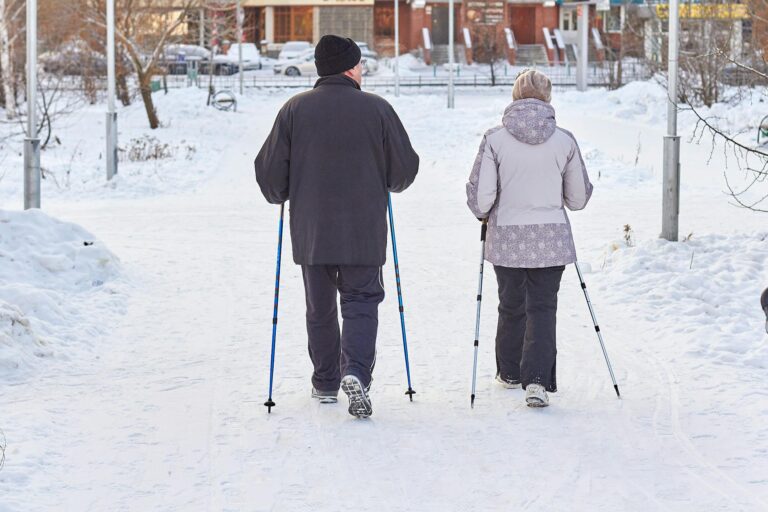
The difference between casual walking and intensity-based walking comes down to speed, effort, and physiological response. A casual walk at 2 to 2.5 mph keeps your heart rate low and your breathing easy enough to hold a full conversation or even sing along to your headphones. Intensity-based walking, whether brisk walking at 3 to 4 mph or power walking at 4 to 5 mph, pushes your cardiovascular system harder, elevates your heart rate into moderate or vigorous training zones, and burns significantly more calories per minute. For someone walking the same 30-minute route every morning, simply increasing pace from a casual stroll to a brisk walk can increase calorie burn by over 70 percent while unlocking substantially greater cardiovascular protection. That does not mean casual walking is without value.
Even low-intensity walking provides meaningful cardiovascular benefits, reduces disease risk, and improves mood. The real question is what you are trying to accomplish and how much time you have to accomplish it. If you have an hour to spare and enjoy a leisurely pace, a casual walk still moves the needle. If you are short on time and want the most efficient return on your effort, intensity matters. This article breaks down the specific speed thresholds, heart rate zones, calorie differences, and research-backed health outcomes that separate casual walking from intensity-based walking. It also covers how to measure your own intensity, when each approach makes the most sense, and how to transition safely from one to the other.
Table of Contents
- What Actually Separates Casual Walking from Intensity-Based Walking?
- How Heart Rate and Calorie Burn Change with Walking Intensity
- What Does the Research Say About Health Outcomes?
- How to Determine Which Walking Approach Fits Your Goals
- Special Considerations for Older Adults and Those with Health Conditions
- Using Technology to Track and Optimize Your Walking Intensity
- The Bigger Picture on Walking and Long-Term Health
- Conclusion
What Actually Separates Casual Walking from Intensity-Based Walking?
The distinction starts with pace and its corresponding metabolic cost. Researchers classify casual or leisure walking at roughly 2 to 2.5 mph with a MET value of 2.5, meaning it burns about two and a half times the energy your body uses at rest. Brisk walking lands at 3 to 4 mph with a MET value between 3.5 and 4.3, while power walking pushes to 4 to 5 mph at a MET of approximately 5.0. Harvard Health researchers simplify this further by defining walking pace as slow (under 3 mph), average (3 to 4 mph), or brisk (above 4 mph). These are not arbitrary lines. Each threshold corresponds to a measurable shift in how hard your heart, lungs, and muscles are working. Cadence offers another useful marker. CDC-aligned research identifies moderate-intensity walking as 100 to 129 steps per minute and vigorous-intensity walking as 130 or more steps per minute.
If you are unsure whether your pace qualifies, count your steps for 15 seconds and multiply by four. Someone walking their dog at a relaxed pace might hit 80 steps per minute. That same person walking with purpose to catch a bus might naturally land at 110 to 120 steps per minute, crossing into moderate territory without even thinking about it. The simplest field test requires no gadget at all. According to the Harvard T.H. Chan School of Public Health, if you can talk comfortably but cannot sing, you are walking at moderate intensity. If you can speak in full sentences with no breathlessness whatsoever, you are still in the casual zone. This “talk test” is surprisingly reliable and has been validated against lab-based metabolic measurements.

How Heart Rate and Calorie Burn Change with Walking Intensity
Heart rate is where the physiological gap between casual and intensity-based walking becomes concrete. During a casual walk, heart rate typically stays between 90 and 120 bpm, well below the threshold most exercise physiologists consider aerobically productive. Brisk walking elevates heart rate to approximately 110 to 130 bpm, targeting 50 to 70 percent of your maximum heart rate, which is the moderate-intensity zone recommended by both the CDC and the American Heart Association for cardiovascular conditioning. The calorie difference is substantial. A casual stroll at roughly 2 mph burns about 200 to 240 calories per hour. Brisk or power walking at 3.5 to 4 mph burns approximately 300 to 350 calories per hour.
That gap of 100-plus calories per hour adds up quickly over weeks and months, particularly for someone walking five days a week. Over the course of a year, the difference between casual and brisk walking on that same five-day schedule could amount to 25,000 or more additional calories burned, roughly equivalent to seven pounds of body fat. However, calorie burn is not the whole picture, and it can be misleading if taken out of context. These estimates assume relatively flat terrain and vary considerably based on body weight, fitness level, and walking surface. A 200-pound person burns more calories at any given pace than a 140-pound person. Walking uphill at a casual 2 mph can spike heart rate and calorie expenditure above what flat-ground brisk walking produces. If your primary goal is calorie deficit for weight management, terrain manipulation and walking duration can sometimes matter as much as raw pace.
What Does the Research Say About Health Outcomes?
The health benefits of walking at any pace are well established, but the research increasingly shows that intensity amplifies those benefits in specific and measurable ways. A study published May 2, 2025, in the journal *Heart* found that compared to slow walking, average-pace walking was associated with a 35 percent lower risk of atrial fibrillation, and brisk walking was associated with a 43 percent lower risk. Atrial fibrillation is the most common type of abnormal heart rhythm and a major risk factor for stroke, making this finding particularly relevant for anyone with cardiovascular concerns. Beyond heart rhythm, walking at moderate or higher intensity has been shown to reduce risk across multiple chronic conditions. Research published in the *PMC/National Library of Medicine* found that walking reduced risk of hypertension by 7.2 percent, hypercholesterolemia by 7.0 percent, diabetes by 12.3 percent, and coronary heart disease by 9.3 percent per MET-hour per day, which was comparable to or better than the risk reductions seen with running.
For people who find running inaccessible due to joint issues, weight, or personal preference, this is significant. Brisk walking can deliver similar disease-risk reduction without the impact forces. Blood glucose control is another area where intensity makes a measurable difference. According to the Harvard Nutrition Source, longer duration and higher-intensity walking, including brisk walking and walking up stairs, achieves greater improvements in blood glucose regulation than casual strolling at the same total duration. For the roughly 96 million American adults with prediabetes, this distinction is not academic. Walking after meals is a commonly recommended strategy for blood sugar management, but the research suggests that a 15-minute brisk post-meal walk is more effective than a 15-minute amble.

How to Determine Which Walking Approach Fits Your Goals
The right approach depends on your current fitness level, available time, and what you are trying to achieve. If you are currently sedentary and starting from zero, casual walking is the right entry point. Jumping straight to power walking at 4.5 mph when you have not exercised in years invites overuse injuries, discouragement, and burnout. The CDC recommends that adults get at least 150 minutes per week of moderate-intensity aerobic activity, which translates to about 30 minutes of brisk walking five days a week. The World Health Organization echoes this with the same 150-minute moderate-intensity or 75-minute vigorous-intensity weekly target. But if brisk walking is not yet realistic for you, casual walking still counts toward your activity goals and still reduces disease risk. The tradeoff is time.
Casual walking requires more total minutes to produce health outcomes equivalent to those of intensity-based walking. If you can commit to 60 minutes of casual walking daily, you may approach similar cardiovascular benefits to someone doing 30 to 40 minutes of brisk walking. For busy professionals or parents with limited windows of free time, intensity-based walking is simply more efficient. A 20-minute brisk walk during a lunch break can deliver more physiological benefit than a 20-minute stroll, assuming your body is conditioned for the pace. One practical strategy is to alternate. Walk casually on recovery days or when walking with friends and family, and walk with intention and pace on days when you want a genuine workout. This mirrors how runners periodically alternate between easy and tempo runs. Not every walk needs to be a training session, and not every walk should be a leisurely meander if fitness improvement is a goal.
Special Considerations for Older Adults and Those with Health Conditions
Age changes the calculus of walking intensity, but not in the direction most people assume. Research published in *PMC* found that high-intensity brisk walking at 80 to 85 percent effort was more effective than moderate-intensity brisk walking at 60 to 75 percent effort for improving aerobic capacity in older adults. This challenges the common assumption that older adults should always default to the gentlest possible exercise. For healthy older adults cleared by a physician, pushing toward higher-intensity walking may yield better fitness outcomes than staying perpetually in a comfortable zone. That said, there are important caveats. Older adults with balance concerns, osteoarthritis, peripheral neuropathy, or cardiovascular conditions should consult a physician before increasing walking intensity. The risk of falls increases with pace, particularly on uneven surfaces.
Heart rate response also changes with age, as maximum heart rate declines and medications like beta-blockers can blunt heart rate elevation, making the talk test a more reliable intensity gauge than a heart rate monitor for some older walkers. Someone on atenolol, for example, might never reach 130 bpm during a walk regardless of effort, so heart rate zones become unreliable. Joint health is another consideration. Casual walking generates ground reaction forces of roughly 1.0 to 1.2 times body weight per step, while faster walking can push closer to 1.4 to 1.5 times body weight. For someone with moderate knee osteoarthritis, the difference between 2 mph and 4 mph is not just cardiovascular. It also changes the mechanical load on already compromised joints. In these cases, increasing walking duration at a comfortable pace may be a smarter strategy than increasing intensity.

Using Technology to Track and Optimize Your Walking Intensity
A simple pedometer or smartphone step counter can get you most of the way to understanding your walking intensity without any advanced equipment. If you are consistently hitting 100 steps per minute or more during your walks, you are in moderate-intensity territory. Many fitness watches and smartphone apps now display real-time cadence, making it straightforward to check your pace mid-walk and adjust. For example, if your watch shows 88 steps per minute and you want to cross into moderate intensity, you know you need to pick up the pace by about 12 steps per minute, which often means little more than lengthening your stride slightly or increasing your arm swing.
Heart rate monitors add another layer of precision. If you know your approximate maximum heart rate (a rough estimate is 220 minus your age), you can target the 50 to 70 percent zone for moderate-intensity walking. A 50-year-old with an estimated max heart rate of 170 would aim for roughly 85 to 119 bpm during a brisk walk. However, wrist-based optical heart rate sensors on consumer smartwatches can be unreliable during walking because the lower arm movement and lighter wrist pressure produce more signal noise than during running. Chest strap monitors remain more accurate if precise heart rate tracking matters to you.
The Bigger Picture on Walking and Long-Term Health
The most important finding across all the walking research is not about casual versus intense. It is about consistency. As the Mayo Clinic and other major health organizations emphasize, the faster, farther, and more frequently you walk, the greater the health benefits. But the best walking routine is the one you actually maintain.
A person who walks casually for 45 minutes every single day will almost certainly be healthier in five years than someone who does one aggressive power-walking session per week and skips the rest. What the intensity research gives us is a tool for optimization, not an argument for all-or-nothing thinking. If you are already walking regularly, nudging your pace upward by even half a mile per hour opens the door to measurably better cardiovascular outcomes, better blood sugar regulation, and more efficient use of your time. If you are not yet walking regularly, starting at any pace is the priority. The intensity conversation becomes relevant once the habit is established.
Conclusion
Casual walking and intensity-based walking are not different activities so much as different points on the same spectrum. Casual walking at 2 to 2.5 mph keeps you moving, supports basic cardiovascular health, and burns roughly 200 to 240 calories per hour. Brisk walking at 3 to 4 mph elevates your heart rate into moderate-intensity training zones, burns over 300 calories per hour, and is associated with significantly lower risks of atrial fibrillation, hypertension, diabetes, and coronary heart disease. The research is clear that more intensity, more distance, and more frequency all produce greater benefits. Your next step is simple.
On your next walk, check your cadence or apply the talk test. If you can sing comfortably, you are in casual territory. If you can talk but not sing, you have crossed into moderate intensity. From there, you can make informed decisions about how to structure your walking routine based on your goals, your available time, and your current fitness level. Even small increases in pace, sustained over months, compound into meaningful health improvements.