The most effective cardio exercises that require no equipment include running, jumping jacks, burpees, high knees, mountain climbers, and jump squats. These movements elevate heart rate, improve cardiovascular endurance, and burn calories using only body weight and gravity. A 150-pound person performing jumping jacks for 30 minutes burns approximately 200 calories, while burpees at moderate intensity can burn closer to 300 calories in the same timeframe””comparable to what many people achieve on gym machines.
Equipment-free cardio offers practical advantages beyond cost savings. You can perform these exercises in a hotel room, backyard, or living room without scheduling around gym hours or waiting for machines. The trade-off is that without resistance adjustments or programmed intervals, you must rely on intensity modifications and exercise selection to progress. This article covers which bodyweight cardio exercises deliver the best results, how to structure workouts for different fitness levels, common mistakes that reduce effectiveness, and how to build progression into equipment-free training.
Table of Contents
- What Are the Best Cardio Exercises That Require No Equipment?
- Comparing Low-Impact and High-Impact Cardio Options
- Building Progression Without Adding Equipment
- Common Mistakes That Reduce Cardiovascular Benefits
- Integrating Equipment-Free Cardio With Running Training
- Adapting Equipment-Free Cardio for Limited Space
- The Future of Bodyweight Cardiovascular Training
- Conclusion
What Are the Best Cardio Exercises That Require No Equipment?
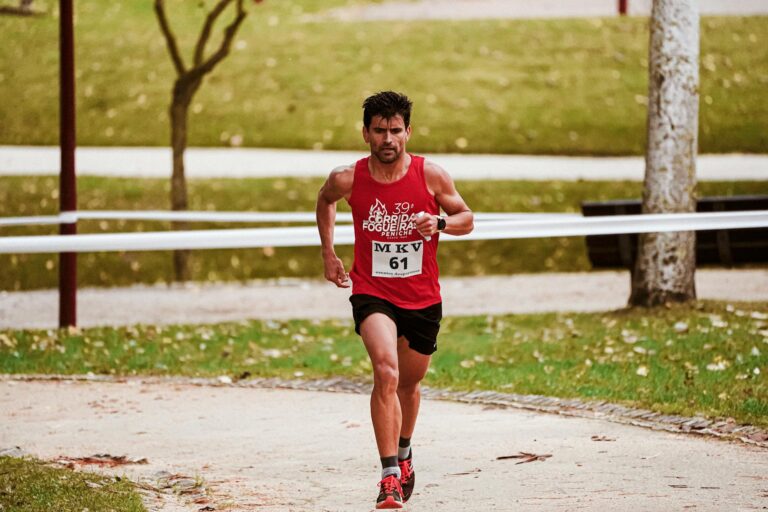
Running and walking remain the foundational equipment-free cardio exercises for good reason. They require no learning curve, scale easily to any fitness level, and provide sustained aerobic conditioning that improves heart health and endurance. A beginner might start with brisk walking at 3.5 miles per hour, while an advanced athlete performs sprint intervals. The limitation is that running demands adequate outdoor space or indoor room for stationary variations like high knees. Plyometric movements such as burpees, jump squats, and tuck jumps deliver higher intensity in shorter time frames. Burpees combine a squat, plank, push-up, and explosive jump into one movement, engaging nearly every major muscle group while spiking heart rate. Research from the American College of Sports Medicine shows that high-intensity bodyweight circuits can produce cardiovascular adaptations similar to traditional steady-state cardio in roughly half the time. However, these exercises create significant joint stress””someone with knee issues should substitute low-impact alternatives like step-touches or marching in place. Jumping jacks, mountain climbers, and speed skaters fall between these extremes, offering moderate-to-high intensity with adjustable impact levels. Mountain climbers, performed from a plank position while driving knees toward the chest, combine core engagement with cardiovascular demand. Speed skaters mimic lateral skating movements and improve balance alongside conditioning.
Compared to running, these exercises recruit different movement patterns and muscle groups, which helps prevent overuse injuries common in repetitive activities. ## How to Structure an Equipment-Free Cardio Workout Effective bodyweight cardio workouts follow either continuous or interval formats. Continuous training involves maintaining a steady effort level for 20 to 60 minutes, as with jogging or sustained jumping jacks. Interval training alternates between high-effort bursts and recovery periods, such as 30 seconds of burpees followed by 30 seconds of rest. Both approaches improve cardiovascular fitness, but interval training typically produces faster gains in VO2 max and anaerobic capacity when time is limited. A practical beginner workout might include four exercises performed in sequence: 30 seconds of marching in place, 30 seconds of modified jumping jacks, 30 seconds of step-back lunges, and 30 seconds of rest. Repeating this circuit four times creates a 16-minute session that gradually introduces the cardiovascular system to sustained effort. Intermediate exercisers can extend work intervals to 45 seconds or add more demanding movements like jump lunges and burpees. However, if you cannot maintain proper form throughout a work interval, the interval is too long. Fatigue-induced compensation””rounded backs during mountain climbers, incomplete hip extension during high knees””reduces effectiveness and increases injury risk. Better results come from shorter intervals performed correctly than longer intervals performed sloppily. Most people overestimate their appropriate intensity level and underestimate the importance of technical consistency.

Comparing Low-Impact and High-Impact Cardio Options
High-impact exercises like jumping jacks, burpees, and running involve both feet leaving the ground simultaneously. This airborne phase creates landing forces that can reach two to three times body weight, stressing joints, bones, and connective tissues. For healthy individuals, this stress stimulates adaptation and strengthens the musculoskeletal system. For those with joint pain, excess weight, or recovering from injury, high-impact exercises may cause more harm than benefit. Low-impact alternatives provide cardiovascular benefits while keeping at least one foot grounded. Marching in place, step-touches, lateral shuffles, and standing knee raises all elevate heart rate without jumping.
A 180-pound person with knee osteoarthritis might burn 150 calories in 30 minutes of brisk marching””less than jumping exercises but sustainable over time without aggravating symptoms. Swimming and cycling offer even lower joint stress, though these technically require equipment (a pool or bicycle). The practical approach combines both categories based on individual tolerance. Someone returning from an ankle sprain might perform 80 percent low-impact movements and 20 percent modified jumps, gradually shifting the ratio as healing progresses. Impact isn’t inherently bad; it’s a training variable that requires appropriate dosing. Healthy runners actually need some high-impact training to maintain bone density and prepare tissues for race demands.
Building Progression Without Adding Equipment
Progressive overload””gradually increasing training demands over time””drives cardiovascular improvement regardless of equipment availability. Without weights or machines to adjust, progression comes from manipulating exercise difficulty, volume, intensity, and density. A beginner who completes 10 burpees in their first workout might perform 15 by week four, complete the same 10 in less time, or progress to a more challenging variation like single-leg burpees. Exercise progressions follow predictable patterns. Jumping jacks progress to seal jacks (arms moving horizontally) to star jumps (full body extension at peak). Squats progress to jump squats to 180-degree jump squats.
High knees progress to a faster tempo or to tuck jumps. Each variation increases power output, coordination demands, or range of motion while using the same fundamental movement pattern. This approach allows continuous advancement for months or years without equipment purchases. Workout density””the amount of work completed per unit of time””offers another progression pathway. A circuit taking 20 minutes in week one might require only 16 minutes by week six as conditioning improves. Alternatively, rest periods between exercises can shrink from 60 seconds to 45 seconds to 30 seconds while work intervals stay constant. The trade-off is that density improvements require honest self-assessment; cutting rest periods prematurely produces junk volume where effort drops and adaptation stalls.

Common Mistakes That Reduce Cardiovascular Benefits
Insufficient intensity ranks as the most frequent error in equipment-free cardio. Many people go through the motions of jumping jacks or mountain climbers without generating the effort necessary for cardiovascular adaptation. Heart rate serves as a useful gauge: moderate-intensity cardio typically requires 64 to 76 percent of maximum heart rate, while vigorous intensity reaches 77 to 93 percent. Someone performing high knees while maintaining an easy conversation is almost certainly working below effective thresholds. Excessive rest between exercises undermines the cardiovascular stimulus, converting a cardio workout into resistance training with long recovery periods. Circuit training for cardiovascular benefit typically uses rest intervals of 10 to 60 seconds, just enough to maintain movement quality without allowing full recovery. Three-minute rests between sets of burpees builds muscular endurance but provides minimal aerobic conditioning.
If cardiovascular improvement is the goal, abbreviated rest should feel uncomfortable. Monotonous exercise selection causes both psychological burnout and physical stagnation. Someone performing only running or only jumping jacks will eventually plateau as their body adapts to the specific stress. More importantly, they develop imbalanced fitness””strong in one movement pattern, weak in others. Rotating through varied exercises challenges different energy systems, muscle groups, and movement planes. A warning: variety should supplement rather than replace foundational movements. The person constantly seeking novel exercises often lacks the consistency to master anything.
Integrating Equipment-Free Cardio With Running Training
Runners benefit from equipment-free cardio exercises as cross-training, warm-up preparation, and supplemental conditioning. Dynamic movements like butt kicks, A-skips, and carioca drills prepare the nervous system and muscles for running demands better than static stretching. A pre-run routine of 30 seconds each of leg swings, high knees, butt kicks, and walking lunges takes three minutes and reduces injury risk by increasing blood flow and joint mobility.
On non-running days, bodyweight circuits maintain cardiovascular fitness while reducing repetitive impact stress. A competitive runner logging 50 miles per week might replace one easy run with a 30-minute bodyweight circuit, preserving weekly cardio volume while giving connective tissues recovery time. This approach works particularly well during injury rehabilitation when running mechanics are compromised but cardiovascular fitness remains trainable through alternative movements.

Adapting Equipment-Free Cardio for Limited Space
Small spaces require exercise modifications rather than different exercise selections. Standard burpees need approximately six feet of floor space, but a narrow-stance burpee with hands reaching straight up rather than forward requires only three feet. Stationary running or high knees replaces outdoor jogging. Lateral movements like side lunges and lateral hops work within a four-foot corridor when forward-and-back movements aren’t practical.
Apartment dwellers must also consider downstairs neighbors. Jumping exercises can be modified by eliminating the jump phase””step-back burpees, calf raises instead of jump squats, alternating toe taps instead of jumping jacks. These modifications reduce impact noise while maintaining cardiovascular demand through increased repetition speed. The result is a less intense but neighbor-friendly workout that can be performed any time without noise complaints.
The Future of Bodyweight Cardiovascular Training
Interest in equipment-free fitness has grown substantially since 2020, and the trend shows no signs of reversing. App-based coaching, video-guided workouts, and online communities have made sophisticated bodyweight programming accessible to anyone with a smartphone. Research institutions are increasingly studying high-intensity bodyweight protocols, validating approaches that fitness practitioners developed through experimentation.
The scientific understanding of minimal-equipment training continues improving, offering better programming guidance for specific goals. The fundamental appeal of equipment-free cardio””accessibility, low cost, and location independence””will remain relevant regardless of gym availability or technological advances. Someone who masters bodyweight cardiovascular training possesses fitness skills that work anywhere in the world, under any circumstances. This resilience proves particularly valuable for frequent travelers, those with limited budgets, and anyone who values self-reliance in their physical preparation.
Conclusion
Effective cardiovascular exercise requires neither gym memberships nor expensive equipment. Running, jumping jacks, burpees, mountain climbers, and dozens of other bodyweight movements provide the intensity and duration necessary for genuine cardiovascular adaptation. The keys to success are maintaining appropriate intensity, structuring workouts with purposeful progressions, and selecting exercises that match individual limitations and goals.
Start with movements that feel manageable and focus on consistency before intensity. Three equipment-free sessions per week of 15 to 20 minutes will produce noticeable cardiovascular improvements within four to six weeks for most beginners. As fitness increases, extend duration, reduce rest periods, and incorporate more demanding exercise variations. The path forward requires only your body, some open floor space, and willingness to work hard enough to elevate your heart rate.