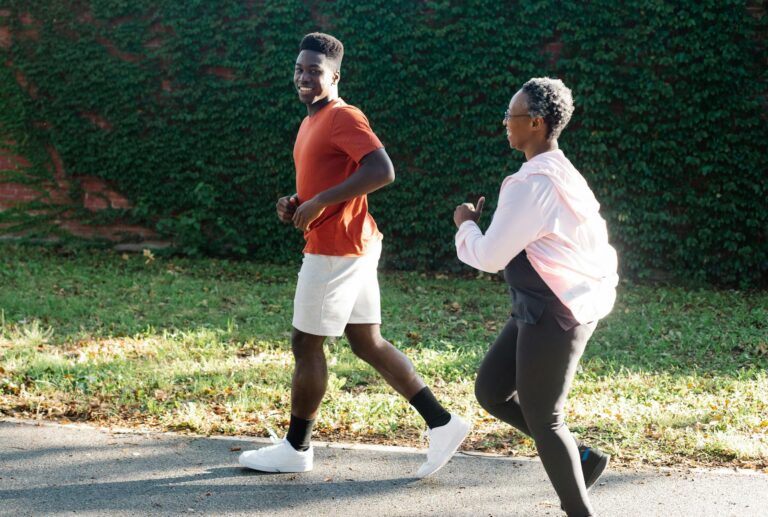
Running and other cardiovascular exercises can support bone health in older adults, but the relationship is more nuanced than many fitness enthusiasts realize. While weight-bearing cardio activities like jogging, brisk walking, and stair climbing stimulate bone remodeling and help maintain bone mineral density, not all cardio is created equal””swimming and cycling, despite their cardiovascular benefits, do minimal work for your skeleton. For adults over 50, the key lies in choosing impact-based aerobic activities that send mechanical signals through the bones, prompting them to strengthen rather than deteriorate. Consider a 62-year-old woman who took up jogging three times weekly after years of sedentary desk work.
Within 18 months, her bone density scans showed stabilization at the hip and modest improvement in her lumbar spine””a reversal of the decline her doctor had been tracking. Her experience reflects what research consistently demonstrates: the right type of cardiovascular exercise, performed regularly, can slow or even partially reverse age-related bone loss. However, this outcome depends heavily on exercise selection, intensity, and individual health factors. This article explores how different forms of cardio affect bone tissue in aging bodies, why impact matters, the limitations of aerobic exercise alone for bone health, and how to structure a cardio routine that serves both your heart and your skeleton. We’ll also address when cardio might not be enough and what complementary strategies can maximize skeletal benefits.
Table of Contents
- How Does Cardiovascular Exercise Affect Bone Density in Aging Adults?
- Weight-Bearing vs. Non-Weight-Bearing Cardio: What Older Adults Need to Know
- Why Impact Loading Matters More as You Age
- Building a Bone-Friendly Cardio Routine After 50
- When Cardio Alone Isn’t Enough for Bone Health
- Cardio Exercise Considerations for Adults with Existing Osteoporosis
- The Role of Balance and Coordination Training Alongside Cardio
- Future Directions: Evolving Understanding of Exercise and Bone Health
- Conclusion
How Does Cardiovascular Exercise Affect Bone Density in Aging Adults?
Bone is living tissue that responds to mechanical stress through a process called mechanotransduction. When you perform weight-bearing cardio, each footstrike or impact sends signals through specialized bone cells called osteocytes, which coordinate bone remodeling by activating osteoblasts (bone-building cells) and regulating osteoclasts (bone-resorbing cells). In older adults, this stimulus becomes increasingly important because bone resorption naturally outpaces formation after age 30, accelerating significantly after menopause in women and more gradually in men after 50. Research from the National Osteoporosis Foundation indicates that adults who engage in regular weight-bearing aerobic exercise maintain 1-3% higher bone mineral density at the hip and spine compared to sedentary peers. This might sound modest, but it translates to meaningful fracture risk reduction””particularly at the hip, where fractures in older adults carry serious mortality and disability implications.
A comparison study published in the Journal of Bone and Mineral Research found that postmenopausal women who jogged or ran had significantly greater femoral neck bone density than those who only walked, suggesting that higher-impact activities provide superior skeletal stimulus. However, there’s a threshold effect. Bone responds best to novel, varied mechanical loading rather than repetitive identical stress. A runner who has jogged the same three-mile route at the same pace for 20 years may see diminishing skeletal returns compared to someone who varies terrain, speed, and distance. The bone adapts to habitual loads and stops responding unless challenged differently.
Weight-Bearing vs. Non-Weight-Bearing Cardio: What Older Adults Need to Know
The distinction between weight-bearing and non-weight-bearing cardiovascular exercise is critical for anyone concerned about bone health. Weight-bearing activities force you to work against gravity while supporting your body weight””running, walking, hiking, dancing, tennis, and stair climbing all qualify. Non-weight-bearing activities like swimming, cycling, and recumbent exercise provide excellent cardiovascular conditioning but generate minimal skeletal loading because the body is supported by water or a seat. For older adults with joint problems or those returning to exercise after injury, this creates a genuine dilemma. Swimming might be the only comfortable cardio option for someone with severe knee osteoarthritis, but it won’t help their bone density.
Studies of competitive swimmers and cyclists show that despite exceptional cardiovascular fitness, these athletes often have lower bone density than runners or even sedentary individuals in some skeletal regions. One study of male cyclists found that after years of training, many had bone density scores in the osteopenic range””the precursor to osteoporosis. If joint issues prevent high-impact exercise, aqua jogging or water aerobics with vertical positioning offers a compromise””some gravitational loading with reduced joint stress. Alternatively, older adults who rely primarily on cycling or swimming for cardio should strongly consider adding resistance training or brief walking sessions specifically for bone maintenance. The cardiovascular system doesn’t care whether you’re swimming or running, but your skeleton certainly does.
Why Impact Loading Matters More as You Age
The osteogenic (bone-building) threshold increases with age, meaning older bones require stronger mechanical signals to trigger the same adaptive response that would occur in younger tissue. Low-level, repetitive loading that might maintain bone in a 30-year-old may be insufficient for a 65-year-old. This doesn’t mean older adults need to take up high-impact activities recklessly, but it does mean that gentle walking alone may not provide adequate stimulus for skeletal maintenance. Research on impact loading has identified that brief, high-magnitude forces are more effective at stimulating bone than prolonged, low-magnitude forces. This principle explains why 10 minutes of jogging with footstrike impact may do more for bone density than 45 minutes of leisurely walking.
Odd-impact activities””those involving multidirectional forces, stops, starts, and changes of direction””appear particularly effective. Tennis players, for instance, show markedly higher bone density in their dominant arm and at the hip compared to runners, likely due to the varied loading patterns of their sport. For older adults new to impact exercise or those with existing osteoporosis, this presents a challenge. High-impact exercise carries fall and fracture risk in populations already vulnerable to both. A graduated approach works best: starting with brisk walking, progressing to Nordic walking with poles for stability, then adding short jogging intervals, light jumping exercises, or heel drops (rising on toes and dropping heels to the ground). Each progression should be maintained for several weeks before advancing, allowing bone and connective tissue to adapt.
Building a Bone-Friendly Cardio Routine After 50
Constructing a cardio program that benefits both cardiovascular and skeletal systems requires intentional exercise selection. A balanced weekly routine might include two to three sessions of higher-impact activity (jogging intervals, aerobic dance, or court sports) combined with lower-impact options (brisk walking, elliptical training) on alternate days for active recovery. This approach allows the bone-building stimulus while managing cumulative joint stress. Consider the tradeoff between frequency and intensity. Three 20-minute jogging sessions weekly provide more bone stimulus than daily 45-minute walks, but the walks accumulate more total cardiovascular training time with less musculoskeletal strain. For an older adult balancing multiple health goals, the optimal mix depends on current fitness level, joint health, and bone density status.
Someone with diagnosed osteoporosis might prioritize the walking volume while adding brief, supervised impact sessions twice weekly. Someone with healthy bones but cardiovascular risk factors might reverse that ratio. Terrain variety amplifies skeletal benefits. Trail walking or running on uneven surfaces creates multidirectional forces that stimulate bone more effectively than treadmill or flat pavement exercise. Hill workouts””both ascending and descending””load bones differently and engage muscles in varied patterns. Stair climbing, whether outdoors or on a machine, provides high hip loading with controlled impact. Even simple modifications like walking backward for short intervals or adding lateral shuffling movements increase the mechanical novelty that bones respond to.
When Cardio Alone Isn’t Enough for Bone Health
Cardiovascular exercise, even the weight-bearing kind, has limitations for skeletal maintenance. While it helps preserve bone density, it rarely builds significant new bone mass in older adults who have already experienced substantial loss. Someone diagnosed with osteoporosis cannot jog their way to normal bone density””the stimulus isn’t strong enough and the time required would be impractical. Cardio serves better as part of a comprehensive bone health strategy than as a standalone intervention. Resistance training provides a complementary and often superior bone stimulus, particularly for the spine and upper body, which receive limited loading from lower-body cardio activities. The pulling forces of muscles on bones during strength exercises generate site-specific adaptations.
A meta-analysis in Osteoporosis International found that combined programs of weight-bearing cardio plus resistance training produced greater bone density improvements than either modality alone. For older adults, this means that replacing one or two weekly cardio sessions with strength training may yield better skeletal outcomes than adding more running or walking. Nutritional factors also limit what exercise can achieve. Without adequate calcium intake (1,000-1,200 mg daily for adults over 50), vitamin D status (many experts recommend blood levels of 30-50 ng/mL), and sufficient protein for muscle and bone maintenance, even optimal exercise programming falls short. Medications, alcohol consumption, and smoking further influence bone metabolism in ways that exercise cannot fully counteract. An older adult committed to bone health through cardio should discuss these factors with a healthcare provider, particularly if bone density tests show concerning trends.
Cardio Exercise Considerations for Adults with Existing Osteoporosis
Older adults already diagnosed with osteoporosis face specific considerations that healthy-bone exercisers don’t encounter. Forward flexion of the spine under load””as occurs when hunched over during cycling or certain rowing motions””increases vertebral compression fracture risk. High-impact landing forces on fragile bone can cause stress fractures. Yet avoiding exercise entirely accelerates bone loss and increases fall risk through muscle weakness and balance deterioration. The goal becomes selecting activities that stimulate bone without creating dangerous loading conditions. Walking remains safe and beneficial for most people with osteoporosis, particularly with proper footwear and on even surfaces.
Adding a weighted vest (starting at 5-10% of body weight) increases the gravitational load without adding impact forces. Water exercise provides safe cardiovascular training, though as noted, it won’t help bone density. Some supervised jumping programs, called osteoporosis-specific exercise classes, teach controlled impact activities appropriate for those with low bone density, but these require proper instruction. Activities to approach with caution or avoid include running on hard surfaces, high-impact aerobics classes designed for younger populations, exercises involving sudden twisting motions, and any activity with significant fall risk. Golf, tennis, and other rotational sports require individual assessment””the loading benefits must be weighed against spinal stress and injury potential. Anyone with osteoporosis should ideally work with a physical therapist experienced in bone health to develop an individualized program before beginning or modifying a cardio routine.
The Role of Balance and Coordination Training Alongside Cardio
Fracture prevention in older adults involves two distinct goals: maintaining bone strength and preventing falls. Cardiovascular exercise addresses the first; balance and coordination training addresses the second. Many bone fractures in older adults result not from inadequate bone density alone but from falls that a younger, more agile person would have prevented or absorbed without injury. A comprehensive exercise program therefore combines cardio, strength, and balance components. Tai chi offers an instructive example.
Despite being low-impact and providing minimal direct bone stimulus, tai chi reduces fracture rates in older adults more effectively than many higher-impact activities, primarily through improved balance and reduced fall frequency. A 70-year-old who practices tai chi twice weekly alongside jogging twice weekly addresses both aspects of fracture risk. Single-leg stance exercises, heel-to-toe walking, and other balance challenges can be incorporated into warm-up or cool-down routines surrounding cardio sessions. Coordination decline with aging also affects running and walking gait, potentially increasing fall risk during the very activities meant to improve bone health. Older adults new to jogging should consider starting on tracks or smooth paths before progressing to trails or uneven terrain. Adequate lighting for outdoor exercise, appropriate footwear, and attention to fatigue-related form breakdown all reduce injury risk while allowing the skeletal benefits of impact exercise.
Future Directions: Evolving Understanding of Exercise and Bone Health
Research into bone health and exercise continues to refine our understanding of optimal approaches for older adults. Whole-body vibration platforms, once marketed heavily for bone benefits, have shown mixed results in clinical trials””some studies suggest modest benefits for postmenopausal women, while others find no significant effect. The intensity, frequency, and duration of vibration protocols vary widely, making firm conclusions difficult.
Current evidence doesn’t support vibration training as a replacement for weight-bearing cardio, though it may serve as an adjunct for those unable to perform impact exercise. Emerging research on bone’s response to exercise timing, the role of rest intervals between loading sessions, and the interaction between exercise and bone-affecting medications may soon inform more precise exercise prescriptions. The recognition that bone health involves not just density but also geometry, microarchitecture, and material properties suggests that future assessments may move beyond simple DXA scans. For now, older adults benefit from focusing on established principles: weight-bearing cardio, resistance training, balance work, adequate nutrition, and medical management of underlying conditions affecting bone metabolism.
Conclusion
Cardiovascular exercise offers genuine benefits for bone health in older adults, but only when the right types of activities are selected and combined with complementary strategies. Weight-bearing, impact-based cardio like jogging, brisk walking, stair climbing, and court sports provides the mechanical signals that help maintain bone density, while non-weight-bearing activities like swimming and cycling, despite cardiovascular value, do little for the skeleton. The key is building a varied program that challenges bones with novel loading patterns while respecting joint limitations and fall risk.
For adults over 50 concerned about bone health, a practical starting point includes two to three weekly sessions of weight-bearing cardio at moderate intensity, combined with resistance training targeting major muscle groups and regular balance practice. Those with diagnosed osteoporosis or significant bone loss should work with healthcare providers to individualize their approach. Exercise represents one component of bone health””nutrition, lifestyle factors, and medical management all play essential roles. The skeleton that carries you through decades of cardio training needs attention beyond the miles you log.