A high-intensity Zumba workout burns an average of 369 calories per session, according to an ACE-sponsored study conducted at the University of Wisconsin-La Crosse. That figure, drawn from research on 19 healthy females aged 18 to 22, translates to roughly 9.5 calories per minute, which outpaces kickboxing, step aerobics, and power yoga over the same duration. For a full one-hour class performed at genuine high intensity, the realistic burn range for most women weighing between 120 and 170 pounds falls between 350 and 650 calories, though the broader range extends from 300 to 900 calories depending on individual factors like body weight, age, and effort level. Those numbers matter if you are trying to use Zumba as a serious cardiovascular training tool rather than just a fun group fitness class.
A 150-pound woman pushing hard through a full hour could reasonably expect to burn around 500 calories, which is comparable to a moderate-pace five-mile run. That kind of output makes Zumba a legitimate calorie-burning workout, not just a dance party with a good playlist. This article covers the research behind those numbers, the heart rate and intensity data that explain why Zumba works so well, the factors that push your personal burn higher or lower, and how to structure your approach for maximum results. Whether you are cross-training between runs, recovering from an injury that limits impact exercise, or simply looking for a high-calorie-burn workout that does not feel like punishment, understanding the real science behind Zumba’s energy demands will help you make informed decisions about your training.
Table of Contents
- How Many Calories Does a High-Intensity Zumba Workout Actually Burn?
- Why Zumba Burns Calories Like Interval Training
- The MET Value of Zumba and What It Means for Your Personal Calorie Burn
- How to Maximize Your Calorie Burn in a Zumba Class
- Why Your Calorie Burn May Be Lower Than You Expect
- Zumba Versus Running for Calorie Burn
- The Future of High-Intensity Dance Fitness
- Conclusion
- Frequently Asked Questions
How Many Calories Does a High-Intensity Zumba Workout Actually Burn?
The most frequently cited research on Zumba calorie expenditure comes from the American Council on Exercise, which funded a study at the University of Wisconsin-La Crosse. Researchers measured oxygen consumption and heart rate in 19 female participants during a standard Zumba class and found an average burn of 369 calories per session, or about 9.5 kilocalories per minute. To put that in perspective, a 150-pound person running at a 10-minute mile pace burns roughly 10 calories per minute, which means a hard Zumba class sits remarkably close to a moderate-effort run in terms of raw energy expenditure. The broader range of 300 to 900 calories per hour that gets cited across fitness literature reflects the enormous variability between individuals. A 125-pound woman performing modified, lower-impact versions of the choreography will land near the bottom of that range.
A 200-pound man throwing full-body effort into every movement, driving his arms overhead, and squatting deep into every lunge will land much higher. The 350-to-650 calorie range represents the most realistic window for women in the 120-to-170-pound range who genuinely maintain high intensity throughout the full class, not just during the songs they enjoy. One important comparison: the ACE study found that Zumba outperformed several popular group fitness formats for calorie burn over the same duration. It beat kickboxing, step aerobics, and power yoga. That does not mean Zumba is inherently superior to those modalities for every fitness goal, but it does confirm that the calorie expenditure claims are not inflated marketing. The numbers hold up under controlled measurement.

Why Zumba Burns Calories Like Interval Training
The heart rate data from the ACE study revealed something that explains a lot about why Zumba is so effective for calorie burning. Participants’ heart rates during a zumba class resembled an interval training pattern, alternating between periods of high intensity and lower intensity, rather than maintaining the steady-state effort you would see during a jog or a bike ride at constant pace. This interval-style pattern is well established in exercise science as a more effective approach for total calorie expenditure compared to steady-state cardio performed at the same average intensity. Participants in the study averaged 64 percent of their VO2max, which falls within the ACE-recommended range of 40 to 85 percent of VO2max for improving cardiovascular endurance. That average masks the peaks and valleys, though. During high-energy songs with fast footwork and explosive movements, heart rates spiked significantly above that average.
During cooldown tracks or slower choreography, they dropped. This oscillation creates an afterburn effect, formally called excess post-exercise oxygen consumption, where your body continues burning calories at an elevated rate after the workout ends. However, if you are the type of person who stands in the back row and does half-effort arm waves while waiting for the next song, you will not get this interval effect. The calorie burn data from the ACE study reflects participants who were working hard throughout the class. If your heart rate never climbs above a conversational level, you are getting a gentle movement session, not a high-intensity workout. There is nothing wrong with that, but the 369-calorie average will not apply to you.
The MET Value of Zumba and What It Means for Your Personal Calorie Burn
Zumba is commonly assigned a MET value of 7.0 to 8.0 for moderate-to-high intensity effort. MET stands for metabolic equivalent of task, and it represents how many times more energy an activity requires compared to sitting still. A MET of 1.0 is rest. Walking at a brisk pace is about 3.5. running at a 9-minute mile pace is roughly 10.0. Zumba’s 7.0-to-8.0 range places it solidly in the vigorous exercise category, comparable to singles tennis or recreational swimming at a moderate pace. You can use this MET value to estimate your own calorie burn with a simple formula: calories burned per minute equals MET value multiplied by 3.5 multiplied by your body weight in kilograms, divided by 200.
For a 155-pound person (about 70 kilograms) working at a MET of 7.5, that comes out to roughly 9.2 calories per minute, or about 552 calories per hour. That lines up well with the ACE study findings and gives you a personalized starting point. A 130-pound person using the same formula would get about 460 calories per hour, while a 185-pound person would get around 660. This formula is a useful estimate, but it has limitations. MET values assume a steady-state effort, and as we established, Zumba is not steady-state. The formula also does not account for fitness level, muscle mass, or genetic differences in metabolic efficiency. Two people of identical weight can burn meaningfully different amounts of calories doing the exact same routine. Use MET calculations as a ballpark, not a bank statement.
How to Maximize Your Calorie Burn in a Zumba Class
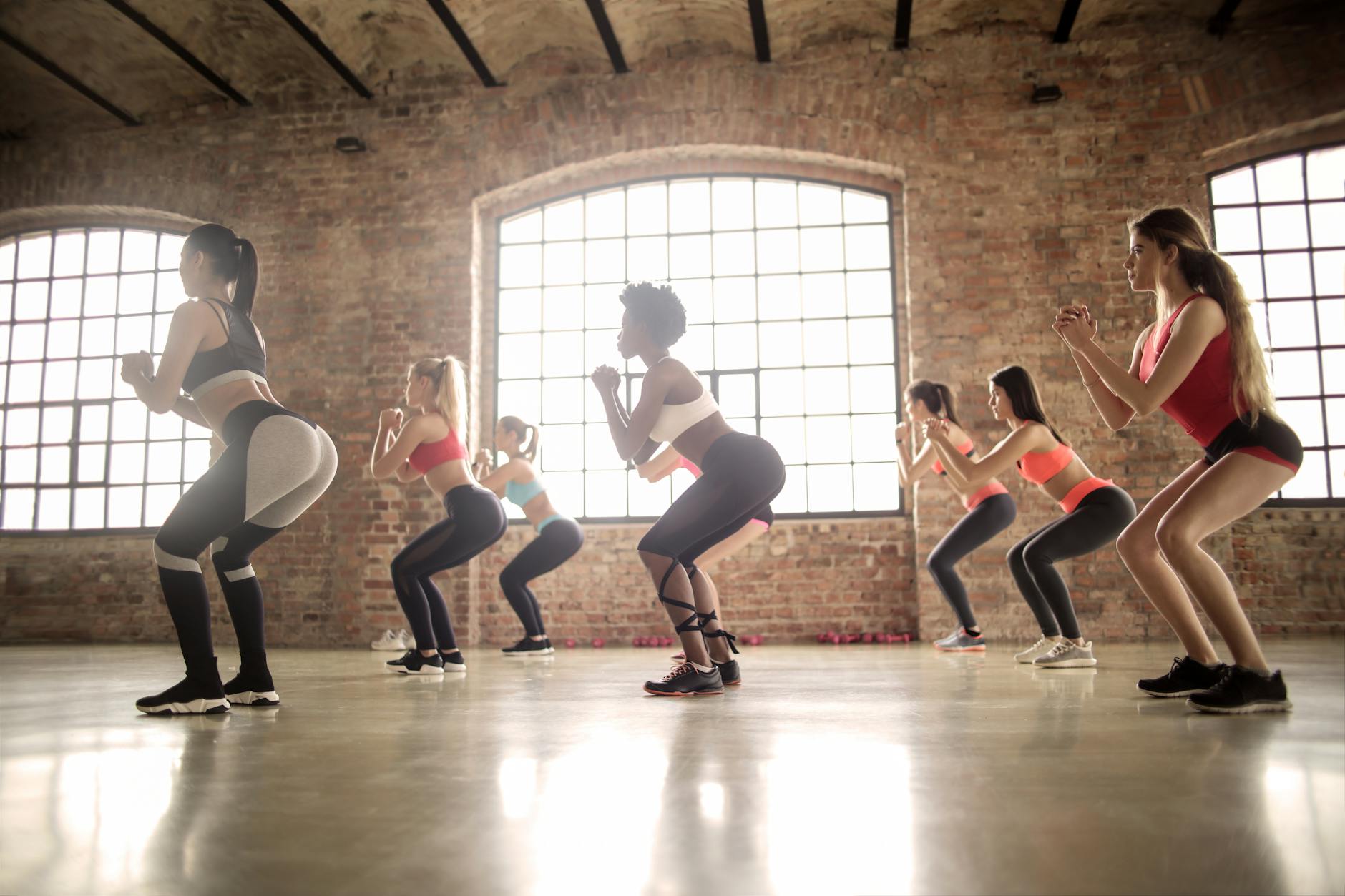
The single biggest factor you can control in a Zumba class is the size and intensity of your movements. Research consistently shows that larger, more exaggerated movements during routines increase energy expenditure significantly. Instead of shuffling through a merengue step, drive your knees higher. Instead of letting your arms hang, push them fully overhead. Squat deeper into cumbia steps. Turn a basic step-touch into a lateral lunge. These modifications do not require any additional skill or coordination, just a willingness to work harder. If you are looking for an even greater calorie burn beyond a standard Zumba class, HIIT-style Zumba variations like STRONG Nation by Zumba are worth considering.
These formats replace traditional Latin music with tracks specifically designed to drive interval-style intensity, combining bodyweight exercises like burpees, squats, and high knees with the choreographed movement patterns of standard Zumba. The tradeoff is that these classes feel considerably harder and less like a dance party. You will burn more calories, but you may also find them less enjoyable, which matters for long-term adherence. A workout you do three times per week at moderate intensity will always beat a workout you do once and then avoid because it was miserable. For runners using Zumba as cross-training, the lateral movement patterns offer a genuine advantage. Running is almost entirely sagittal plane movement, forward and back. Zumba demands lateral shuffles, rotational hip work, and multi-directional steps that strengthen stabilizer muscles and connective tissue that running neglects. The calorie burn is a bonus on top of that functional benefit.
Why Your Calorie Burn May Be Lower Than You Expect
Body weight, age, fitness level, genetics, and workout intensity all significantly affect individual results, and most of these factors work against the eye-catching calorie numbers you see online. As your fitness improves, your body becomes more efficient at performing the same movements, which means you burn fewer calories doing the same routine at the same perceived effort level. A Zumba veteran who has been attending classes three times per week for two years will burn measurably fewer calories than a newcomer performing the same choreography, even if their effort feels identical. Age plays a role as well. The ACE study used participants aged 18 to 22, a demographic with naturally higher metabolic rates and greater capacity for intense output. A 45-year-old woman performing the same class will likely burn fewer calories, partly due to metabolic differences and partly because peak heart rate declines with age, which limits the intensity ceiling.
This does not mean Zumba becomes ineffective as you get older. It means the 369-calorie average from that specific study population should not be treated as a universal guarantee. One common pitfall is relying on wrist-based fitness trackers or the calorie counters built into gym equipment to validate your burn. These devices are notoriously inaccurate for dance-based exercise because the arm movements in Zumba do not correspond well to the accelerometer patterns these devices are calibrated for. Some studies have shown wrist-based trackers overestimating calorie burn by 20 to 40 percent during dance-style workouts. If your watch says you burned 700 calories in a Zumba class, the real number is probably closer to 450 to 550.
Zumba Versus Running for Calorie Burn
For readers of a cardiovascular fitness site, the inevitable question is how Zumba stacks up against running. A 155-pound person running at a 10-minute mile pace burns roughly 600 calories per hour. That same person in a high-intensity Zumba class burns an estimated 500 to 550 calories per hour based on the MET calculations and study data. Running wins on raw calorie burn per hour, but the margin is smaller than most runners assume, and it shrinks further when you account for the interval-style intensity pattern of Zumba and its associated afterburn effect.
The more practical comparison is sustainability and injury risk. Running at a pace that burns 600 calories per hour places significant stress on your joints, particularly your knees, hips, and ankles. Many recreational runners cannot maintain that pace for a full hour without injury risk. Zumba, while not zero-impact, distributes stress across more movement patterns and generally involves less repetitive loading on any single joint. For someone managing a running injury, recovering from a race, or simply looking for variety in their training, a high-intensity Zumba class delivers a calorie burn that is close enough to a solid run to make it a legitimate substitute, not just a consolation prize.
The Future of High-Intensity Dance Fitness
The fitness industry continues to push dance-based workouts toward more structured, measurable intensity programming. Formats like STRONG Nation by Zumba represent a deliberate move to blend the adherence advantages of music-driven group fitness with the physiological benefits of HIIT training. As heart rate monitoring technology improves and becomes more standard in group fitness settings, instructors are increasingly able to coach participants toward specific heart rate zones during class, which should help close the gap between the calorie burn that is possible in a Zumba class and the calorie burn that most people actually achieve.
For runners and endurance athletes, dance-based cross-training is gaining credibility as a legitimate tool for improving cardiovascular fitness, reducing overuse injury risk, and maintaining training volume during recovery periods. The calorie expenditure data supports this. A high-intensity Zumba class is not a replacement for your long run or your tempo workout, but it is a far more productive use of a cross-training day than most people give it credit for.
Conclusion
A high-intensity Zumba class burns an average of 369 calories per the ACE-sponsored study, with a realistic range of 350 to 650 calories per hour for most women who maintain genuine effort throughout. The interval-style heart rate pattern, vigorous MET value of 7.0 to 8.0, and full-body movement demands make Zumba a legitimate cardiovascular workout, not just a recreational activity. The research confirms that it outperforms several popular group fitness alternatives for calorie expenditure and sits surprisingly close to moderate-pace running.
To get the most from a Zumba class, commit to full-range, exaggerated movements, choose high-intensity formats like STRONG Nation when available, and do not trust your wrist tracker’s calorie estimate without skepticism. If you are a runner, treat Zumba as a genuine cross-training option that delivers real calorie burn while training movement patterns that running ignores. The best workout is always the one you actually do consistently, and if Zumba keeps you moving on days you would otherwise skip training, the calorie math works out in your favor.
Frequently Asked Questions
Is it true that Zumba burns 1,000 calories per hour?
No. While the theoretical upper range for very large individuals working at maximum intensity could approach 900 calories per hour, claims of 1,000-plus calories per hour are not supported by research. The ACE study found an average of 369 calories per class, and the realistic range for most women is 350 to 650 calories per hour.
How does Zumba compare to running for calorie burn?
Running at a 10-minute mile pace burns roughly 600 calories per hour for a 155-pound person. A high-intensity Zumba class burns an estimated 500 to 550 calories per hour for the same person. Running has a slight edge in raw calorie burn, but Zumba offers multi-directional movement benefits and lower repetitive joint stress.
Does Zumba count as HIIT?
Standard Zumba is not formally classified as HIIT, but heart rate data from the ACE study showed that the intensity pattern during a Zumba class resembles interval training, with alternating high and low intensity periods. STRONG Nation by Zumba is specifically designed as a HIIT-style format.
How accurate are fitness trackers for measuring Zumba calorie burn?
Wrist-based fitness trackers tend to be inaccurate for dance-based exercise. The arm movements in Zumba do not match the accelerometer patterns these devices are calibrated for, often leading to overestimates of 20 to 40 percent. Chest-strap heart rate monitors paired with a calorie algorithm provide more reliable data.
Will I burn fewer calories as I get better at Zumba?
Yes. As your body adapts to the movement patterns and your cardiovascular fitness improves, you become more metabolically efficient, which means fewer calories burned for the same routine at the same perceived effort. To counteract this, increase movement intensity, try advanced choreography, or switch to higher-intensity formats.