An intermediate Zumba session lasting 45 to 60 minutes typically burns between 300 and 600 calories, depending on your body weight, effort level, and the specific choreography involved. To put that in concrete terms, a 155-pound person working at moderate-to-high intensity can expect to burn roughly 400 to 500 calories over the course of an hour, which places Zumba squarely in the range of other popular cardio workouts like cycling or jogging at a moderate pace. That figure comes with important caveats, though.
A landmark 2012 study commissioned by the American Council on Exercise found that participants burned an average of 9.5 calories per minute during a Zumba class, totaling about 369 calories over a 39-minute session. That research remains the most frequently cited source on the topic, and it gives us a reliable baseline. But individual results vary widely based on weight, fitness level, age, and how hard you actually push during those salsa-inspired intervals. This article breaks down the calorie burn estimates for intermediate Zumba sessions by body weight, examines the research behind those numbers, compares Zumba to other forms of cardio, and offers practical guidance on how to maximize or accurately track your calorie expenditure during class.
Table of Contents
- How Many Calories Does an Intermediate Zumba Session Actually Burn?
- What the ACE Research Study Tells Us and Where It Falls Short
- How Body Weight and Composition Shape Your Calorie Burn
- How to Maximize Calorie Burn During an Intermediate Zumba Session
- Why Calorie Estimates Are Often Misleading
- How Zumba Compares to Running and Other Cardio for Calorie Burn
- The Future of Calorie Tracking in Group Fitness
- Conclusion
How Many Calories Does an Intermediate Zumba Session Actually Burn?
The honest answer is that it depends, but we have enough research to narrow the range considerably. The ACE-commissioned study, which involved 19 healthy female participants ages 18 to 22, recorded an average burn of 9.5 calories per minute. Extrapolate that over a full 60-minute intermediate class, and you land somewhere around 570 calories. However, that study’s participants were young and presumably fit, which means your results could skew lower if you are older, lighter, or working at a more moderate pace. For most people attending a standard intermediate class, the realistic window is 300 to 600 calories per session. Body weight is the single biggest variable.
A 125-pound person performing at moderate intensity for 45 minutes can expect to burn around 335 calories, while the same session at high intensity pushes that closer to 380 calories. A 185-pound person doing that identical 45-minute class burns approximately 430 calories at low intensity, 496 at moderate intensity, and 562 at high intensity. The difference between the lightest and heaviest person in a typical class can easily be 150 to 200 calories for the same workout, which is why blanket claims about Zumba calorie burn should always be taken with skepticism. Compared to other group fitness formats, Zumba holds its own. The ACE study found that Zumba burned more calories than the same duration of kickboxing, step aerobics, or power yoga. That comparison matters for anyone trying to decide between classes at their local gym. Zumba is not the most intense option available, but it consistently outperforms several popular alternatives while being significantly more accessible to people who find traditional cardio monotonous.

What the ACE Research Study Tells Us and Where It Falls Short
The 2012 ACE study is the backbone of nearly every calorie burn claim you will find about Zumba, and for good reason. It was conducted under controlled conditions with heart rate monitors and metabolic analysis, and its finding of 9.5 calories per minute placed Zumba well above the threshold for a workout that meaningfully improves cardiovascular fitness. Participants maintained heart rates in the range associated with vigorous exercise for much of the session, which supports the argument that Zumba qualifies as serious cardio despite its party-like reputation. However, the study has notable limitations. The sample size was just 19 participants, all of whom were female and between 18 and 22 years old. That is a narrow demographic slice that does not represent the typical Zumba class, which often includes men and women ranging from their twenties to their sixties.
Older participants, heavier participants, and those with lower baseline fitness levels would likely produce different results, potentially higher calorie burns for heavier individuals and lower burns for those who cannot maintain the same intensity throughout the class. If you are a 50-year-old man or a 40-year-old woman returning to exercise after a long break, the ACE numbers are a useful reference point but not a personal guarantee. The class length also matters. The ACE study measured a 39-minute session, which is shorter than many standard Zumba classes that run 45 to 60 minutes. Scaling up linearly is tempting but not entirely accurate, because fatigue sets in during longer sessions and intensity tends to drop in the final 10 to 15 minutes. A more realistic estimate for a full 60-minute class would account for that natural decline rather than simply multiplying 9.5 calories by 60.
How Body Weight and Composition Shape Your Calorie Burn
Your body weight is not just a factor in calorie burn during Zumba. It is the dominant factor. A heavier person moves more mass through space with every step, jump, and hip rotation, and that requires more energy. This is basic physics, and it applies to Zumba just as it does to running, swimming, or any other physical activity. Women in the 120- to 170-pound range typically burn 350 to 650 calories per hour at full intensity, but the spread within that range is enormous. Consider two people in the same intermediate class. A 125-pound woman working at high intensity for 45 minutes burns roughly 380 calories.
A 185-pound person at moderate intensity for that same 45 minutes burns about 496 calories. The heavier person burns more while working less hard, which is a counterintuitive reality that frustrates lighter exercisers but is consistent across all forms of cardio. This does not mean lighter people are wasting their time. It means they need to either extend their workout duration or increase intensity to match the raw calorie numbers of a heavier classmate. Body composition adds another layer. Two people who weigh the same but carry different ratios of muscle to fat will burn calories at different rates. Muscle tissue is more metabolically active than fat tissue, so a muscular 155-pound person will likely burn slightly more than a 155-pound person with a higher body fat percentage, even during the same Zumba routine. This effect is modest during the workout itself but compounds over time as increased muscle mass raises your resting metabolic rate.
How to Maximize Calorie Burn During an Intermediate Zumba Session
The simplest way to increase your calorie expenditure in Zumba is to commit fully to the movements. Half-hearted arm swings and abbreviated jumps can reduce your burn by 20 to 30 percent compared to full range-of-motion execution. If the instructor cues a deep squat, go deep. If the choreography calls for a jump, leave the floor. This sounds obvious, but in a room full of people, the temptation to coast is real, and the calorie difference between coasting and pushing is substantial. Heart rate is the most reliable proxy for effort, and wearing a chest strap or optical heart rate monitor during class gives you real-time feedback that no calorie chart can match.
Aim to keep your heart rate in the 65 to 85 percent of maximum range for most of the session. If you consistently hover below 60 percent, you are working at low intensity regardless of what the choreography looks like. If you find that a standard intermediate class no longer elevates your heart rate sufficiently, consider STRONG Nation, the higher-intensity Zumba variant formerly known as STRONG by Zumba, which can burn 400 to 800 calories per hour by incorporating more high-impact intervals and bodyweight strength moves. There is a tradeoff here, though. Pushing harder in every session increases calorie burn but also increases injury risk and recovery demands. For most people attending Zumba two to three times per week, alternating between a high-effort session and a moderate-effort session is more sustainable than redlining every class. The person who burns 400 calories three times a week for a year will outperform the person who burns 600 calories twice a week for three months and then quits from burnout or a knee injury.
Why Calorie Estimates Are Often Misleading
One of the most persistent problems with Zumba calorie claims is exaggeration. You will find websites and class promoters suggesting that Zumba burns 1,000 calories per hour. That number has virtually no basis in research. Even at the high end, with a heavy person working at maximum sustainable intensity, an hour of Zumba rarely exceeds 700 to 900 calories. For most intermediate participants, 400 to 500 calories is a far more honest expectation. Inflated claims set people up for frustration when the scale does not move as quickly as they anticipated. Wrist-based fitness trackers add to the confusion.
Many popular devices overestimate calorie burn during dance-based workouts because the arm movements generate accelerometer data that the algorithm interprets as higher-intensity work than what is actually occurring. A 2016 study from Stanford found that popular wearables had error rates of 27 to 93 percent for calorie estimation during various activities. If your watch says you burned 700 calories in Zumba, the true number might be closer to 450 or 500. Chest strap heart rate monitors paired with validated algorithms tend to be more accurate, though still imperfect. The other limitation worth noting is that calorie burn during the session is only part of the picture. Excess post-exercise oxygen consumption, commonly called the afterburn effect, adds some additional calorie expenditure after high-intensity work. However, for a standard intermediate Zumba class, the afterburn contribution is modest, likely 30 to 50 extra calories over the following hours. It is real, but it is not the game-changer that some fitness marketing would have you believe.
How Zumba Compares to Running and Other Cardio for Calorie Burn
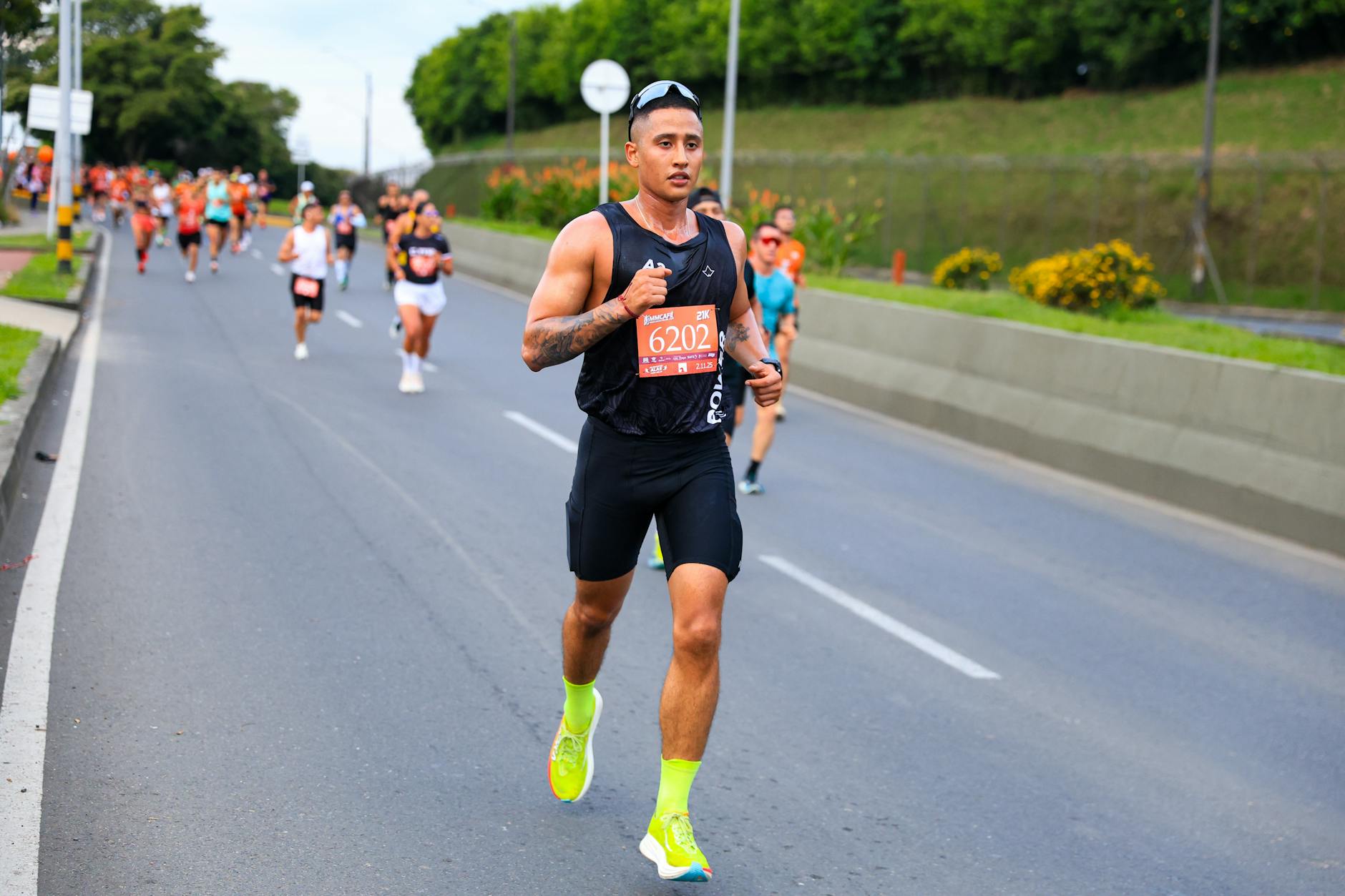
For readers of a cardiovascular fitness site, the natural comparison is between Zumba and running. A 155-pound person running at a 10-minute-mile pace burns roughly 590 calories per hour, compared to the 400 to 500 calories that same person might burn in an intermediate Zumba class. Running wins on raw calorie burn per hour at moderate-to-vigorous paces, but Zumba offers advantages that pure numbers do not capture. Adherence rates for dance-based fitness tend to be higher than for solo running, particularly among people who find repetitive cardio boring.
The best workout for calorie burn is the one you actually do consistently. Zumba also provides a different training stimulus than steady-state running. The interval nature of most Zumba choreography, alternating between high-energy songs and recovery tracks, mimics aspects of interval training that can improve cardiovascular fitness and metabolic flexibility. For someone who already runs three or four days per week, adding one or two Zumba sessions can serve as active recovery while still contributing meaningful calorie expenditure without the joint impact of additional miles.
The Future of Calorie Tracking in Group Fitness
As wearable technology continues to improve, the gap between estimated and actual calorie burn in classes like Zumba should narrow. Newer devices incorporating optical heart rate sensors, skin temperature readings, and motion pattern recognition are producing more accurate estimates than their predecessors, though no consumer device is laboratory-grade. Several gym chains have already begun integrating real-time heart rate displays into group fitness classes, allowing participants to see their effort zones on screen and adjust intensity accordingly.
The larger trend in fitness is a shift away from obsessing over per-session calorie counts and toward consistent participation over months and years. Whether your intermediate Zumba class burns 350 or 550 calories on a given day matters far less than whether you show up for that class week after week. The calorie estimates provided here are useful for planning and goal-setting, but they should be treated as approximations, not scorecards.
Conclusion
An intermediate Zumba session is a legitimate cardiovascular workout that burns roughly 300 to 600 calories depending on your body weight, effort level, and session length. The ACE research supports an average of about 9.5 calories per minute, and the workout compares favorably to kickboxing, step aerobics, and power yoga in terms of energy expenditure. Heavier individuals will burn more, lighter individuals will burn less, and everyone should be skeptical of claims that push the number above 700 or 800 calories for a standard class.
If you are using Zumba as part of a broader fitness or weight management plan, track your heart rate during class for the most personalized estimate, commit fully to the choreography, and resist the urge to compare your calorie burn to inflated online claims. For those looking for higher intensity, STRONG Nation sessions offer a measurable step up. Whatever format you choose, consistency over time will always outperform any single high-calorie session.