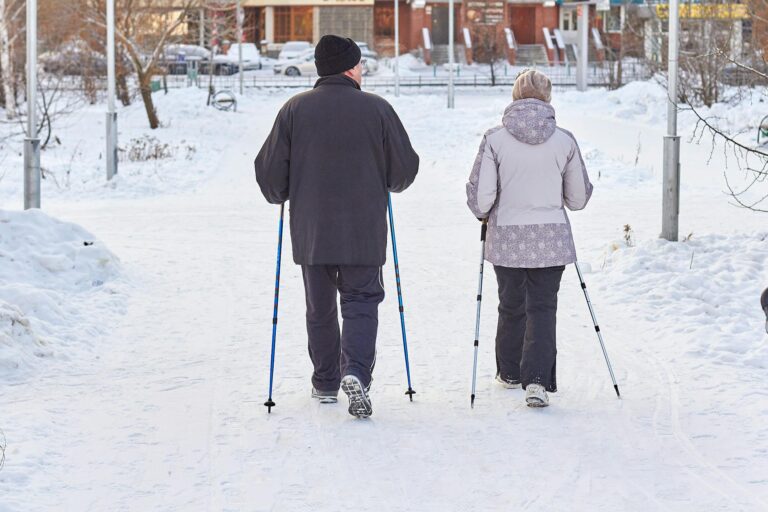
Yes, you probably are walking too easily, and that is the single biggest reason so many people log thousands of steps each day without ever seeing meaningful changes in fitness, body composition, or cardiovascular health. The comfortable, conversational pace that most people default to on their daily walks sits below the intensity threshold needed to force physiological adaptation. If your heart rate barely rises, your breathing never changes, and you finish feeling exactly the same as when you started, your body has no reason to get stronger, leaner, or more efficient. A 2023 study published in JAMA Internal Medicine found that walking intensity mattered more than total step count for reducing the risk of cardiovascular disease, cancer, and all-cause mortality.
In practical terms, a person walking 7,000 brisk steps received more health benefits than someone strolling through 10,000 easy ones. This does not mean casual walking is worthless. It contributes to daily movement, joint health, and mental well-being. But if you are walking specifically to improve your fitness or lose weight and you have hit a wall, intensity is almost certainly the missing variable. This article breaks down what “too easy” actually means in measurable terms, how to find the right intensity for results, what heart rate zones matter for walkers, how terrain and technique change the equation, and when easy walking is actually the smarter choice.
Table of Contents
- How Do You Know If Your Walking Pace Is Too Easy for Results?
- What Intensity Do You Actually Need to Improve Cardiovascular Fitness?
- Why Your Body Stops Responding to the Same Walking Routine
- How to Make Your Walks Harder Without Running
- When Easy Walking Is Actually the Right Choice
- Using Heart Rate Zones to Calibrate Your Walking Effort
- What Happens When You Walk With Purpose for 12 Weeks
- Conclusion
- Frequently Asked Questions
How Do You Know If Your Walking Pace Is Too Easy for Results?
The simplest test is the talk test, and it is more accurate than most people expect. If you can carry on a full conversation without ever needing to pause for breath, you are walking below moderate intensity. Moderate intensity, which is the minimum threshold associated with cardiovascular and metabolic improvements, means you can talk in short sentences but would struggle to sing. If you can belt out a song on your walk, your effort level is too low to trigger the adaptations you are hoping for. In heart rate terms, moderate intensity falls between roughly 64 and 76 percent of your maximum heart rate. For a 45-year-old with an estimated max of 175 beats per minute, that means a heart rate of at least 112 during the walk. Many casual walkers hover around 90 to 100, which is better than sitting but not enough to generate meaningful cardiovascular stress. Another reliable indicator is your rate of perceived exertion on a 1 to 10 scale.
Easy walking typically registers as a 2 or 3. Moderate walking that produces results should feel like a 4 to 6, where you are aware of the effort and slightly uncomfortable but could sustain it for 30 to 60 minutes. Compare two walkers covering the same three-mile route: one finishes in 54 minutes at a strolling pace and burns roughly 200 calories, while the other finishes in 42 minutes at a brisk pace and burns around 300 calories. The faster walker also experiences greater post-exercise oxygen consumption, meaning an elevated calorie burn for up to an hour afterward. Same route, same distance, wildly different outcomes. The distinction matters most for people who have been walking consistently for months without change. Your body is remarkably efficient at adapting to repeated stimuli. A pace that challenged you six months ago may now sit firmly in your comfort zone. If you have not increased your speed, distance, or terrain difficulty in that time, you have likely adapted past the point where your current effort produces results.

What Intensity Do You Actually Need to Improve Cardiovascular Fitness?
The American College of Sports Medicine defines moderate–intensity exercise as 3.0 to 5.9 METs, which translates to a walking speed of roughly 3.0 to 4.5 miles per hour for most adults on flat ground. Below 3.0 miles per hour, healthy adults are unlikely to reach the moderate-intensity threshold unless they are walking uphill or carrying added weight. This is where many people unknowingly fall short. The average American walking speed is approximately 2.8 to 3.0 miles per hour, which puts a large portion of recreational walkers right at the border of too easy. To improve VO2 max, which is the gold standard measure of cardiovascular fitness and one of the strongest predictors of longevity, you need to regularly spend time at or above moderate intensity. A 2021 meta-analysis in the British Journal of Sports Medicine found that brisk walking at 4.0 miles per hour or faster produced significant improvements in VO2 max among previously sedentary adults over 8 to 12 weeks. Slower walking produced improvements in blood pressure and insulin sensitivity but did not meaningfully change aerobic capacity.
This is an important distinction: easy walking can improve certain health markers, but it will not make you fitter in the cardiovascular sense. However, if you are currently sedentary, deconditioned, or over 65, your moderate-intensity threshold is lower. A person with a resting heart rate of 85 and poor baseline fitness may reach moderate intensity at 2.5 miles per hour. The thresholds above apply to generally healthy adults with at least a basic fitness foundation. This is why heart rate monitoring or perceived exertion scales are more useful than pace alone. A 2.8-mile-per-hour pace that is easy for a fit 35-year-old might be genuinely challenging for someone just starting out, and that is perfectly fine. The goal is relative intensity, not an arbitrary speed target.
Why Your Body Stops Responding to the Same Walking Routine
The principle of progressive overload is not exclusive to weightlifting. It applies to every form of exercise, including walking. Your cardiovascular system, muscles, and metabolic pathways adapt to the specific stress you place on them. Once they have adapted, the same stimulus no longer produces change. This is why someone can walk the same 2-mile loop at the same pace for a year and see results in the first two months but nothing afterward. The body met the demand and stopped investing in further improvement. Consider a specific example. A 50-year-old woman begins walking 30 minutes per day at 3.2 miles per hour. In the first eight weeks, she loses four pounds, her resting heart rate drops by five beats per minute, and she notices improved energy.
Then everything stalls. She is still walking the same amount, but her body has fully adapted. Her heart rate during the walk, which used to hit 125, now barely reaches 110 at the same pace. She is doing the same activity but at a functionally lower intensity because her fitness improved. Without increasing the challenge, walking has become maintenance rather than stimulus. Breaking through this plateau requires one or more of three adjustments: increasing pace, increasing duration, or increasing difficulty through terrain or load. Even small changes matter. Adding a one-percent incline on a treadmill or choosing a route with a few hills can elevate heart rate by 10 to 20 beats per minute at the same walking speed. Swapping one of four weekly walks for a 45-minute session instead of 30 minutes adds volume without requiring a faster pace. The key is that something must change regularly enough to stay ahead of adaptation.

How to Make Your Walks Harder Without Running
The most accessible intensity upgrade is speed. Moving from 3.0 to 3.5 miles per hour is a modest increase that most people can achieve within a few sessions, and it meaningfully changes the metabolic demand. Moving from 3.5 to 4.0 is harder and begins to engage the glutes, hamstrings, and calves more aggressively. Above 4.0 miles per hour, many people find it more natural to break into a jog, but racewalkers regularly sustain 4.5 to 5.5 miles per hour, proving that walking can reach vigorous intensity without a single running stride. Incline walking is arguably the best tool for walkers who want results without joint stress.
A 2019 study in the Journal of Sports Science and Medicine found that walking at 3.0 miles per hour on a 10-percent incline produced similar cardiovascular demand to jogging at 5.5 miles per hour on flat ground, but with roughly 30 percent less impact force on the knees. For people who avoid running due to joint pain, this is a meaningful tradeoff: you get comparable cardio stimulus with significantly less orthopedic stress. The downside is that sustained incline walking can fatigue the lower back and calves disproportionately, so building up gradually over two to three weeks is important. Other options include wearing a weighted vest, which adds metabolic cost without changing your mechanics the way hand or ankle weights do, and interval-style walking, where you alternate two minutes of fast effort with one minute of easy recovery. Weighted vests in the 10- to 20-pound range have been shown to increase calorie burn by 12 to 15 percent at the same walking speed. Interval walking, sometimes called fartlek walking, trains the cardiovascular system across a wider range of heart rate zones in a single session and is particularly effective for people who cannot yet sustain a brisk pace for 30 or more continuous minutes.
When Easy Walking Is Actually the Right Choice
Not every walk needs to be a training session, and pushing intensity on every outing is a mistake that leads to burnout, overuse injuries, and a deteriorating relationship with exercise. Easy walking has legitimate, research-backed benefits that hard walking does not replicate well. It lowers cortisol, promotes parasympathetic nervous system activity, and supports recovery between harder workouts. If you also run, cycle, or do strength training, your easy walks should stay easy. Adding unnecessary intensity to recovery walks undermines the purpose of having them in your program. The warning here is for people who conflate activity with productivity. Walking 90 minutes at a gentle pace after a hard leg day is not laziness.
It is active recovery that promotes blood flow to damaged tissues without adding mechanical stress. Similarly, walking for mental health, which is one of the most evidence-supported uses of walking, does not require moderate intensity. Studies on walking and depression consistently show benefits at any pace, likely because the mechanisms are related to time outdoors, rhythmic movement, and cognitive disengagement rather than cardiovascular strain. The mistake is not easy walking itself. The mistake is doing only easy walking and expecting fitness outcomes. If your program includes three to four moderate or vigorous intensity sessions per week from any combination of activities, your easy walks are filling exactly the role they should. If your only exercise is walking and all of it is easy, that is where the problem lies.

Using Heart Rate Zones to Calibrate Your Walking Effort
A chest strap or optical heart rate monitor removes the guesswork from walking intensity. Zone 2, which corresponds to roughly 60 to 70 percent of maximum heart rate, is where most easy walking falls. Zone 3, at 70 to 80 percent, is the moderate-intensity range where most fitness adaptations occur for walkers. If you can get into Zone 3 and sustain it for 20 or more minutes during a walk, you are generating meaningful cardiovascular stimulus.
For example, a 40-year-old with a max heart rate of 180 would aim for 126 to 144 beats per minute during the working portion of a brisk walk. If that person’s walks consistently stay below 120, they are leaving results on the table. One practical approach is the 80/20 split adapted for walkers: roughly 80 percent of your weekly walking volume at an easy, conversational pace, and 20 percent at a brisk or vigorous pace. For someone walking five days per week, that means four easy walks and one deliberately hard walk, or splitting the intensity within individual sessions by adding 10 minutes of fast-paced effort to the end of three easy walks.
What Happens When You Walk With Purpose for 12 Weeks
The research on structured walking programs consistently shows that walkers who progressively increase intensity see results that rival those of beginner running programs. A 12-week brisk walking intervention published in the Journal of Physical Activity and Health found that participants who walked at 70 to 80 percent of maximum heart rate for 40 minutes, four times per week, improved VO2 max by 9 percent, reduced waist circumference by an average of 1.5 inches, and lowered resting blood pressure by 6 mmHg systolic. These are not trivial numbers. A 9-percent improvement in VO2 max is associated with a measurable reduction in all-cause mortality risk.
The shift from aimless walking to intentional walking does not require a dramatic overhaul. It requires awareness of intensity, a willingness to be slightly uncomfortable, and some form of progression every two to three weeks. Walk faster, walk farther, walk steeper, or walk with load. The specific method matters less than the principle: your body only changes when you ask it to do something it cannot yet do easily.
Conclusion
If your walking routine has stopped producing results, the most likely explanation is that your effort level is no longer challenging enough to force adaptation. Comfortable, easy-paced walking is a valuable daily habit for health maintenance, stress relief, and recovery, but it is not sufficient for improving cardiovascular fitness, changing body composition, or continuing to reduce disease risk once your body has adapted. The fix is straightforward: walk faster, add incline, incorporate intervals, or use a weighted vest.
Monitor your heart rate or perceived exertion to confirm you are actually reaching moderate intensity, which for most adults means a pace of at least 3.5 miles per hour on flat ground or a heart rate above 60 to 70 percent of your maximum. Start with one or two higher-intensity walks per week while keeping the rest easy. Progress gradually over the next 8 to 12 weeks, and measure outcomes beyond the scale: resting heart rate, the pace at which you reach a target heart rate, how you feel climbing stairs, and whether your easy pace today would have been your hard pace two months ago. Walking is one of the most sustainable forms of exercise available, and when done with purpose, it produces results that most people incorrectly assume require running.
Frequently Asked Questions
How fast do I need to walk to lose weight?
Weight loss depends primarily on calorie balance, but walking at 3.5 miles per hour or faster burns significantly more calories per minute than strolling and generates greater post-exercise metabolic activity. At 4.0 miles per hour, a 170-pound person burns roughly 370 calories per hour compared to about 250 at 2.5 miles per hour. Combined with a modest calorie deficit, brisk walking four to five days per week is effective for fat loss.
Is walking 10,000 steps a day enough if the pace is slow?
Ten thousand slow steps is better than being sedentary, and it will support joint health, basic circulation, and mental well-being. However, for cardiovascular fitness improvements and meaningful metabolic changes, research shows that the intensity of those steps matters more than the count. You would get more fitness benefit from 7,000 brisk steps than 12,000 slow ones.
Can I get a good workout walking on a treadmill?
Yes, and the treadmill has one major advantage over outdoor walking: precise incline control. Setting a treadmill to 10 to 15 percent incline at 3.0 to 3.5 miles per hour creates a cardiovascular challenge comparable to jogging on flat ground. The limitation is that treadmill walking does not challenge lateral stability or varied terrain adaptation the way outdoor walking does.
How do I know if I am walking too fast and should switch to running?
If your walking speed exceeds roughly 4.3 to 4.5 miles per hour, most people naturally feel like jogging would be more efficient, and biomechanically it is. At very high walking speeds, the energy cost of walking actually exceeds that of jogging at the same speed because of the exaggerated hip and leg movements required. If you are comfortable running, the crossover point where jogging becomes easier than walking is typically around 4.5 miles per hour.
Does walking on sand or grass burn more calories than pavement?
Walking on soft sand increases energy expenditure by roughly 50 to 80 percent compared to firm pavement at the same speed, because your muscles must work harder to stabilize and propel on an unstable surface. Grass falls somewhere in between. The tradeoff is increased ankle and Achilles tendon stress on sand, so it should be introduced gradually, particularly if you have a history of ankle issues.
How long does it take to see results from brisk walking?
Most studies show measurable improvements in resting heart rate, blood pressure, and exercise tolerance within four to six weeks of consistent brisk walking at moderate intensity for 30 or more minutes, at least four days per week. Visible body composition changes typically take 8 to 12 weeks, depending on dietary habits and starting fitness level.