
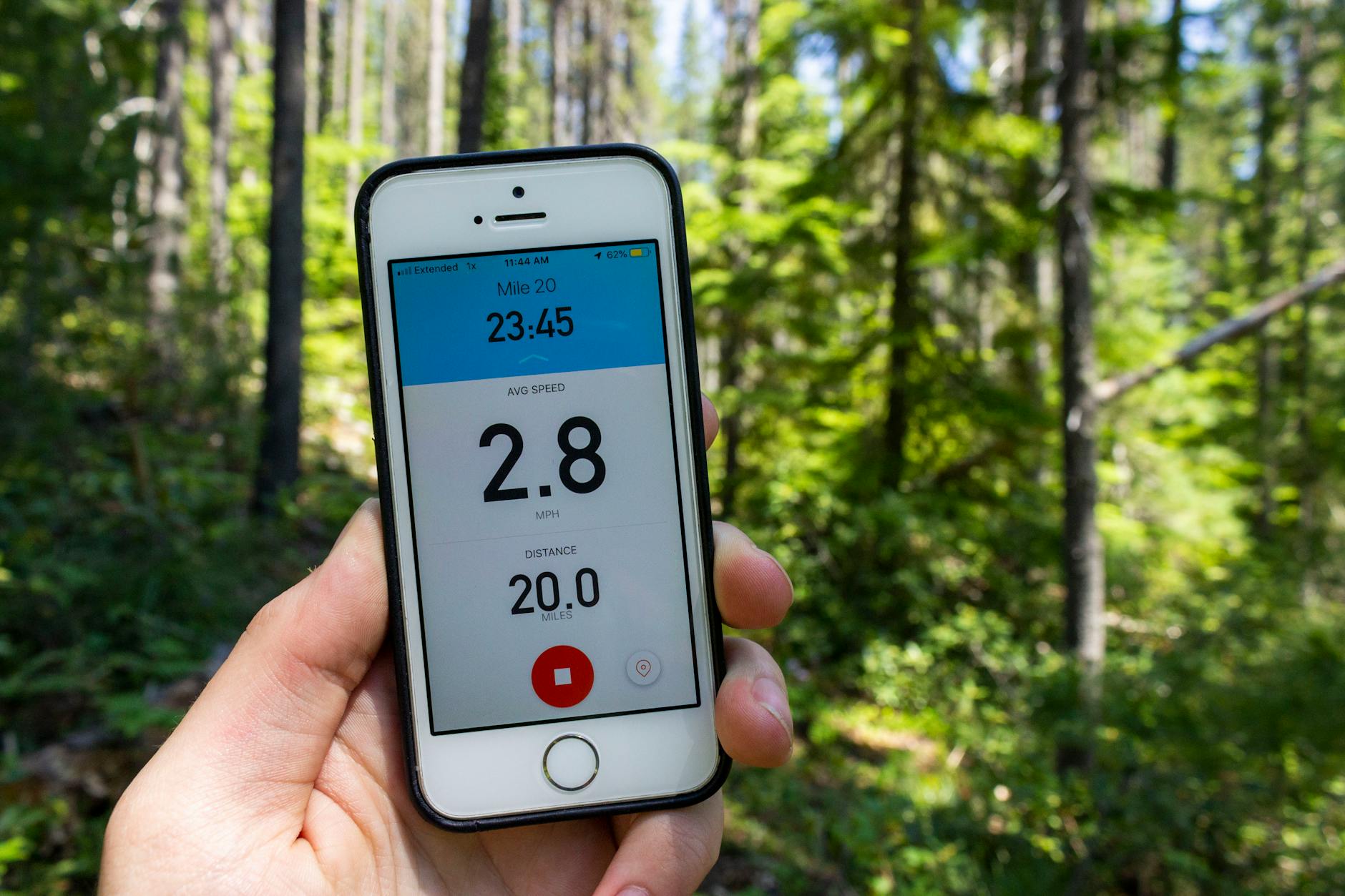
The average walking speed for a healthy adult is about 3 miles per hour, or roughly a 20-minute mile. That number comes from the CDC and aligns with a large meta-analysis published in PMC, which found that healthy adults walk at a self-selected usual pace of 1.31 m/s, or 2.93 mph. So if you have ever timed yourself on a one-mile loop around your neighborhood and clocked in somewhere between 18 and 24 minutes, you are squarely in the normal range. A 45-year-old man walking his dog at a comfortable clip is probably covering ground at about 3.2 mph without even thinking about it.
But “average” only tells part of the story. Walking speed varies meaningfully by both age and gender, and those differences matter for more than just trivia. Researchers and geriatric physicians now treat walking speed as a clinical vital sign, one that can flag fall risk, cardiovascular decline, and overall health trajectory. This article breaks down the specific walking speed data by decade of life and by sex, explains why speed declines with age, covers the clinical thresholds that doctors actually care about, and offers practical guidance for anyone who wants to walk faster or simply maintain the pace they have.
Table of Contents
- What Is the Average Walking Speed by Age and Gender?
- Why Walking Speed Declines With Age and What the Research Shows
- Walking Pace Categories and What “Brisk Walking” Actually Means
- How to Measure and Improve Your Walking Speed
- When Slow Walking Speed Becomes a Clinical Concern
- How Gender Differences in Walking Speed Play Out in Daily Life
- What Walking Speed Research Means for Long-Term Fitness
- Conclusion
What Is the Average Walking Speed by Age and Gender?
walking speed is not a flat number across the lifespan. According to research compiled from gait studies, men in their 20s walk at about 3.04 mph while women of the same age come in at 3.00 mph. Both sexes tend to hit their peak walking speed in the 30-to-49 age window, where men average 3.20 mph and women reach about 3.00 to 3.11 mph. After age 50, the numbers start to slide. Men in their 60s drop to 3.00 mph, women to 2.77 mph. By the time adults reach their 70s, men average 2.82 mph and women 2.53 mph. And for those 80 and older, the figures fall to 2.17 mph for men and 2.10 mph for women. To put that in real-world terms, a 35-year-old man walking a flat mile at his natural pace would finish in about 18 minutes and 45 seconds.
A 75-year-old woman covering the same mile at her typical speed would need closer to 23 minutes and 45 seconds. That five-minute gap per mile adds up. Over a 3-mile walk, the difference is roughly 15 minutes, which is why mixed-age walking groups often struggle to find a pace that works for everyone. A systematic meta-analysis confirmed that men walk faster than women across every age bracket studied. The primary drivers are biomechanical: men tend to have longer stride lengths, more lower-body muscle mass, and higher average aerobic fitness. However, these are population-level averages. Plenty of active women in their 60s walk faster than sedentary men in their 30s. The data describes trends, not ceilings.

Why Walking Speed Declines With Age and What the Research Shows
The decline in walking speed with age is gradual but measurable. Research indicates that walking speed decreases by approximately 1.2 minutes per kilometer by age 60 compared to age 20. That slowdown is driven by several overlapping factors: loss of muscle mass (sarcopenia), reduced joint flexibility, changes in balance and proprioception, and declining cardiovascular efficiency. After about age 50, adults lose roughly 1 to 2 percent of their muscle mass per year if they do not actively resist the trend through exercise. A study published in PubMed measured comfortable gait speed across age groups and found it ranged from 146.2 cm/s for men in their 40s down to 127.2 cm/s for women in their 70s.
Maximum gait speed, the fastest pace subjects could sustain, showed an even steeper drop: from 253.3 cm/s for men in their 20s to 174.9 cm/s for women in their 70s. Adults aged 80 to 99 recorded the slowest mean gait speed at 94.3 cm/s, roughly 2.1 mph, for women in that range. However, aging alone does not determine your walking speed. A 70-year-old who has maintained a regular walking habit, done some form of strength training, and managed chronic conditions like arthritis or diabetes may walk just as fast as an inactive 50-year-old. The research captures averages, and averages are heavily influenced by the large percentage of older adults who are sedentary. If you notice your pace dropping faster than the age-related norms would predict, that is worth discussing with a doctor, because an accelerated decline in gait speed can signal underlying health issues beyond normal aging.
Walking Pace Categories and What “Brisk Walking” Actually Means
Not all walking is created equal from a fitness standpoint, and the pace categories used in research help clarify where your effort level falls. A slow pace is roughly 0.82 m/s, or 1.83 mph, which is the speed of a casual stroll through a museum or grocery store. A usual pace sits at about 1.31 m/s (2.93 mph), the speed most people default to when walking with purpose but not pushing themselves. A medium pace comes in at 1.47 m/s (3.29 mph), and a fast or brisk pace reaches 1.72 m/s (3.85 mph). That brisk threshold matters because walking at 3.5 mph or faster is associated with significant cardiovascular health benefits. Public health guidelines from organizations like the American heart Association frequently recommend brisk walking as a baseline for moderate-intensity exercise. A practical way to gauge whether you are walking briskly: you should be able to talk in short sentences but not sing comfortably.
For a specific example, if you are covering a mile in about 17 minutes or less, you are in brisk territory. Here is the catch. What counts as “brisk” is relative to the individual. For a fit 30-year-old, 3.85 mph might feel moderate. For a 75-year-old with knee osteoarthritis, hitting 2.8 mph might represent their version of brisk effort and still deliver meaningful cardiovascular stimulus. The heart rate response matters more than the absolute speed on a GPS watch. If your heart rate is elevated into a moderate-intensity zone (roughly 50 to 70 percent of your maximum heart rate), you are getting the benefit regardless of whether the number on the screen matches the textbook definition of brisk.
How to Measure and Improve Your Walking Speed
Measuring your walking speed is straightforward. The simplest method is to time yourself over a known distance. Walk a quarter-mile stretch of flat sidewalk at your normal pace, multiply the time by four, and you have your per-mile pace. From there, divide 60 by your minutes-per-mile to get your speed in mph. If you timed a quarter mile in 5 minutes, your mile pace is 20 minutes, and your speed is 3.0 mph. Fitness trackers and phone GPS apps can do this automatically, though they are sometimes less accurate at walking speeds than at running speeds due to the way GPS interpolates slower movement. Improving walking speed involves two main levers: cardiovascular fitness and lower-body strength. For the cardiovascular side, interval-style walking works well.
Alternate between two minutes at your comfortable pace and one minute at the fastest pace you can sustain without breaking into a jog. Over several weeks, this trains your aerobic system to support a faster default speed. For strength, simple bodyweight exercises like squats, calf raises, and step-ups directly target the muscles responsible for propulsion during walking. Research consistently shows that older adults who add resistance training to their routine see measurable improvements in gait speed. The tradeoff is time and consistency versus intensity. Walking faster for shorter distances provides a stronger cardiovascular stimulus per minute but covers less ground. Walking at a moderate pace for longer builds endurance and burns more total calories. For most people who are not training for a specific event, the best strategy is to do most of your walking at a comfortable pace and dedicate one or two sessions per week to pushing the speed. This mirrors how runners structure their training, and it works for walkers too.
When Slow Walking Speed Becomes a Clinical Concern
Walking speed is now considered a vital sign by geriatric researchers, and that designation is not symbolic. Speeds below 1.0 m/s, which is 2.24 mph, are associated with increased fall risk, higher rates of hospitalization, and accelerated health decline in older adults. To put that in perspective, 2.24 mph translates to a 26-minute-and-47-second mile. If a person over 65 cannot walk a mile in under 27 minutes at a comfortable pace, clinicians view that as a red flag worth investigating. The reason this threshold matters is that walking integrates multiple body systems simultaneously. It requires adequate muscle strength, joint mobility, cardiovascular output, neurological coordination, and cognitive processing (especially in environments that demand attention, like busy sidewalks or uneven terrain).
When walking speed drops significantly below age-adjusted norms, it often signals that one or more of those systems is failing in ways that may not yet be obvious through other screening tools. A limitation of this clinical marker is that a single measurement on a single day does not tell the full story. Pain, fatigue, medication side effects, and even mood can influence gait speed on any given assessment. What matters more is the trend. If a person’s comfortable walking speed has dropped from 2.8 mph to 2.1 mph over a year, that trajectory is more informative than any single number. Anyone who notices a meaningful and sustained decline in their walking pace should bring it up with their physician, even if they feel otherwise fine.
How Gender Differences in Walking Speed Play Out in Daily Life
The gap between male and female walking speed is consistent but relatively small, typically 0.04 to 0.29 mph depending on age group. The widest gap appears in the 70-to-79 bracket, where men average 2.82 mph and women 2.53 mph. In practical terms, if a couple in their 70s walks together for 30 minutes, the man’s natural pace would carry him about 120 feet farther than the woman’s over that half hour, assuming neither adjusts. In reality, most couples and walking partners unconsciously compromise, but the accommodation tends to fall more on the faster walker slowing down.
This difference is relevant for anyone designing walking programs, group fitness activities, or even urban infrastructure. Pedestrian crossing signals, for instance, are typically timed assuming a walking speed of about 3.5 to 4.0 feet per second (roughly 2.4 to 2.7 mph). That works for most adults under 70 but can be tight for older women, who may average closer to 2.1 to 2.5 mph. Several cities have begun extending crossing times at intersections near senior housing and medical facilities in response to this data.
What Walking Speed Research Means for Long-Term Fitness
The growing body of research on walking speed points toward a broader shift in how we think about fitness as we age. Rather than focusing exclusively on how far or how often someone walks, the speed component adds a layer of information about functional capacity that distance alone cannot capture. A person who walks 5 miles a day at 2.0 mph is getting volume, but their gait speed suggests they may benefit from targeted strength and mobility work that a purely distance-focused mindset would miss.
Looking ahead, wearable technology is making it easier than ever to passively track walking speed over time without dedicated tests. Smartwatches and phones already estimate walking speed in the background. As these tools mature and integrate more tightly with healthcare systems, walking speed could become a routine data point in annual physicals, not just something measured in gait labs. For now, the actionable takeaway is simple: know your walking speed, check it periodically, and treat any sustained decline as a signal to invest in the strength, flexibility, and cardiovascular work that keeps you moving well.
Conclusion
The average adult walks at about 3 mph, but that number shifts depending on age, gender, and fitness level. Men tend to walk slightly faster than women across all age groups, and both sexes experience a gradual decline starting around age 50 that accelerates after 70. The data is clear that peak walking speed lands in the 30-to-49 range and that adults over 80 typically walk at about 2.1 to 2.2 mph. These are not just fitness metrics. Walking speed below 1.0 m/s (2.24 mph) is a recognized clinical marker for fall risk and health decline in older adults.
The practical message is that walking speed is both a reflection of your current health and something you can actively improve. Regular walking at varied intensities, combined with basic lower-body strength training, can maintain or even increase your gait speed regardless of age. If you are curious where you stand, time yourself over a known distance this week. Compare your result to the age and gender benchmarks above, and use that as a baseline. Walking is the most accessible form of exercise that exists, and paying attention to your pace adds a meaningful dimension to an activity most people already do every day.
1 thought on “Average Walking Speed by Age and Gender”
Comments are closed.