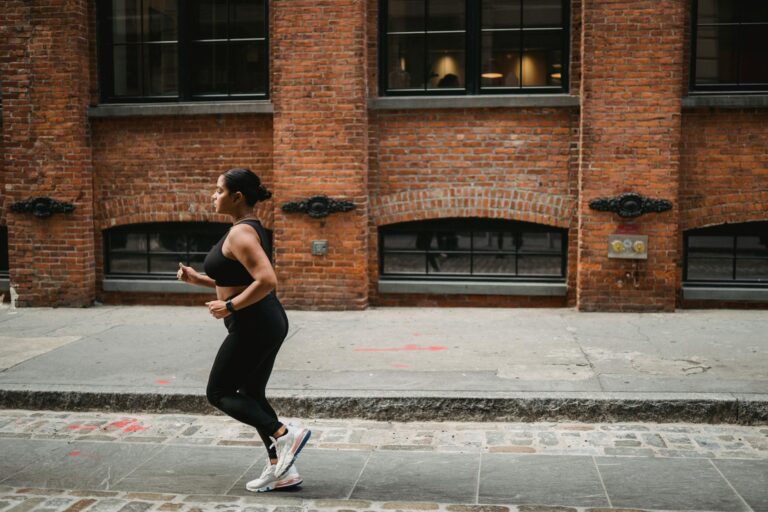
A good walking pace for most adults falls between 2.5 and 4.0 miles per hour, but age is the single biggest factor that determines where you should land within that range. A healthy 30-year-old can typically sustain a brisk pace of 3.5 to 4.0 mph without difficulty, while a 70-year-old walking comfortably at 2.5 to 3.0 mph is performing equally well relative to their age group. For example, a 45-year-old woman who walks a mile in about 17 minutes, roughly 3.5 mph, is hitting a solidly above-average pace for her demographic.
The key is understanding that “good” is not a fixed number but a moving target that shifts with every decade of life. Walking speed is actually one of the most studied metrics in exercise science, and researchers have found it correlates strongly with overall health and longevity. A landmark study published in JAMA found that older adults who walked faster than 2.2 mph had a better survival rate than those who walked slower, earning walking speed the informal title of “the sixth vital sign” among geriatricians. This article breaks down realistic pace benchmarks for every age group from your 20s through your 70s and beyond, explains why pace naturally declines, covers how to measure and improve your speed safely, and addresses when a slowing pace might signal something worth discussing with a doctor.
Table of Contents
- What Is Considered a Good Walking Pace for Each Age Group?
- Why Walking Pace Declines With Age and What the Research Shows
- How to Accurately Measure Your Walking Pace
- How to Improve Your Walking Speed at Any Age
- When a Slow Walking Pace May Signal a Health Problem
- How Terrain, Footwear, and Weather Affect Your Walking Pace
- Walking Pace as a Lifelong Fitness Metric
- Conclusion
What Is Considered a Good Walking Pace for Each Age Group?
Walking pace norms have been established through large population studies, and the numbers shift meaningfully across decades. Adults in their 20s and 30s typically walk between 3.0 and 4.0 mph during a brisk, intentional walk, with many younger adults comfortably sustaining 3.5 mph or faster. By the 40s and 50s, average brisk walking pace tends to settle around 3.0 to 3.5 mph. Once you cross into your 60s, a pace of 2.8 to 3.2 mph is considered good, and for adults in their 70s and older, anything above 2.5 mph is generally above average. These numbers assume flat terrain and a purposeful walking effort, not a casual stroll. To put this into perspective, consider two people walking a one-mile loop at a local park. A 35-year-old completing that mile in 15 minutes flat is walking at exactly 4.0 mph, which is excellent and approaching the border of race walking.
A 65-year-old completing the same loop in 20 minutes is walking at 3.0 mph, which is equally impressive for that age bracket. Comparing the two raw times is meaningless without the age context. The CDC classifies any pace above 3.0 mph as “brisk” for general adult populations, but exercise physiologists increasingly argue that age-adjusted benchmarks provide a far more useful picture of fitness. One important caveat is that sex also plays a role. Men tend to walk slightly faster than women across all age groups, partly due to average differences in leg length and stride. Studies from the Journal of Applied Physiology show the gap is roughly 0.2 to 0.3 mph on average, so a 50-year-old woman walking at 3.0 mph is performing comparably to a 50-year-old man walking at 3.2 mph. Most public health guidelines do not separate recommendations by sex, which can make women feel they are underperforming when they are actually right on track.

Why Walking Pace Declines With Age and What the Research Shows
The gradual slowdown in walking speed is driven by several overlapping biological changes. Muscle mass decreases by roughly 3 to 8 percent per decade after age 30, a process called sarcopenia, and the muscles that remain lose some of their fast-twitch fibers, which are responsible for generating quick, powerful strides. Joint flexibility decreases as cartilage thins, particularly in the hips, knees, and ankles, which shortens stride length. Cardiovascular efficiency also declines, meaning the heart delivers slightly less oxygen per beat during exertion, so the body naturally downregulates effort to compensate. Research from the University of Pittsburgh’s Cardiovascular Health Study tracked thousands of adults over age 65 and found that walking speed declined by an average of 1 to 2 percent per year in that population. That sounds small, but it compounds.
Someone walking at 3.2 mph at age 65 might be walking at 2.6 mph by age 80 if the decline follows the average trajectory. The study also found that the rate of decline varied enormously based on physical activity levels, meaning people who continued walking regularly experienced a much gentler slope than those who became sedentary. However, if you notice a sudden and significant drop in walking speed over a short period, say a 20 percent decrease within a year, that pattern is different from normal aging. Rapid gait speed decline has been associated with underlying conditions including peripheral artery disease, early neurological changes, undiagnosed heart failure, and vitamin D deficiency. A gradual, predictable slowdown is normal. A sharp, unexpected one warrants a medical evaluation rather than a shrug.
How to Accurately Measure Your Walking Pace
Knowing your actual pace requires more than guessing, and the good news is you do not need expensive equipment. The simplest method is to walk a known distance, such as a quarter-mile track at a local school, and time yourself with a phone stopwatch. Four laps on a standard outdoor track equals one mile. If you complete that mile in 18 minutes, you are walking at 3.33 mph. This gives you a reliable baseline number that you can retest every few months to track changes. GPS-enabled fitness watches and smartphone apps like MapMyWalk or Apple Health provide real-time pace data and can be useful for tracking walks on routes where you do not know the exact distance.
A 55-year-old man who recently started using a fitness tracker might discover that his usual neighborhood loop, which he assumed was brisk, actually clocks in at 2.7 mph, well below the brisk threshold. That kind of objective data can be motivating. It takes the guesswork out of the equation and gives you a concrete number to improve upon. One practical tip is to measure your pace on the same route at least three times before treating the number as your true baseline. Wind, slight inclines, how well you slept the night before, and even ambient temperature all affect speed. A single walk on a hot, humid afternoon after a poor night of sleep is not representative. Take the average of three or more attempts on the same flat route to get a number you can trust.

How to Improve Your Walking Speed at Any Age
Improving walking pace comes down to three levers: cardiovascular fitness, lower-body strength, and walking-specific technique. For cardiovascular gains, the most effective approach is interval walking, alternating between your normal pace and a faster effort in timed segments. A simple protocol is to walk at your regular speed for three minutes, then push to the fastest pace you can sustain for one minute, and repeat for 20 to 30 minutes. A Japanese study on adults over 60 found that this style of interval walking improved gait speed by an average of 10 percent over five months, outperforming steady-pace walking of the same duration. Strength training, particularly exercises targeting the glutes, quadriceps, calves, and hip flexors, directly supports faster walking.
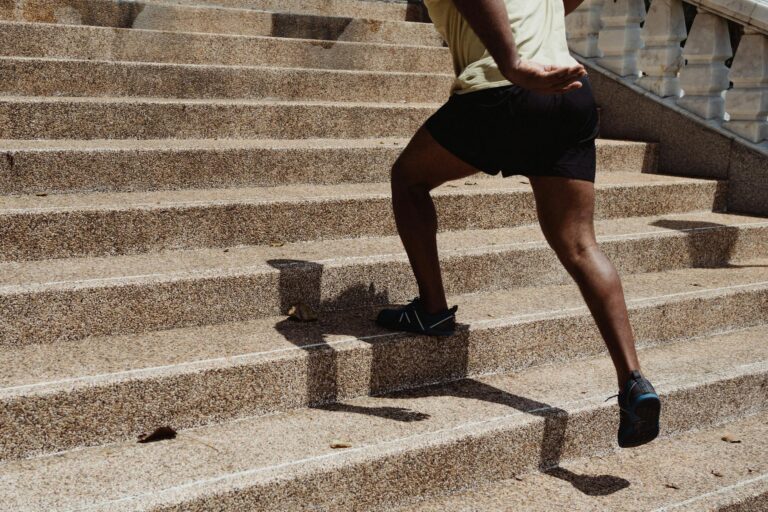
Bodyweight squats, calf raises, and step-ups are accessible movements that do not require a gym. The tradeoff here is time: adding two 20-minute strength sessions per week on top of regular walks demands more commitment, but the payoff extends beyond pace improvement into better balance, bone density, and joint stability. For someone in their 60s or 70s, strength work may actually deliver bigger pace gains than simply walking more, because the limiting factor is often muscular power rather than aerobic capacity. Technique adjustments also matter more than most people realize. Focusing on a longer stride by pushing off more forcefully through the back foot, keeping your posture upright, and driving your arms in a controlled swing can add 0.2 to 0.4 mph without any change in fitness level. The comparison is striking: a person walking with hands in their pockets and eyes on the ground versus the same person with an engaged arm swing and upright posture will clock measurably different speeds on the same route.
When a Slow Walking Pace May Signal a Health Problem
While a naturally slower pace is expected with aging, walking speed below certain thresholds has been identified as a clinical red flag. The commonly cited cutoff is 0.8 meters per second, which translates to about 1.8 mph. Adults of any age who walk slower than this pace on a flat surface, assuming they are not intentionally strolling, may be exhibiting signs of functional decline that merit investigation. Geriatricians use this benchmark frequently in clinical assessments, and some hospitals now measure gait speed as part of standard intake for patients over 65. The conditions linked to abnormally slow gait are varied and sometimes surprising. Peripheral neuropathy from diabetes can reduce foot sensation and make people walk cautiously. Early Parkinson’s disease often manifests as a shuffling, slower gait before tremors become obvious.
Depression and chronic pain both reduce walking speed independent of any musculoskeletal cause. The limitation of using pace as a diagnostic tool is that it is nonspecific. A slow pace tells you something is likely off but cannot tell you what. It is a screening indicator, not a diagnosis. One warning worth emphasizing is that people should not interpret these clinical thresholds as targets for casual walking. A 75-year-old who walks at 2.2 mph is well above the clinical concern line and should not feel pressured to hit 3.0 mph if that pace causes joint pain or leaves them breathless. The goal is to walk at a pace that feels moderately challenging but sustainable, known as a “conversational pace” because you should be able to speak in short sentences without gasping. Pushing beyond what your body can comfortably handle in pursuit of an arbitrary number increases the risk of falls and overuse injuries.

How Terrain, Footwear, and Weather Affect Your Walking Pace
Environmental factors can swing your pace by 15 to 25 percent in either direction, which is why comparing your Tuesday morning mall walk to your Saturday afternoon trail hike is not apples to apples. Walking on soft sand or grass is significantly slower than walking on pavement or a treadmill because your foot sinks slightly with each step, absorbing energy that would otherwise propel you forward. A 60-year-old who averages 3.0 mph on a paved greenway might clock only 2.3 mph on a packed-dirt trail with moderate elevation, and that difference has nothing to do with fitness.
Footwear matters more than most walkers appreciate. A study in the journal Gait and Posture found that older adults wearing unsupportive shoes, such as flat sandals or worn-out sneakers, walked measurably slower and with shorter strides than when wearing properly fitted walking shoes with arch support and cushioning. If you have not replaced your walking shoes in over 400 miles of use, the midsole compression alone may be costing you speed and increasing joint stress.
Walking Pace as a Lifelong Fitness Metric
The growing recognition of walking speed as a health marker is changing how both individuals and medical professionals think about fitness after 50. Wearable technology has made continuous pace tracking effortless, and several health systems are now incorporating gait speed into annual wellness visits alongside blood pressure and cholesterol. The trend points toward a future where your average walking speed appears on your health dashboard right next to your resting heart rate, giving you and your doctor one more objective data point to monitor over the years.
What makes walking pace uniquely valuable as a metric is that it is both diagnostic and actionable. Unlike many lab values that require medication to change, walking speed responds directly to exercise, strength training, and lifestyle adjustments. A 68-year-old who starts a structured walking and strength program today can realistically expect measurable pace improvements within two to three months. Few health indicators offer that combination of clinical significance and personal agency, which is why walking pace deserves more attention than it currently receives from most people tracking their fitness.
Conclusion
A good walking pace is not a single number but an age-adjusted range, from around 3.5 to 4.0 mph in your 20s and 30s down to 2.5 to 3.0 mph in your 70s and beyond. The natural decline is driven by well-understood biological changes in muscle, joints, and cardiovascular function, and it can be slowed significantly through regular walking, strength training, and attention to technique. Measuring your pace on a consistent route gives you a reliable baseline, and interval walking is one of the most evidence-backed methods for improvement regardless of your starting point. The most important takeaway is to know your number and track it over time.
A gradual, modest decline over the years is completely normal and should not cause alarm. A sudden, significant drop is worth mentioning to a healthcare provider. And if your pace is already in a good range for your age, the best thing you can do is keep walking consistently, because the strongest predictor of walking well at 75 is having walked regularly at 55, 60, and 65. Lace up, time yourself, and let the data guide you.