The most important thing to look for in a heart rate monitor is accuracy that matches your training style, and that starts with choosing the right sensor type. Chest strap monitors using electrocardiogram technology achieve 99.6% accuracy when worn correctly, making them the clear winner for serious runners and endurance athletes who need reliable zone data during intervals, tempo runs, and race efforts. Wrist-based optical sensors, while far more convenient, struggle during high-intensity exercise and activities that shake the wrists — running being one of the worst offenders for accuracy. If you are training by heart rate zones and making pacing decisions based on that data, the sensor type alone will shape your entire experience.
Beyond the sensor, you need to evaluate connectivity options, battery life, and whether the monitor supports the ecosystem you already use. A monitor with dual Bluetooth and ANT+ connectivity will pair with nearly every fitness app, treadmill, and cycling computer on the market, while a device locked to Bluetooth alone may leave you stranded at the gym. Price matters less than you might expect — the gold-standard Polar H10 chest strap costs just $90, and entry-level heart rate bands start around $50, putting reliable training data within reach for most runners. This guide walks through each monitor type in detail, compares the top-rated models available in 2026 with real prices and ratings, explains how heart rate zones work for training, and covers the accuracy pitfalls that catch runners off guard. Whether you are buying your first monitor or replacing one that has let you down during hard efforts, the information here will help you spend wisely.
Table of Contents
- What Type of Heart Rate Monitor Should Runners Actually Buy?
- Key Features That Separate a Good Monitor from a Frustrating One
- Top-Rated Heart Rate Monitors for Runners in 2026
- Understanding Heart Rate Zones and Why Your Monitor Choice Affects Training Quality
- Accuracy Problems That Catch Runners Off Guard
- Getting the Most from a Budget Heart Rate Monitor
- Where Heart Rate Monitoring Is Headed for Runners
- Conclusion
- Frequently Asked Questions
What Type of Heart Rate Monitor Should Runners Actually Buy?
There are three main categories, and each involves a genuine tradeoff. Chest strap monitors sit against your sternum and read the heart‘s electrical signals directly, the same principle behind a clinical ECG. That 99.6% accuracy figure is not marketing — it comes from peer-reviewed research published in PubMed Central confirming that commercial chest straps in athletes closely match clinical ECG readings. The downside is comfort. Some runners find the strap irritating on long runs, especially in hot weather when sweat loosens the band or causes chafing. If you have ever abandoned a chest strap mid-run because it slid down to your belly, you understand the complaint. Armband monitors, like the Wahoo TICKR FIT, split the difference.
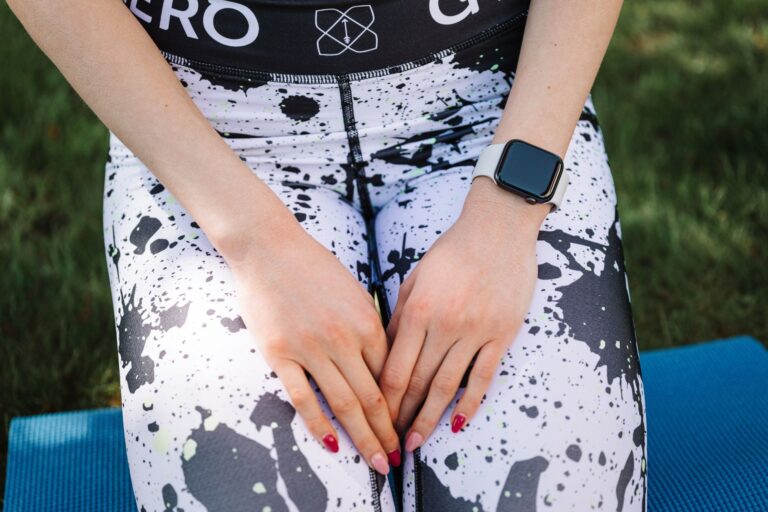
They use optical photoplethysmography sensors but place them on the upper arm where there is more muscle and less wrist movement, which delivers accuracy comparable to chest straps and significantly better than anything on your wrist. This is the category to consider if you genuinely cannot tolerate a chest strap but still want data you can trust during hard intervals. The limitation is that armbands are another thing to charge and strap on before a run, and they are less common, so your options are narrower. Wrist-based monitors — your smartwatch or fitness tracker — win on convenience because you are already wearing one. They use infrared light to sense your pulse through artery expansion, and for easy runs, daily step counts, resting heart rate tracking, and sleep analysis, they work well enough. However, the same PubMed Central research found that wrist-based optical sensors diverge significantly from ECG readings during rapid heart rate changes, exactly the moments when accurate data matters most. If you are doing threshold work or VO2max intervals and watching your wrist for real-time zone feedback, you may be training off bad numbers.

Key Features That Separate a Good Monitor from a Frustrating One
Dual connectivity — meaning both Bluetooth and ANT+ — is the single feature that prevents the most buyer’s remorse. Bluetooth pairs with your phone and most fitness apps. ANT+ connects to cycling computers, many gym treadmills, and Garmin devices. A monitor with only Bluetooth will work fine until the day you want to broadcast your heart rate to a Peloton bike or a friend’s cycling computer, and then you are stuck. Both the Polar H10 and Garmin HRM-Pro Plus support dual connectivity, and at this point there is no reason to buy a chest strap without it. Battery life matters more than spec sheets suggest, particularly for ultrarunners and Ironman athletes. Some chest straps can store up to 18 hours of data before syncing, which means you can run a 100-miler without worrying about losing your data midway through.
Wrist-based monitors, on the other hand, often need charging every few days depending on GPS usage, and if your watch dies at mile 60, you lose both your pace data and your heart rate data simultaneously. For marathon-distance and beyond, a dedicated chest strap with a coin-cell battery that lasts months is a genuinely safer bet than relying on your watch alone. Running dynamics — vertical oscillation, stride length, ground contact time — are available on premium chest straps like the Garmin HRM-Pro Plus and are worth understanding even if you do not need them today. These metrics help identify form breakdown during fatigue. If your ground contact time creeps up in the final miles of a marathon, that is concrete evidence you are losing efficiency, not just a vague feeling that your legs are heavy. However, if you do not coach yourself using biomechanical data or work with a coach who does, running dynamics are a feature you will check once and then ignore. Do not pay a premium for them unless you have a plan to actually use the data.
Top-Rated Heart Rate Monitors for Runners in 2026
The Polar H10, at $90, holds a perfect 5 out of 5 star rating for accuracy across multiple review outlets, and its readings closely match clinical ECG equipment. It is the monitor that coaches and exercise physiologists tend to recommend first because there is simply nothing to argue about — it works, it is accurate, and it connects to everything. The main complaint you will find is that, like all chest straps, it can feel uncomfortable until you find the right strap tightness. A dab of electrode gel or water on the sensor pads before you run solves most contact issues. The Garmin HRM-Pro Plus at $129.99, rated 4.5 out of 5 stars, is the better choice if you are already deep in the Garmin ecosystem. It feeds running dynamics directly to your Garmin watch, stores data when your watch is not nearby, and syncs it later.
The Garmin HRM 600 is another strong option within the Garmin lineup, earning recognition as a top pick for chest strap comfort and consistently stable data over years of use. For runners who already own a Garmin Forerunner or Fenix, staying in-ecosystem reduces friction and gives you better integration between your watch and your strap. On the wrist-based side, the Google Pixel Watch 4 has emerged as one of the most precise wrist monitors available, with readings that approach dedicated chest straps in controlled conditions. If you want a single device that handles notifications, music, GPS, and heart rate without wearing anything extra, it is a strong contender. For runners on a budget, the Fitbit Charge 6 at roughly $50 provides exercise, heart rate, and sleep tracking that covers the basics without a major investment. And for those who dislike chest straps but want better-than-wrist accuracy, the Wahoo TICKR FIT armband, rated 4 out of 5 stars for accuracy, fills that niche.

Understanding Heart Rate Zones and Why Your Monitor Choice Affects Training Quality
The American Heart Association defines target heart rate zones as percentages of your maximum heart rate, calculated as 220 minus your age. A 35-year-old runner has an estimated max of 185 beats per minute, which means their Zone 2 — the aerobic base-building zone most coaches emphasize — falls roughly between 96 and 111 bpm. There are five heart rate training zones in total, ranging from light activity in Zone 1 to maximum effort in Zone 5. Zones 2 and 3 are considered ideal for most people to improve overall fitness and cardiovascular health, balancing intensity with sustainability while reducing injury risk. Here is where monitor accuracy becomes a practical concern rather than an academic one. If your wrist-based sensor reads 8 to 12 beats per minute too high during an easy run — which is common during the arm-swinging motion of running — you might think you are in Zone 3 when you are actually in Zone 2.
Over weeks, that faulty feedback could lead you to slow down unnecessarily, undermining your aerobic development. Alternatively, if the sensor reads low during intervals, you might push harder than intended and accumulate more fatigue than your training plan calls for. A chest strap eliminates this guesswork. The tradeoff is that wrist monitors excel at tracking resting heart rate, which chest straps cannot easily provide since few people sleep in a chest strap. A lower resting heart rate typically indicates better cardiovascular fitness and more efficient heart function, while a higher resting heart rate is linked to lower fitness, higher blood pressure, and higher body weight, according to the Cleveland Clinic. Ideally, a runner would use a wrist device for 24/7 passive monitoring and a chest strap for workout accuracy. That is two devices, which is more hassle, but it gives you the most complete picture.
Accuracy Problems That Catch Runners Off Guard
The biggest accuracy gap with wrist-based monitors occurs precisely when you need good data the most — during high-intensity exercise with significant wrist movement. Running and mountain biking produce the least accurate wrist-based readings because the repetitive jarring motion disrupts the optical sensor’s ability to track blood flow through your skin. A tempo run at threshold pace, where knowing your exact heart rate determines whether you are in the right zone or drifting into anaerobic territory, is exactly the scenario where wrist sensors are least reliable. This is not a minor inconvenience for runners who train by heart rate; it is a fundamental limitation of the technology. Fit and skin contact also cause problems that are easy to overlook. A wrist monitor worn loosely will bounce during a run and return erratic readings.
Tattoos on the wrist can interfere with the optical sensor. Cold weather constricts blood vessels near the skin surface, reducing signal quality. Chest straps have their own fit issues — a dry sensor pad at the start of a run can produce wildly inaccurate readings for the first few minutes until sweat moistens the electrodes — but once they lock on, the data is stable. If you have ever seen your watch show 180 bpm during an easy warmup jog before suddenly dropping to a realistic 130, that initial spike was almost certainly a sensor artifact, not your actual heart rate. One warning worth emphasizing: no consumer heart rate monitor is a medical device. While newer wrist-based monitors offer features like irregular heart rhythm detection, recovery tracking, and sleep analysis, these tools provide health data that should prompt a conversation with your doctor rather than replace one. If your monitor flags an irregular rhythm, take it seriously — but take it to a cardiologist, not to a running forum.
Getting the Most from a Budget Heart Rate Monitor
You do not need to spend $130 to get useful training data. Entry-level heart rate bands start at around $50, and at that price point, the Fitbit Charge 6 delivers exercise tracking, continuous heart rate monitoring, and sleep analysis that covers the fundamentals for newer runners building an aerobic base. If you are still figuring out whether heart rate training is something you will stick with, a $50 wrist tracker paired with easy-run discipline gets you 80% of the benefit without the commitment of a chest strap setup. The key is understanding what that price buys you — reliable resting heart rate trends and decent easy-pace data — and what it does not — precision during hard efforts.
If you decide heart rate training matters to your goals, the upgrade path is straightforward. Add a Polar H10 chest strap for $90 and use it for workouts where accuracy counts: intervals, tempo runs, and races. Keep the wrist tracker for daily wear, sleep data, and recovery monitoring. That two-device approach costs under $150 total and covers every scenario better than any single device at any price.
Where Heart Rate Monitoring Is Headed for Runners
The gap between wrist and chest accuracy is narrowing, but it has not closed. The Google Pixel Watch 4 demonstrates that wrist-based technology is capable of matching chest strap precision under the right conditions, and sensor hardware improves with each generation. Features like 24/7 wearability that enable resting heart rate tracking and sleep analysis continue to push wrist monitors toward being comprehensive health tools rather than just workout accessories. For runners, the most meaningful near-term development is better accuracy during high-movement activities — the one area where wrist sensors still fall short.
What will not change is the underlying physics. Optical sensors reading light through skin will always be more susceptible to motion artifacts than electrodes reading electrical signals directly. For the foreseeable future, runners who want the best possible data during hard training sessions will reach for a chest strap, and runners who prioritize convenience and all-day health tracking will rely on their wrist. The good news is that both options are better and cheaper than they have ever been, and the decision is less about finding the right product and more about understanding what kind of data matters most for how you train.
Conclusion
Choosing a heart rate monitor comes down to three honest questions: how accurate do you need your data to be during hard efforts, how much discomfort will you tolerate for that accuracy, and whether you want all-day health tracking or workout-only data. Chest straps like the Polar H10 at $90 remain unmatched for workout accuracy at 99.6%, and they pair with everything through dual Bluetooth and ANT+ connectivity. Wrist monitors win on convenience and 24/7 wearability. Armbands like the Wahoo TICKR FIT occupy a sensible middle ground for runners who find chest straps uncomfortable but want better accuracy than their wrist can provide.
Start with the level of investment that matches your current commitment to heart rate training. A $50 fitness tracker is a reasonable entry point for exploring zone-based running. If you find yourself caring about the precision of your Zone 2 data or making race-day pacing decisions off heart rate, a chest strap is a $90 upgrade that will pay for itself in better training. Whichever route you choose, make sure the monitor supports dual connectivity, fits comfortably enough that you will actually wear it, and integrates with the apps and devices you already use. The best heart rate monitor is the one that gives you data you trust on every run.
Frequently Asked Questions
How accurate are wrist-based heart rate monitors compared to chest straps?
Chest strap monitors achieve approximately 99.6% accuracy using ECG technology, closely matching clinical readings confirmed by peer-reviewed research in PubMed Central. Wrist-based optical sensors are less accurate, especially during running and other high-intensity activities with significant wrist movement. The divergence is most pronounced during rapid heart rate changes like intervals and sprints.
Do I need both Bluetooth and ANT+ connectivity on my heart rate monitor?
Dual connectivity is strongly recommended. Bluetooth connects to phones and most fitness apps, while ANT+ pairs with cycling computers, gym equipment, and many Garmin devices. A monitor with only one protocol may not work with all the equipment you encounter. Both the Polar H10 and Garmin HRM-Pro Plus support dual connectivity.
What heart rate zone should I train in for general fitness?
Zones 2 and 3 are considered ideal for most people to improve cardiovascular health and overall fitness, according to research from University Hospitals and Houston Methodist. These zones balance intensity with sustainability and reduce injury risk. Your zones are based on percentages of your maximum heart rate, estimated as 220 minus your age per the American Heart Association.
How much should I spend on a heart rate monitor?
Entry-level heart rate bands start around $50, and the Fitbit Charge 6 falls in that range with solid basic features. The Polar H10 at $90 is widely considered the gold standard for accuracy. The Garmin HRM-Pro Plus at $129.99 adds running dynamics and deep Garmin integration. You do not need to spend more than $130 to get top-tier training data.
Why does my wrist heart rate monitor show wildly high readings at the start of a run?
This is a common optical sensor artifact caused by the monitor struggling to lock onto your pulse as your wrist moves and blood flow changes during warmup. It is not your actual heart rate. Wearing the watch snugly, slightly above the wrist bone, can help. Chest straps can have a similar issue when the sensor pads are dry — moistening them before starting typically resolves it within seconds.
Is a heart rate monitor worth it if I am a beginner runner?
Yes, even a basic wrist monitor provides useful data for beginners. Tracking resting heart rate over weeks shows your cardiovascular fitness improving, which is motivating. During easy runs, a monitor helps you stay slow enough to build aerobic fitness without overexerting — the most common beginner mistake. A lower resting heart rate over time is one of the clearest signs that your training is working.