
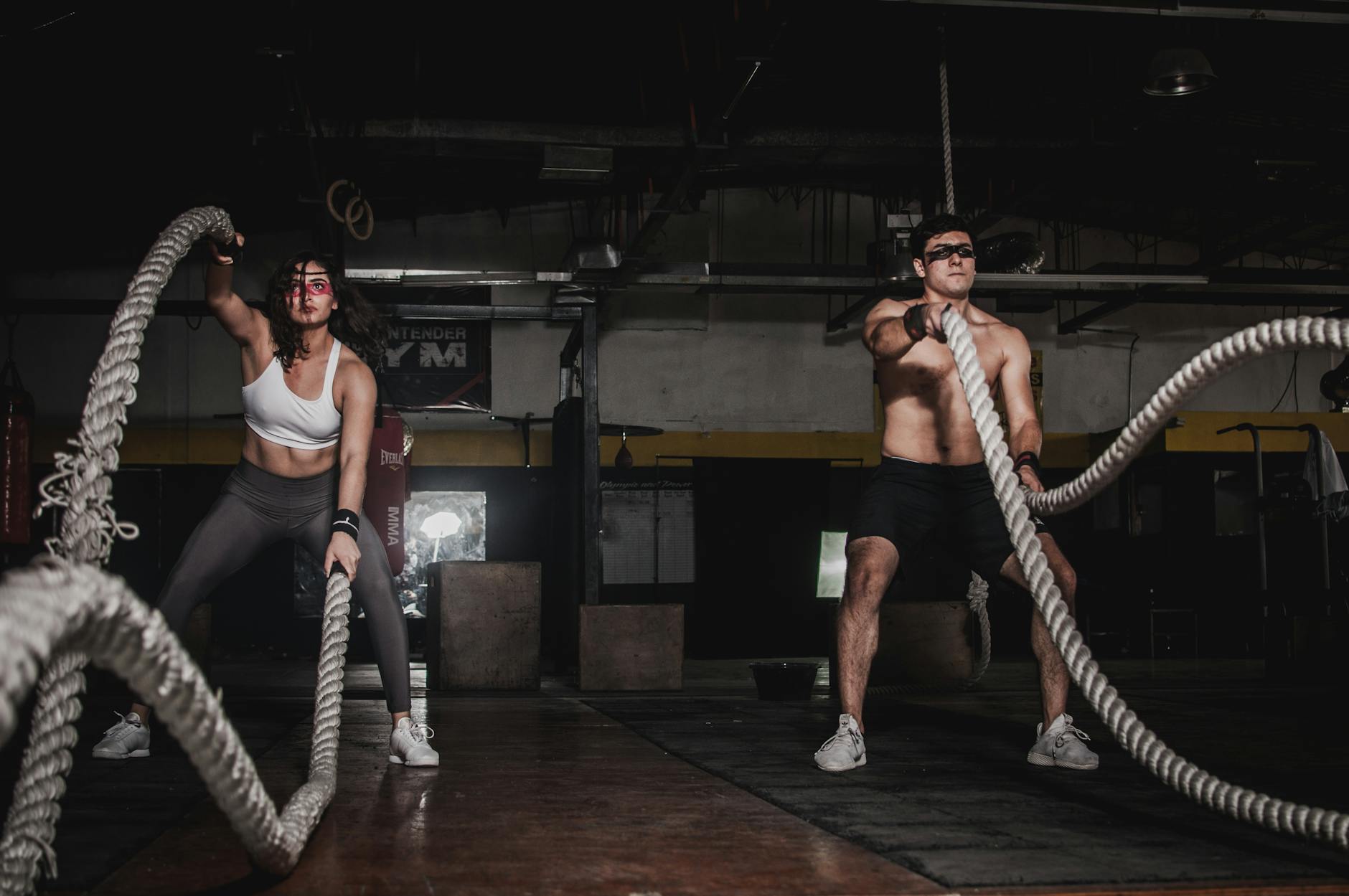
The best battle ropes workouts for beginners are alternating waves, double arm slams, and snakes — three movements that teach you the fundamental patterns while delivering a serious cardiovascular challenge. A beginner who commits to just two or three sessions per week, starting with five to eight minutes of rope work and building to ten or fifteen minutes over the first month, can expect to burn roughly 10.1 calories per minute according to ACE-sponsored research, which puts battle ropes squarely in the vigorous-intensity category. That means a focused 14-minute session torches about 140.9 calories, a rate that rivals sprinting without the joint impact.
What makes battle ropes particularly compelling for runners and cardio enthusiasts is that they train the upper body and core in a way that most traditional cardio neglects. Research shows battle rope exercise engages up to 90 percent of the body’s muscles, hitting shoulders, arms, upper back, core, quads, and glutes in a single workout. For someone whose training revolves around logging miles, that kind of full-body stimulus fills a gap that running alone never will. This article breaks down the specific exercises you should learn first, how to structure your initial sessions, what rope to buy, the most common form mistakes that slow beginners down, and how to integrate rope work into an existing running or cardio program without overtraining.
Table of Contents
- What Are the Best Battle Ropes Exercises for a Complete Beginner?
- How to Structure Your First Four Weeks of Battle Ropes Training
- Why Battle Ropes Build Strength, Not Just Cardio
- Choosing the Right Rope — Diameter, Length, and Material
- The Form Mistakes That Will Stall Your Progress
- Integrating Ropes Into a Running Program
- Where Battle Ropes Fit in the Bigger Picture
- Conclusion
- Frequently Asked Questions
What Are the Best Battle Ropes Exercises for a Complete Beginner?
If you have never touched a battle rope, start with alternating waves. Stand with feet shoulder-width apart, hold one end of the rope in each hand, and alternate pumping your arms up and down so the rope creates continuous ripples along the floor. This is the movement that builds your baseline conditioning and teaches you how to generate force from your hips rather than just your arms. Aim for 15 to 30 seconds of work followed by 30 to 45 seconds of rest, repeating for five to eight total rounds. That simple protocol is enough to spike your heart rate to around 148 beats per minute — roughly 79 percent of maximum heart rate for most adults — which ACE researchers confirmed qualifies as vigorous-intensity exercise. Once alternating waves feel manageable, add double arm slams. Raise both arms overhead and drive the ropes down into the floor as hard as you can.
This movement builds explosive power and hammers the core in a way that waves alone do not. According to data compiled by Fit Life Regime, power slams burn 50 to 100 percent more calories than standard waves, making them one of the most efficient movements you can perform with a rope. The tradeoff is fatigue: most beginners can only sustain slams for 10 to 15 seconds before form collapses, and that is perfectly fine. Short, high-quality sets beat long, sloppy ones every time. The third essential beginner exercise is snakes, sometimes called sidewinders. Instead of moving the ropes up and down, you sweep your arms side to side so the ropes create an S-shaped pattern along the ground. This variation targets the abs, shoulders, upper back, and traps from a different angle than waves or slams, and it tends to be slightly less taxing on grip strength, which is often the first thing to give out in a new trainee. Circular motions — moving the ropes in outward or inward circles for 30-second sets — round out a solid beginner repertoire and keep shoulder mobility in the picture.

How to Structure Your First Four Weeks of Battle Ropes Training
The biggest mistake beginners make is going too hard in the first session and then not touching the ropes again for two weeks because their forearms and shoulders are destroyed. A smarter approach is to follow the progression that Valor Fitness recommends: start with five to eight minutes of total rope work per session, training two to three times per week with at least one rest day between sessions. During weeks one and two, stick with alternating waves and snakes using a 15 seconds on, 45 seconds off ratio. During weeks three and four, add double arm slams into the rotation and tighten the rest periods to 30 seconds off. However, if you are already running four or five days a week, you need to be strategic about where rope sessions land in your schedule. Battle ropes tax the shoulders and core heavily, and accumulated upper-body fatigue can subtly wreck your running posture on long runs the next day.
A practical solution is to place rope sessions on your easy run days or cross-training days, treating them as a 10 to 15 minute finisher rather than a standalone workout. This keeps total training volume in check while still adding the upper-body conditioning that runners typically lack. One limitation worth noting: the work-to-rest ratios cited above assume you are using a standard 1.5-inch diameter rope. If your gym only has a thicker 2-inch rope, you will fatigue significantly faster and may need to cut work intervals down to 10 seconds and extend rest to a full minute. There is no shame in this. The thicker rope demands substantially more grip strength, and your cardiovascular system will still be working hard even with shorter intervals.
Why Battle Ropes Build Strength, Not Just Cardio
A common misconception is that battle ropes are purely a cardio tool. ACE research published in March 2023 directly contradicts this, confirming that battle ropes overload muscles enough to drive improvements in muscular strength, not just cardiovascular fitness. This dual benefit is unusual — most exercises fall clearly into either the strength or the cardio bucket, but ropes occupy both. For runners, this matters more than it might seem. The primary muscles targeted by battle rope work — shoulders, upper back, core, and glutes — are the same muscle groups responsible for maintaining efficient running form during the final miles of a long run or race.
A stronger core and upper back mean less postural collapse when you are fatigued, which translates to better breathing mechanics and more efficient stride. Think of rope work as an investment in the structural integrity that keeps your running economy from falling apart late in a workout. The afterburn effect adds another layer. According to Garage Gym Reviews, the excess post-exercise oxygen consumption from a battle ropes session can keep your metabolism elevated for up to 72 hours after the workout. This is comparable to the EPOC you get from hill sprints or heavy resistance training, and it means the caloric impact of a 10-minute rope session extends well beyond the session itself. Estimates suggest battle ropes can burn between 300 and 800 calories per hour depending on intensity, though beginners will realistically land on the lower end of that range.
Choosing the Right Rope — Diameter, Length, and Material
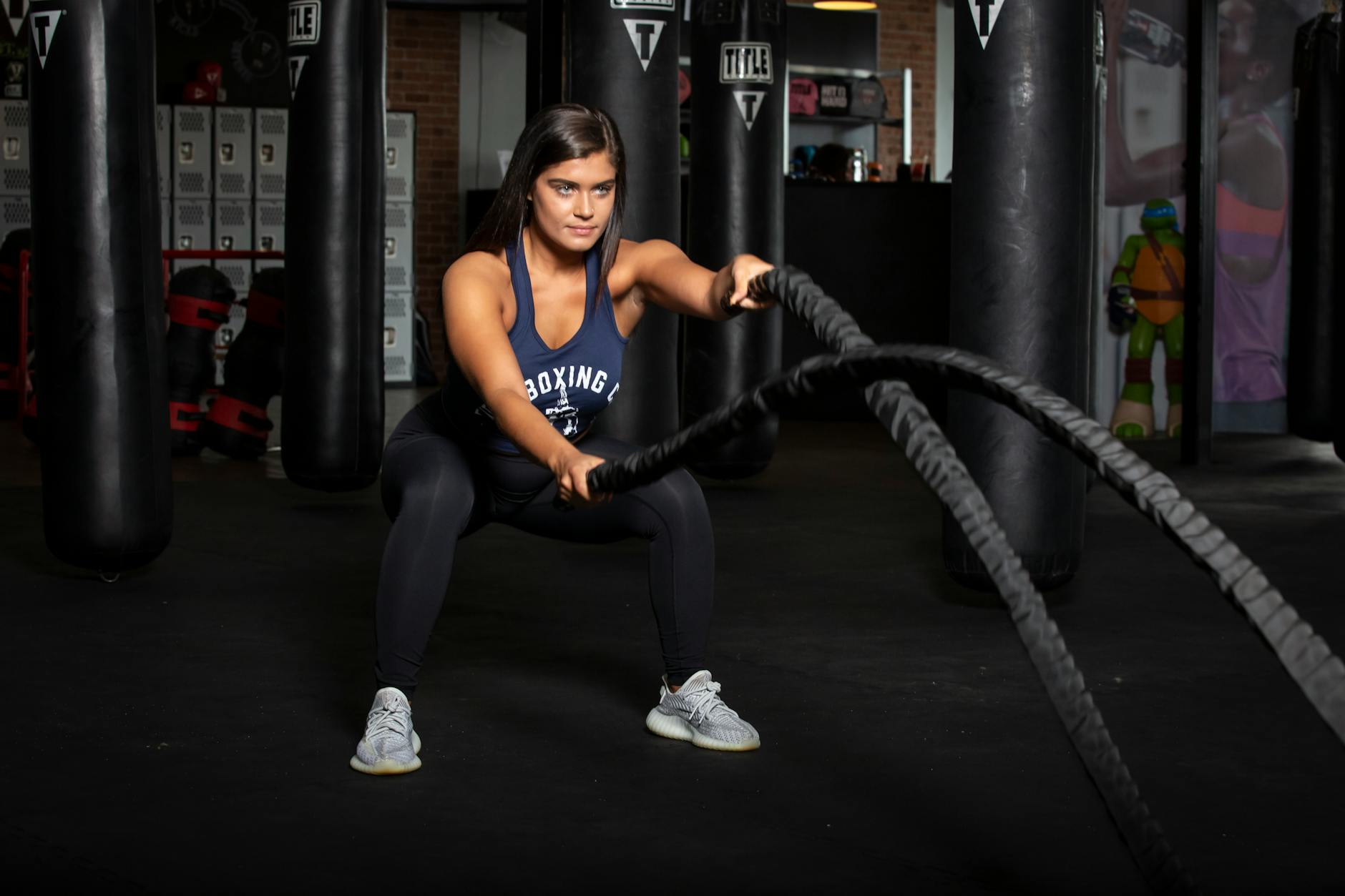
The first decision is diameter. Beginners should start with a 1.5-inch diameter rope, which is easier on grip and allows longer work intervals before forearm fatigue forces you to stop. A 2-inch diameter rope, according to BarBend’s 2026 testing roundup, fatigues the grip significantly faster and is better suited for intermediate and advanced users who have already built a baseline of forearm endurance. If you are choosing between the two and plan to use the rope primarily for cardio conditioning rather than grip-specific training, go with the thinner option. Length matters as well.
A 50-foot rope is the standard recommendation because it gives you enough slack for both single-rope and double-rope movements when anchored at the midpoint, leaving you holding two 25-foot sections. Shorter ropes — 30 or 40 feet — reduce the total weight you are moving and can be useful in tight spaces, but they also produce less resistance and a different wave pattern that some users find less satisfying. The tradeoff is straightforward: longer ropes are heavier and harder, shorter ropes are lighter and more forgiving, and 50 feet hits the sweet spot for most home and commercial gym setups. One advantage worth highlighting for runners specifically: battle ropes are low-impact on joints compared to running or jumping exercises, making them an accessible cross-training option even during recovery weeks or when managing minor lower-body niggles. Hyperwear’s research notes this low-impact quality as one of the primary reasons ropes work well for people who are already putting significant stress on their knees, ankles, and hips through other training.
The Form Mistakes That Will Stall Your Progress
The most common error is letting the core go slack. Every battle rope resource worth reading — from NASM to Living.Fit to DMoose — emphasizes the same point: keep your core engaged and tight throughout all movements. When your midsection disengages, the force you generate with your arms dissipates before it reaches the rope, the waves die out halfway down, and your lower back absorbs stress it should not be handling. If you find yourself unable to maintain core tension, that is a signal to end the set, not to push through with sloppy form. The second mistake is hunching forward and letting the neck crane. Maintain a straight back and neutral neck position throughout every exercise.
Beginners tend to round their shoulders and stare at the rope, which compresses the thoracic spine and restricts breathing — exactly the opposite of what you want during a high-intensity cardio effort. A useful cue is to keep your chest proud and your eyes on the anchor point rather than looking down at the rope in your hands. Speed is the third trap. NASM’s coaching guidelines specifically advise beginners to slow down initially and focus on smooth, controlled movement patterns before chasing speed. A beginner who whips the ropes as fast as possible for 10 seconds and then stands there gasping for 90 seconds gets less training stimulus than someone who maintains moderate, rhythmic waves for a full 30 seconds. The goal in the first few weeks is pattern quality, not raw intensity. Speed and power will come naturally as your coordination and conditioning improve.

Integrating Ropes Into a Running Program
Battle ropes work best for runners when used as a standalone HIIT session on a cross-training day or as a finisher tacked onto the end of a strength training workout. SET FOR SET recommends this flexible approach: use ropes as a dedicated 10 to 15 minute HIIT workout, a dynamic warm-up before lifting, or a metabolic finisher after your main strength work. For a runner doing three to four runs per week plus one or two strength sessions, adding five to eight minutes of rope work at the end of each strength day is the lowest-friction way to get started without overhauling your schedule.
A sample integration might look like this: after your normal strength circuit on Tuesday and Thursday, perform three rounds of 20 seconds alternating waves, 20 seconds double arm slams, and 20 seconds snakes, resting 40 seconds between rounds. Total time is under seven minutes. Within three to four weeks, progress to four or five rounds and tighten rest to 30 seconds. This small addition delivers meaningful upper-body conditioning and cardiovascular stimulus without adding another standalone workout day to an already full calendar.
Where Battle Ropes Fit in the Bigger Picture
Battle ropes have moved from a niche tool used mostly by combat sport athletes to a staple in general fitness programming, and the research backing their effectiveness continues to grow. The ACE studies from 2020 and 2023 established a solid evidence base for both caloric expenditure and strength adaptation, which puts ropes on firmer scientific ground than many other trending fitness tools. For runners and cardio-focused athletes, ropes fill a specific gap: high-intensity, low-impact, upper-body-dominant conditioning that complements rather than competes with mileage.
The practical reality is that battle ropes are simple, durable, and require almost no learning curve to start using safely. Unlike Olympic lifts or gymnastics movements, where poor form creates real injury risk, the worst thing that happens with bad rope technique is that your waves look ugly and you get tired faster. That low barrier to entry, combined with the research-backed intensity and full-body muscle engagement, makes battle ropes one of the most efficient cross-training tools available to runners who are willing to spend 10 minutes a few times per week doing something other than running.
Conclusion
The path into battle ropes training is straightforward: learn alternating waves, double arm slams, and snakes. Start with five to eight minutes per session, two to three times per week, using a 1.5-inch diameter, 50-foot rope. Focus on keeping your core tight, your back straight, and your movements controlled before you chase speed or volume.
Within a month, you will have enough conditioning to push into longer sessions and shorter rest periods, and you will likely notice that your upper body and core feel more resilient during hard runs. Battle ropes are not a replacement for running, strength training, or any other cornerstone of your fitness program. They are a supplement — a brutally efficient one that burns over 10 calories per minute, engages 90 percent of your muscles, and asks for less than 15 minutes of your time. For runners looking to build the upper-body endurance and core stability that long miles demand, few tools deliver this much return on this little time investment.
Frequently Asked Questions
How many calories do battle ropes burn per session?
ACE-sponsored research found that battle rope exercise burns an average of 10.1 calories per minute. A 14-minute session burns approximately 140.9 calories. Estimates for a full hour range from 300 to 800 calories depending on intensity, with power slams burning 50 to 100 percent more than standard waves.
Are battle ropes bad for your joints?
No. Battle ropes are low-impact on joints compared to running or jumping, which makes them a strong cross-training option for runners managing knee, ankle, or hip issues. The stress is primarily on the muscles of the upper body and core rather than the skeletal structure of the lower body.
How long should a beginner battle ropes workout last?
Start with five to eight minutes of total rope work per session. Over three to four weeks, build up to 10 to 15 minutes. Work intervals should be 15 to 30 seconds with 30 to 45 seconds of rest between sets.
What size battle rope should a beginner buy?
A 1.5-inch diameter, 50-foot rope is the standard beginner recommendation. The thinner diameter is easier on grip and allows longer work intervals. A 2-inch rope fatigues the forearms faster and is better suited for intermediate and advanced users.
Can I use battle ropes every day?
It is not recommended. Two to three sessions per week with at least one rest day between sessions allows adequate recovery. Battle ropes are vigorous-intensity exercise that overloads muscles enough to drive strength adaptations, meaning your body needs time to repair and adapt.
1 thought on “The Best Battle Ropes Workouts for Beginners”
Comments are closed.