
A typical 60-minute Zumba class burns between 400 and 550 calories for most participants, making it one of the more effective group fitness options for cardiovascular conditioning and energy expenditure. For a person weighing around 155 pounds, that number lands closer to 470–500 calories per session, which is roughly comparable to a moderate-paced jog or a vigorous cycling class. If you have been told that Zumba torches 1,000 calories an hour, that claim is not supported by exercise science research, and we will address why that myth persists later in this article. The actual number of calories you burn in any Zumba class depends on several individual factors, including your body weight, workout intensity, age, fitness level, and which Zumba format you are taking.
A 130-pound woman following along at moderate effort will have a very different calorie output than a 200-pound man going full intensity in a Zumba High-Intensity class. This article breaks down the calorie burn across different Zumba formats, explains the science behind how those numbers are calculated, identifies what you can do to maximize your burn, and separates the real data from the marketing hype. Beyond the raw calorie numbers, understanding how Zumba compares to other cardio workouts can help you decide whether it deserves a regular spot in your fitness routine. We will look at the MET values behind the estimates, compare Zumba to running and other popular cardio options, and give you practical strategies for getting the most out of every class.
Table of Contents
- How Many Calories Does a 60-Minute Zumba Class Really Burn by Body Weight?
- Zumba Formats and Their Different Calorie Outputs
- Understanding MET Values and the Science Behind the Estimates
- How to Maximize Your Calorie Burn During Zumba
- Debunking the 1,000-Calorie Zumba Myth
- How Zumba Compares to Running and Other Cardio Workouts
- Making Zumba Part of a Balanced Fitness Routine
- Conclusion
How Many Calories Does a 60-Minute Zumba Class Really Burn by Body Weight?
calorie burn during exercise is not a fixed number. It scales primarily with body weight, because a heavier body requires more energy to move through the same dance sequences. Women weighing between 120 and 170 pounds can expect to burn roughly 350 to 650 calories per hour at full intensity, with most landing somewhere in the middle of that range. A 140-pound participant working hard through the full hour might burn around 420 calories, while someone at 170 pounds performing the same routine could clear 550 or more. These are not trivial differences, and they explain why the person next to you in class may be getting a substantially different workout even though you are doing the same choreography. For context, consider two people attending the same Tuesday evening Zumba class at their local gym. One weighs 130 pounds and has been attending for six months, meaning her body has adapted somewhat to the movement patterns.
She might burn around 380 calories. Her friend, who weighs 165 pounds and is relatively new to the class, could burn upward of 520 calories doing the same routines simply because her body is working harder to keep up and is carrying more mass through each movement. Neither person is doing anything wrong. The physics of energy expenditure just favor larger bodies when it comes to raw calorie numbers. It is also worth noting that these estimates assume you are actually working at a vigorous level for most of the class. Many participants, especially beginners, spend portions of the hour learning choreography, taking water breaks, or scaling down movements they find too challenging. A realistic first-class calorie burn could be 20 to 30 percent lower than what experienced participants achieve, which is completely normal and not a reason to be discouraged.

Zumba Formats and Their Different Calorie Outputs
Not all Zumba classes are created equal, and the format you choose has a measurable impact on how many calories you burn. Standard Zumba, the most widely offered format, typically produces a burn in the range of 400 to 550 calories per 60-minute session. This version blends Latin-inspired dance moves with aerobic intervals and is designed for general adult fitness. It is the baseline against which other formats are measured. Zumba Gold is a lower-impact version designed primarily for older adults, beginners, or anyone returning to exercise after a long break. Because the movements are less intense and the pace is more moderate, a 60-minute Zumba Gold class burns approximately 300 to 350 calories.
That is still a solid workout, particularly for populations that may not tolerate high-impact movement, but it is noticeably less than the standard version. However, if you are an older adult or someone managing joint issues, Zumba Gold may allow you to exercise consistently without injury, which matters far more for long-term health than squeezing out an extra 100 calories per session. On the higher end, Zumba Toning and high-intensity Zumba formats push the calorie burn to roughly 550 to 600 calories per hour for a 70-kilogram person. These classes incorporate resistance elements like toning sticks or add more explosive movements such as jump squats and high knees between dance sequences. The tradeoff is that these formats are significantly more demanding and carry a higher risk of overuse injuries if your form breaks down as you fatigue. If you are not yet comfortable with standard Zumba choreography, jumping straight into a high-intensity format is likely to produce frustration rather than results.
Understanding MET Values and the Science Behind the Estimates
The calorie estimates for Zumba are not pulled from thin air. They are derived from a measurement called MET, or Metabolic Equivalent of Task, which quantifies the energy cost of physical activities relative to rest. Zumba has an estimated MET value of approximately 6.5 to 8.0, which classifies it as a vigorous-intensity aerobic activity. For comparison, walking at a brisk pace carries a MET value around 3.5 to 4.0, while running at six miles per hour sits around 9.8. The formula for estimating calorie burn using MET values is straightforward. You multiply the MET value by your body weight in kilograms and by the duration of the activity in hours.
For a 70-kilogram person performing Zumba at a MET of 7.0 for one hour, the calculation would be 7.0 times 70 times 1, yielding 490 calories. This aligns closely with the commonly cited range of 470 to 500 calories for a person of that weight. The formula gives you a useful approximation, but it does not account for individual variations in cardiovascular efficiency, muscle mass, or how closely you follow the choreography. One important limitation of MET-based calculations is that they assume a steady intensity throughout the activity. Zumba classes are inherently interval-based, alternating between high-energy dance segments and lower-intensity cool-down or transition periods. Your actual calorie burn during the intense segments may be substantially higher than the average MET value suggests, while the recovery periods bring the average down. A heart rate monitor provides a more personalized and accurate picture of your specific energy expenditure than any formula can.
How to Maximize Your Calorie Burn During Zumba
If your goal is to push your calorie burn toward the higher end of the 400-to-550 range, the single most important factor is intensity. This means committing to full range of motion on every movement, keeping your feet off the ground during jump sequences, and engaging your arms with deliberate force rather than letting them drift passively through the choreography. The difference between going through the motions and actually pushing yourself can easily account for 100 or more calories over the course of an hour. Positioning yourself near the front of the class, where you can clearly see the instructor and feel a degree of social accountability, tends to produce higher effort levels than hiding in the back corner. Wearing a heart rate monitor also provides real-time feedback that can motivate you to push harder during intervals and confirm that you are actually reaching vigorous-intensity heart rate zones.
Aim to spend the majority of the class at 70 to 85 percent of your maximum heart rate, which for most adults falls between 130 and 165 beats per minute. There is a tradeoff worth acknowledging here. Pushing for maximum calorie burn every single session increases your risk of burnout and overtraining. Zumba is effective partly because people enjoy it and stick with it long-term. If you turn every class into a grueling, red-line effort, you may find yourself dreading it within a month. A practical approach is to go hard two or three times per week and treat other sessions as moderate-effort days where you focus on learning choreography and simply enjoying the movement.
Debunking the 1,000-Calorie Zumba Myth
One of the most persistent claims in group fitness marketing is that Zumba burns 1,000 calories per hour. This number appears frequently on social media, in promotional materials, and in enthusiastic testimonials from participants. According to Fitness Blender, these claims are exaggerated and not supported by research. Realistic estimates for most people fall in the 400-to-600 calorie range, and reaching 1,000 calories in a single hour of dance-based exercise would require a level of sustained intensity that is simply not achievable for the vast majority of exercisers. To burn 1,000 calories in one hour, a 155-pound person would need to sustain activity at a MET value of roughly 13 to 14 for the entire 60 minutes.
That is equivalent to running at a seven-and-a-half-minute-mile pace nonstop for an hour, which is a pace that most recreational runners cannot maintain, let alone someone performing dance choreography with built-in rest periods. Even elite athletes in the most demanding sports rarely sustain that level of energy output for a full hour. The danger of the 1,000-calorie myth is not just that it is inaccurate. It can lead people to overestimate their calorie expenditure and then overeat in response, undermining their weight management goals. If you believe your Zumba class burned 1,000 calories and reward yourself with a 600-calorie post-workout meal, you are operating at a much smaller deficit than you think, or possibly no deficit at all. Use the evidence-based range of 400 to 550 calories as your working estimate, and adjust from there based on your body weight and effort level.
How Zumba Compares to Running and Other Cardio Workouts
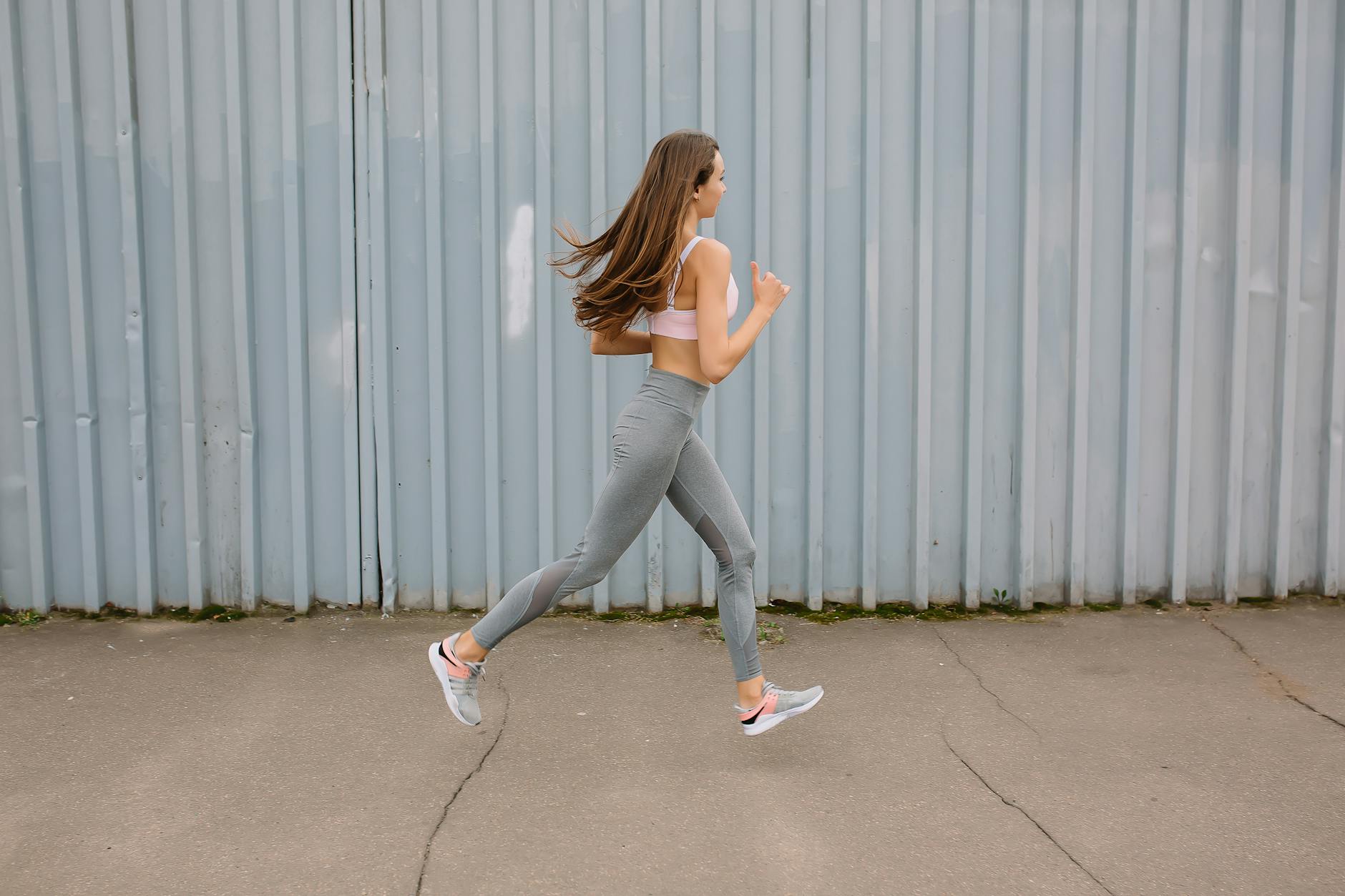
For readers of a running and cardiovascular fitness site, the natural question is how Zumba stacks up against other cardio options. Running at a moderate pace of five miles per hour burns approximately 480 to 560 calories per hour for a 155-pound person, which places it in a similar range to standard Zumba. However, running at a faster pace pulls ahead quickly, with a six-mile-per-hour run clearing 600 to 700 calories for the same person. Cycling at a vigorous pace, swimming laps, and rowing all fall in comparable ranges depending on intensity.
Where Zumba holds a genuine advantage is adherence. Research consistently shows that people are more likely to stick with exercise they enjoy, and the social, music-driven environment of a Zumba class keeps many people coming back who would otherwise abandon a solo treadmill routine within weeks. A workout that burns 450 calories and gets done three times a week beats a 700-calorie run that happens once before the habit fades. If you find running monotonous or hard on your joints, Zumba offers a legitimate alternative that delivers comparable calorie burn with lower impact and higher enjoyment for many people.
Making Zumba Part of a Balanced Fitness Routine
Zumba works best not as a standalone fitness program but as one component of a well-rounded routine. It delivers strong cardiovascular conditioning and meaningful calorie expenditure, but it does not provide the resistance training stimulus needed to build or maintain muscle mass, nor does it develop the specific muscular endurance required for activities like distance running or cycling. Pairing two to three Zumba classes per week with two days of strength training and one longer-duration cardio session creates a balanced program that covers all the major bases.
Looking forward, the continued expansion of Zumba formats, including virtual classes and hybrid models that blend dance with functional training, means there are more options than ever for fitting this style of workout into your schedule. The key is to approach it with realistic expectations about calorie burn, use the 400-to-550 range as your baseline, and focus on consistency over intensity. The best calorie-burning workout is the one you actually do week after week.
Conclusion
A 60-minute Zumba class burns between 400 and 550 calories for most people, with the exact number depending on your body weight, the specific format, and how hard you push during the session. Zumba Gold sits at the lower end around 300 to 350 calories, standard Zumba occupies the middle at 400 to 550, and high-intensity formats can reach 550 to 600 calories for a 70-kilogram person. Claims of 1,000-calorie burns are marketing exaggeration, not science.
If you are deciding whether to add Zumba to your cardio rotation, the calorie numbers support it as a legitimate vigorous-intensity workout that competes with moderate-pace running and other popular options. Track your effort with a heart rate monitor for personalized data, choose the format that matches your fitness level, and prioritize showing up consistently over chasing maximum burn in any single session. The calories will add up over time.
1 thought on “How Many Calories Does a 60 Minute Zumba Class Burn?”
Comments are closed.