A 20-minute Zumba workout burns roughly 190 calories at average intensity, according to research commissioned by the American Council on Exercise. That figure comes from a study in which participants averaged 9.5 calories per minute during Zumba sessions, putting a 20-minute block right around that 190-calorie mark. For context, that is comparable to what many people burn during a moderate-paced 20-minute run, which makes Zumba a surprisingly efficient option for those who find traditional cardio monotonous. A 160-pound person dancing through a high-energy Zumba segment, for instance, could push that number well above 200 calories if the intensity stays elevated throughout the session.
The actual range is wider than a single average suggests. Depending on your body weight, effort level, and fitness background, you might burn as few as 120 calories or as many as 400 calories in the same 20-minute window. The low end applies to lighter individuals working at a moderate pace, while the high end reflects heavier participants going all out at an intensity where holding a conversation becomes impossible. This article breaks down how those numbers are calculated, what variables shift the calorie count up or down, how Zumba compares to other popular cardio formats, and what you can do to get the most out of a short session.
Table of Contents
- How Many Calories Does a 20-Minute Zumba Workout Actually Burn?
- Why Calorie Burn Varies So Much Between Zumba Participants
- The Interval Training Effect That Makes Zumba Efficient
- How Zumba Stacks Up Against Other Cardio Workouts in 20 Minutes
- Common Mistakes That Reduce Your Zumba Calorie Burn
- Using the MET Formula to Estimate Your Personal Calorie Burn
- Making the Most of a Short Zumba Session for Cardiovascular Fitness
- Conclusion
- Frequently Asked Questions
How Many Calories Does a 20-Minute Zumba Workout Actually Burn?
The most cited research on Zumba calorie expenditure comes from a study led by Mary Luettgen, M.S., and commissioned by the American Council on Exercise. The study monitored 19 healthy female participants between the ages of 18 and 22 across class lengths ranging from 32 to 52 minutes, using heart-rate monitors to track exertion. The results showed an average calorie burn of 9.5 calories per minute. Extrapolated to a 20-minute session, that lands at approximately 190 calories, though the participants were young and presumably active, which means results for a broader population may vary. A commonly referenced benchmark is roughly 95 calories per 10 minutes, which aligns neatly with the ACE data.
However, this number assumes you are actually dancing at a consistent, moderate-to-vigorous effort level for the full duration. If you spend part of the session learning choreography, adjusting your positioning, or taking water breaks, your effective working time drops and the calorie total drops with it. A person who genuinely pushes through all 20 minutes without significant rest will sit closer to that 190-calorie average, while someone easing in might land around 120 to 150 calories. For a rough comparison, consider that 190 calories in 20 minutes is what a 155-pound person would burn jogging at about a 12-minute-per-mile pace for the same duration. The difference is that Zumba achieves this through variable movement patterns rather than sustained, repetitive motion, which has implications for both joint stress and metabolic response.
Why Calorie Burn Varies So Much Between Zumba Participants
The range of 120 to 400 calories for a 20-minute Zumba session is broad, and that spread exists because calorie expenditure is deeply personal. Body weight is the single largest variable. A 200-pound person performing the same choreography at the same intensity as a 130-pound person will burn significantly more calories because moving a larger mass requires more energy. Age plays a role as well. Metabolic rate tends to decline with age, which means a 50-year-old will generally burn fewer calories per minute than a 22-year-old at similar effort levels, all else being equal. Fitness level creates a paradox that is worth understanding.
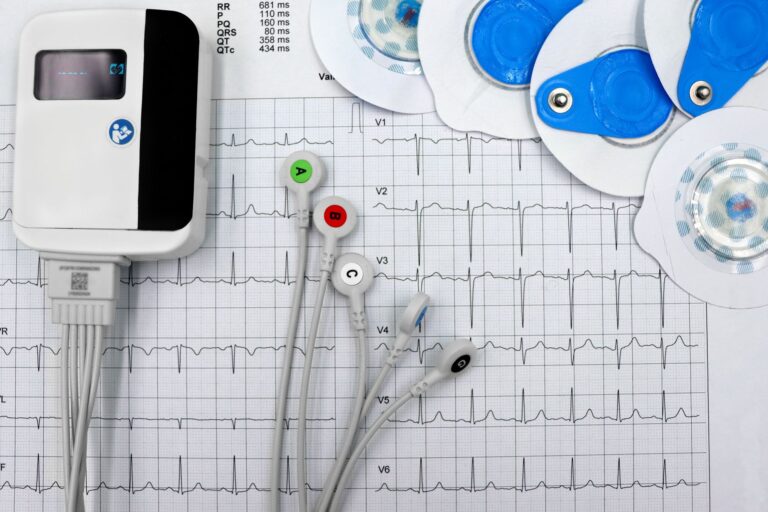
Beginners often have higher heart rates during Zumba because the movements are unfamiliar and the cardiovascular system is less conditioned. That elevated heart rate might suggest a higher calorie burn on a wrist tracker, but it can also reflect inefficiency rather than true work output. Conversely, a well-conditioned participant may have a lower heart rate but could be producing more power and covering more ground with each movement. Heart-rate-based calorie estimates, while useful, are imperfect for this reason. However, if you are relying solely on a fitness tracker or smartwatch to gauge your burn, be cautious. Wrist-based optical heart-rate monitors can overestimate calorie expenditure during dance-based activities by 15 to 30 percent because the arm movements in Zumba can interfere with accurate pulse readings. A chest strap monitor will give you a more reliable number if precision matters to you.
The Interval Training Effect That Makes Zumba Efficient
One of the more interesting findings from the ACE study is that Zumba’s heart-rate profile resembles interval training rather than steady-state cardio. Lead researcher Mary Luettgen noted that participants’ heart rates fluctuated throughout the class, spiking during high-energy Latin dance segments and dipping during transitions or slower rhythms. This pattern mirrors the structure of high-intensity interval training, which research has consistently shown to burn more calories than steady-state exercises like jogging at a fixed pace. This matters because interval-style training produces what is sometimes called excess post-exercise oxygen consumption, or EPOC. After a session that includes repeated spikes in heart rate, the body continues burning calories at an elevated rate during recovery.
While the EPOC effect from a 20-minute Zumba session will be modest compared to a dedicated HIIT workout, it does mean the total caloric impact extends slightly beyond the session itself. A person who burns 190 calories during the workout might see an additional 10 to 20 calories burned in the hour afterward as the body returns to baseline. For a specific example, imagine a Zumba segment that alternates between a fast merengue track and a slower cumbia. During the merengue, your heart rate might climb to 80 or 85 percent of maximum, then drop to 65 percent during the cumbia. That oscillation is what creates the interval effect, and it is one reason Zumba can deliver a meaningful calorie burn in a relatively short time frame.
How Zumba Stacks Up Against Other Cardio Workouts in 20 Minutes
According to ACE research, Zumba burns more calories per minute than kickboxing, step aerobics, and power yoga. That ranking may surprise people who associate higher calorie burns with more traditionally grueling workouts, but the combination of continuous movement, large muscle group recruitment, and variable intensity gives Zumba an edge over formats that involve more static holds or predictable pacing. In practical terms, here is what 20 minutes of various activities looks like for a person of average weight at moderate-to-vigorous intensity: Zumba sits around 190 calories, while step aerobics typically falls in the 150 to 170 range, and power yoga comes in around 90 to 120 calories. Running at a brisk pace can match or exceed Zumba, but it places substantially more repetitive stress on the knees, hips, and ankles.
Cycling at moderate effort lands in a similar range to Zumba but without the upper-body engagement that dance movements provide. The tradeoff with Zumba is specificity. If your goal is to improve running performance, Zumba is a complement, not a replacement. It builds general cardiovascular fitness and can improve coordination and lateral movement, but it does not replicate the neuromuscular demands of running. For pure calorie burn in a time-limited window, though, Zumba is competitive with nearly any popular cardio format.
Common Mistakes That Reduce Your Zumba Calorie Burn
The biggest factor that undermines calorie expenditure in Zumba is participation level, and it is often underestimated. Standing toward the back of a class and performing half-range movements while watching the instructor can cut your effective calorie burn by 30 to 50 percent compared to someone fully committing to each motion. The ACE study’s 9.5-calorie-per-minute average was measured in participants who were actively engaged throughout the session. If you are going through the motions without genuine effort, expect results closer to the low end of the 120-calorie floor. Another common issue is overestimating calorie burn based on perceived exertion alone.
Zumba feels hard partly because it is unfamiliar and engaging, which can create a sense of intense effort even when the actual metabolic demand is moderate. This psychological effect is not a problem in itself, but it becomes one when people use inflated calorie estimates to justify excessive post-workout eating. A 20-minute session at moderate intensity does not create a caloric deficit large enough to offset, say, a 500-calorie smoothie. It is also worth noting that the MET value for Zumba is generally estimated at 7.0 to 8.0, classifying it as a vigorous-intensity activity. But that MET value assumes full effort. Performing Zumba at a casual pace drops the effective MET closer to 4.0 or 5.0, which is moderate-intensity territory and closer to a brisk walk than a vigorous workout.
Using the MET Formula to Estimate Your Personal Calorie Burn
If you want a more personalized estimate than a general range, the MET formula offers a reasonable approximation. The calculation is straightforward: calories burned per minute equals the MET value multiplied by your body weight in kilograms, divided by 200. For Zumba at vigorous intensity with a MET of 7.5, a 70-kilogram person (about 154 pounds) would burn approximately 2.6 calories per minute, or 52.5 calories in 20 minutes. That seems low compared to the ACE data, and the discrepancy exists because the standard MET formula tends to be conservative and does not account for the interval-like spikes that elevate calorie burn during actual Zumba sessions.
A more practical approach is to use the ACE benchmark of 9.5 calories per minute as your starting point and adjust from there. If you weigh more than the study’s average participant, add 10 to 20 percent. If you weigh less or work at lower intensity, subtract accordingly. This gives you a working estimate in the 150 to 250 calorie range for most adults during a 20-minute session.
Making the Most of a Short Zumba Session for Cardiovascular Fitness
Twenty minutes is enough time to produce a meaningful cardiovascular training stimulus, provided the intensity stays elevated. For runners and endurance athletes using Zumba as cross-training, the key benefit is not just the calorie burn but the variety of movement planes. Running is almost entirely sagittal, meaning forward and backward.
Zumba incorporates lateral shuffles, rotational hip movements, and arm patterns that challenge stability muscles often neglected in linear sports. Looking ahead, the trend toward shorter, higher-intensity workout formats plays in Zumba’s favor. As more research examines the physiological effects of dance-based interval training, we are likely to see more granular data on how different Zumba formats, including aqua Zumba and Zumba toning, compare in terms of calorie expenditure and cardiovascular adaptation. For now, the existing ACE data gives us a reliable baseline: 20 minutes of committed Zumba burns roughly as many calories as a moderate run of the same duration, with the added benefits of coordination training and what many people find to be a far more enjoyable experience.
Conclusion
A 20-minute Zumba workout burns approximately 190 calories at average intensity, based on ACE-commissioned research showing a rate of 9.5 calories per minute. That number can range from around 120 calories at low-to-moderate effort to as high as 400 calories for heavier individuals working at maximum intensity. The interval-like heart-rate pattern of Zumba contributes to its efficiency, and the format compares favorably to kickboxing, step aerobics, and power yoga in terms of per-minute calorie expenditure.
The most important variable is not the workout itself but how you approach it. Full participation, genuine effort, and consistent intensity are what separate a 120-calorie session from a 250-calorie session. If you are using Zumba as part of a broader cardiovascular fitness or weight management plan, treat it as you would any other training tool: track your effort honestly, pair it with appropriate nutrition, and recognize that the calorie numbers are estimates, not guarantees. For a 20-minute investment of time, Zumba delivers a legitimate cardiovascular stimulus that holds its own against more traditional forms of cardio.
Frequently Asked Questions
Is 20 minutes of Zumba enough to lose weight?
Twenty minutes of Zumba alone is unlikely to produce significant weight loss unless combined with dietary changes. Burning 190 calories per session adds up over time, but meaningful fat loss requires a sustained caloric deficit. Three 20-minute Zumba sessions per week would burn roughly 570 additional calories, which amounts to less than a sixth of a pound of fat. It is a useful piece of a larger strategy, not a standalone solution.
Does Zumba burn more calories than running?
It depends on the running pace. At a moderate jogging pace of about 12 minutes per mile, the calorie burn is roughly equivalent to Zumba at average intensity, both landing near 190 calories in 20 minutes. At faster running speeds, running pulls ahead. Zumba’s advantage is that many people sustain effort more easily because the music and choreography provide distraction from fatigue.
How accurate are fitness trackers for measuring Zumba calorie burn?
Wrist-based fitness trackers can overestimate Zumba calorie burn by 15 to 30 percent because arm movements during dance routines interfere with optical heart-rate sensors. Chest strap monitors provide more reliable readings. If you are using a wrist tracker, consider reducing its reported calorie number by about 20 percent for a more realistic estimate.
What is the MET value for Zumba?
Zumba’s MET value is generally estimated at 7.0 to 8.0, which classifies it as a vigorous-intensity activity. For comparison, brisk walking is around 3.5 to 4.0 METs, and running at a 10-minute-per-mile pace is approximately 9.8 METs. The MET value assumes active participation at full effort; casual participation would drop the effective MET to 4.0 to 5.0.
Can beginners burn as many calories as experienced Zumba participants?
Beginners often show higher heart rates during Zumba because their cardiovascular systems are less conditioned and the movements are unfamiliar. This can result in comparable or even higher calorie-burn readings on a heart-rate monitor, but some of that elevated heart rate reflects inefficiency rather than productive work. Over time, as technique improves, the calorie burn per session may actually decrease slightly even as fitness gains increase.