The best spinning workout for fat loss is a HIIT-based indoor cycling session lasting 20 to 45 minutes, built around short all-out sprints followed by active recovery intervals. This format consistently outperforms steady-state cycling for burning calories and reducing body fat, largely because of how it elevates your metabolism both during and after the workout. A 30-minute HIIT cycling session burns up to 30 percent more calories than 30 minutes of steady-state running or cycling at a constant pace, according to data from Studio Three. For someone weighing 155 pounds, a vigorous 30-minute ride burns roughly 260 to 298 calories based on Harvard Medical School figures, and that number climbs significantly when you push into true interval territory over a full 45-minute class.
What makes this approach particularly effective is not just the calories you torch on the bike. After a 45-minute high-intensity spinning session, research has shown that participants’ metabolic rate remained elevated for 14 hours, burning an additional 190 calories beyond their resting metabolic rate. That afterburn effect, technically called Excess Post-Exercise Oxygen Consumption or EPOC, is what separates a good cardio session from a genuinely productive fat loss workout. This article breaks down the specific workout structure, explains the science behind why intervals work, covers realistic expectations for body composition changes, and addresses common mistakes that can undermine your results.
Table of Contents
- Why Does HIIT Spinning Burn More Fat Than Steady-State Cycling?
- What the Research Actually Shows About Body Composition Changes
- The Complete HIIT Spinning Workout Structure
- How Often Should You Spin for Fat Loss and When Is It Too Much?
- Common Mistakes That Undermine Spinning for Fat Loss
- Combining Spinning With Other Training for Faster Results
- Who Should Think Twice Before Starting a HIIT Spinning Program
- Conclusion
- Frequently Asked Questions
Why Does HIIT Spinning Burn More Fat Than Steady-State Cycling?
The short answer is metabolic disruption. When you alternate between 20 to 30 seconds of all-out effort and 40 to 60 seconds of easy pedaling, your body has to repeatedly shift between energy systems. That constant toggling demands more oxygen, more fuel, and more recovery resources than simply pedaling at one pace for half an hour. Your heart rate spikes, drops partially, then spikes again, and your muscles cycle through rapid glycogen depletion and partial replenishment. The cumulative effect is a calorie burn that extends well beyond the workout itself. Steady-state cycling has its place, particularly for building aerobic base fitness and for riders who are new to exercise or recovering from injury.
But the calorie math favors intervals for fat loss. A typical 45-minute spinning class burns 400 to 600 calories depending on body weight, resistance, and intensity. That range is wide because the rider who coasts through recovery intervals and the rider who attacks every sprint with genuine effort will have vastly different outcomes from the same class. The key variable is not duration but intensity distribution. If you are spending your entire ride in a moderate heart rate zone, you are leaving a significant portion of your potential calorie burn on the table. One important comparison: a 20-minute HIIT cycling workout can produce meaningful fat loss results thanks to the EPOC effect, while a 20-minute steady-state ride at moderate intensity rarely generates enough metabolic stress to move the needle. That does not mean longer rides are pointless, but it does mean that a time-crunched rider is better served by going hard and short than easy and long.
What the Research Actually Shows About Body Composition Changes
The most encouraging data for spinning and fat loss comes from studies tracking body composition rather than just scale weight. A study published in PubMed (ID 20585293) examined sedentary overweight women who took up indoor cycling and found that after 24 to 36 sessions, participants reduced body weight by 2.6 to 3.2 percent and fat mass by 4.3 to 5.0 percent. Critically, lean muscle mass increased by 2.3 to 2.6 percent. That last number matters because gaining muscle while losing fat is the outcome most people actually want, even if the scale does not move dramatically. A separate study published through the National Library of Medicine (PMC7727675) followed women with obesity through 12 weeks of regular indoor cycling and found significant improvements in both body composition and aerobic capacity, including reduced body weight and increased muscle mass.
Research on younger populations tells a similar story. A 16-week spinning program studied in middle school students (PMC5667616) improved body composition, physical fitness, and blood variables, suggesting that the benefits are not limited to a specific age group or starting fitness level. However, these results came from consistent training over weeks and months, not from a single heroic session. If you spin once, feel destroyed, and skip the next two weeks, you will not see the body composition shifts the research describes. The studies that produced meaningful fat loss involved participants who trained regularly, typically two to five sessions per week, and who maintained that frequency for at least six to twelve weeks. There is no shortcut past that consistency requirement, and anyone selling a “one workout that changes everything” narrative is distorting how adaptation actually works.
The Complete HIIT Spinning Workout Structure
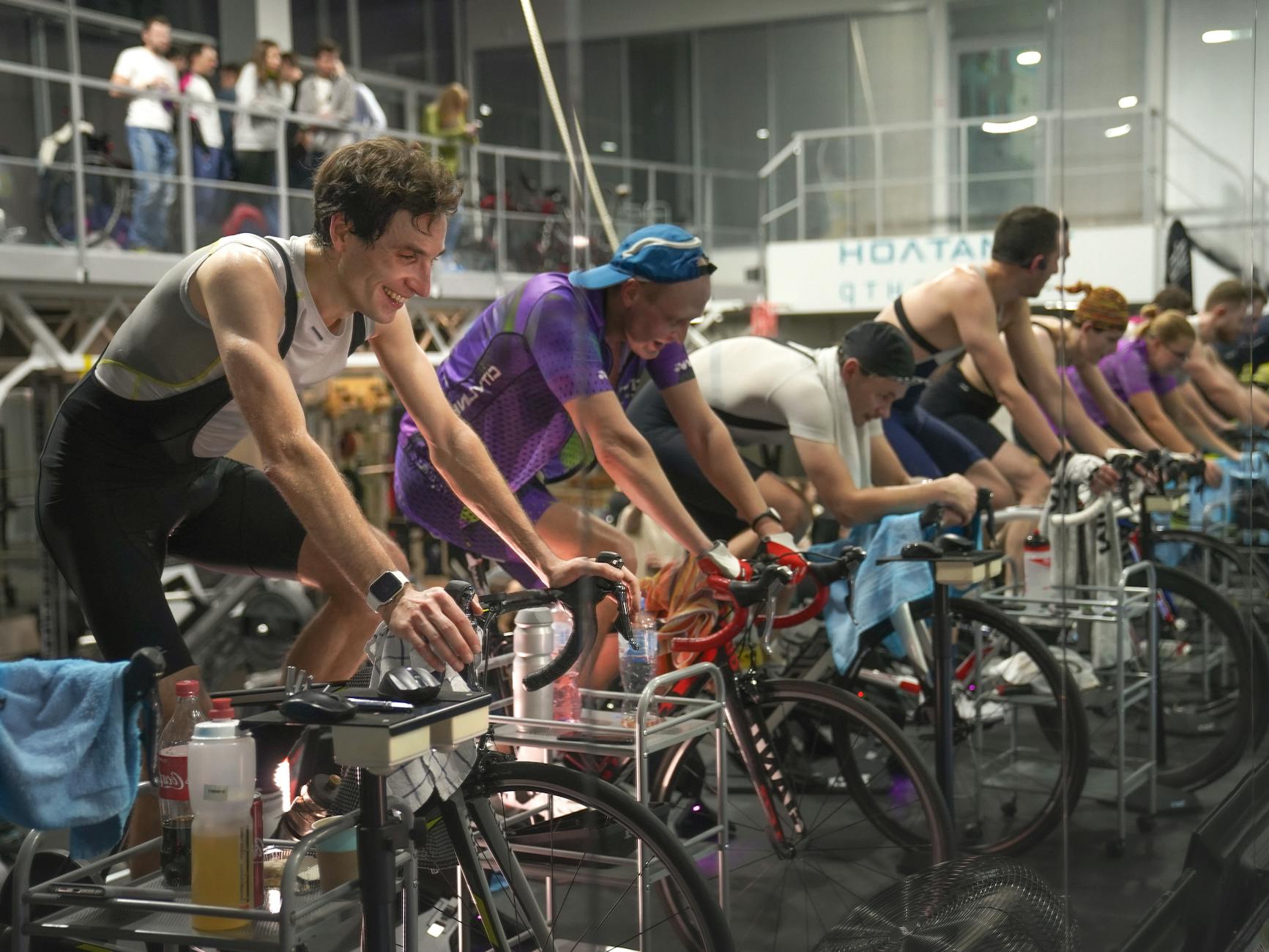
The workout itself is straightforward, which is part of its appeal. You do not need complex choreography or a dozen different drill types. Begin with a five-minute warm-up at low resistance, gradually increasing your cadence until your legs feel loose and your heart rate has climbed out of its resting zone. This is not optional. Jumping straight into high-intensity intervals on cold muscles is a reliable way to strain a quad or aggravate a knee. The main set consists of 8 to 12 rounds of work and recovery intervals.
Each work interval is 20 to 30 seconds of all-out effort at high resistance, where you are genuinely pushing as hard as you can sustain for that duration. Each recovery interval is 40 to 60 seconds of easy pedaling at low resistance. The work-to-recovery ratio matters. Beginners should lean toward the shorter work intervals and longer recovery periods, while experienced riders can push toward 30-second sprints with only 40 seconds of recovery. After your final round, spend five minutes in a cool-down at easy effort, letting your heart rate drift back toward normal. For a practical example, consider a 30-minute session: five minutes warming up, ten rounds of 30-second sprints with 60-second recoveries totaling 15 minutes, then five more minutes of moderate-effort climbing before a five-minute cool-down. That session is manageable for most intermediate riders and will produce a substantial calorie burn without requiring you to be on the bike for an hour.
How Often Should You Spin for Fat Loss and When Is It Too Much?
The recommended frequency for HIIT spinning is two to three sessions per week for sustainable fat loss. You can push to three to five sessions weekly when pairing your training with a moderate calorie deficit, but more is not always better. True high-intensity work taxes your nervous system and your muscles in ways that require genuine recovery. If you are doing five all-out HIIT sessions per week and sleeping six hours a night, you are more likely to overtrain than to accelerate your results. The tradeoff between frequency and intensity is real. Three hard sessions per week with adequate recovery will generally produce better fat loss outcomes than five sessions where fatigue forces you to dial back your effort. If you want to ride more often, make the additional sessions moderate steady-state rides focused on aerobic base building rather than interval work.
This approach lets you accumulate weekly calorie expenditure without running yourself into the ground. A practical weekly schedule might include two HIIT spin sessions, one longer steady-state ride, and two days of strength training or active recovery. Session duration also involves a tradeoff. Sessions of 20 to 45 minutes are the optimal window according to expert recommendations from sources like BarBend and PureGym. Shorter sessions let you maintain genuinely high intensity throughout. Longer sessions inevitably involve some pacing, which dilutes the HIIT effect. A focused 25-minute session where you leave nothing in the tank will typically outperform a 50-minute session where you subconsciously hold back to survive the duration.
Common Mistakes That Undermine Spinning for Fat Loss
The most prevalent mistake is treating every ride as a moderate effort. Many riders settle into a comfortable rhythm where they feel like they are working hard but never actually reach the intensity threshold that triggers significant EPOC. If you can carry on a conversation during your work intervals, you are not working hard enough for HIIT benefits. The sprint portions should make talking impossible. That discomfort is the point. A second common error is ignoring nutrition entirely. Spinning creates a calorie deficit opportunity, but it does not override a calorie surplus.
A 45-minute class that burns 500 calories is easily negated by a post-workout smoothie and a muffin. The research showing 2.6 to 3.2 percent body weight reduction assumed participants were not compensating for their exercise by eating significantly more. You do not need to starve yourself, but you do need to be aware that exercise and nutrition work together and neither one alone is sufficient for most people’s fat loss goals. A third pitfall is resistance avoidance. Some riders crank up their cadence to 120-plus RPM at minimal resistance, believing that faster pedaling equals more work. In reality, high-cadence low-resistance spinning burns fewer calories than moderate-cadence high-resistance efforts and does almost nothing for the muscle-building component that improves your resting metabolic rate. During sprint intervals, your resistance should be high enough that you cannot spin faster than roughly 80 to 100 RPM even at maximum effort.

Combining Spinning With Other Training for Faster Results
Spinning works best as part of a broader program rather than as your only form of exercise. Pairing two to three weekly spin sessions with two days of resistance training accelerates fat loss by building lean muscle mass, which raises your resting metabolic rate. A rider who adds squats, deadlifts, and lunges to their weekly routine will likely see faster body composition changes than one who only rides, because those compound movements build the large muscle groups that drive daily calorie expenditure even at rest.
For a real-world example, consider alternating days: Monday is a 30-minute HIIT spin session, Tuesday is a full-body strength workout, Wednesday is rest or light walking, Thursday is another HIIT spin session, and Friday is a second strength session. Weekends can include a longer moderate ride or active recovery. This structure provides enough spinning volume for cardiovascular and fat loss benefits while building the muscle mass that makes your metabolism work harder around the clock.
Who Should Think Twice Before Starting a HIIT Spinning Program
HIIT spinning is not appropriate for everyone out of the gate. People with significant knee issues, unmanaged cardiovascular conditions, or those who have been completely sedentary for years should build a base of moderate-intensity cycling before attempting all-out intervals. The forces involved in high-resistance sprints, particularly standing climbs, place substantial load on the knees and lower back. Starting with four to six weeks of steady-state indoor cycling at moderate intensity gives your joints, tendons, and cardiovascular system time to adapt before you introduce the stress of interval work.
That said, the research on previously sedentary and overweight populations shows that indoor cycling, when introduced progressively, is both safe and effective. The key is progression, not avoidance. Start with longer recovery intervals and shorter work periods, gradually shifting the ratio as your fitness improves. Most riders can safely incorporate HIIT elements within four to eight weeks of consistent moderate riding, and from there the fat loss benefits of interval training become available to them.
Conclusion
The evidence consistently points to HIIT-based spinning as one of the most time-efficient and effective cardiovascular approaches for fat loss. The combination of high acute calorie burn, extended post-exercise metabolic elevation, and simultaneous muscle preservation makes it a strong choice for riders at most fitness levels. The research backs this up with measurable body composition improvements, including fat mass reductions of 4.3 to 5.0 percent and lean muscle gains of 2.3 to 2.6 percent in studies lasting 24 to 36 sessions.
The practical takeaway is simple: ride two to three times per week, keep your sessions between 20 and 45 minutes, make your work intervals genuinely hard, and pair your riding with sensible nutrition and some form of resistance training. Consistency over weeks and months matters far more than any single session’s intensity. Set up your bike, find a resistance level that challenges you honestly, and commit to the process rather than searching for a more complicated answer. The best spinning workout for fat loss is the one you actually do at real intensity, repeatedly, for long enough to let the adaptations accumulate.
Frequently Asked Questions
How many calories does a spinning class actually burn?
A typical 45-minute spinning class burns 400 to 600 calories depending on body weight, resistance, and intensity. Harvard Medical School data shows a 155-pound person burns roughly 260 to 298 calories in just 30 minutes of vigorous stationary cycling, with heavier riders burning proportionally more.
Can a 20-minute spinning workout really help with fat loss?
Yes. A 20-minute HIIT cycling workout can be effective for fat loss because of the afterburn effect, where your body continues burning calories at an elevated rate after the session ends. Research has shown metabolic rates can remain elevated for up to 14 hours after a high-intensity spinning session, adding approximately 190 extra calories burned beyond your resting rate.
How many times per week should I spin to lose fat?
Two to three HIIT spinning sessions per week is the standard recommendation for sustainable fat loss. You can increase to three to five sessions weekly when combined with a moderate calorie deficit, but additional sessions beyond three should be moderate-intensity rides rather than all-out interval work to avoid overtraining.
Is spinning better than running for fat loss?
Spinning offers some advantages over running for fat loss, including lower impact on joints, easier intensity control through resistance adjustments, and the ability to safely push into very high intensity zones without the injury risk associated with high-speed running. A 30-minute HIIT cycling session burns up to 30 percent more calories than 30 minutes of steady-state running. However, running engages more total muscle mass and has its own advantages, so the best choice depends on your body, your injury history, and which activity you will actually do consistently.
Will spinning make my legs bulky?
Research suggests the opposite concern is unfounded. Studies on indoor cycling show lean muscle mass increases of 2.3 to 2.6 percent alongside fat mass decreases of 4.3 to 5.0 percent. Spinning builds functional muscle endurance rather than significant hypertrophy. You would need heavy resistance training with progressive overload and a calorie surplus to build noticeably larger legs.