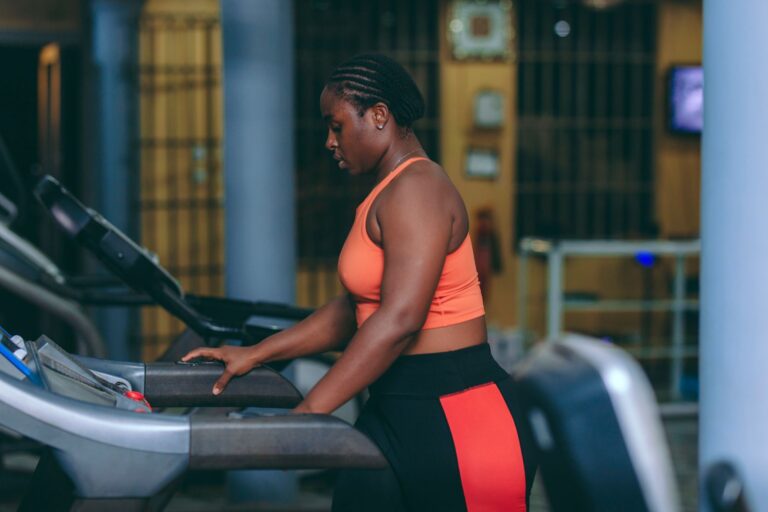
Running burns more calories than the elliptical, but not by as much as most people assume. At comparable effort levels, the difference comes out to roughly 100 calories per hour — a gap that might not justify the added wear on your joints depending on your situation. A 155-pound person, for example, burns about 372 calories in 30 minutes running at a 10-minute-per-mile pace, compared to around 324 calories for the same duration on an elliptical at general effort. That is a difference of about 48 calories, or the equivalent of half a banana.
The real story is more nuanced than a simple calorie scoreboard. A study published in the Journal of Strength and Conditioning Research found that when participants exercised at matched perceived exertion on both machines, calories burned, heart rate, and oxygen consumption were nearly identical. In other words, the calorie gap largely disappears when you push yourself equally hard on either machine. The difference in raw numbers has more to do with how people typically use the equipment than any fundamental metabolic advantage. This article breaks down the actual calorie numbers by body weight, examines what the research says about joint health and injury risk, explains why the calorie counters on both machines lie to you, and offers practical guidance on choosing the right machine for your training goals.
Table of Contents
- How Many Calories Does the Elliptical Burn Compared to Running?
- Why Your Machine’s Calorie Counter Is Misleading You
- What Does the Research Say About Joint Health and Running?
- Choosing Between the Elliptical and Treadmill for Weight Loss
- Common Mistakes That Reduce Calorie Burn on Both Machines
- How the Elliptical and Treadmill Compare for Cardiovascular Fitness
- Where Home and Gym Fitness Equipment Is Heading
- Conclusion
- Frequently Asked Questions
How Many Calories Does the Elliptical Burn Compared to Running?
The most reliable calorie data comes from Harvard Health, which estimates burn rates across three body weights for 30-minute sessions. On the elliptical at general use intensity, a 125-pound person burns roughly 270 calories, a 155-pound person burns about 324 calories, and a 185-pound person burns approximately 378 calories. For running at 5 mph, those same weights yield about 240, 288, and 336 calories respectively. Interestingly, at these moderate paces, the elliptical actually comes out ahead — likely because the elliptical engages both upper and lower body simultaneously at general effort. The running numbers climb quickly at faster speeds, though. Push the pace to a 10-minute mile and that 155-pound runner is now burning 372 calories in half an hour.
A study from the Medical College of Wisconsin found that over a full hour on a treadmill, jogging burns between 705 and 866 calories depending on speed and incline, while vigorous elliptical effort produces roughly 773 calories per hour — right in the middle of that treadmill range. The takeaway is that intensity matters far more than which machine you are standing on. Body weight is the other major variable. A heavier person will burn more calories on either machine simply because moving more mass requires more energy. If you weigh 185 pounds and work out vigorously on the elliptical, you may actually burn more total calories than a 125-pound runner jogging at a moderate clip. The machine matters less than the effort and the person on it.

Why Your Machine’s Calorie Counter Is Misleading You
One critical caveat that applies to both the treadmill and the elliptical: the calorie display on the machine is almost certainly wrong. Research has shown that built-in calorie counters overestimate actual energy expenditure by up to 25 percent. If your elliptical says you burned 400 calories, the real number might be closer to 300. Treadmills are guilty of the same inflation, though they tend to be slightly more accurate because the movement pattern — walking and running — is better studied and easier to model. This overestimation creates a practical problem for anyone using exercise to manage weight.
If you eat back the calories your machine says you burned, you may be consuming 100 or more extra calories per session without realizing it. Over a week, that adds up. The most reliable approach is to treat machine readouts as rough estimates, discount them by 20 percent or so, and track trends in your body composition rather than fixating on session-by-session numbers. However, if you are using a chest-strap heart rate monitor connected to the machine, the accuracy improves significantly. Machines that factor in real-time heart rate data along with your weight and age produce estimates that are much closer to what lab-grade metabolic testing would show. Without that external data, the algorithms are essentially guessing based on average movement patterns.
What Does the Research Say About Joint Health and Running?
The elliptical’s biggest selling point has always been its low-impact design. Your feet stay on the pedals throughout the entire motion, which eliminates the repetitive ground-strike forces that characterize running. A 2023 study published in the International Journal of Environmental Research and Public Health confirmed that these ground-impact forces in running raise the risk of shin splints and joint pain, particularly for newer runners or those increasing mileage too quickly. But the long-term picture for running and joint health is surprisingly encouraging. A 2017 study in the Journal of Orthopaedic and Sports Physical Therapy found that only 3.5 percent of recreational runners developed hip or knee arthritis, compared to 10.2 percent of sedentary non-runners.
That finding challenges the popular assumption that running destroys your knees. Moderate, consistent running appears to be protective for joint health over time, possibly because the cyclical loading strengthens cartilage and surrounding structures. The elliptical is not entirely free of joint concerns either. A 2024 study published in Medicina and indexed on PubMed found that elliptical machines induce higher knee joint torque compared to stationary bikes. This does not mean the elliptical is dangerous, but it does mean that people recovering from knee surgery or dealing with certain ligament issues should not automatically assume the elliptical is the safest option. For some knee conditions, a stationary bike may actually be gentler.

Choosing Between the Elliptical and Treadmill for Weight Loss
If your primary goal is losing fat, the best machine is the one you will actually use consistently. A treadmill might burn 10 to 15 percent more calories per session at similar effort levels, but that advantage vanishes if knee pain causes you to skip workouts or cut sessions short. Consistency over weeks and months will always outweigh a marginal per-session calorie advantage. For runners training for a race, the treadmill is the obvious choice because it builds sport-specific fitness. The elliptical does not replicate the neuromuscular demands of running — the foot strike pattern, the single-leg loading phase, the elastic energy return from tendons.
You cannot train for a half marathon on an elliptical alone. However, the elliptical is an excellent cross-training tool for runners. Using it on easy or recovery days lets you maintain cardiovascular fitness while giving your legs a break from impact stress. For people who are significantly overweight or returning from a lower-body injury, the elliptical often makes more sense as a primary cardio tool in the early stages. Build your aerobic base and shed some initial weight on the elliptical, then transition to running once your joints are better prepared to handle the load. This staged approach reduces injury risk without sacrificing cardiovascular development.
Common Mistakes That Reduce Calorie Burn on Both Machines
The most widespread mistake on the elliptical is setting low resistance and coasting through the motion. Because the flywheel carries momentum, it is possible to move the pedals with very little muscular effort, turning what should be a workout into something closer to standing and swaying. If you are not breathing hard and your muscles are not working, you are not burning meaningful calories regardless of what the display says. Increasing the resistance and consciously driving with your legs and arms corrects this. On the treadmill, the equivalent mistake is holding the handrails while walking at an incline. This is extremely common and dramatically reduces calorie expenditure because you are offloading your body weight onto your arms.
A 2012 study found that holding the handrails during incline walking reduced calorie burn by as much as 20 to 25 percent. If you cannot maintain the incline without gripping the rails, lower the incline to a level you can handle hands-free. Another overlooked factor on both machines is workout duration and structure. Steady-state cardio at a moderate intensity for 30 minutes is fine, but interval training — alternating between high and moderate effort — tends to produce greater total calorie burn in the same time frame and generates a larger post-exercise metabolic effect. On the elliptical, this might mean 60 seconds at high resistance followed by 90 seconds at moderate resistance. On the treadmill, alternating between jogging and faster running works similarly.

How the Elliptical and Treadmill Compare for Cardiovascular Fitness
Beyond calorie burn, both machines are effective tools for improving heart health and aerobic capacity. The research from the Journal of Strength and Conditioning Research showing equivalent heart rate and oxygen consumption between the two machines at matched exertion levels means your cardiovascular system does not know or care which machine you are on.
What matters is that you are spending enough time at an elevated heart rate to drive adaptation. For people with conditions like high blood pressure or early-stage heart disease, the elliptical may have a slight edge because lower-impact exercise tends to produce a less dramatic spike in blood pressure during the session. That said, both machines are appropriate for most people, and a conversation with a physician matters more than the choice of equipment if you have a diagnosed cardiovascular condition.
Where Home and Gym Fitness Equipment Is Heading
The calorie debate between ellipticals and treadmills is becoming less relevant as hybrid machines and smart fitness platforms blur the lines between equipment types. Machines that adjust resistance and speed in real-time based on heart rate data are getting better at standardizing effort across different movement patterns, which means the calorie burn gap between machines will continue to shrink.
What will matter more going forward is how well the equipment keeps you engaged and consistent. The best calorie-burning machine is still the one that does not become a clothes rack after three months. Whether that is a treadmill, an elliptical, or something else entirely depends on your preferences, your body, and your goals — not on a 50-calorie-per-session difference that barely registers over time.
Conclusion
Running holds a modest edge over the elliptical in raw calorie burn — roughly 10 to 15 percent more at comparable effort levels. For a 155-pound person, that translates to about 48 extra calories over 30 minutes, a margin that shrinks or disappears entirely when effort is truly matched between the two machines. The elliptical counters with significantly less joint impact, comparable cardiovascular benefits, and a lower injury risk for people who are new to exercise or carrying extra weight.
The most productive approach is to stop framing this as a competition and start treating both machines as tools in your fitness arsenal. Use the treadmill when you want sport-specific running training or when your body feels fresh and ready for impact. Use the elliptical on recovery days, when nursing a minor ache, or when you simply want a solid cardio session without the pounding. Total calories burned over weeks and months — driven by intensity, duration, body weight, and consistency — will always matter more than which machine you happen to be standing on during any single workout.
Frequently Asked Questions
Does the elliptical burn fewer calories than running?
At similar effort levels, the elliptical burns roughly 10 to 15 percent fewer calories than running, amounting to about 100 fewer calories per hour. However, research shows that when perceived exertion is matched, calorie burn, heart rate, and oxygen consumption are nearly identical between the two.
Is the elliptical bad for your knees?
The elliptical is generally considered low-impact and easier on the knees than running because your feet never leave the pedals. However, a 2024 study in Medicina found that ellipticals produce higher knee joint torque than stationary bikes, so people with specific knee injuries should consult a physical therapist before assuming the elliptical is their best option.
Can I lose weight using only an elliptical?
Yes. Weight loss depends on maintaining a calorie deficit, and the elliptical is an effective tool for burning calories. A 155-pound person burns approximately 324 calories in 30 minutes of general elliptical use. Paired with appropriate nutrition, that is more than sufficient to support fat loss.
How accurate are the calorie counters on ellipticals and treadmills?
Not very. Research indicates that machine calorie counters overestimate actual burn by up to 25 percent. Using a chest-strap heart rate monitor and entering your correct weight and age improves accuracy, but the displayed number should still be treated as an estimate rather than a precise measurement.
Does running really damage your joints long-term?
The evidence suggests otherwise for most people. A 2017 study in the Journal of Orthopaedic and Sports Physical Therapy found that only 3.5 percent of recreational runners developed hip or knee arthritis, compared to 10.2 percent of sedentary individuals. Moderate running appears to be protective for joint health, not destructive.
Should I use the elliptical or treadmill for cross-training as a runner?
The elliptical is an excellent cross-training option for runners because it maintains cardiovascular fitness while eliminating impact stress. Using it on easy or recovery days gives your legs a break from the pounding of running without sacrificing aerobic conditioning.