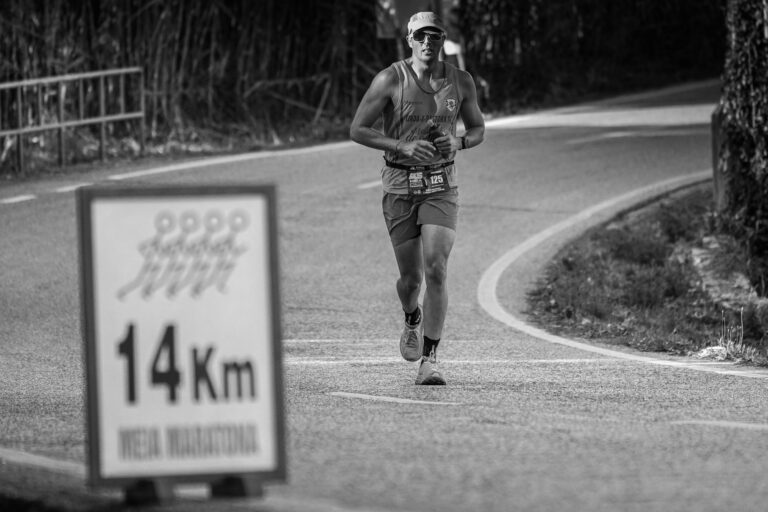
Completing a 7-mile run fundamentally rewires how you perceive your own capabilities, creating a lasting psychological confidence that extends far beyond the finish line. This distance sits in a unique sweet spot””long enough to require genuine mental fortitude and physical preparation, yet accessible enough that most recreational runners can achieve it with consistent training. The confidence gained isn’t merely about fitness; it’s about proving to yourself that you can commit to a challenging goal and see it through, which translates directly into how you approach difficulties in work, relationships, and personal growth. Consider the experience of a first-time 7-mile finisher who spent months believing they could never run more than 3 miles. That moment of crossing an imaginary finish line after 7 continuous miles doesn’t just change their running identity””it challenges every self-imposed limitation they’ve carried.
Research in sports psychology consistently shows that endurance achievements create what psychologists call “mastery experiences,” the most powerful source of self-efficacy according to Albert Bandura’s foundational work. This article explores why 7 miles specifically holds such psychological weight, how the confidence transfer works, the mental strategies that maximize these benefits, and the practical steps to build toward this transformative milestone. The journey to 7 miles also carries some important caveats. Not everyone experiences the same confidence boost, and those who push too hard too fast may actually undermine their psychological gains through injury or burnout. Understanding the nuances helps you approach this goal in a way that maximizes the mental benefits while avoiding common pitfalls.
Table of Contents
- Why Does Completing a 7 Mile Run Build Such Lasting Psychological Confidence?
- How the Confidence Transfer Effect Works Beyond Running
- The Neurochemical Foundation of Post-Run Confidence
- How to Structure Training for Maximum Psychological Benefit
- When the Psychological Benefits Don’t Materialize
- The Social Dimension of Running Confidence
- How to Prepare
- How to Apply This
- Expert Tips
- Conclusion
- Frequently Asked Questions
Why Does Completing a 7 Mile Run Build Such Lasting Psychological Confidence?
The psychological power of a 7-mile run stems from what exercise psychologists call the “challenge-skill balance.” At this distance, you’re forced to confront doubt, fatigue, and the temptation to quit””and overcoming these internal battles creates neural pathways associated with resilience. Unlike shorter runs where you can essentially override discomfort, 7 miles requires you to negotiate with your mind repeatedly, building what researchers describe as distress tolerance. Each time you continue running despite wanting to stop, you’re essentially training your brain to persist through difficulty. The specificity of 7 miles matters more than many runners realize. Compared to a 5K (3.1 miles), which most people can complete on determination alone, 7 miles requires actual strategic thinking about pacing, fueling, and mental management.
Yet unlike a half marathon or longer, it doesn’t require the kind of extreme training that can lead to obsessive behaviors or overtraining syndrome. A runner who completes their first 7-miler typically finishes tired but not destroyed, which psychologically reinforces that challenging goals are achievable rather than punishing. For example, marathon finishers sometimes report a complex mix of accomplishment and trauma, while 7-mile completers more consistently report pure satisfaction. This confidence also benefits from what psychologists call “effort attribution.” When you accomplish something difficult, your brain assigns credit either to external factors (luck, easy conditions) or internal factors (your own effort and ability). The 7-mile distance is long enough that you can’t attribute success to luck””you clearly trained and earned it””but not so grueling that you might attribute completion to desperation or unusual circumstances.
How the Confidence Transfer Effect Works Beyond Running
The psychological confidence from completing a 7-mile run transfers to non-running challenges through a mechanism called “symbolic self-completion.” When you prove you can do something difficult in one domain, your brain updates your overall self-concept rather than just your running-specific identity. Studies from the University of British Columbia found that participants who completed challenging physical tasks showed increased persistence on unrelated cognitive tasks, even when told the two were completely separate experiments. This transfer effect is strongest when runners consciously acknowledge the mental aspects of their accomplishment. Simply completing 7 miles while distracted by podcasts provides less psychological benefit than running while aware of your mental state, noticing when you wanted to quit, and recognizing when you chose to continue anyway.
The conscious recognition acts as a form of self-acknowledgment that makes the accomplishment available for future reference when facing other challenges. However, if you complete 7 miles under unusually favorable conditions””perfect weather, a flat course, running with a highly supportive group””the confidence transfer may be weaker. Your brain may attribute success partially to those external factors, diluting the internal attribution that creates lasting confidence. This doesn’t mean you should avoid good conditions, but it explains why many runners report that their hardest completions, not their fastest ones, created the most lasting psychological shifts.
The Neurochemical Foundation of Post-Run Confidence
The confidence you feel after a 7-mile run has concrete neurochemical underpinnings that distinguish it from shorter efforts. Runs exceeding 45-60 minutes trigger significant increases in brain-derived neurotrophic factor (BDNF), sometimes called “fertilizer for the brain,” which supports the formation of new neural connections. When these connections form during and after an achievement state, they’re essentially encoding confidence into your brain’s physical structure. Endorphins receive most of the popular attention, but the more relevant neurochemical for lasting confidence is likely anandamide, an endocannabinoid that increases during sustained aerobic exercise.
Anandamide creates a sense of calm well-being rather than euphoria, and this state allows you to process the accomplishment without the distortions of either excessive excitement or post-effort depression. Runners often report that their clearest thinking about what they’ve accomplished comes 20-40 minutes after finishing, which aligns with anandamide’s pharmacological profile. For example, a runner in their late 40s who completed their first 7-miler described the hour after finishing as the first time in months they felt genuinely capable of handling a difficult workplace situation. The neurochemical state created a window where positive self-assessment felt natural rather than forced. This isn’t mystical””it’s the predictable result of known brain chemistry interacting with a genuine accomplishment.

How to Structure Training for Maximum Psychological Benefit
Building to 7 miles using a gradual, methodical approach creates more psychological confidence than aggressive training, even if the aggressive approach gets you there faster. The reason involves how your brain tracks progress. When you add distance incrementally””perhaps half a mile per week””each successful longer run provides a small confidence boost that compounds over time. Rushing the process may get you to 7 miles, but without the accumulated evidence of progressive mastery. The comparison between time-based and distance-based training reveals an important tradeoff.
Time-based training (running for 70 minutes regardless of distance) reduces performance anxiety and allows your body to find its natural pace, which can be psychologically healthier for anxious runners. Distance-based training (targeting 7 specific miles) provides clearer milestones and a more definitive sense of accomplishment. Most runners benefit from using time-based training during the building phase and switching to distance-based goals for the achievement run itself. Including deliberate “challenge runs” during training””where you intentionally run in imperfect conditions like mild rain or slight fatigue””builds what researchers call “robust confidence” rather than “fragile confidence.” Fragile confidence depends on conditions being right; robust confidence comes from knowing you can handle variability. A runner who has completed 5 or 6 miles in various conditions approaches their 7-mile goal knowing that even if the day isn’t perfect, they have the mental tools to adapt.
When the Psychological Benefits Don’t Materialize
Not everyone who completes a 7-mile run experiences significant psychological confidence gains, and understanding why helps you avoid common pitfalls. The most frequent issue is what psychologists call “goal displacement,” where runners become so focused on pace, splits, or comparing themselves to others that they fail to internalize the accomplishment itself. Finishing 7 miles while thinking “but I was so slow” actively undermines the confidence-building process because you’re encoding self-criticism rather than mastery. Another limitation involves runners with extensive athletic backgrounds in other sports.
If you were a competitive swimmer or played college soccer, completing 7 miles may not register as a significant challenge to your self-concept because you’ve already established yourself as physically capable. These runners often need to pursue more ambitious running goals””or focus specifically on what running teaches them that their previous sports didn’t””to experience meaningful psychological shifts. There’s also a warning for runners who complete 7 miles through what might be called “white-knuckling”””pure grit and determination with no enjoyment or strategic mental management. While this approach works physically, it often creates negative associations with long-distance running, and the confidence gained may be accompanied by aversion rather than motivation to continue. If your 7-mile completion felt like survival rather than achievement, consider whether your training prepared you adequately or whether you pushed into that distance before you were genuinely ready.

The Social Dimension of Running Confidence
Completing a 7-mile run often shifts how you relate to others who exercise, creating a sense of belonging to a community of people who challenge themselves physically. This social dimension amplifies the psychological benefits because humans are inherently social creatures who derive part of their identity from group memberships.
Even if you run alone, knowing you share an accomplishment with millions of other distance runners provides a form of invisible support. For example, runners who complete their first 7-miler frequently report feeling more comfortable in running stores, more likely to strike up conversations with other runners, and more interested in running events””even if they don’t plan to compete. This social comfort becomes self-reinforcing because positive social interactions around running strengthen the identity, which further solidifies the psychological confidence gains.
How to Prepare
- **Establish a baseline and track progress visibly.** Run your current comfortable distance and record it somewhere you’ll see regularly. This creates a concrete reference point that makes future progress undeniable. When you eventually complete 7 miles, you’ll have documented evidence of how far you’ve come rather than vague memories.
- **Add distance gradually while rating mental effort.** Increase your long run by no more than half a mile per week, and after each run, rate your mental effort on a 1-10 scale alongside your physical effort. This develops awareness of your psychological patterns and helps you recognize that mental difficulty doesn’t mean physical inability.
- **Practice specific mental strategies during training runs.** Experiment with mantras, segmenting (thinking only about the current mile), body scans, and deliberate relaxation. Identify which techniques help you most when you hit difficulty points. Don’t wait until your 7-mile attempt to discover what works.
- **Complete at least one “dress rehearsal” run of 6 to 6.5 miles.** This close-but-not-quite run serves two purposes: it confirms your physical readiness and it allows you to experience most of the psychological challenge without using up the novelty of the full distance. Common mistake to avoid: running your dress rehearsal too close to your 7-mile attempt, leaving insufficient recovery time.
- **Plan your 7-mile route and conditions deliberately.** Choose a route you know reasonably well so navigation doesn’t consume mental energy, but include enough interest to prevent monotony. Avoid scheduling your attempt during high-stress periods in other areas of your life, as depleted willpower can undermine both performance and psychological benefit.
How to Apply This
- **Immediately after finishing, spend five minutes in deliberate reflection.** Before checking your phone or talking to others, sit or walk quietly and consciously review what you just did. Notice any lingering doubts that wanted you to stop and acknowledge that you continued anyway. This consolidation window is crucial for memory formation.
- **Write a brief account of the experience within 24 hours.** The act of writing forces you to articulate what the run meant, which deepens cognitive processing. Include specific moments where you overcame mental resistance. This written record becomes a reference point you can revisit when facing future challenges.
- **Identify one non-running challenge where you’ll consciously apply your running confidence.** The transfer effect is stronger when deliberate. Choose something you’ve been avoiding or dreading, and when you notice hesitation, explicitly remind yourself: “I completed 7 miles. I can handle discomfort and uncertainty.”
- **Continue running to maintain the identity, but don’t immediately pursue longer distances.** Spend several weeks running 4-6 mile distances comfortably, allowing the 7-mile accomplishment to settle into your self-concept. Rushing to 8 or 10 miles can actually dilute the psychological impact by suggesting that 7 miles wasn’t really significant.
Expert Tips
- Avoid tracking pace during your first 7-mile completion. Visible pace data creates constant judgment opportunities that compete with the experience of simply accomplishing the distance. Many runners find their most psychologically meaningful runs are those where they didn’t know or care about their speed.
- Run your 7-mile attempt without music or podcasts if possible. External audio, while helpful for training runs, can prevent you from fully experiencing the mental journey. The confidence comes partly from having been present with yourself through the full challenge.
- Don’t complete your first 7-miler during a race unless you’re confident you won’t get caught up in competition. Racing others shifts focus from internal accomplishment to external comparison, which undermines the confidence transfer effect for many runners.
- If you have a history of anxiety or depression, recognize that a single 7-mile run won’t resolve these conditions””but it can provide a genuine data point against the narrative that you’re incapable or weak. Use it as evidence, not cure.
- Tell at least one person about your goal before you attempt it, but not so many that you feel public pressure. The ideal is one or two supportive people who will acknowledge your accomplishment without creating performance anxiety.
Conclusion
The psychological confidence from completing a 7-mile run operates through multiple reinforcing mechanisms: neurochemical changes that support positive self-assessment, mastery experiences that update your self-concept, and the conscious recognition that you can persist through difficulty. This distance sits at an ideal threshold””challenging enough to be meaningful, accessible enough to be achievable with reasonable training””which explains why many runners identify their first 7-miler as a turning point in how they view themselves. Moving forward, the key is treating this accomplishment as both an endpoint and a foundation.
Allow yourself to fully absorb what you’ve done before chasing longer distances. Apply the confidence deliberately to other challenging areas of your life, using explicit reminders when you notice hesitation. Consider maintaining a regular running practice that includes occasional 7-mile runs, reinforcing the identity while building toward whatever goals feel meaningful next. The confidence you’ve built is real and neurologically encoded””your task now is to trust it.
Frequently Asked Questions
How long does it typically take to see results?
Results vary depending on individual circumstances, but most people begin to see meaningful progress within 4-8 weeks of consistent effort. Patience and persistence are key factors in achieving lasting outcomes.
Is this approach suitable for beginners?
Yes, this approach works well for beginners when implemented gradually. Starting with the fundamentals and building up over time leads to better long-term results than trying to do everything at once.
What are the most common mistakes to avoid?
The most common mistakes include rushing the process, skipping foundational steps, and failing to track progress. Taking a methodical approach and learning from both successes and setbacks leads to better outcomes.
How can I measure my progress effectively?
Set specific, measurable goals at the outset and track relevant metrics regularly. Keep a journal or log to document your journey, and periodically review your progress against your initial objectives.
When should I seek professional help?
Consider consulting a professional if you encounter persistent challenges, need specialized expertise, or want to accelerate your progress. Professional guidance can provide valuable insights and help you avoid costly mistakes.
What resources do you recommend for further learning?
Look for reputable sources in the field, including industry publications, expert blogs, and educational courses. Joining communities of practitioners can also provide valuable peer support and knowledge sharing.