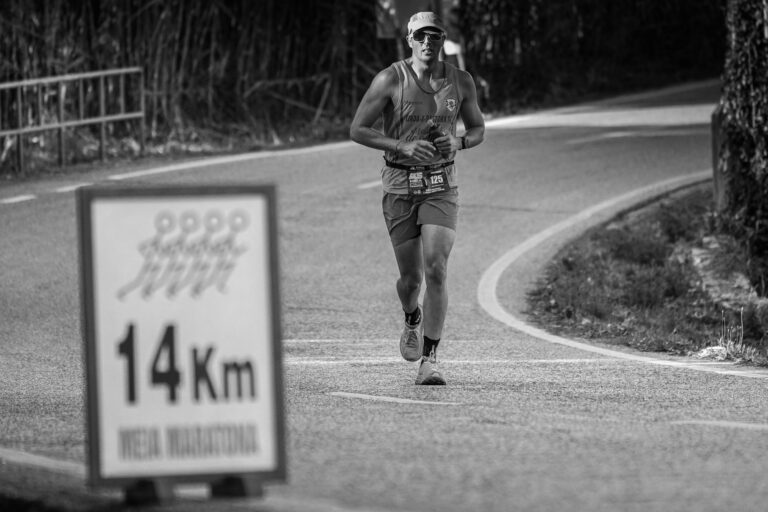
The key to running beyond 3.5 miles without hitting a wall lies in synchronizing your breathing rhythm with your footsteps and deliberately slowing your initial pace by 30 to 45 seconds per mile compared to your shorter runs. Most runners fail at longer distances because they start too fast and breathe too shallowly, depleting glycogen stores and accumulating oxygen debt before the real work begins. The solution is adopting a rhythmic breathing pattern””typically a 3:2 ratio where you inhale for three footstrikes and exhale for two””while maintaining a conversational pace for at least the first two miles. Consider a runner who comfortably completes 5K races at an 8:30 pace but struggles to finish 5-mile training runs.
The problem isn’t fitness””it’s strategy. By starting those longer runs at 9:00 to 9:15 pace and focusing on deep belly breathing rather than chest breathing, that same runner often finds the final miles easier than the opening ones. This counterintuitive approach preserves energy systems and delays the onset of fatigue that typically arrives around the 25 to 35 minute mark. This article covers the physiological reasons behind breathing adjustments for extended runs, specific techniques for establishing sustainable rhythms, pace calibration methods, terrain considerations, and troubleshooting common problems that emerge past the 3.5-mile threshold.
Table of Contents
- Why Does Breathing Become Harder After Running 3.5 Miles?
- Establishing Rhythmic Breathing Patterns for Distance Running
- Calculating Your Sustainable Pace for Runs Beyond 3.5 Miles
- Adjusting Breathing and Pace for Varied Terrain
- Common Breathing Mistakes That Sabotage Longer Runs
- The Role of Cadence in Breathing Efficiency
- How to Prepare
- How to Apply This
- Expert Tips
- Conclusion
- Frequently Asked Questions
Why Does Breathing Become Harder After Running 3.5 Miles?
The 3.5-mile mark represents a metabolic inflection point for many recreational runners. During the first 20 to 25 minutes of running, your body primarily burns readily available glycogen and relies heavily on your aerobic energy system. Beyond this point, your body begins recruiting different muscle fibers, lactate accumulates more rapidly, and your respiratory demands increase even if your pace remains constant. Your breathing feels harder not because you’ve suddenly become less fit, but because the energy cost of running compounds over time. Oxygen consumption doesn’t scale linearly with distance. A runner maintaining an 8-minute pace will consume approximately 35 to 40 milliliters of oxygen per kilogram of body weight per minute.
However, running efficiency decreases as muscles fatigue, meaning that same pace requires progressively more oxygen as miles accumulate. By mile four, you may need 5 to 10 percent more oxygen to maintain the same speed you held at mile one. This explains why a pace that felt easy at the start suddenly feels labored. The comparison between trained and untrained runners illustrates this clearly. An experienced distance runner develops mitochondrial density and capillary networks that deliver oxygen more efficiently, pushing this metabolic shift point further into the run. A newer runner hits this wall earlier and harder, which is why breathing adjustments become critical rather than optional for those building toward longer distances.

Establishing Rhythmic Breathing Patterns for Distance Running
Rhythmic breathing involves coordinating your inhales and exhales with your footstrikes in a consistent, repeatable pattern. The most widely recommended approach for distances beyond 3.5 miles is the 3:2 pattern: inhale as your left foot strikes, then right, then left, and exhale as your right foot strikes, then left. This odd-numbered pattern ensures that the stress of exhalation””when your core is least stable””alternates between your left and right foot, distributing impact stress more evenly. However, the 3:2 pattern doesn’t work for everyone, and forcing an unnatural rhythm creates more problems than it solves. runners with shorter strides, those running at higher intensities, or individuals with respiratory conditions may find a 2:1 pattern more sustainable.
The test is simple: if you can maintain the pattern without conscious effort after five minutes of running, it fits your physiology. If you’re constantly losing the rhythm or feeling breathless, try a different ratio. Deep diaphragmatic breathing matters more than any specific pattern. Place your hand on your belly while running slowly””it should expand outward with each inhale. Chest-only breathing limits oxygen intake to approximately 70 percent of lung capacity and encourages the tense, elevated-shoulder posture that wastes energy. Belly breathing accesses the full volume of your lungs and keeps your upper body relaxed through the later miles.
Calculating Your Sustainable Pace for Runs Beyond 3.5 Miles
Your sustainable pace for longer runs should feel almost uncomfortably slow during the first mile. A practical benchmark: if you can speak in complete sentences without gasping between words, you’re in the right zone. Most running coaches recommend targeting 60 to 75 percent of your maximum heart rate for base-building runs, which typically translates to 45 to 90 seconds slower than your 5K race pace. For example, a runner with a 24-minute 5K (7:44 per mile pace) should approach 5-mile training runs at 8:30 to 9:15 pace.
This feels maddeningly slow at first, but the payoff emerges in the final miles when energy reserves remain available and breathing stays controlled. Elite marathoners train the vast majority of their weekly mileage at paces that would seem plodding to observers””Paula Radcliffe famously ran most of her training miles more than two minutes slower than her race pace. If you have a history of cardiac issues, are over 50, or have been sedentary for extended periods, these pace guidelines need adjustment. Consult a physician before establishing training zones, as heart rate response to exercise varies significantly based on medications, individual physiology, and underlying conditions. The perceived exertion method””that conversational pace test””serves as a safer starting point than heart rate calculations alone for these populations.

Adjusting Breathing and Pace for Varied Terrain
Flat courses allow consistent rhythm, but real-world running involves hills, wind, and uneven surfaces that demand flexible breathing strategies. On uphills, most runners naturally shift from a 3:2 to a 2:1 breathing pattern””this isn’t a sign of failure but an appropriate response to increased oxygen demand. The key is returning to your baseline pattern once the terrain levels out rather than staying in emergency breathing mode. A runner tackling a four-mile route with a significant hill at mile three should plan for this disruption. Approach the base of the hill at a slightly slower pace than the preceding flat section, shorten your stride by 10 to 15 percent, and let your breathing pattern adjust upward without fighting it.
At the crest, resist the urge to accelerate immediately””take 30 to 45 seconds of your normal flat-ground pace to recover before resuming target speed. Downhill running presents a different challenge: breathing often feels easy, tempting runners to significantly increase pace. This creates impact stress and muscle damage that compounds over subsequent miles. Limit downhill acceleration to 10 to 15 seconds per mile faster than flat pace, focusing on quick turnover rather than longer strides. Your breathing may feel underutilized, but your legs will thank you at mile five.
Common Breathing Mistakes That Sabotage Longer Runs
The most damaging breathing mistake is holding your breath during moments of exertion or discomfort. Runners often unconsciously hold their breath when checking a watch, navigating obstacles, or pushing through a difficult patch””and these micro-interruptions accumulate into significant oxygen debt over four or five miles. Awareness is the first solution: during your next run, deliberately notice any moments where you catch yourself holding breath and address the pattern. Shallow rapid breathing is the second major error. When breathing becomes labored, the instinct is to breathe faster, but this often means breathing less deeply.
Each breath involves overhead””the energy cost of moving air through your throat and bronchi. Rapid shallow breaths maximize this overhead while minimizing actual oxygen exchange in the alveoli where it matters. Slower, deeper breaths are more efficient even though they feel counterintuitive when you’re struggling. A critical warning: if you experience dizziness, chest tightness, or tingling in your extremities during running, these are not breathing technique problems””they’re potential medical issues requiring immediate attention. Stop running, walk slowly, and seek medical evaluation before your next run. Breathing discomfort from exertion feels different from these warning signs, which indicate possible cardiac issues, exercise-induced asthma, or other conditions that won’t respond to technique adjustments.

The Role of Cadence in Breathing Efficiency
Running cadence””the number of steps you take per minute””directly affects breathing rhythm options. A runner at 160 steps per minute has different breath-to-stride possibilities than one at 180 steps per minute. Research from the University of Wisconsin found that most recreational runners naturally gravitate toward 150 to 170 steps per minute, while elite runners typically exceed 180.
Higher cadence generally correlates with better breathing efficiency because shorter, quicker strides reduce vertical oscillation””the bouncing that wastes energy and disrupts breathing rhythm. A runner who consciously increases cadence from 160 to 175 steps per minute often reports easier breathing within the first mile, even though the change initially feels rushed. The sweet spot seems to be finding a cadence where your breathing pattern locks in naturally without counting.
How to Prepare
- **Establish your baseline breathing pattern during short runs.** Spend three to four easy 2-mile runs focusing solely on breathing rhythm. Don’t worry about pace””find a pattern that you can maintain without conscious effort and note which ratio (3:2, 2:1, or other) feels natural.
- **Practice diaphragmatic breathing off the run.** Spend five minutes daily lying on your back with a book on your belly, breathing so the book rises and falls. This trains the muscle memory that translates to running.
- **Conduct a talk test calibration run.** Run one mile at what feels like easy effort while reciting something from memory””the Pledge of Allegiance, song lyrics, or a poem. If you can’t complete full sentences, you’re going too fast.
- **Build weekly mileage gradually.** Add no more than 10 percent total weekly distance to allow respiratory and cardiovascular systems to adapt. Jumping from 10 weekly miles to 15 invites the breathing struggles you’re trying to avoid.
- **Run your longest weekly run on the same day each week.** Consistency allows your body to anticipate and prepare for the respiratory demands. Warning: running your longest effort when already fatigued from previous days’ workouts masks your true breathing capacity and leads to poor technique reinforcement.
How to Apply This
- **Start 15 percent slower than your target pace.** For the first half mile, deliberately hold back. Your breathing should feel almost too easy””this creates the oxygen reserve that sustains later miles.
- **Check in with your breathing every quarter mile.** Briefly notice: Am I breathing from my belly? Am I holding rhythm? Can I speak a sentence? These micro-assessments catch problems before they compound.
- **Respond to terrain changes proactively.** When you see a hill approaching, adjust your pace and breathing five to ten seconds before you reach it, not after you’re already struggling on the incline.
- **Use the final mile as a breathing laboratory.** If you’ve paced correctly, the last mile should feel controlled. Experiment with slightly increasing pace while maintaining your breathing pattern””this builds the connection between breath and speed that improves future runs.
Expert Tips
- Breathe through both your nose and mouth simultaneously during running””nose-only breathing restricts airflow below what extended running demands.
- Do not attempt to change both your breathing pattern and your pace simultaneously in the same run; adjust one variable at a time.
- Run your first mile as though you’re embarrassed by how slow you’re going; this almost always produces the correct effort level.
- Practice your breathing pattern during walking first if you struggle to establish it while running””the coordination transfers once learned.
- Avoid running within two hours of a large meal; digestive blood flow competition makes breathing efficiency nearly impossible regardless of technique.
Conclusion
Running beyond 3.5 miles successfully requires abandoning the habits that work for shorter distances. The synchronized approach””matching rhythmic breathing patterns to a deliberately conservative pace””addresses both the respiratory and metabolic challenges that emerge as runs extend past the 25-minute threshold. The 3:2 breathing ratio and conversational pace aren’t magic formulas, but they provide frameworks that keep oxygen delivery aligned with muscular demand. Your next step is practical experimentation.
On your next run, implement one change: either establish a breathing rhythm or slow your opening mile pace significantly. Don’t combine changes initially. Track what happens to your perceived effort at the 3.5-mile mark and adjust from there. Consistency in applying these principles matters more than perfection””over four to six weeks, the techniques that feel awkward today will become automatic responses that carry you through miles five, six, and beyond.
Frequently Asked Questions
How long does it typically take to see results?
Results vary depending on individual circumstances, but most people begin to see meaningful progress within 4-8 weeks of consistent effort. Patience and persistence are key factors in achieving lasting outcomes.
Is this approach suitable for beginners?
Yes, this approach works well for beginners when implemented gradually. Starting with the fundamentals and building up over time leads to better long-term results than trying to do everything at once.
What are the most common mistakes to avoid?
The most common mistakes include rushing the process, skipping foundational steps, and failing to track progress. Taking a methodical approach and learning from both successes and setbacks leads to better outcomes.
How can I measure my progress effectively?
Set specific, measurable goals at the outset and track relevant metrics regularly. Keep a journal or log to document your journey, and periodically review your progress against your initial objectives.
When should I seek professional help?
Consider consulting a professional if you encounter persistent challenges, need specialized expertise, or want to accelerate your progress. Professional guidance can provide valuable insights and help you avoid costly mistakes.
What resources do you recommend for further learning?
Look for reputable sources in the field, including industry publications, expert blogs, and educational courses. Joining communities of practitioners can also provide valuable peer support and knowledge sharing.