Shoe drop””the height difference between heel and toe””directly influences where your foot strikes the ground, how much your muscles and tendons work, and which parts of your body absorb impact forces. A higher drop (10-12mm) encourages heel striking and shifts workload toward your knees and quadriceps, while a lower drop (0-6mm) promotes midfoot or forefoot striking and demands more from your calves and Achilles tendons. This single measurement can determine whether you finish a run feeling fresh or spend the next week nursing a nagging injury. Consider a runner who switches from traditional 12mm drop trainers to minimalist zero-drop shoes without a transition period.
Within weeks, they develop Achilles tendinitis because their lower leg wasn’t prepared for the increased eccentric loading. The same runner in appropriate footwear””or with a gradual transition””might have adapted their form successfully. Understanding drop isn’t just about preference; it’s about matching your biomechanics, running goals, and injury history to the right tool. This article breaks down exactly how different drop heights alter your gait mechanics, which runners benefit from each option, how to transition safely between drop heights, and when conventional wisdom about shoe drop simply doesn’t apply to your situation.
Table of Contents
- What Is Shoe Drop and How Does It Change Your Running Gait?
- How Different Drop Heights Shift Muscle and Joint Loading
- The Connection Between Shoe Drop and Running Cadence
- How Your Running Surfaces Interact with Shoe Drop
- Why Transitioning Between Drop Heights Requires a Gradual Approach
- When Higher-Drop Shoes Actually Improve Form
- How to Prepare
- How to Apply This
- Expert Tips
- Conclusion
- Frequently Asked Questions
What Is Shoe Drop and How Does It Change Your Running Gait?
Shoe drop, sometimes called heel-to-toe offset or differential, measures the difference in stack height between the heel and forefoot of a running shoe. A traditional running shoe might have 22mm of cushioning under the heel and 12mm under the forefoot, creating a 10mm drop. This measurement exists independently of total cushion””a maximalist shoe and a racing flat can share the same drop while feeling completely different underfoot. The drop creates an incline plane that your foot rests on throughout the gait cycle. Higher drops essentially put your heel on a small ramp, making it the natural first point of contact when your leg extends forward.
Research from the University of Wisconsin-La Crosse found that runners in higher-drop shoes landed with approximately 7% greater knee flexion at initial contact compared to lower-drop conditions, demonstrating how this single variable cascades through the entire kinetic chain. Your ankle, knee, and hip all adjust their positions and timing based on where and how your foot meets the ground. Lower-drop shoes remove this heel bias and allow””though don’t guarantee””a more midfoot-oriented strike pattern. When runners in the same study wore zero-drop shoes, they showed increased plantarflexion at contact (pointing their toes more downward), which positioned their foot for midfoot or forefoot landing. However, this adaptation varied significantly between individuals, with some runners maintaining heel strike patterns regardless of footwear.

How Different Drop Heights Shift Muscle and Joint Loading
Every millimeter of drop redistributes where impact forces travel through your body. Higher-drop shoes create what biomechanists call a longer effective lever arm at the ankle, meaning your calf muscles don’t need to work as hard to control dorsiflexion during landing. This shifts demand toward the knee joint and quadriceps, which must absorb a greater percentage of landing forces through eccentric contraction. Lower-drop and zero-drop shoes reverse this equation. With less heel elevation, your Achilles tendon and calf complex become the primary shock absorbers.
Studies measuring muscle activity during running found that gastrocnemius and soleus activation increased by 10-15% in lower-drop conditions. For runners with healthy Achilles tendons and adequate calf strength, this loading pattern may actually reduce knee stress. However, if you have a history of Achilles problems, plantar fasciitis, or calf strains, lower-drop shoes amplify stress on already vulnerable tissues. This tradeoff explains why there’s no universally “correct” drop height. A runner recovering from patellofemoral pain syndrome might benefit from lower-drop shoes that reduce knee loading, while someone with chronic Achilles tendinopathy could worsen their condition with the same footwear choice. The relationship between drop and injury isn’t linear””it’s about matching the shoe to your specific biomechanical vulnerabilities.
The Connection Between Shoe Drop and Running Cadence
Runners in lower-drop shoes often naturally increase their step rate, even without consciously trying to do so. This cadence increase appears to be a compensatory mechanism””shorter, quicker steps reduce the braking forces at initial contact and minimize the time your foot spends ahead of your center of mass. Research published in the Journal of Sports Sciences found that transitioning from 10mm to 0mm drop shoes increased average cadence by 2-4 steps per minute in recreational runners. Higher cadence carries its own form benefits. Each step involves less vertical oscillation, reduced ground contact time, and decreased overstriding.
These changes can improve running economy for some athletes, particularly those who previously ran with an exaggerated heel strike and significant braking forces. Elite marathoners typically run at 180+ steps per minute regardless of footwear, but recreational runners often hover around 160-170, leaving room for improvement. The cadence-drop relationship isn’t automatic, though. A runner who simply puts on lower-drop shoes without any gait awareness may maintain their existing cadence while heel striking even harder””creating a worst-case scenario where impact forces increase without the protective benefits of midfoot landing. Footwear alone doesn’t guarantee form changes; it merely makes certain patterns easier to adopt.
How Your Running Surfaces Interact with Shoe Drop
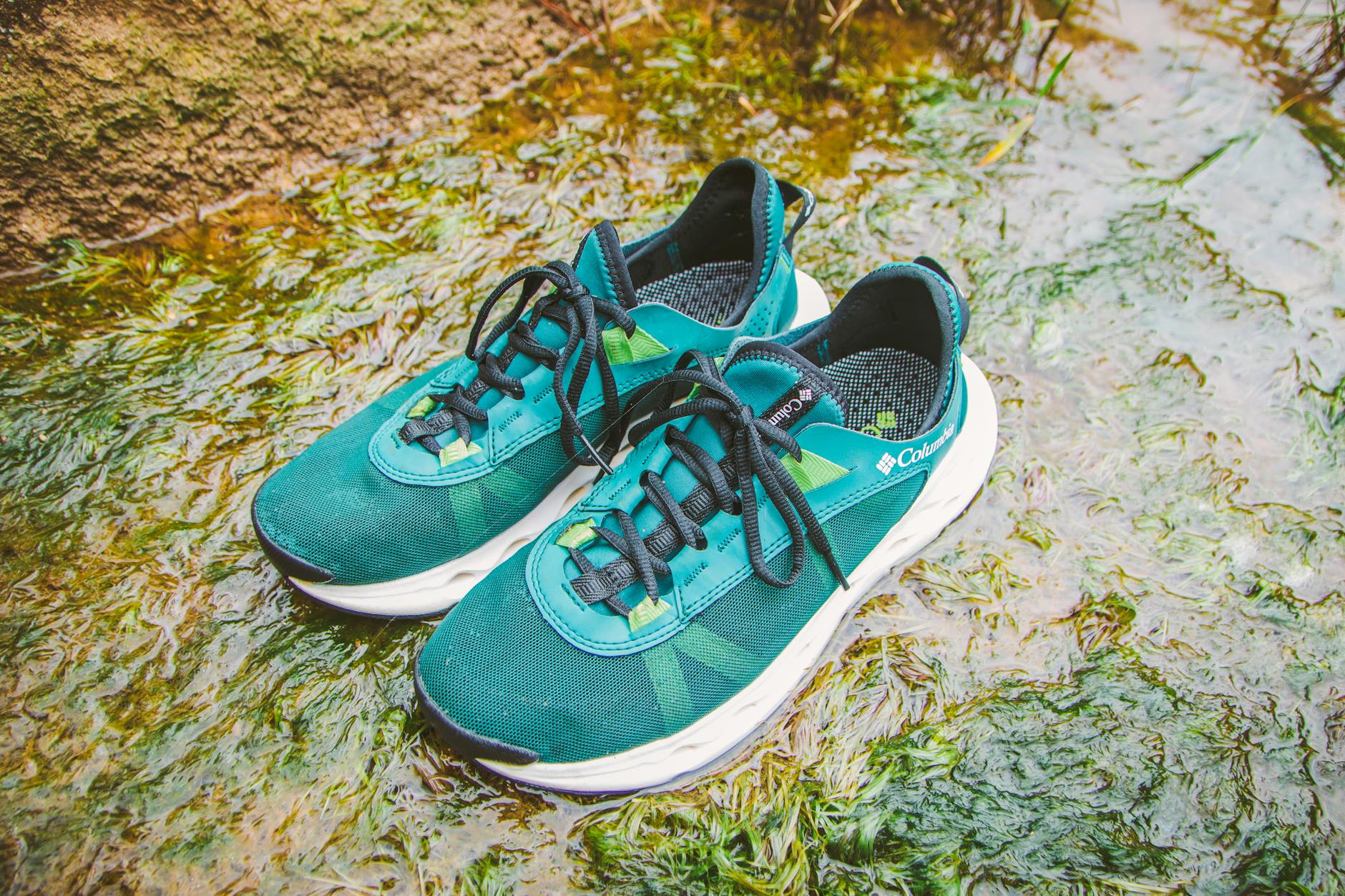
Trail running presents a different calculation than road running when it comes to drop effects. On technical terrain with roots, rocks, and uneven surfaces, your foot lands at constantly varying angles, which partially negates the influence of heel-to-toe differential. A zero-drop trail shoe doesn’t guarantee midfoot striking when you’re descending a steep grade or navigating loose gravel””your foot adapts to whatever surface it encounters. Road and track running show more consistent drop effects because the surface is predictable. Your neuromuscular system can establish repeatable patterns over thousands of identical foot strikes.
This is where drop-related form changes become most pronounced and where injury patterns from inappropriate footwear develop most quickly. A runner logging 50 miles per week on pavement in the wrong drop height accumulates far more repetitive stress than a trail runner covering the same distance on varied terrain. Consider a runner who uses zero-drop shoes exclusively on trails without problems, then wears the same shoes for interval training on the track. The consistent, hard surface amplifies every impact, and without the terrain variability that previously masked aggressive loading, their Achilles begins complaining within a few sessions. Surface context matters as much as the shoe itself.
Why Transitioning Between Drop Heights Requires a Gradual Approach
The most common mistake runners make with shoe drop is changing too quickly. Your body adapts to repetitive loading over months and years, building tissue tolerance specific to your habitual footwear. A sudden switch from 12mm to 0mm drop””even in a well-designed shoe””introduces forces your tissues haven’t prepared for. The Achilles tendon, in particular, requires approximately 100 days to fully remodel in response to new loading demands. Research on minimalist shoe transitions found that runners who dropped more than 4mm at once and immediately maintained their normal training volume had significantly higher rates of metatarsal stress reactions and Achilles injuries compared to gradual transitioners.
The successful approach involved reducing drop by no more than 4mm per change, initially limiting new-shoe running to 10-20% of weekly volume, and building exposure over 4-6 weeks before making another change. However, not everyone needs or benefits from lower-drop shoes. If your current footwear supports injury-free running at the volume and intensity you desire, there’s no inherent advantage to transitioning toward minimalism. The “natural running” movement convinced many runners that less shoe was always better, but the injury data tells a more nuanced story. Match your footwear to your goals, history, and biomechanics””not to ideology.

When Higher-Drop Shoes Actually Improve Form
Despite the recent trend toward lower-drop options, traditional 10-12mm drop shoes remain the right choice for specific runners and situations. Heel strikers who lack the ankle mobility or calf strength for midfoot landing often run more efficiently in higher-drop shoes because they’re not fighting against their natural mechanics. Attempting to force a forefoot strike in someone with limited ankle dorsiflexion creates compensatory movements elsewhere in the chain.
Ultra-distance events also favor moderate-to-high drop for many runners. As fatigue accumulates over 50 or 100 miles, form degrades and heel striking increases regardless of footwear. Having adequate heel cushioning protects against the accumulating damage of late-race shuffling. Elite ultramarathoners like Jim Walmsley and Courtney Dauwalter often race in shoes with 8-10mm drops despite having the strength and skill for lower-drop options””a practical acknowledgment that racing footwear must account for worst-case form, not just optimal mechanics.
How to Prepare
- **Assess your current ankle mobility** by performing a weight-bearing dorsiflexion test. Kneel with one foot flat on the ground, then drive your knee forward over your toes without lifting your heel. If you can’t move your knee past your toes by at least 4 inches, work on ankle mobility before transitioning to lower-drop shoes.
- **Build calf and Achilles tendon strength** with progressive heel raises. Start with double-leg raises on flat ground, progress to single-leg raises, then add height by performing them on a step with full range of motion. Aim for 3 sets of 15 single-leg raises before attempting significant drop changes.
- **Strengthen your foot intrinsic muscles** through towel scrunches, marble pickups, and barefoot walking on varied surfaces. These small muscles help control midfoot loading and reduce stress on larger structures.
- **Run short barefoot sessions on grass** to expose your nervous system to zero-drop loading without the impact of hard surfaces. Even 5-10 minutes of barefoot strides helps your body understand the mechanics you’re targeting.
- **Identify your current drop baseline** by checking the specifications of your existing shoes. Many runners don’t know what they’re currently running in, making systematic transition planning impossible.
How to Apply This
- **Introduce the new shoe on your shortest, easiest runs first.** Recovery runs and easy effort sessions under 30 minutes allow exposure without excessive fatigue that might compromise form. Avoid debuting new drop heights during workouts or long runs.
- **Limit initial exposure to 10-20% of your weekly mileage.** If you run 40 miles per week, your new lower-drop shoe should cover just 4-8 miles during the first two weeks. Increase by 10% weekly if you experience no adverse symptoms.
- **Maintain your previous shoes in rotation** throughout the transition. Alternating between drop heights gives tissues recovery time while still building adaptation. Many runners eventually settle on using multiple drops for different purposes rather than standardizing on a single option.
- **Monitor for warning signs including Achilles stiffness, calf tightness that doesn’t resolve with normal recovery, and metatarsal soreness.** Any of these signals require pulling back exposure and potentially reassessing your transition timeline.
Expert Tips
- Start your transition during a lower-volume training period, not while building toward a goal race. Adding new tissue stress during peak training compounds injury risk unnecessarily.
- Don’t assume that lower drop automatically means better form. Video your running gait in different drop heights to see what actually changes””the results often surprise runners who expected dramatic form shifts.
- Pay attention to the total stack height, not just the drop. A zero-drop shoe with 30mm of cushion behaves very differently than a zero-drop racing flat with 15mm. Both variables matter.
- Avoid transitioning during winter months if you live in a cold climate. Tendons and connective tissues are more vulnerable when temperatures drop, and the additional loading from lower-drop shoes increases injury potential.
- Don’t force zero-drop if your body repeatedly rejects it. Some runners have structural characteristics””bone geometry, tendon insertion points, or mobility limitations””that make lower drops inappropriate regardless of transition patience.
Conclusion
Shoe drop functions as a dial that shifts running forces between different body structures. Higher drops protect the Achilles and calves while loading the knees and quads; lower drops reverse this equation.
Neither option is inherently superior””the right choice depends on your injury history, running goals, current tissue capacity, and willingness to invest in proper transition. The most successful approach involves understanding your own biomechanics, making changes gradually, and maintaining enough self-awareness to recognize when a particular drop height isn’t serving you. Experiment systematically, respect the adaptation timeline your body requires, and remember that the goal isn’t to reach some idealized drop number but to find what supports your running sustainably.
Frequently Asked Questions
How long does it typically take to see results?
Results vary depending on individual circumstances, but most people begin to see meaningful progress within 4-8 weeks of consistent effort. Patience and persistence are key factors in achieving lasting outcomes.
Is this approach suitable for beginners?
Yes, this approach works well for beginners when implemented gradually. Starting with the fundamentals and building up over time leads to better long-term results than trying to do everything at once.
What are the most common mistakes to avoid?
The most common mistakes include rushing the process, skipping foundational steps, and failing to track progress. Taking a methodical approach and learning from both successes and setbacks leads to better outcomes.
How can I measure my progress effectively?
Set specific, measurable goals at the outset and track relevant metrics regularly. Keep a journal or log to document your journey, and periodically review your progress against your initial objectives.
When should I seek professional help?
Consider consulting a professional if you encounter persistent challenges, need specialized expertise, or want to accelerate your progress. Professional guidance can provide valuable insights and help you avoid costly mistakes.
What resources do you recommend for further learning?
Look for reputable sources in the field, including industry publications, expert blogs, and educational courses. Joining communities of practitioners can also provide valuable peer support and knowledge sharing.