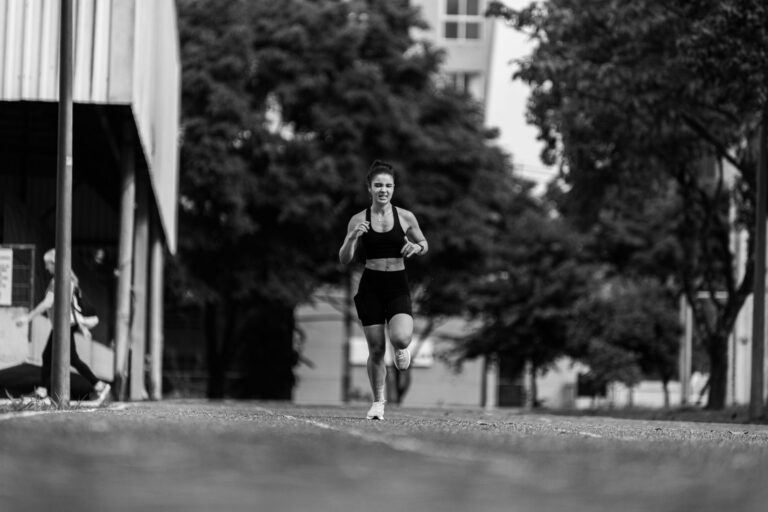
Maximizing your personal record in running depends on three core elements: structured training with proper progression, strategic race preparation, and physiological adaptation over time. Unlike hoping for a breakthrough performance, a systematic approach to improving your PR involves periodized training that gradually increases intensity while managing fatigue. For example, a runner targeting a 5K PR might spend 8-12 weeks building aerobic base fitness before transitioning into speed work and race-specific intervals in the final 4 weeks before competition.
The difference between casual running and PR-focused training lies in intention. While recreational runners benefit from consistency alone, those chasing personal records must manipulate training variables—volume, intensity, pace—in precise ways. Your body adapts to sustained stress, and these adaptations drive performance gains. A runner who has plateaued at 22 minutes for a 5K typically isn’t reaching their ceiling due to genetics; they’re likely missing a key training stimulus their physiology hasn’t yet encountered.
Table of Contents
- What Does Training for a Personal Record Actually Require?
- Why Recovery and Adaptation Are Non-Negotiable in PR Training
- Race-Day Strategy and Environmental Factors in Achieving Your Best Time
- Pacing Strategies and Effort Distribution for Maximum Performance
- Avoiding Injury While Pushing Toward a Personal Record
- Nutrition and Fueling as a Performance Variable in PR Achievement
- Long-Term Development and the Reality of Diminishing Returns
- Conclusion
What Does Training for a Personal Record Actually Require?
Training for a PR demands more than simply running faster or longer. Your body requires specific stimulus types: aerobic capacity work, lactate threshold development, and VO2 max intervals each trigger different physiological adaptations. A runner building toward a marathon PR needs long runs to teach the body efficient fuel utilization at race pace, tempo runs to raise lactate threshold, and shorter speed work to maintain running economy. Each serves a distinct purpose that casual running doesn’t address. The timeline matters significantly.
Attempting a PR on a whim after a week of slightly harder training rarely works. Your musculoskeletal system and cardiovascular system need weeks of progressive overload to adapt without breaking down. A common mistake is ramping training intensity too quickly—increasing weekly mileage by more than 10 percent, for instance—which leads to injury rather than improvement. One runner training for a half-marathon PR might follow this progression: 8 weeks of base building at conversational paces, 6 weeks of threshold and tempo work, and 3 weeks of race-specific sharpening before tapering. Without this progression, you’re competing with your current fitness rather than an improved version.

Why Recovery and Adaptation Are Non-Negotiable in PR Training
Many runners underestimate recovery‘s role in achieving personal records. The actual training stimulus—the hard workout—is only the trigger. Adaptation happens during rest: your muscles rebuild stronger, your cardiovascular system becomes more efficient, and your central nervous system consolidates the neuromuscular patterns. A runner who maintains the same sleep schedule, stress level, and nutrition while increasing training intensity will likely stagnate or regress, no matter how well-designed the workouts are. This is where most amateur runners fail.
You cannot outwork insufficient recovery. A runner logging 50 miles per week on poor sleep, high stress, and inconsistent nutrition will see fewer gains than a runner logging 35 miles with excellent sleep, managed stress, and deliberate fueling. The harder you train for a PR, the more critical recovery becomes. One limitation to acknowledge: life circumstances change. A runner dealing with a new job, relationship stress, or health issues may need to postpone PR attempts rather than push through—pushing hard during high stress increases injury risk without corresponding performance gains.
Race-Day Strategy and Environmental Factors in Achieving Your Best Time
Executing a personal record isn’t just fitness—it’s also strategy. Pacing, weather, course conditions, and mental approach all influence whether you achieve your trained fitness on race day. A runner might be capable of a 37-minute 10K but fail to achieve it by starting too fast, burning out at the halfway point, and limping home in 38:15. Conversely, a runner might execute perfect pacing, negative splits, and still miss their target if the course has unexpected hills or conditions are unexpectedly windy. Weather presents a clear example.
Running a PR attempt in 78-degree heat with humidity is substantially harder than the same effort in 55 degrees with calm winds. Your cardiovascular system must work harder to cool your body, reducing the energy available for forward progress. Elite runners strategically select races based on predicted conditions; a serious 5K PR attempt might wait for a cooler month or might target a known fast course. Wind, sun exposure, and even altitude can swing a race by minutes. This means sometimes your best training cycle won’t yield a PR if race conditions aren’t favorable, and delaying your attempt to find better conditions is a smarter strategy than forcing a poor performance.

Pacing Strategies and Effort Distribution for Maximum Performance
How you distribute your effort across a race determines whether you’ll achieve your PR. Even pacing works for some runners and distances; negative splits (running the second half faster) work for others. The wrong pacing strategy for your physiology wastes energy and prevents your best performance. A runner trained primarily on steady-state long runs might excel with even pacing, while one who’s done substantial tempo work might perform better with a controlled first half and a faster final third.
The comparison between pacing approaches is instructive. Runner A attempts a marathon PR with an even pace of 7:15 per mile, splits at 3:11:30 halfway, and slows to 7:45 pace in the final miles, finishing in 3:19. Runner B with similar fitness runs conservatively at 7:30 pace for the first half (3:17:30) and accelerates to 7:00 pace for the final miles, finishing in 3:18. Same aerobic fitness, different strategy, eight-minute difference. However, the tradeoff is that negative split strategies require significant mental discipline and carrying energy reserves through the first half—something that doesn’t work for everyone.
Avoiding Injury While Pushing Toward a Personal Record
The line between pushing hard enough to improve and pushing so hard you get injured is thin. Training load injuries—stress fractures, tendinitis, and overuse injuries—often emerge during PR-focused training blocks because volume and intensity both increase. A runner increasing weekly mileage from 30 to 50 miles while adding high-intensity intervals simultaneously has compounded injury risk, not doubled it. The body has finite adaptation capacity. Common mistakes include ignoring early warning signs.
A runner experiencing persistent niggles in their knee or calf during PR training often pushes through, assuming it’s just part of hard training. This frequently escalates minor irritation into serious injury that sidelines training for months. A real limitation of PR chasing: sometimes you need to back off before reaching your planned peak to protect yourself long-term. The smarter approach is recognizing when planned progression isn’t sustainable and adjusting rather than getting injured. One example: a runner mid-block of PR training develops shin splint symptoms might reduce mileage by 20-30 percent for two weeks, lose some fitness short-term, but avoid a six-week injury that derails the entire PR attempt.

Nutrition and Fueling as a Performance Variable in PR Achievement
What you eat and drink before, during, and after training directly affects your ability to execute PR-focused workouts and recover from them. A runner attempting a PR without optimizing nutrition is essentially leaving free performance on the table. During endurance efforts lasting over 90 minutes, consuming carbohydrates (6-8 grams per kilogram of body weight per day, adjusted for training) ensures your body has fuel to sustain the required intensity. During the race itself, depending on distance, carbohydrate intake becomes critical—a marathoner burning 2,800 calories might only consume 600 from food and drink, forcing the body to access stored glycogen and fat, which requires metabolic efficiency. The specific application matters.
A 5K runner fueling much before or during the race is unnecessary—the event is too short. A half-marathon runner might benefit from a single gel or sports drink at mile 6-7. A marathoner needs a deliberate fueling strategy with practiced timing. The tradeoff is that practicing fueling during training, especially trying race-day fueling in training, takes time and experimentation. Many runners show up to their PR race having never practiced their fuel plan, which introduces unnecessary risk.
Long-Term Development and the Reality of Diminishing Returns
Understanding that PR improvement isn’t linear is important for maintaining perspective. Early in a running career, new runners make rapid PRs—a beginner might drop five minutes from their 5K time in a single year. But as years pass and fitness improves, gains diminish. An elite 5K runner might work for two years to improve by 30 seconds, while a newer runner achieves the same gain in two months.
This is normal physiological reality, not failure. The forward-looking reality is that sustainable improvements often require broader life optimizations. A runner plateaued at their current performance level might gain meaningful time not from harder training, but from addressing sleep deficiency, reducing life stress, improving nutrition quality, or addressing underlying biomechanical issues through strength training. Some runners benefit from working with a coach who can assess training objectively and prevent the common mistake of more-is-better. The most successful long-term PR chasers think of running as part of a larger life system and optimize across multiple domains rather than just pounding out more miles.
Conclusion
Maximizing your personal record in running requires integrating structured training progression, strategic race preparation, honest assessment of recovery capacity, and practical pacing decisions. There’s no single formula—different distances, body types, and running histories require different approaches. But the runners who consistently achieve PRs share common traits: patience with the training process, attention to recovery quality, realistic race-day execution, and willingness to abandon scheduled attempts when conditions or life circumstances aren’t optimal. Your next step isn’t necessarily to run harder.
It’s to assess your current training structure, identify one or two limiting factors holding back your fitness, and design a block of training specifically targeting those weaknesses. If you haven’t done structured speed work, add it. If you’ve never optimized race-day pacing, run your next race with a predetermined splits plan. If you’re running on four hours of sleep nightly, improving sleep becomes your highest-impact intervention. PRs come from systems thinking, not heroic effort.