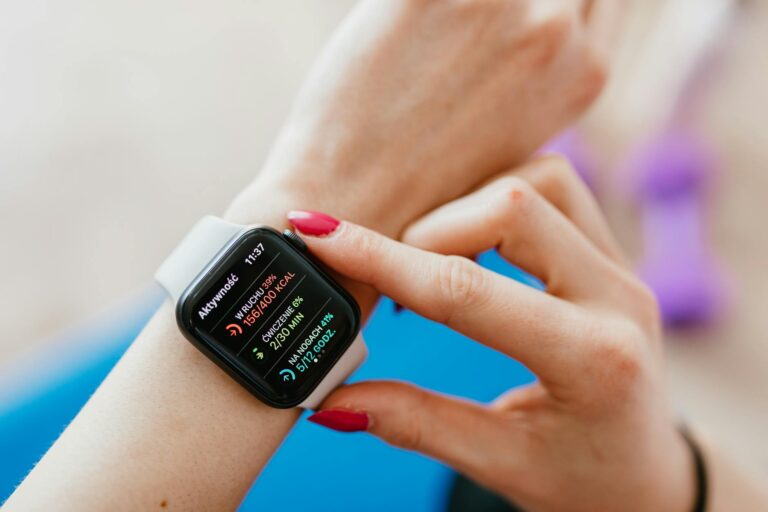
Recent research from the American Heart Association and other leading health institutions reveals a clear connection between intensity minutes and overall quality of life: meeting the recommended guidelines for vigorous or moderate-intensity activity directly translates to measurable improvements in lifespan, cardiovascular health, sleep quality, and mental well-being. The data is compelling—adults who accumulate just 75 minutes per week of vigorous aerobic activity or 150 minutes of moderate-intensity activity experience a 19% reduction in mortality risk from all causes, with even greater benefits observed at higher activity levels. The significance here extends beyond the numbers on a fitness tracker; these intensity minutes represent a direct investment in how you feel today and how many healthy years you’ll have tomorrow. What makes these latest insights particularly relevant is that they challenge the old assumption that fitness improvement requires rigid, time-intensive routines.
New findings suggest that even small amounts of vigorous activity—as little as 4 to 5 minutes daily—can reduce your risk of incident cardiovascular disease by 35 to 50 percent. This means that if you currently struggle to carve out large blocks of time for exercise, you’re not locked out of significant health benefits. The relationship between intensity minutes and quality of life is less about perfect adherence to a schedule and more about understanding how your body responds to different types of activity. The broader takeaway from 2025-2026 research is that intensity minutes matter more than total volume alone, though both factors play important roles in determining your overall health trajectory. This article explores what the latest science tells us about intensity, how to interpret these guidelines for your own life, and why the quality of your movement often matters as much as the quantity.
Table of Contents
- How Do Intensity Minutes Actually Impact Your Quality of Life?
- The Science Behind Vigorous vs. Moderate Activity Intensity
- The Cardiovascular Benefits That Matter Most
- Flexible Approaches to Building Your Intensity Minutes
- The Sleep and Mental Health Revolution
- High-Intensity Interval Training and Modern Fitness
- Building Intensity Into Real Life and Looking Forward
- Conclusion
How Do Intensity Minutes Actually Impact Your Quality of Life?
Intensity minutes fundamentally reshape your quality of life by triggering physiological changes that affect your energy, mood, cardiovascular health, and longevity. The American Heart Association’s current guidelines recommend either 150 minutes per week of moderate-intensity activity or 75 minutes of vigorous activity—roughly equivalent to 30 minutes five days a week at moderate intensity or 15 minutes five days a week at vigorous intensity. For someone working a desk job with limited free time, the vigorous option can feel more achievable, particularly since research shows that vigorous activity delivers more substantial cardiovascular benefits per minute of exercise. Your body’s response to intensity is dose-dependent; the harder you push, the more significant the adaptations your cardiovascular system makes. Consider a practical example: a 45-year-old runner who switches from casual jogging (moderate intensity) to interval training on three days a week while maintaining moderate-paced runs on two other days will accumulate more “effective” intensity minutes than someone running the same total time at a steady, easy pace.
That runner’s heart becomes more efficient, their blood pressure improves, and their risk of cardiovascular disease drops measurably. The brain also responds immediately to vigorous activity—cognitive function improves, anxiety decreases, and mood-regulating neurochemicals increase within minutes of finishing a workout. These aren’t abstract health metrics; they’re tangible improvements in how you function day to day. The intensity-quality-of-life connection reveals itself most clearly when you track both physical and mental health outcomes alongside your intensity minute accumulation. People who consistently hit their intensity targets report better sleep quality, more stable energy throughout the day, improved focus at work, and greater emotional resilience during stressful periods. The boost isn’t solely from endorphins or the satisfaction of achievement—moderate and vigorous exercise produces lasting changes in your nervous system, reducing inflammation and supporting your body’s stress response mechanisms.

The Science Behind Vigorous vs. Moderate Activity Intensity
The distinction between vigorous and moderate intensity matters more than most casual exercisers realize, because your body adapts differently depending on how hard you push. Vigorous activity—typically defined as anything that elevates your heart rate to 70-85% of maximum and makes speaking difficult—triggers more rapid cardiovascular improvements, greater calorie burn per minute, and stronger metabolic adaptations. Moderate intensity, on the other hand, keeps you at 50-70% of maximum heart rate, allows conversation, and may feel sustainable for longer durations. Neither approach is inherently “better”; rather, they serve different purposes depending on your goals and baseline fitness level. Here’s where the latest research introduces an important nuance: vigorous activity delivers outsized benefits relative to the time invested. Someone accumulating 75 minutes per week of vigorous intensity gains similar cardiovascular protection to someone doing 150 minutes at moderate intensity.
Research from the American Heart Association found that adults performing recommended vigorous activity (75-150 minutes per week) see a 19% reduction in all-cause mortality, while those doing 300-600 minutes per week of vigorous activity achieve a 21-23% reduction—suggesting that more is beneficial but with diminishing returns. The limitation here is important to acknowledge: vigorous activity carries a marginally higher injury risk, particularly for people who are sedentary at baseline or dealing with existing joint problems. Someone with arthritis who jumps immediately into vigorous running might experience a flare-up rather than improvement. The comparison becomes even more interesting when you consider meeting combined moderate and vigorous minimums—people hitting these targets achieve a 22-31% reduction in cardiovascular disease mortality specifically. This suggests that mixing intensities may offer unique protective advantages, perhaps because your cardiovascular system learns to function well across a range of demands. The practical takeaway is that your activity doesn’t need to be uniformly intense; alternating vigorous efforts with moderate recovery work builds robustness across multiple systems simultaneously.
The Cardiovascular Benefits That Matter Most
When researchers examine intensity minutes and cardiovascular health, the numbers become sobering and motivating simultaneously. A landmark finding from 2026 research revealed that as little as 4 to 5 minutes daily of vigorous activity correlates with a 35 to 50 percent reduction in risk for incident cardiovascular disease—the most dramatic benefit-to-time ratio in the entire fitness literature. This isn’t theoretical; these statistics come from large population studies tracking thousands of adults over years, controlling for age, baseline health status, and other risk factors. What this means in practical terms is that even someone with a genuinely packed schedule can achieve substantial cardiovascular protection through brief, intense efforts rather than lengthy moderate sessions. The mechanism behind this dramatic risk reduction involves the acute and chronic adaptations your heart and arteries undergo during and after vigorous activity. Each vigorous bout triggers improvements in arterial flexibility, endothelial function (the inner lining of your blood vessels), and your heart’s pumping efficiency.
Over weeks and months, these acute improvements compound into structural changes—your left ventricle becomes slightly larger and stronger, your resting heart rate drops, and your blood pressure improves. High-intensity interval training (HIIT) research from 2024-2025 adds another dimension to this picture: when overweight and obese youth performed HIIT over 4-12 week periods, they experienced greater reductions in systolic blood pressure compared to other exercise training forms. This is significant because blood pressure is one of the most modifiable cardiovascular risk factors. The warning here involves the distinction between correlation and causation, and the importance of baseline health screening. While the mortality reduction data is robust, it assumes adequate recovery between vigorous bouts and no underlying undiagnosed heart conditions. Someone with uncontrolled hypertension, recent chest pain, or a family history of early heart disease should consult a cardiologist before jumping into vigorous intensity work, even though evidence suggests they stand to gain the most.

Flexible Approaches to Building Your Intensity Minutes
One of the most practical and least widely known findings from recent research is that you don’t need to distribute your activity evenly throughout the week—accumulating 150 or more minutes of moderate-to-vigorous activity in just two days provides similar health benefits to spreading the same volume across five or six days. For people whose schedules vary wildly week to week, this is genuinely liberating. You don’t lose health benefits by doing three intense running sessions on the weekend, even if the rest of your week is sedentary. Your cardiovascular system responds to the total stimulus, not to the distribution pattern. This flexibility opens up several practical strategies for modern life.
A busy professional might dedicate Saturday and Sunday mornings to vigorous running while remaining relatively sedentary during weekdays, and still achieve the cardiovascular protection associated with meeting weekly targets. Alternatively, someone could do three 25-minute vigorous runs spaced throughout the week, or a hybrid approach mixing longer moderate efforts with shorter vigorous sessions. The comparison to rigid, evenly-distributed schedules is worth noting: people who can match their exercise pattern to their actual lifestyle—rather than forcing adherence to an ideal schedule—demonstrate better long-term consistency. The tradeoff, however, is that clustering all your activity into two days means your cardiovascular system doesn’t receive stimulus throughout the week, which may have implications for daily energy levels and mood stability that haven’t been extensively studied. A concrete example: a parent with young children might find it impossible to exercise consistently Monday through Friday, but absolutely able to do 80 minutes of vigorous running on Saturday and 70 minutes on Sunday. The research says their cardiovascular benefits will be essentially equivalent to someone doing 30 minutes per day, five days a week—a meaningful shift in how fitness advice translates to real life.
The Sleep and Mental Health Revolution
Beyond cardiovascular mortality and disease risk, one of the most immediate quality-of-life impacts of building intensity minutes comes through sleep and mental health improvements. Research published in Nature Scientific Reports found that moderate-intensity continuous exercise produces significant improvements in subjective sleep quality, measurably earlier bedtimes, and increased total sleep time. The effect size is meaningful—people who add consistent moderate intensity work to their routine often find themselves falling asleep 15-30 minutes earlier and sleeping through the night more reliably. This isn’t a minor convenience; improved sleep cascades through your entire life, affecting mood, immune function, metabolism, and cognitive performance. The mental health component operates through multiple pathways simultaneously.
Vigorous or moderate exercise produces immediate improvements in brain function, reduced anxiety, and enhanced mood, particularly notable in children and adults dealing with stress or depression. The mechanisms involve neurochemical changes (increased serotonin and dopamine availability), reduced inflammation in the brain, and activation of the parasympathetic nervous system (your body’s calm-down system). Many people report that the mental clarity and mood improvement from intensity work matters more than the cardiovascular benefits—which is itself a profound quality-of-life consideration. Someone struggling with anxiety might find that 20 minutes of vigorous running provides more relief than months of medication alone. The limitation worth acknowledging is that exercise alone doesn’t replace professional mental health treatment for clinical depression or anxiety disorders, though it represents a powerfully effective complementary approach. Additionally, the immediate mental health benefits are most consistent when exercise is regular and sustainable; someone who pushes too hard initially and burns out within weeks misses these compounding psychological improvements.

High-Intensity Interval Training and Modern Fitness
High-intensity interval training (HIIT) has moved from fringe fitness trend to scientifically validated training methodology, particularly for populations dealing with metabolic dysfunction. The 2024-2025 research demonstrating that HIIT produces greater blood pressure reduction in overweight and obese youth than traditional aerobic training suggests that intensity isn’t just about time efficiency—it fundamentally changes how your body adapts. HIIT involves alternating short bursts of maximum or near-maximum effort (typically 20-60 seconds) with active recovery periods (30 seconds to several minutes), all within a single 15-30 minute session.
The total time investment is minimal, but the intensity stimulus is maximal. An example illustrates the practical application: a 30-minute HIIT running session might involve five rounds of three minutes at vigorous pace with two minutes of easy recovery jogging interspersed. The total vigorous-intensity time might be only 15 minutes, but that 15 minutes produces adaptations comparable to 30-45 minutes of steady vigorous running—primarily because your cardiovascular system is pushed to adapt at higher speeds and heart rates. The trade-off is that HIIT feels harder while you’re doing it, requires better recovery between sessions, and carries slightly higher acute injury risk if technique breaks down during fatigue.
Building Intensity Into Real Life and Looking Forward
The latest insights on intensity minutes and quality of life suggest a future where fitness becomes increasingly personalized based on your individual response rather than prescriptive one-size-fits-all guidelines. Wearable technology and AI-driven analysis are beginning to allow runners and athletes to understand their own optimal intensity distribution—some people show maximum health benefits from frequent vigorous work, while others respond better to a vigorous-moderate mix. As research continues, the flexibility already evident in the data (the finding that 150 minutes in two days equals distributed activity, for instance) will likely expand further, revealing even more nuanced ways to achieve cardiovascular and mental health benefits within the constraints of real life.
The practical forward-looking strategy is to view intensity minutes not as a rigid requirement but as an opportunity to invest in your health efficiency. If you have 300 minutes per week available, you might choose vigorous work knowing you get maximum protection per minute. If you have only 75 minutes available, that becomes your target—and you can flex whether to distribute it across the week or concentrate it into fewer, longer sessions. The convergence of research from 2025-2026 all points toward this empowering truth: there are multiple valid paths to substantial quality-of-life improvements through intensity, and the best approach is the one you’ll actually maintain consistently over months and years.
Conclusion
The latest research fundamentally reframes the relationship between intensity minutes and quality of life from an obligation toward a practical tool for building the health outcomes you actually want. Whether your goal is reducing cardiovascular disease risk, improving sleep quality, enhancing mental clarity, or simply extending your healthy lifespan, the science is now clear: intensity matters, but flexibility in how you accumulate it matters equally. The American Heart Association guidelines of 75 vigorous or 150 moderate minutes per week represent evidence-based minimums, and meeting these targets correlates with a 19% reduction in all-cause mortality—a difference equivalent to years of additional healthy life.
Your next step is not to judge yourself against an idealized training schedule, but to understand which approach to intensity matches your actual lifestyle and constraints. Whether you’re doing 4-5 minute vigorous bursts daily, concentrating 150+ minutes into two days weekly, mixing moderate and vigorous efforts, or using HIIT as your primary training tool, the physiological improvements accumulate. The quality-of-life benefits—better sleep, clearer thinking, improved mood, stronger cardiovascular system, and measurable mortality risk reduction—await on the other side of consistent effort. Choose your approach based on what you can sustain, track your intensity minutes alongside how you actually feel, and expect to notice improvements in both measurable health metrics and daily lived experience within weeks of building these habits.