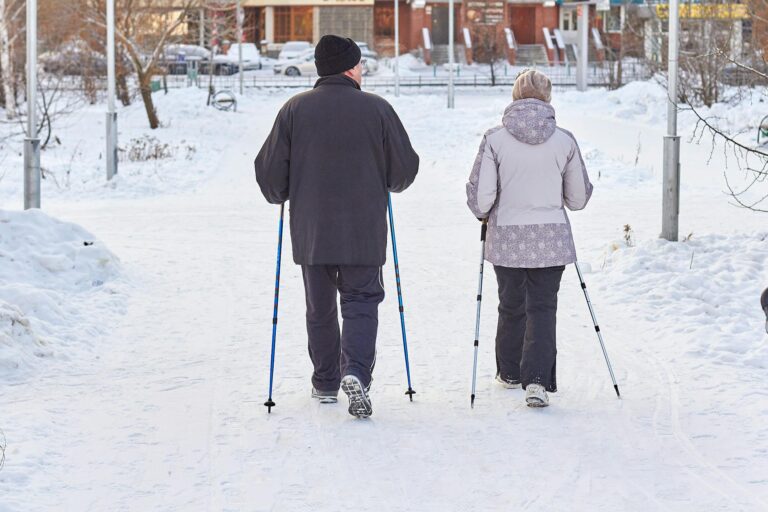
The 150 minutes per week of moderate-intensity activity recommended by both the CDC and WHO is the evidence-based standard you should follow. The 10,000-step goal, while not harmful, is a marketing-derived number from a 1960s Japanese pedometer campaign — not a scientific benchmark. If you are trying to decide which target to chase, the intensity minutes framework gives you a clearer, more flexible, and better-supported path to cardiovascular health. Here is what that looks like in practice.
A person who takes three 50-minute brisk walks per week hits the 150-minute guideline and likely accumulates around 7,000 to 8,000 steps on those days alone. Meanwhile, someone who wanders slowly through an office park for 10,000 steps may log the count without ever raising their heart rate enough to qualify as moderate-intensity exercise. Both metrics have value, but they measure different things, and understanding the distinction matters for how you structure your training and daily movement. This article breaks down where the 10,000-step goal actually came from, what the research says about step thresholds and mortality, how steps translate to intensity minutes, and what adjustments you should make based on your age, fitness level, and how much time you spend sitting.
Table of Contents
- Where Did the 10,000 Steps a Day Goal Come From, and How Does It Compare to 150 Intensity Minutes?
- What Does the Research Say About How Many Steps You Actually Need?
- Do Faster Steps Matter More Than Total Steps for Heart Health?
- How to Use Both Metrics Together for Better Results
- When 10,000 Steps Is Not Enough — and When It Is Overkill
- Why the WHO Dropped the 10-Minute Bout Requirement
- Where Step and Intensity Research Is Heading
- Conclusion
Where Did the 10,000 Steps a Day Goal Come From, and How Does It Compare to 150 Intensity Minutes?
The 10,000-step target did not originate from a clinical trial, a government health agency, or a university research lab. It came from a pedometer called the manpo-kei — literally “10,000 steps meter” — marketed in Japan during a fitness boom surrounding the 1964 Tokyo Olympics. The number 10,000, or 万 (man) in Japanese, carries cultural significance as a symbol of completeness and abundance. It made for a clean, aspirational marketing message. That message stuck, and it has been repeated so many times over the past six decades that most people assume it is backed by rigorous science. The 150 weekly intensity minutes guideline, by contrast, comes directly from the U.S. Department of Health and Human Services Physical Activity Guidelines and the World Health Organization’s 2020 update.
The CDC recommends that adults get at least 150 minutes per week of moderate-intensity aerobic activity — or 75 minutes per week of vigorous-intensity activity — plus two or more days of muscle-strengthening exercises. The WHO echoes this with a range of 150 to 300 minutes of moderate-intensity or 75 to 150 minutes of vigorous-intensity activity per week. Notably, neither the CDC nor the WHO includes a daily step-count recommendation in their official guidelines. The WHO also removed the previous requirement that activity be accumulated in 10-minute bouts, meaning even short bursts of movement now count. The practical difference is important. Intensity minutes account for how hard you are working, not just how much you are moving. walking briskly at a pace that elevates your breathing counts as moderate intensity. Strolling through a grocery store does not, even though your step counter ticks upward just the same.

What Does the Research Say About How Many Steps You Actually Need?
The science has caught up to the marketing, and the results are more nuanced than a single round number. A 2022 meta-analysis published in The Lancet Public Health, drawing on 15 international cohorts, confirmed that health benefits from walking begin at roughly 2,500 to 2,700 steps per day and increase with additional steps. However, the mortality benefits do not scale linearly forever. For adults over 60, benefits plateau between 6,000 and 8,000 steps per day. For adults under 60, the optimal range extends to 8,000 to 10,000 steps per day. every additional 1,000 steps per day reduces all-cause mortality, but with diminishing returns once you pass those age-specific thresholds.
A 2025 dose-response meta-analysis, also published in The Lancet Public Health, reinforced these findings, identifying 7,000 steps per day as the threshold associated with clinically meaningful health improvements across age groups. Ten thousand steps remains a viable target for more active individuals, but it is not the minimum effective dose that many people believe it to be. However, if you are largely sedentary — sitting for eight or more hours per day at a desk job, for instance — these thresholds shift. Research covered by NPR in August 2025 suggests that highly sedentary individuals may need approximately 13,000 steps per day to offset the health risks of prolonged sitting, compared to roughly 7,000 for people who are not desk-bound. This is a critical caveat that most step-count advice ignores entirely. Your baseline activity level changes how many steps you need to see the same benefit.
Do Faster Steps Matter More Than Total Steps for Heart Health?
A reasonable assumption is that walking faster should be better for you than walking slowly — and in isolation, data seems to support that. A 2020 study published in JAMA found that step intensity, measured in steps per minute, was inversely associated with mortality. People who walked at a brisker pace had lower death rates. But here is the critical finding: when the researchers adjusted for total daily step volume, the association between intensity and mortality was no longer statistically significant. Total steps mattered more than pace.
A follow-up study published in JAMA Internal Medicine in 2022 confirmed this pattern, showing that daily step count is associated with lower rates of cancer, cardiovascular disease, and all-cause mortality independent of intensity. In other words, a person who accumulates 8,000 relatively slow steps throughout the day gets a comparable longevity benefit to someone who power-walked those same 8,000 steps. This does not mean intensity is irrelevant for fitness. If your goal is improving VO2 max, running a faster 5K, or building cardiovascular endurance, intensity matters enormously. But for the baseline question of “will more steps help me live longer,” volume appears to be the primary driver. This is good news for people who find brisk walking uncomfortable or unsustainable — a leisurely evening walk still counts.
How to Use Both Metrics Together for Better Results
Rather than choosing between steps and intensity minutes, the most practical approach is to use them for different purposes. Think of your daily step count as a measure of overall movement and non-exercise activity. Think of intensity minutes as a measure of structured cardiovascular training. They complement each other. For example, a runner who logs three 30-minute runs per week at a moderate pace hits 90 of the recommended 150 intensity minutes. Adding two 30-minute brisk walks gets them to 150 minutes. On their non-running days, they might only hit 4,000 to 5,000 steps, but their intensity minutes are covered.
Meanwhile, a non-runner who walks throughout the day might easily reach 9,000 steps but accumulate minimal intensity minutes if none of that walking is brisk enough to elevate their heart rate meaningfully. The runner has better cardiovascular conditioning. The walker has better all-day movement patterns. Ideally, you want both. The tradeoff comes down to time and preference. If you have 30 focused minutes, a vigorous workout is more time-efficient for hitting intensity targets. If you have a flexible schedule and prefer low-impact movement spread throughout the day, accumulating steps is more sustainable. According to UT Southwestern Medical Center, 7,000 to 9,000 steps per day is roughly equivalent to 150 to 300 minutes of brisk walking per week, which means hitting a moderate step target can satisfy the intensity guideline simultaneously — as long as a meaningful portion of those steps are taken at a brisk pace.
When 10,000 Steps Is Not Enough — and When It Is Overkill
The biggest limitation of the 10,000-step framework is that it treats all steps equally and all people the same. A 25-year-old office worker and a 70-year-old retiree have very different physiological responses to the same step count. The research is clear that adults over 60 see diminishing mortality returns beyond 6,000 to 8,000 steps, so pushing to 10,000 may offer little additional benefit while increasing joint stress and fatigue. On the other end of the spectrum, if you spend most of your day sitting — a reality for many remote workers, long-haul drivers, and desk-bound professionals — 10,000 steps may genuinely not be enough.
The data suggesting that highly sedentary individuals need closer to 13,000 steps per day to counteract prolonged sitting should be a wake-up call. If your wearable congratulates you at 10,000 steps but you spent the other 14 waking hours in a chair, you may be getting a false sense of security. There is also the issue of what steps cannot capture. Neither metric — steps nor intensity minutes — accounts for muscle-strengthening activity, which both the CDC and WHO recommend on at least two days per week. A comprehensive fitness routine needs resistance training in addition to aerobic movement, and no amount of walking replaces that.

Why the WHO Dropped the 10-Minute Bout Requirement
One of the most underappreciated changes in the 2020 WHO guidelines was the removal of the rule that physical activity had to be accumulated in bouts of at least 10 minutes to count. Under the old framework, a five-minute walk to the bus stop and a seven-minute walk at lunch did not officially contribute to your weekly total, even though they added up to 12 minutes of movement. The updated guidelines recognize that all movement counts, regardless of duration.
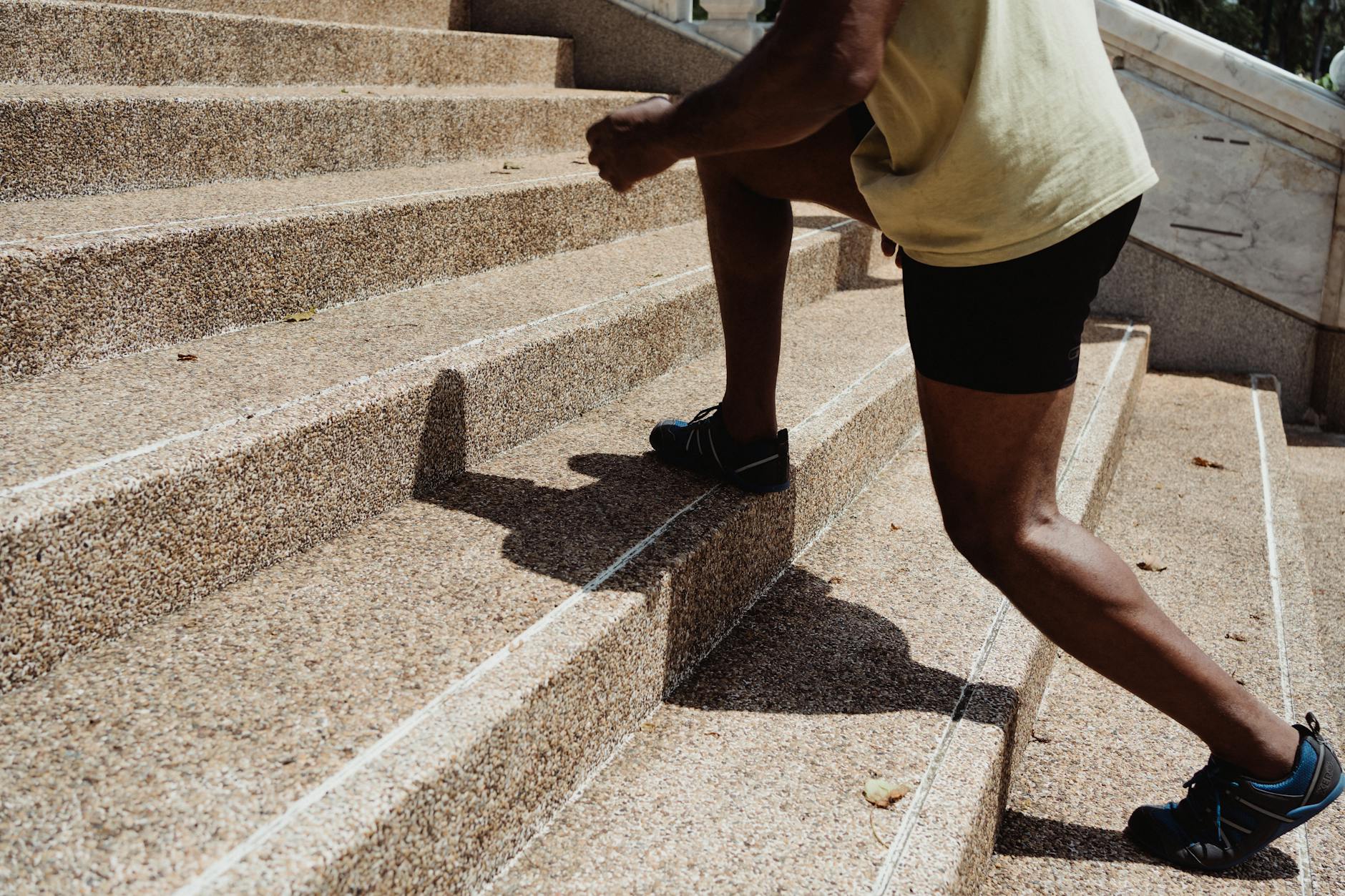
This change has practical implications for how people structure their days. Taking the stairs for two minutes, walking during a phone call for eight minutes, and doing a brisk 15-minute loop after dinner all count toward your 150-minute weekly target. For people who struggle to carve out a continuous 30- or 45-minute block for exercise, this is a meaningful shift. It also aligns with the step-count research showing that total daily volume matters more than how you accumulate it.
Where Step and Intensity Research Is Heading
The next frontier in this research is personalization. Current guidelines offer population-level recommendations, but wearable technology is making it possible to tailor targets based on individual resting heart rate, heart rate variability, sleep quality, and activity patterns.
Future guidelines may move away from universal thresholds entirely and instead recommend individualized movement targets that account for age, baseline fitness, chronic conditions, and sedentary time. What will not change is the underlying principle: consistent moderate-to-vigorous physical activity reduces the risk of cardiovascular disease, cancer, and premature death. Whether you track that in steps, intensity minutes, or some future metric, the goal remains the same — move more, move often, and when possible, move with enough effort that your body has to adapt.
Conclusion
The 150 minutes per week of moderate-intensity activity guideline is the standard backed by the CDC, the WHO, and decades of clinical research. The 10,000-step target is a useful motivational tool, but it was born from a marketing campaign, not a medical study. Science shows that meaningful health benefits begin at far fewer steps — as low as 4,000 to 7,000 depending on your age — and that total movement volume matters more than pace for reducing mortality risk. The best approach is to use both metrics strategically.
Aim for at least 150 intensity minutes per week through structured exercise, and use your daily step count as a gauge of overall non-exercise movement. If you sit for most of the day, push your step target higher than 10,000. If you are over 60, do not feel pressured to hit a number that research suggests offers you no additional benefit. And regardless of your step count, do not neglect resistance training at least twice per week. The goal is not to hit a magic number on your wrist — it is to build a body that functions well for as long as possible.