

Understanding how treadmill running alters foot strike and shoe performance has become essential knowledge for the millions of runners who split their training between indoor and outdoor environments. The mechanics of running on a moving belt differ substantially from propelling yourself across stationary ground, and these differences cascade through your entire kinetic chain, affecting everything from initial ground contact to the way your shoes absorb and return energy. Whether you’re a beginner using a treadmill for convenience or an experienced marathoner logging miles during harsh weather, recognizing these biomechanical shifts can help prevent injury and optimize your training outcomes. The question of surface-specific running mechanics goes beyond academic curiosity.
Research published in sports medicine journals over the past two decades has documented measurable differences in stride length, cadence, muscle activation patterns, and most notably, foot strike position between treadmill and overground running. These variations mean that a runner who predominantly heel strikes outdoors might exhibit a more midfoot-oriented pattern on a treadmill, or vice versa. Such changes directly influence which portions of the shoe midsole experience the greatest stress, how quickly cushioning materials fatigue, and whether the shoe’s design features actually benefit the runner as intended. By the end of this article, you’ll understand the specific biomechanical mechanisms that cause foot strike alterations on treadmills, how these changes affect shoe wear patterns and performance characteristics, and practical strategies for adapting your footwear choices and running form across both surfaces. This knowledge becomes particularly valuable when selecting shoes, structuring training programs, or troubleshooting persistent discomfort that only appears during one type of running.
Table of Contents
- Why Does Running on a Treadmill Change Your Foot Strike Pattern?
- Biomechanical Differences Between Treadmill and Outdoor Running Surfaces
- How Shoe Cushioning and Stability Features Respond to Treadmill Running
- Selecting Running Shoes for Optimal Treadmill Performance
- Common Foot Strike Problems and Shoe Wear Issues on Treadmills
- Transitioning Between Treadmill and Outdoor Running
- How to Prepare
- How to Apply This
- Expert Tips
- Conclusion
- Frequently Asked Questions
Why Does Running on a Treadmill Change Your Foot Strike Pattern?
The fundamental difference between treadmill and overground running lies in how forward motion is achieved. When running outside, your muscles must propel your body mass forward through space, requiring significant horizontal force production. On a treadmill, the belt moves beneath you, effectively eliminating the need for horizontal propulsion while you simply lift and place your feet to avoid falling behind. This shift in mechanical demands triggers a cascade of adaptations in running form that researchers have documented across multiple studies.
Ground contact patterns shift partly because runners subconsciously adjust to the compliant, uniform surface of a treadmill belt. Most treadmill decks incorporate shock-absorbing systems that create a more forgiving landing surface than concrete or asphalt. Studies using high-speed cameras and force plates embedded in treadmill belts have found that runners often land with a flatter foot position, reducing the aggressive heel strike angle common on harder outdoor surfaces. The belt’s consistent texture and slight give allow runners to contact the ground earlier in their stride cycle without the jarring impact that would occur on rigid surfaces. Several key factors drive these foot strike changes:.
- **Reduced horizontal propulsion requirements** mean the posterior chain muscles work differently, affecting leg swing mechanics and landing position
- **Belt compliance and deck cushioning** reduce peak impact forces, allowing runners to subconsciously adopt landing patterns they’d avoid on harder surfaces
- **Constant belt speed** eliminates natural pace fluctuations, which can alter stride length and subsequently affect foot strike location
- **Absence of visual flow cues** changes proprioceptive feedback, as runners can’t gauge speed through peripheral vision the same way they do outdoors
Biomechanical Differences Between Treadmill and Outdoor Running Surfaces
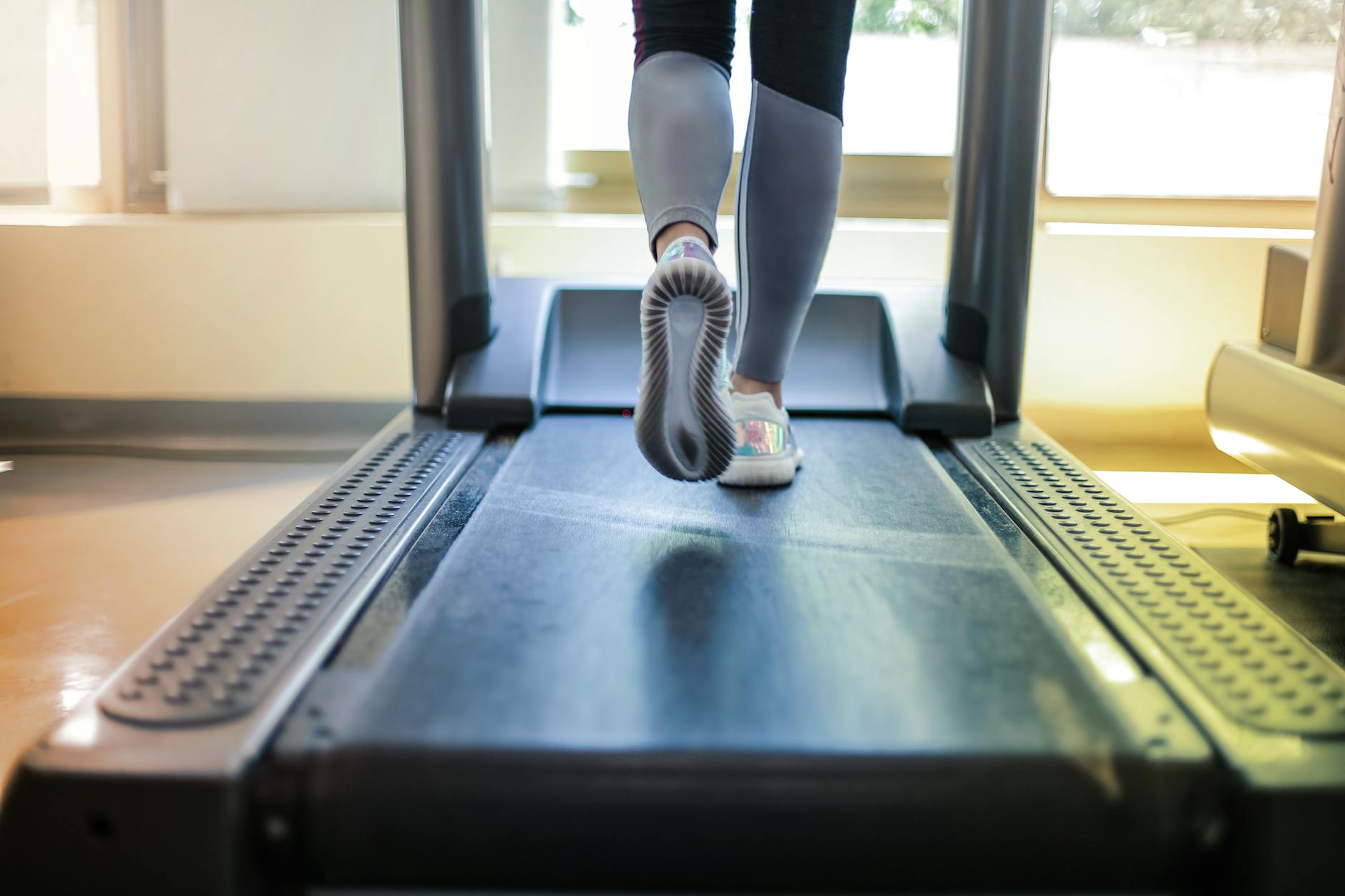
The biomechanics of treadmill running involve more than just foot strike alterations. Research comparing the two conditions has revealed systematic differences across multiple parameters that collectively influence how shoes-feel-faster-outside-but-sluggish-on-a-treadmill/” title=”Why Some Shoes Feel Faster Outside but Sluggish on a Treadmill”>shoes perform. A 2020 meta-analysis examining 33 studies found that while many kinematic variables remain similar between treadmill and overground running, subtle but consistent differences emerge in hip and knee flexion angles, tibial rotation, and ankle dorsiflexion at initial contact. One critical distinction involves the role of the hamstrings and gluteal muscles.
During outdoor running, these muscles work concentrically to pull the body forward over the planted foot. On a treadmill, their role shifts toward controlling leg swing and managing the transition from flight phase to stance. This altered muscle recruitment pattern affects how the foot approaches the ground. With less emphasis on pulling forward and more on lifting and placing the feet, runners often exhibit reduced stride length and increased cadence, both of which favor a more anterior foot strike position. The specific biomechanical differences affect shoe performance in measurable ways:.
- **Reduced ground contact time** on treadmills means shoe cushioning systems have less time to compress and rebound, potentially limiting energy return benefits
- **Lower peak vertical forces** decrease the demand on midsole materials, which may extend shoe lifespan but also means stability features engage less actively
- **Altered loading rates** change which foam densities and geometries provide optimal protection, as the force curve shape differs between surfaces
- **Modified ankle kinematics** affect how motion control features interact with the foot, potentially making shoes feel more or less supportive than on roads
How Shoe Cushioning and Stability Features Respond to Treadmill Running
Running shoe technology is primarily engineered for outdoor surfaces, where designers must account for hard pavement, cambered roads, and variable terrain. When these shoes are used on treadmills, their performance characteristics may not align with the manufacturer’s intentions. The interplay between deck cushioning and shoe cushioning creates a compound effect that can feel substantially different from road running. Modern midsole foams like Nike’s ZoomX, Adidas Boost, and Saucony PWRRUN PB are calibrated to compress at specific force thresholds and return energy at particular rates. On a treadmill’s cushioned deck, the total system stiffness changes.
With two cushioning layers working in series, the combined deflection increases while peak forces decrease. For some runners, this feels plush and comfortable. For others, particularly those who prefer responsive, firm shoes, the sensation becomes overly soft and unstable. Research on dual-cushioning systems suggests that excessive compliance can reduce running economy by requiring additional muscular effort to stabilize the ankle and maintain efficient push-off mechanics. Stability and motion control features also behave differently on treadmills:.
- **Medial posts and guide rails** designed to limit overpronation may engage less aggressively when impact forces are lower, potentially providing insufficient support for runners who need it
- **Heel-toe drop** (the height difference between heel and forefoot) interacts with deck incline settings, effectively changing the shoe’s geometry during inclined treadmill running
- **Outsole rubber compounds** experience less abrasion on smooth belts, extending grip lifespan but also meaning the shoe never develops the wear patterns that reveal gait abnormalities

Selecting Running Shoes for Optimal Treadmill Performance
Choosing appropriate footwear for treadmill running requires understanding how the surface-shoe interaction differs from outdoor conditions. Runners who log significant treadmill miles may benefit from selecting shoes with slightly different characteristics than their outdoor trainers, or at minimum, being aware of how their current shoes will perform differently indoors. For runners who spend the majority of their time on treadmills, a firmer, more responsive shoe often provides better proprioceptive feedback and running economy than a maximally cushioned option.
The treadmill deck already absorbs considerable impact energy, making ultra-soft midsoles potentially redundant. Shoes with lower stack heights and moderate cushioning can help maintain ground feel and efficient toe-off mechanics. Conversely, runners who experience joint discomfort specifically during treadmill sessions may benefit from examining whether the combined deck-plus-shoe cushioning creates too much instability rather than too little protection. When selecting treadmill running shoes, consider these factors:.
- **Midsole firmness** should complement rather than duplicate the deck’s cushioning, with moderately firm shoes often feeling more efficient on cushioned belts
- **Outsole design** matters less for traction but more for flexibility, as smooth belt surfaces don’t require aggressive lugs that can feel clunky on flat terrain
- **Upper breathability** becomes more important on treadmills where reduced airflow and warmer indoor temperatures increase foot perspiration
- **Weight considerations** favor lighter options since the consistent, flat surface eliminates the need for reinforced protection against rocks and debris
Common Foot Strike Problems and Shoe Wear Issues on Treadmills
Runners who train extensively on treadmills sometimes develop form issues that wouldn’t emerge during outdoor running. The altered mechanical demands and artificial environment can reinforce suboptimal patterns that eventually manifest as discomfort or injury. Understanding these common problems helps runners identify when their treadmill habits might be causing harm. One frequent issue involves over-striding in an attempt to match the belt’s consistent pace.
Without natural terrain variations that force stride length adjustments, runners may lock into patterns where the foot lands too far ahead of the center of mass. This creates excessive braking forces despite the reduced horizontal propulsion demands. The resulting heel-dominant landing increases loading rates through the lower leg and may accelerate breakdown of the shoe’s heel cushioning while leaving forefoot foam relatively unused. Common treadmill-specific problems include:.
- **Asymmetric belt position** where runners consistently favor one side of the belt, creating uneven shoe wear and potential muscular imbalances
- **Reduced hip extension** from the belt’s forward movement, which can tighten hip flexors and alter foot strike timing on subsequent outdoor runs
- **Overreliance on visual pacing** from the console display rather than internal effort perception, leading to form breakdown when outdoor pace feels different than expected
- **Insufficient shoe rotation** because treadmill convenience encourages using the same pair repeatedly, accelerating midsole compression without recovery time
Transitioning Between Treadmill and Outdoor Running
Managing the transition between treadmill and outdoor running requires attention to how your body and footwear adapt to each surface. Runners who abruptly switch between conditions after extended periods on one surface often report that their form feels off or that their shoes perform unexpectedly. This adjustment period reflects genuine neuromuscular recalibration as the body readjusts to different mechanical demands.
The transition challenge extends to footwear considerations. Shoes that have been used exclusively on treadmills develop minimal outsole wear but may have compressed midsoles that perform poorly on impact-heavy road surfaces. Conversely, shoes worn down by outdoor running may still provide adequate cushioning on softer treadmill decks even after they would be due for replacement in a road-only rotation. Building awareness of how training surface affects shoe longevity helps runners avoid both premature replacement and running on degraded cushioning.
How to Prepare
- **Assess your current shoes’ treadmill-specific wear patterns** by examining midsole compression along the outer edge (where initial contact typically occurs) and comparing to the medial forefoot area. Uneven compression indicates that your foot strike position may be shifting on the treadmill, requiring form adjustment or different footwear.
- **Set the treadmill incline to 1-2 percent** to approximate the energy cost of outdoor running and encourage a more forward-oriented foot strike. Flat belt running at zero incline tends to promote heel striking and reduces posterior chain engagement compared to level ground outdoor running.
- **Position yourself toward the front third of the belt** to encourage proper posture and prevent over-striding. Running too far back creates a subconscious fear of falling off, which leads to shortened strides and disrupted landing mechanics.
- **Perform a brief warm-up on the treadmill before evaluating shoes** because midsole foams require several minutes to reach operating temperature. Cold foam behaves differently than warmed foam, so first impressions of treadmill shoe feel may not reflect actual performance during sustained running.
- **Record yourself from the side using slow-motion video** to analyze foot strike position relative to your center of mass. Compare this to outdoor footage captured on similar flat terrain to identify surface-specific patterns that might require attention.
How to Apply This
- **Rotate between two pairs of shoes for treadmill running** even if the convenience of indoor running tempts you to grab the same pair each time. Alternating footwear allows midsole foams to recover their shape and extends functional shoe lifespan by 30-40 percent.
- **Match shoe characteristics to the specific treadmill deck** at your gym or home. High-cushion decks pair well with firmer, more responsive shoes, while basic or commercial treadmills with minimal deck cushioning may warrant softer midsole options.
- **Incorporate periodic form check intervals** where you consciously assess foot strike position, cadence, and posture. Set the treadmill to a moderate pace, close your eyes briefly (while holding the rails if needed for safety), and tune into how your feet are contacting the belt.
- **Schedule regular outdoor runs** even during treadmill-heavy training blocks to maintain the neuromuscular adaptations specific to overground propulsion. A ratio of three treadmill sessions to one outdoor session minimum helps preserve natural running mechanics.
Expert Tips
- **Avoid increasing both speed and incline simultaneously** when working on foot strike, as the compound demand makes it difficult to isolate mechanical changes. Adjust one variable while keeping the other constant.
- **Pay attention to shoe sounds on the belt** because loud slapping indicates a flat-footed or heel-dominant strike with excessive vertical displacement, while a quiet patter suggests efficient, level foot placement.
- **Consider treadmill-specific shoes for serious indoor training** rather than using road shoes that may have features irrelevant to belt running. Trail shoes’ aggressive lugs, for instance, provide no benefit and may feel unstable on smooth belts.
- **Monitor midsole compression by the press test** regularly: push your thumb firmly into the midsole and observe how quickly and fully it rebounds. Treadmill running causes different compression patterns than road running, and shoes may fail this test while still appearing externally intact.
- **Use the treadmill’s slight belt movement at ground contact** as a proprioceptive training tool by consciously landing with the foot already moving backward relative to your body, matching belt speed for a zero-velocity touchdown that reduces braking forces.
Conclusion
The relationship between treadmill running, foot strike mechanics, and shoe performance involves a complex interplay of biomechanical adaptations and equipment responses. The moving belt, cushioned deck, and controlled environment create conditions that systematically alter how runners land and how their shoes function. Rather than viewing these differences as problems to overcome, understanding them allows runners to make informed choices about footwear, training structure, and form cueing that optimize their indoor running experience.
Successful integration of treadmill running into a balanced training program requires acknowledging that it represents a related but distinct activity from outdoor running. By selecting appropriate shoes, monitoring form adaptations, and maintaining exposure to both surfaces, runners can leverage the convenience and consistency of treadmill training without developing the movement pattern restrictions or equipment issues that sometimes accompany exclusive indoor running. The key lies in treating treadmill and outdoor running as complementary training modalities, each with specific demands and benefits, rather than assuming that what works on one surface transfers seamlessly to the other.
Frequently Asked Questions
How long does it typically take to see results?
Results vary depending on individual circumstances, but most people begin to see meaningful progress within 4-8 weeks of consistent effort. Patience and persistence are key factors in achieving lasting outcomes.
Is this approach suitable for beginners?
Yes, this approach works well for beginners when implemented gradually. Starting with the fundamentals and building up over time leads to better long-term results than trying to do everything at once.
What are the most common mistakes to avoid?
The most common mistakes include rushing the process, skipping foundational steps, and failing to track progress. Taking a methodical approach and learning from both successes and setbacks leads to better outcomes.
How can I measure my progress effectively?
Set specific, measurable goals at the outset and track relevant metrics regularly. Keep a journal or log to document your journey, and periodically review your progress against your initial objectives.
When should I seek professional help?
Consider consulting a professional if you encounter persistent challenges, need specialized expertise, or want to accelerate your progress. Professional guidance can provide valuable insights and help you avoid costly mistakes.
What resources do you recommend for further learning?
Look for reputable sources in the field, including industry publications, expert blogs, and educational courses. Joining communities of practitioners can also provide valuable peer support and knowledge sharing.
1 thought on “How Treadmill Running Alters Foot Strike and Shoe Performance”
Comments are closed.